Science notes, unit 1
Scientific skills
Textbook Science Year 1 (DLP), pages 1–10
What this chapter covers
- You can observe things using your five senses (1.1.1)
- You can tell others what you find out by speaking, drawing and writing (1.1.2)
- You can make a model from simple materials (1.1.2)
- You can use and handle science apparatus and specimens with care (1.2.1, 1.2.2)
- You can sketch, clean and store science apparatus correctly (1.2.3, 1.2.4, 1.2.5)
Scientists find out about the world with scientific skills. In Year 1 you learn two groups: science process skills (thinking skills) and manipulative skills (hand skills).
1.1Science process skills
Observing
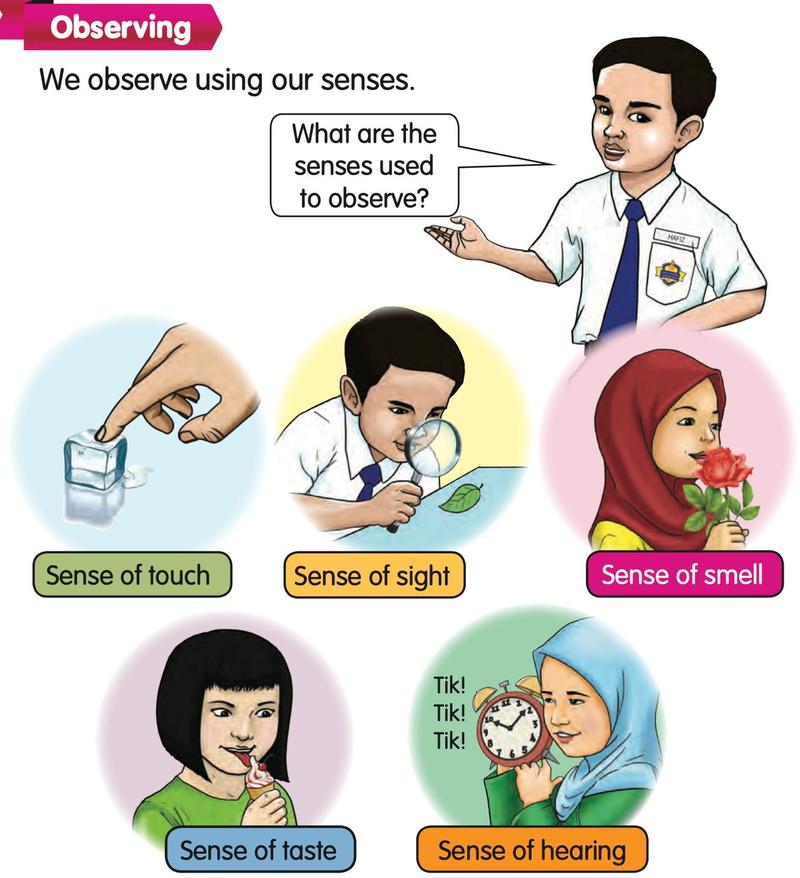
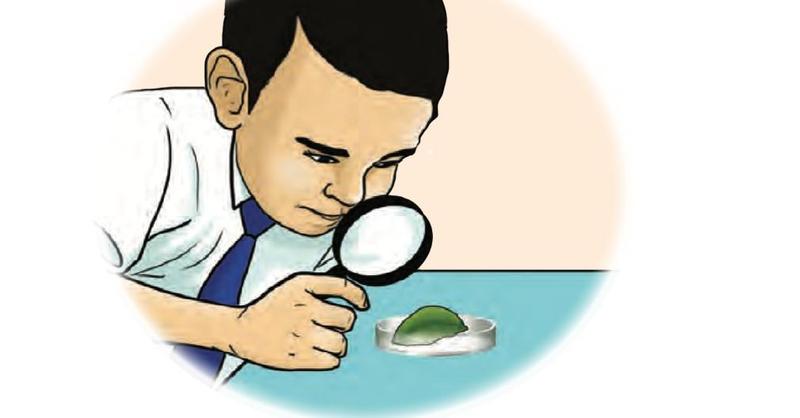
Observing means using our senses to find out about things.
| Sense | Body part | Example |
|---|---|---|
| Sight | Eyes | We see a green leaf. |
| Hearing | Ears | We hear the clock go tik, tik, tik. |
| Smell | Nose | We smell a rose. |
| Taste | Tongue | We taste a sweet. |
| Touch | Skin | Ice feels cold. |
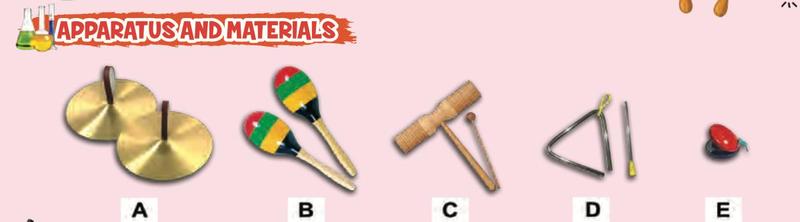
Do not play a musical instrument close to a friend's ear. It is too loud.
Which sense do you use to smell a flower?
Show answerHide answer
The sense of smell, with our nose.
Communicating
Communicating means telling other people what we find out.
We can communicate in three ways: oral (say it), sketch (draw it) and writing (write it).
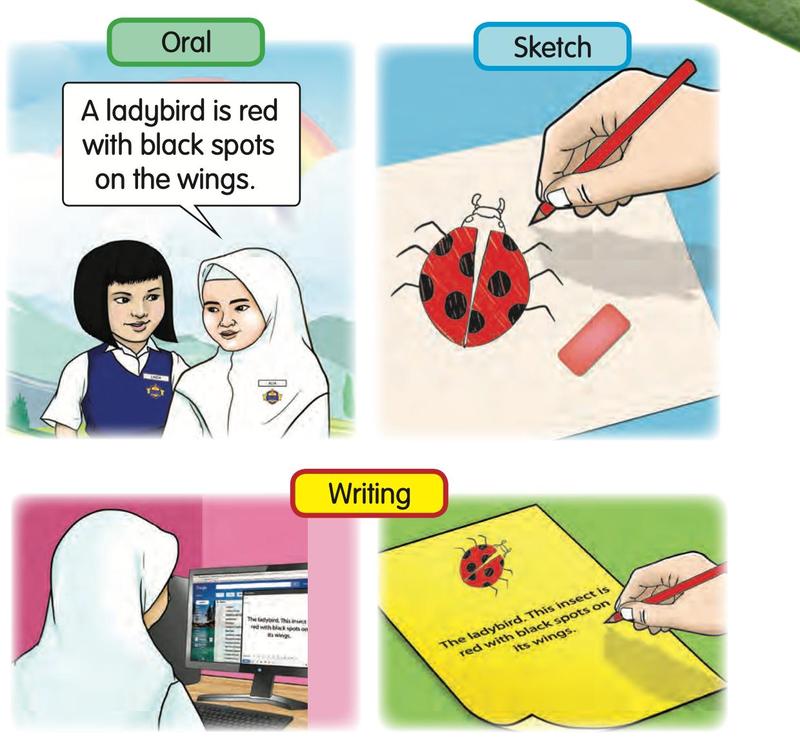
Example: the ladybird
Oral: "A ladybird is red with black spots."Sketch: draw a red ladybird with black spots.
Writing: write a sentence about the ladybird.
Creating a model
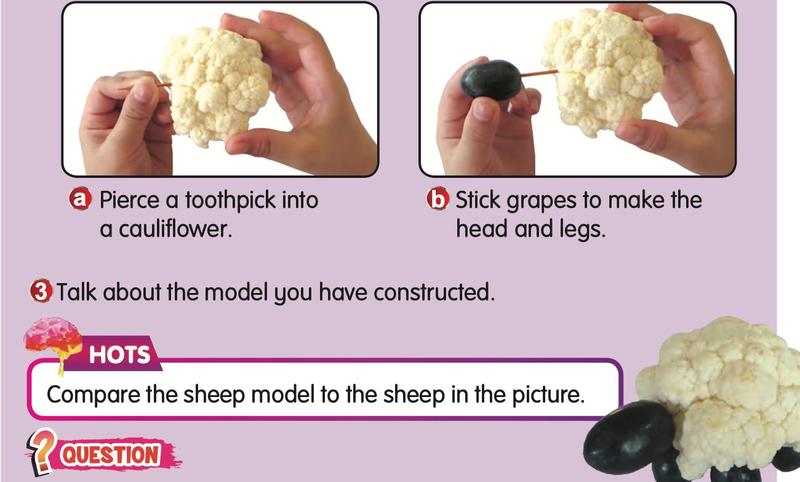
We can also share an idea by making a model. A model looks like the real thing.
Name two ways to communicate.
Show answerHide answer
Any two: oral, sketch, writing.
1.2Manipulative skills
Manipulative skills are the ways we use our hands to handle science things correctly.
- Use apparatus and science materials correctly.
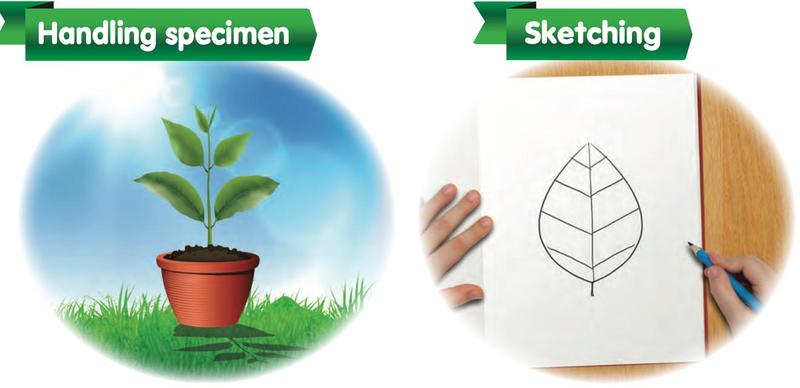
- Handle a specimen with care. A specimen is a thing we test or study.
- Sketch a specimen or apparatus.
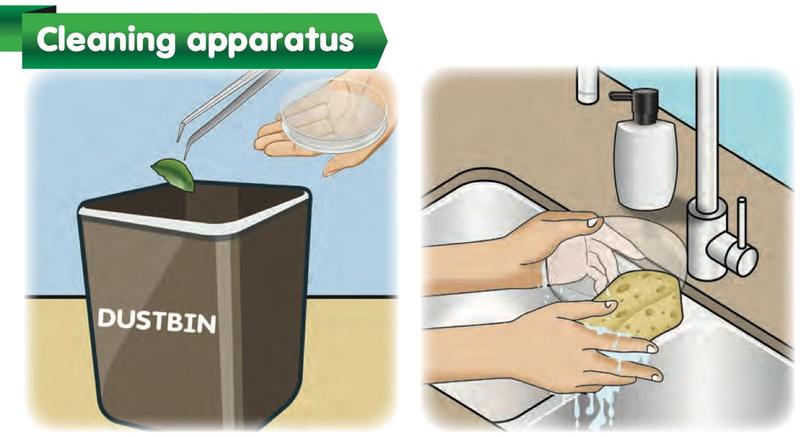
- Clean apparatus after use.
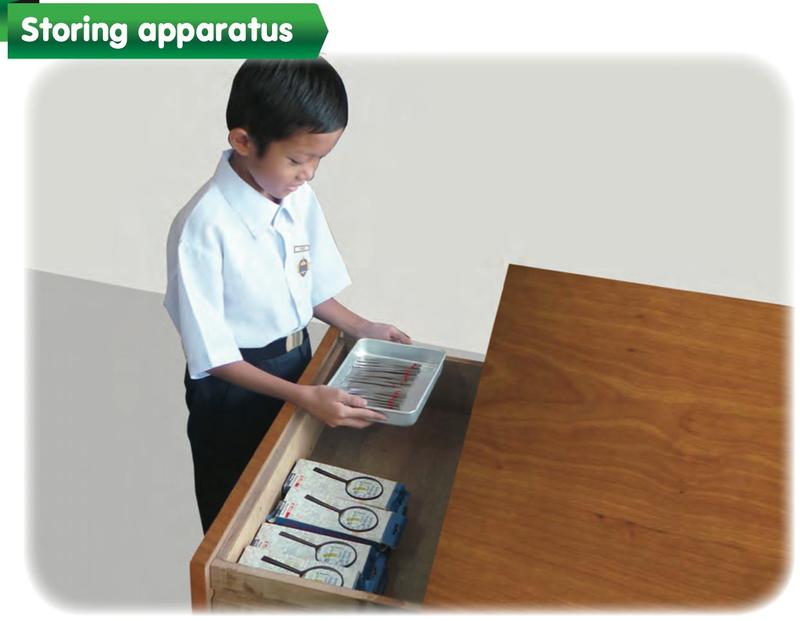
- Store apparatus safely in the right place.
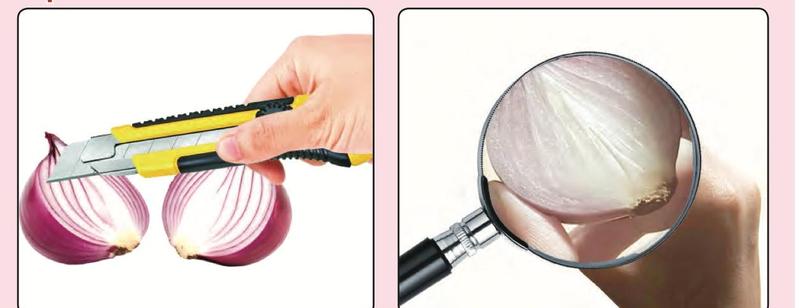
Be careful with a cutter. Your teacher must watch you.
We clean and store apparatus so that it is safe and ready to use again.
After the onion activity, what should we do with the apparatus?
Show answerHide answer
Clean it and store it in the right place.
Pictures: Science Year 1 (DLP) textbook, pp. 2, 3, 4, 5, 6, 7, 8.
Summary
| Skill | What we do | Example |
|---|---|---|
| Observing | Use our senses | Hear a clock |
| Communicating | Oral, sketch, writing, model | Draw a ladybird |
| Manipulative skills | Use, handle, sketch, clean, store | Store magnifying glasses in a drawer |