Practice paper, not an official KPM paper
Sains Tahun 3
Ujian Akhir Sesi AkademikEnd of Academic Session Test
SainsScience
Darjah 3, 1 jam / 1 hour, 40 marks
Nama / Name
Kelas / Class
Tarikh / Date
Markah / Marks: / 40
Instructions
- Jawab semua soalan.Answer all questions.
- Bahagian A: bulatkan satu jawapan yang betul.Section A: circle one correct answer.
- Bahagian B: tulis jawapan anda di ruang yang disediakan.Section B: write your answers in the spaces provided.
Answer schemes are in English (DLP).
Practice shows answers as you go. Exam times you and hides answers until you submit.
Bahagian ASection A
10 marksJawab semua soalan. Bulatkan satu jawapan yang betul.Answer all questions. Circle one correct answer.
1
Question 1
Lim melihat daun pokok sawi di kebunnya berlubang. Dia juga melihat banyak ulat pada daun itu. Apakah inferens yang paling sesuai?Lim sees holes in the leaves of the mustard plants in his garden. He also sees many caterpillars on the leaves. What is the best inference?
Show answerHide answer
C
An inference is a sensible first reason for what we observe. Holes in the leaves plus many caterpillars on them: maybe the caterpillars ate the leaves.
2
Question 2
Peraturan bilik sains yang manakah perlu dipatuhi selepas aktiviti?Which Science Room rule must we follow after an activity?
Show answerHide answer
B
After an activity we clean the apparatus and switch off all the fans and lights so we do not waste electricity. A, C and D are done before the activity.
3
Question 3
Berdasarkan Piramid Makanan Malaysia, makanan yang manakah perlu kita makan paling sedikit?Based on the Malaysian Food Pyramid, which food should we eat the least?
Show answerHide answer
D
Fat, oil, salt and sugar are at the top (smallest) level of the pyramid, so we eat them the least. Rice is at the bottom level (eat enough), vegetables at level 2 (eat plenty), fish at level 3 (eat in moderation).
4
Question 4
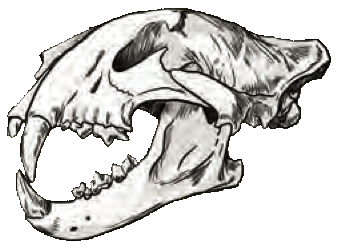
Rajah 1 menunjukkan tengkorak seekor haiwan. Haiwan manakah yang mempunyai gigi seperti ini?Diagram 1 shows the skull of an animal. Which animal has teeth like this?
Show answerHide answer
B
The skull has long, sharp canines for tearing meat, so it belongs to a carnivore such as a tiger. Goats, rabbits and cows are herbivores with strong incisors and big molars.
5
Question 5
Pak Hassan mahu menambah bilangan pokok mangganya tanpa menanam biji benih. Dia membuatkan akar tumbuh pada sebatang dahan semasa dahan itu masih pada pokok. Apakah nama teknologi ini?Pak Hassan wants more mango trees without planting seeds. He makes roots grow on a branch while the branch is still on the tree. What is this technology called?
Show answerHide answer
A
Marcottage (tut) makes roots grow on a branch that is still on the tree; then the branch is cut off and planted. It is used for mango and lime trees.
6
Question 6
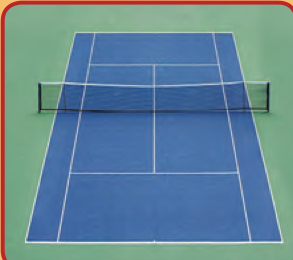
Rajah 2 menunjukkan sebuah gelanggang permainan. Unit yang manakah paling sesuai untuk mengukur luas gelanggang itu?Diagram 2 shows a games court. Which unit is the most suitable to measure the area of the court?
Show answerHide answer
C
A court is a medium-sized place, so its area is measured in square metres (m²). cm² is for small things like a book, km² for very big places like a state, and mℓ is a unit of volume.
7
Question 7
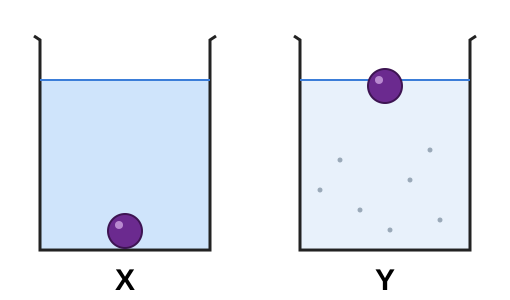
Rajah 3 menunjukkan sebiji buah anggur di dalam bikar X dan bikar Y. Mengapakah buah anggur itu timbul di dalam bikar Y?Diagram 3 shows a grape in beaker X and in beaker Y. Why does the grape float in beaker Y?
Show answerHide answer
B
A grape is more dense than plain water, so it sinks in X. Dissolving salt (or sugar) makes the water more dense, so the grape floats in Y.
8
Question 8
Aishah menitiskan ekstrak kunyit ke dalam bahan Z. Warna kuning ekstrak kunyit itu berubah menjadi merah keperangan. Apakah bahan Z?Aishah drops turmeric extract into substance Z. The yellow turmeric extract turns reddish-brown. What is substance Z?
Show answerHide answer
D
Turmeric extract changes colour (to reddish-brown) only with an alkaline substance. Sodium bicarbonate solution is alkaline. Lime juice and vinegar are acidic; drinking water is neutral.
9
Question 9
Ahli Sistem Suria yang manakah ialah bebola ais dan debu yang mempunyai ekor yang panjang dan terang?Which member of the Solar System is a ball of ice and dust with a long, bright tail?
Show answerHide answer
A
A comet is a ball of ice and dust with a long, bright tail. Asteroids are big rocks, meteoroids are small pieces of rock, and a natural satellite (like the Moon) moves around a planet.
10
Question 10
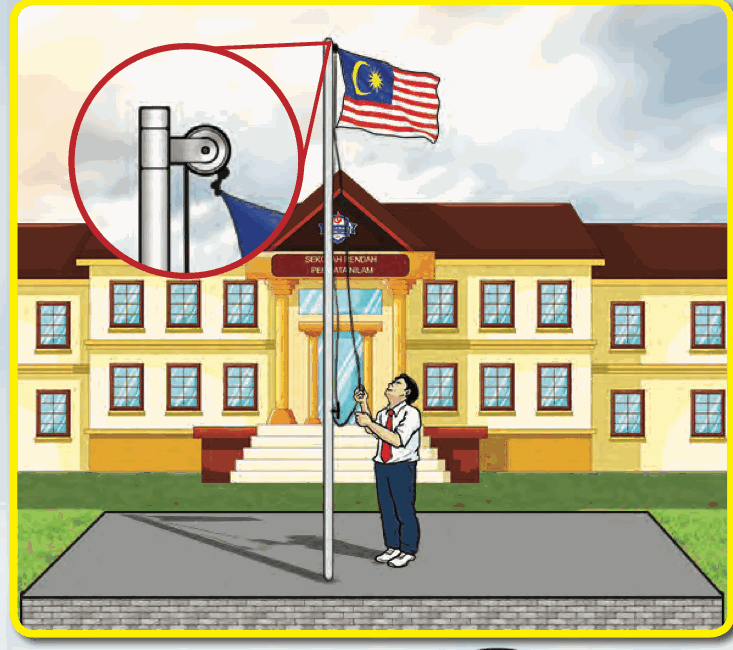
Rajah 4 menunjukkan seorang murid menaikkan Jalur Gemilang. Terdapat takal di hujung atas tiang bendera. Apakah yang berlaku apabila murid itu menarik tali ke bawah?Diagram 4 shows a pupil raising the Jalur Gemilang. There is a pulley at the top of the flagpole. What happens when the pupil pulls the rope down?
Show answerHide answer
C
With a fixed pulley, pulling the rope down makes the load on the other side go up. The fixed pulley stays in its place; only its wheel turns.
Bahagian BSection B
30 marksJawab semua soalan. Tulis jawapan anda di ruang yang disediakan.Answer all questions. Write your answers in the spaces provided.
11
Question 11
Peraturan bilik sains perlu dipatuhi sebelum, semasa dan selepas aktiviti. Pilih bilakah setiap peraturan di bawah dipatuhi.Science Room rules must be followed before, during and after an activity. Choose when each rule below is followed.
[1 mark]
(a)Meletakkan beg sekolah di luar bilik sains.Leave your school bag outside the Science Room.
Show answerHide answer
Before the activity
Bags are left outside before we start, so nobody trips over them.
[1 mark]
(b)Mengambil peralatan sains dengan cermat dan tertib.Take the science apparatus in a proper and careful way.
Show answerHide answer
During the activity
During the activity we take the apparatus carefully and wait for our turn, so nothing falls or breaks.
[1 mark]
(c)Membersihkan peralatan sains yang telah digunakan.Clean the science apparatus that has been used.
Show answerHide answer
After the activity
After the activity we clean the apparatus and put it back in its place.
12
Question 12
Rajah 5 menunjukkan urutan aliran makanan di dalam badan kita.Diagram 5 shows the flow of food in our body.

[1 mark]
(a)Namakan P.Name P.
Show answerHide answer
Tick each point you got.
[1 mark]
(b)Namakan Q.Name Q.
Show answerHide answer
Tick each point you got.
[1 mark]
(c)Apakah yang berlaku kepada makanan di Q?What happens to the food in Q?
Show answerHide answer
Nutrients are absorbed into the body.
Nutrients from digested food are absorbed in the intestine (page 52).
[1 mark]
(d)Amin makan roti sambil berlari di padang sekolah. Nyatakan satu kesan kepada Amin.Amin eats bread while he runs in the school field. State one effect on Amin.
Show answerHide answer
He may vomit, choke or get a stomach ache (page 54).
Any 1 points
Tick each point you got.
13
Question 13
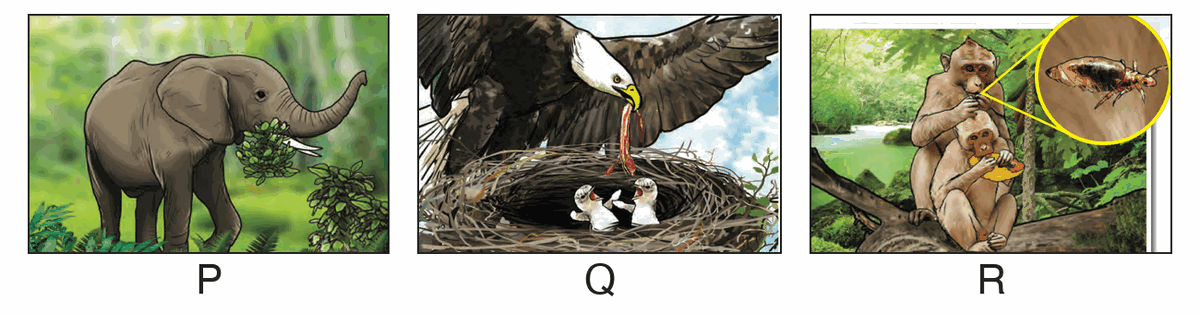
Rajah 6 menunjukkan tiga haiwan, P, Q dan R, sedang makan.Diagram 6 shows three animals, P, Q and R, eating.
[1 mark]
(a)Gajah P makan daun dan rumput sahaja. Kelaskan haiwan P.Elephant P eats only leaves and grass. Classify animal P.
Show answerHide answer
Herbivore
An animal that eats plants only is a herbivore.
[1 mark]
(b)Helang Q makan haiwan lain sahaja. Kelaskan haiwan Q.Eagle Q eats only other animals. Classify animal Q.
Show answerHide answer
Carnivore
An animal that eats other animals only is a carnivore.
[1 mark]
(c)Monyet R makan buah dan serangga. Kelaskan haiwan R.Monkey R eats fruit and insects. Classify animal R.
Show answerHide answer
Omnivore
An animal that eats both plants and other animals is an omnivore.
[1 mark]
(d)Harimau juga makan haiwan lain sahaja. Gigi yang manakah digunakan oleh harimau untuk mengoyakkan daging?A tiger also eats only other animals. Which teeth does a tiger use to tear meat?
Show answerHide answer
Canines
Carnivores have very sharp canines to tear meat (page 64).
14
Question 14
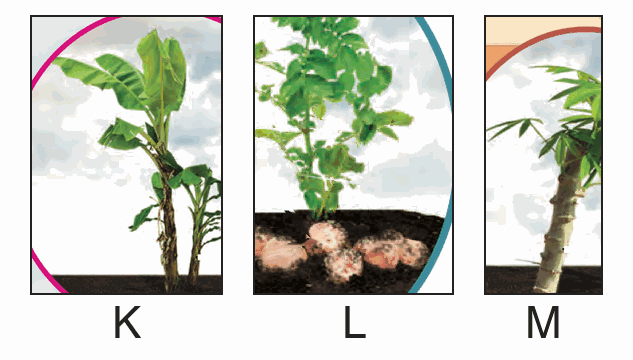
Rajah 7 menunjukkan tiga jenis tumbuhan, K, L dan M.Diagram 7 shows three kinds of plants, K, L and M.
[1 mark]
(a)Pokok pisang K membiak melalui ...Banana plant K reproduces through ...
Show answerHide answer
Suckers
Young plants (suckers) grow around the banana parent plant and become new plants (page 72).
[1 mark]
(b)Pokok kentang L membiak melalui ...Potato plant L reproduces through ...
Show answerHide answer
Underground stems
The potato is an underground stem that stores food; planted, it grows into a new plant (page 72).
[1 mark]
(c)Pokok ubi kayu M membiak melalui ...Tapioca plant M reproduces through ...
Show answerHide answer
Stem cuttings
A piece of tapioca stem pushed into the soil grows roots and leaves (page 73).
[1 mark]
(d)Mengapakah tumbuh-tumbuhan perlu sentiasa membiak? Berikan satu sebab.Why must plants keep reproducing? Give one reason.
Show answerHide answer
So that there is always food, a habitat, oxygen and wood for other living things, and the plant does not become extinct.
Any 1 points
Tick each point you got.
15
Question 15
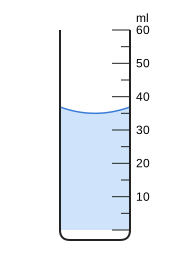
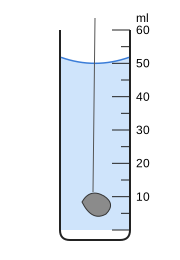
Rajah 8 menunjukkan cara Mei Ling mengukur isi padu seketul batu. Dia mengikat batu itu dengan benang dan memasukkannya perlahan-lahan ke dalam silinder penyukat.Diagram 8 shows how Mei Ling measures the volume of a stone. She ties the stone with thread and lowers it slowly into a measuring cylinder.
[1 mark]
(a)Berapakah isi padu awal air?What is the initial volume of the water?
Show answerHide answer
Tick each point you got.
[2 marks]
(b)Hitung isi padu batu itu.Calculate the volume of the stone.
Show answerHide answer
50 mℓ − 35 mℓ = 15 mℓ (= 15 cm³)
Tick each point you got.
[1 mark]
(c)Apakah nama kaedah yang digunakan oleh Mei Ling?What is the name of the method Mei Ling uses?
Show answerHide answer
Water displacement method
A stone has an irregular shape, so we use the water displacement method: the water pushed up has the same volume as the stone (page 91).
16
Question 16
Rajah 9 menunjukkan keputusan ujian kertas litmus ke atas tiga bahan, J, K dan L.Diagram 9 shows the results of testing three substances, J, K and L, with litmus paper.
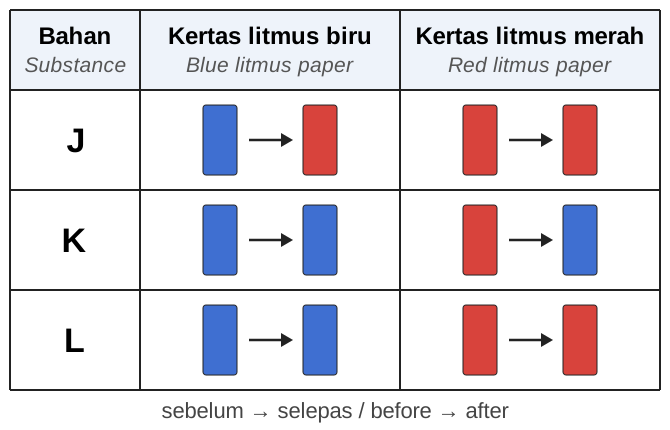
[1 mark]
(a)Apakah sifat bahan J?What is the property of substance J?
Show answerHide answer
Acidic
Only the blue litmus paper changed, to red: J is acidic.
[1 mark]
(b)Apakah sifat bahan K?What is the property of substance K?
Show answerHide answer
Alkaline
Only the red litmus paper changed, to blue: K is alkaline.
[1 mark]
(c)Apakah sifat bahan L?What is the property of substance L?
Show answerHide answer
Neutral
Neither litmus paper changed colour: L is neutral.
[1 mark]
(d)Kertas litmus Ali sudah habis. Namakan satu bahan lain yang boleh digunakan untuk menggantikan kertas litmus.Ali has no more litmus paper. Name one other thing he can use in place of litmus paper.
Show answerHide answer
Any 1 points
Tick each point you got.
17
Question 17
Rajah 10 menunjukkan Matahari dan lapan planet mengikut urutan.Diagram 10 shows the Sun and the eight planets in order.
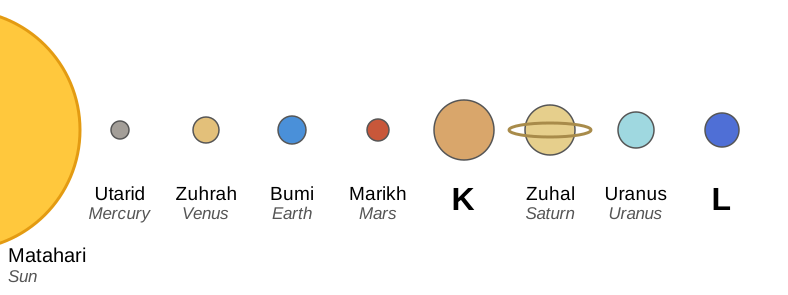
[1 mark]
(a)Namakan planet K.Name planet K.
Show answerHide answer
Tick each point you got.
[1 mark]
(b)Planet yang manakah mengambil masa lebih lama untuk mengelilingi Matahari sekali?Which planet takes a longer time to go once around the Sun?
Show answerHide answer
L
L is Neptune, the farthest planet from the Sun; it has the longest revolution time (about 165 years).
[1 mark]
(c)Terangkan jawapan anda di (b).Explain your answer in (b).
Show answerHide answer
L is farther from the Sun, so its orbit is longer and it takes more time to go around once.
Any 1 points
Tick each point you got.
18
Question 18
Rajah 11 menunjukkan takal tetap yang digunakan untuk menimba air dari perigi.Diagram 11 shows a fixed pulley used to lift water from a well.
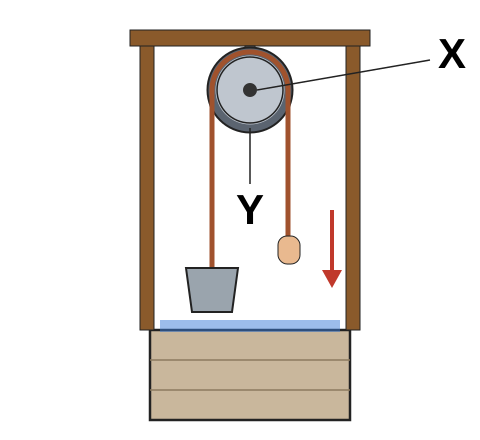
[1 mark]
(a)Namakan bahagian X.Name part X.
Show answerHide answer
Axle
The axle is the rod in the centre; the wheel turns around it.
[1 mark]
(b)Namakan bahagian Y.Name part Y.
Show answerHide answer
Groove
The groove is the channel around the edge of the wheel; the rope sits in it (page 128).
[1 mark]
(c)Pak Abu menarik tali ke bawah mengikut arah anak panah. Ke manakah baldi akan bergerak?Pak Abu pulls the rope down in the direction of the arrow. Which way will the bucket move?
Show answerHide answer
Upwards
When the rope is pulled down, it moves through the groove, the wheel turns and the load goes up.
[1 mark]
(d)Nyatakan satu kebaikan menggunakan takal untuk menimba air dari perigi.State one good thing about using a pulley to lift water from a well.
Show answerHide answer
The pulley helps Pak Abu lift the bucket easily, using less force.
Any 1 points
Tick each point you got.
Test specification (JSU)
| Unit | Remembering | Understanding | Applying | Analysing | Evaluating | Creating | Items | marks |
|---|---|---|---|---|---|---|---|---|
| 1. Scientific skills | – | 1 (1) | – | – | – | – | 1 | 1 |
| 2. Science room rules | 2 (4) | – | – | – | – | – | 2 | 4 |
| 3. Humans | 2 (5) | – | – | – | – | – | 2 | 5 |
| 4. Animals | 1 (4) | – | 1 (1) | – | – | – | 2 | 5 |
| 5. Plants | 1 (1) | 1 (4) | – | – | – | – | 2 | 5 |
| 6. Measurement | – | 1 (1) | 1 (4) | – | – | – | 2 | 5 |
| 7. Density | – | 1 (1) | – | – | – | – | 1 | 1 |
| 8. Acid and alkali | – | 1 (4) | 1 (1) | – | – | – | 2 | 5 |
| 9. The solar system | 1 (1) | 1 (3) | – | – | – | – | 2 | 4 |
| 10. Machine | – | – | 2 (5) | – | – | – | 2 | 5 |
| Total | 7 (15) | 6 (14) | 5 (11) | 0 (0) | 0 (0) | 0 (0) | 18 | 40 |
Each cell shows items (marks).