Scientific skills
What this chapter covers
- You can observe things using all five senses (1.1.1)
- You can sort things into groups by what they look like or how they feel (1.1.2)
- You can measure length with a ruler and time with a stopwatch, using the right units (1.1.3)
- You can make an inference, a sensible reason for what you see (1.1.4)
- You can predict what will happen next using clues and patterns (1.1.5)
- You can share information using tables, bar charts and drawings (1.1.6)
- You can use, handle, sketch, clean and store science apparatus and specimens correctly (1.2)
Scientists find out about the world in careful ways. These ways are called scientific skills. You use some of them every day without knowing it! In this unit you will learn two kinds: science process skills (ways of thinking) and manipulative skills (ways of using your hands).
1.1Science process skills
There are six science process skills in Year 3. Let us learn them one by one.
Observing
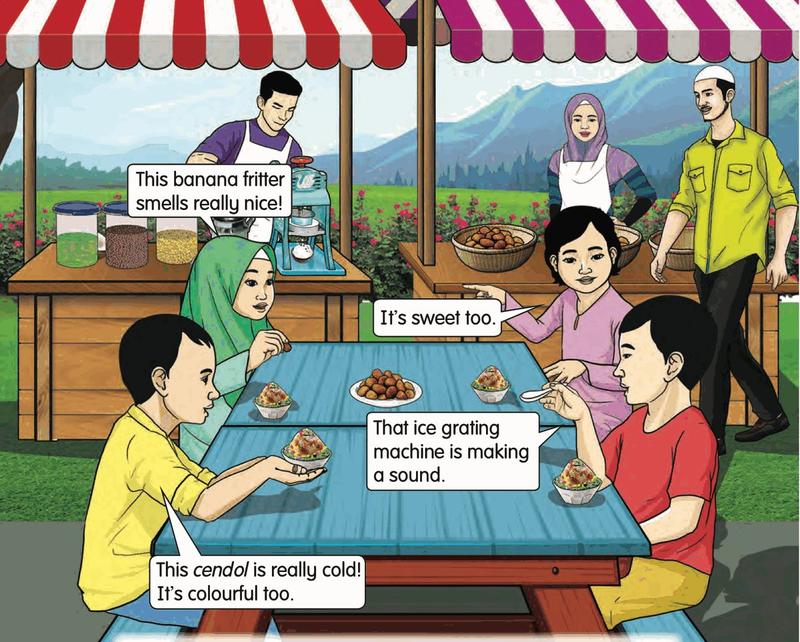
We have five senses. Each sense has its own body part.
| Sense | Body part | Example at Pak Mat's stall |
|---|---|---|
| Sight | Eyes | The cendol is green and colourful. |
| Hearing | Ears | The ice grating machine makes a loud sound. |
| Smell | Nose | The banana fritters smell nice. |
| Taste | Tongue | The cendol is sweet. |
| Touch | Skin | The cendol bowl feels cold. |
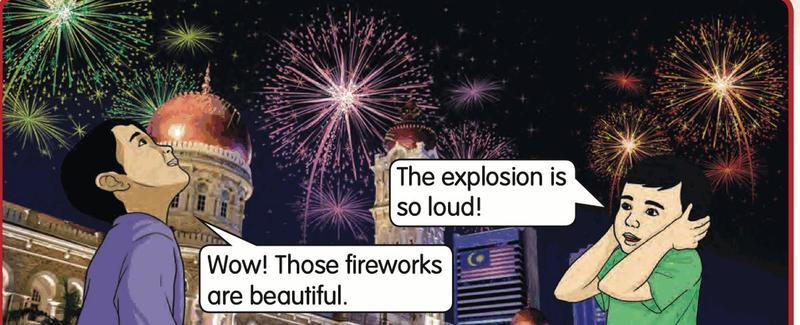
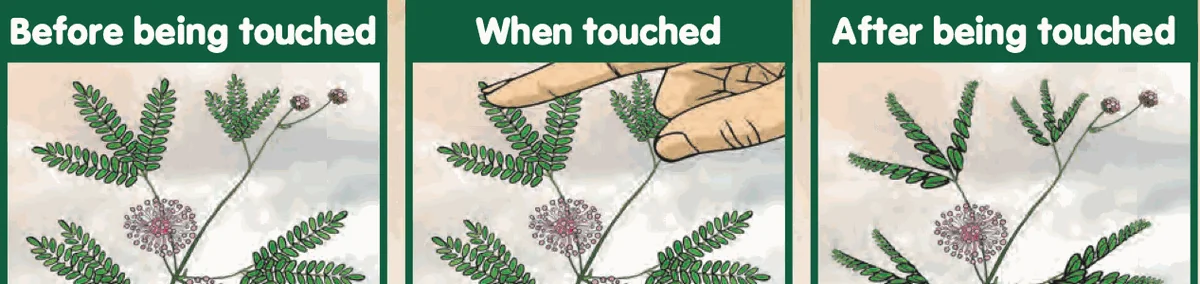
We can also observe changes. Touch the leaves of a mimosa plant (pokok semalu). The leaves fold up! After a while, they open again.
Show answerHide answer
Classifying
Langgi helps his grandfather sort stamps. They look at the shape. Some stamps are triangles. Others are rectangles.
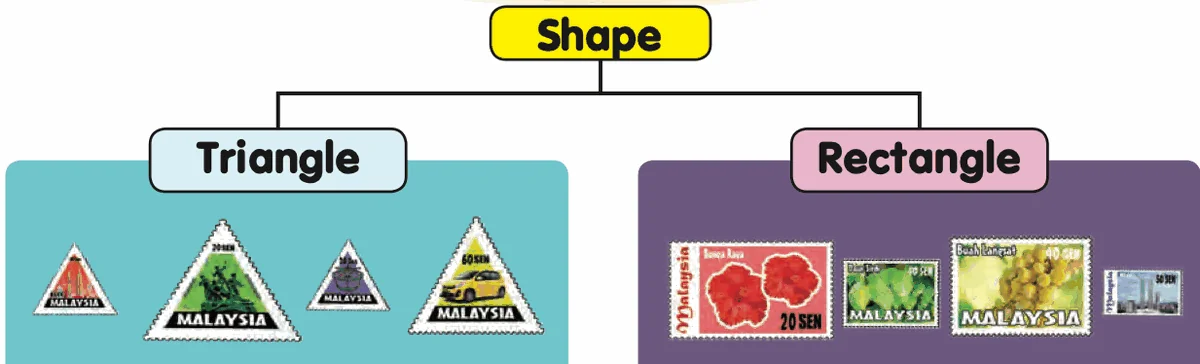
We could also sort the same stamps by colour or by size. You can sort the books in your school bag too: thick and thin, hard cover and soft cover.
Measuring and using numbers
| What we measure | Tool | Unit |
|---|---|---|
| Length (how long) | Ruler | centimetre (cm) |
| Time (how long it takes) | Stopwatch | minute (min) and second (s) |
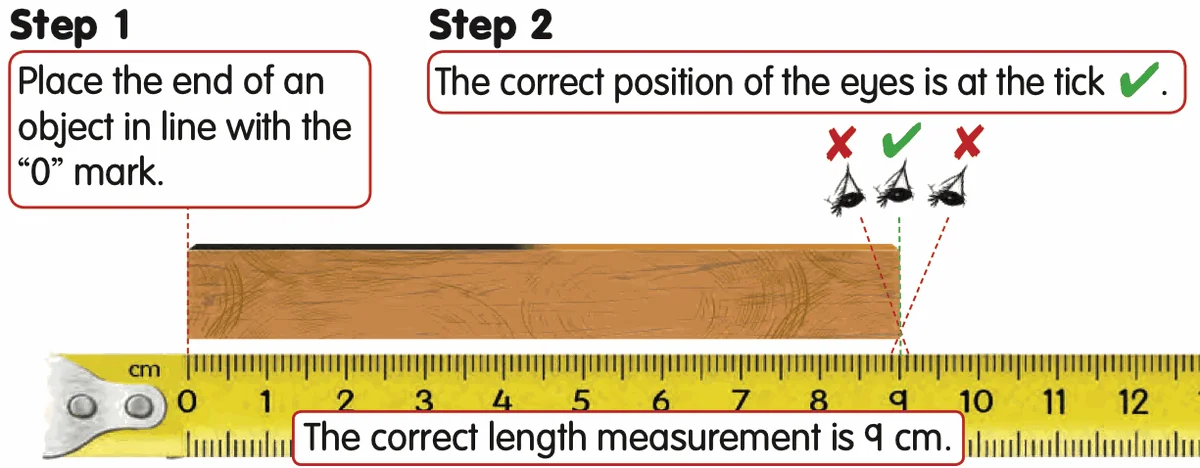
Measuring length with a ruler
- Put one end of the object in line with the "0" mark.
- Put your eye straight above the other end. Do not look from the side.
- Read the number and write the unit.

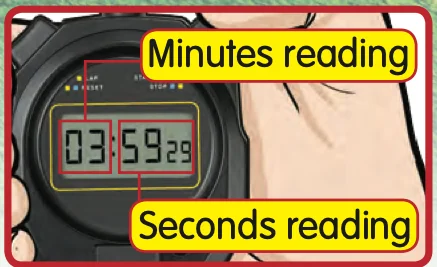
Measuring time with a digital stopwatch
- Push the reset button so the time shows zero.
- Push the start button to start.
- Push it again to stop. Then read the time.
Making inferences
| Observation | + Sensible reason | = Inference |
|---|---|---|
| The plant is green and fresh. | Plants need water to grow well. | Maybe the plant is watered every day. |
| The plant is wilted and the leaves are yellow. | The soil looks dry. | Maybe the plant did not get enough water. |
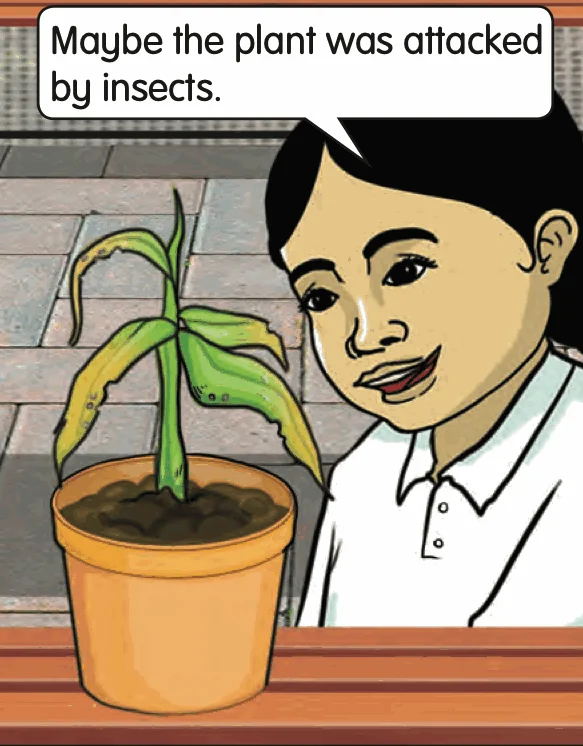
An inference may be true or false. The wilted plant could also lack fertiliser, or insects could have attacked it.
Inference: Maybe someone spilled a drink. Maybe the cleaner just mopped it.
Show answerHide answer
Predicting
Predicting is not guessing. A guess has no clues. A prediction uses clues.
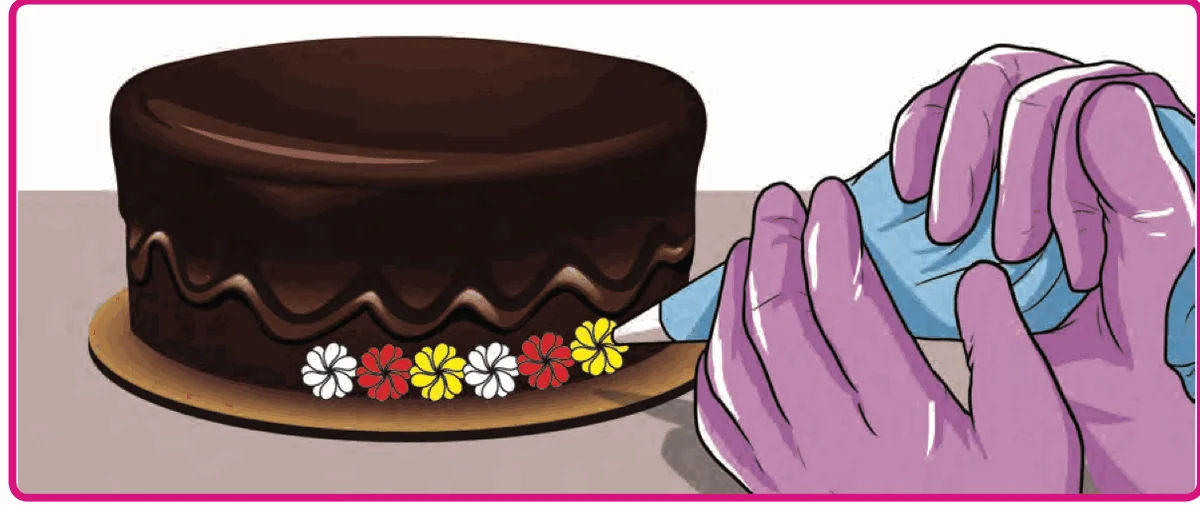
Dark clouds and lightning in the sky? We can predict that it will rain soon. We can make more than one prediction. Predictions may be true or false.
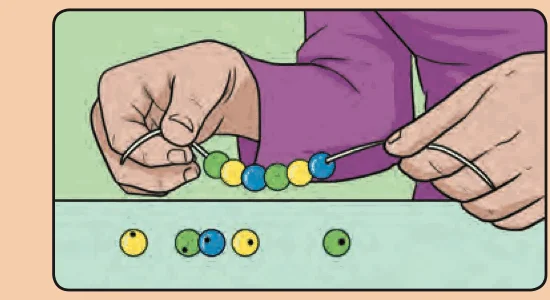
Show answerHide answer
Communicating
Year 3 pupils asked their friends about their favourite fruits. They wrote the answers in a table. Then they drew a bar chart from the table.
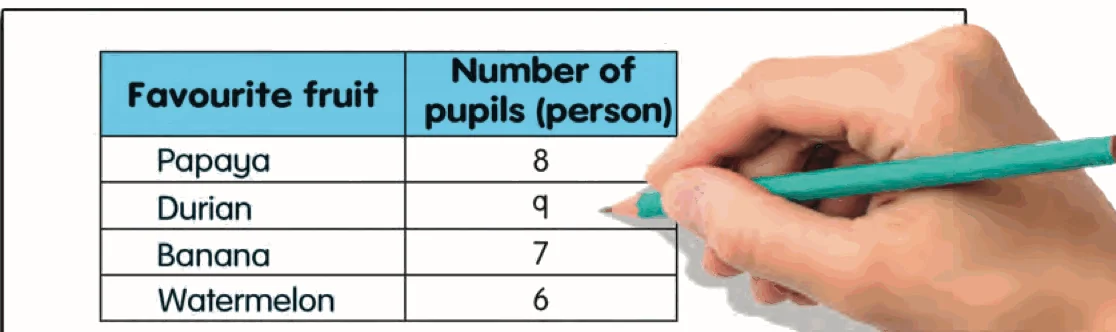
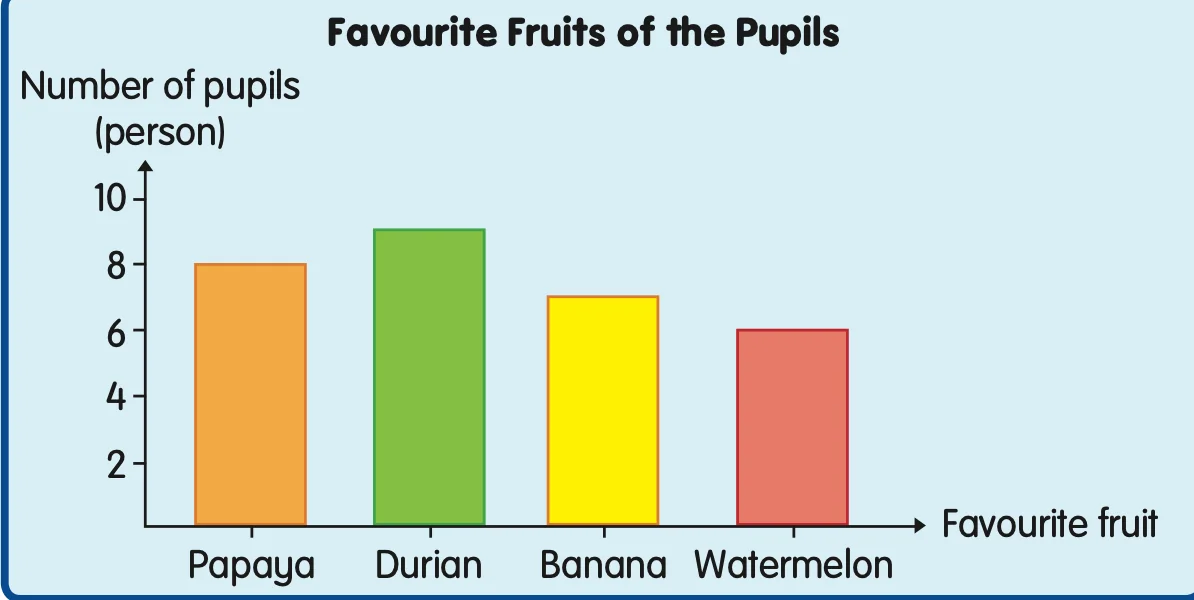
In the bar chart, each fruit gets a bar. The taller the bar, the more pupils like that fruit. Durian has the tallest bar (9 pupils), so it is the favourite. Watermelon has the shortest bar (6 pupils).
1.2Manipulative skills
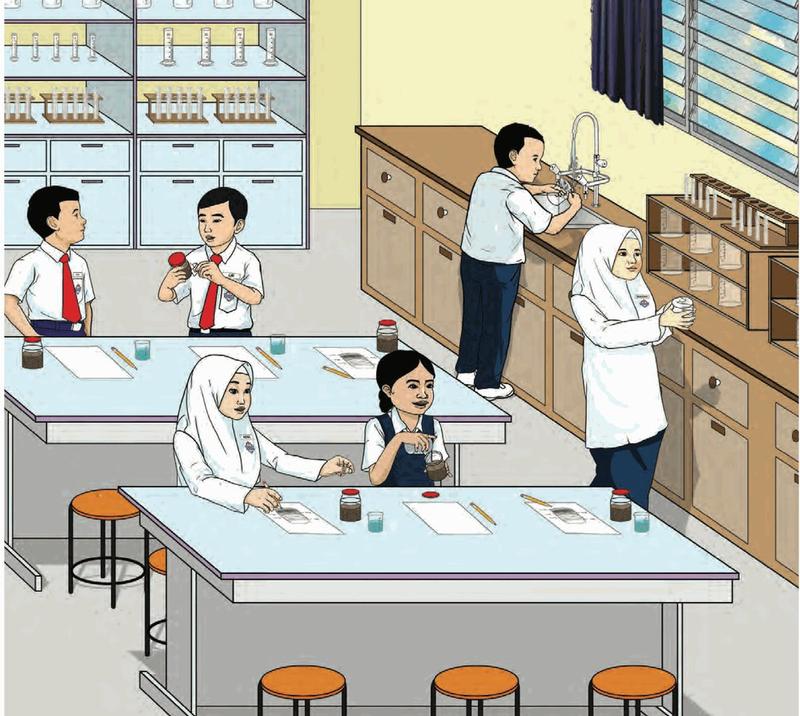
Handling apparatus and specimens
A specimen is a living thing or a sample we study, like an insect, a leaf or some soil. Kina and Lim catch a grasshopper.
- Use a net to catch an insect gently.
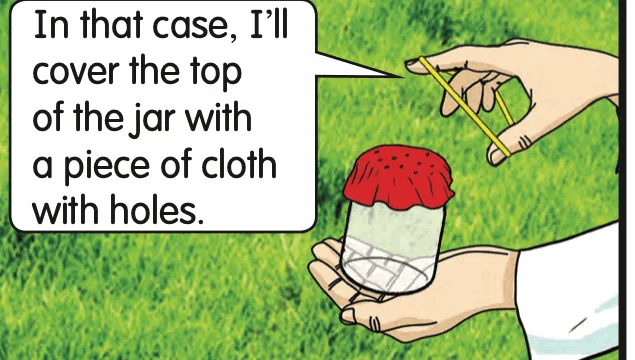
- Put it in a jar. Cover the jar with a cloth with holes so it can breathe.
- Put a leaf inside so it has food.
- Take only one. Do not take too many specimens.
- Use a hand lens to see small parts more clearly.
- Release the insect after you finish.
Sketching
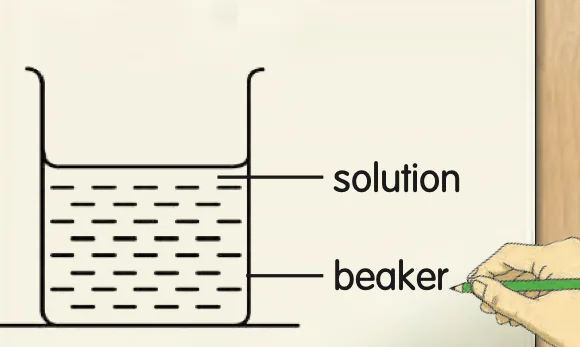
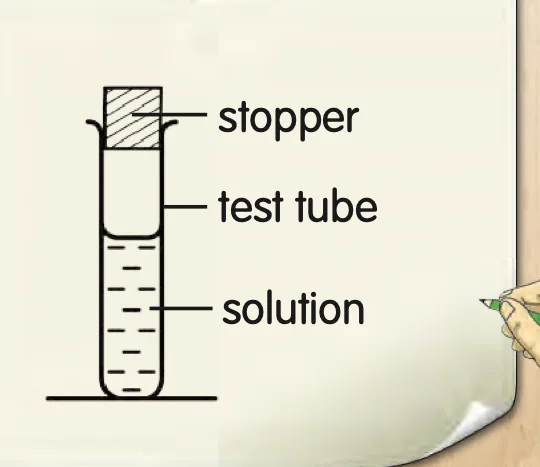
Use a ruler to draw straight lines. Then label each part with a straight line pointing to it.
Cleaning and storing apparatus
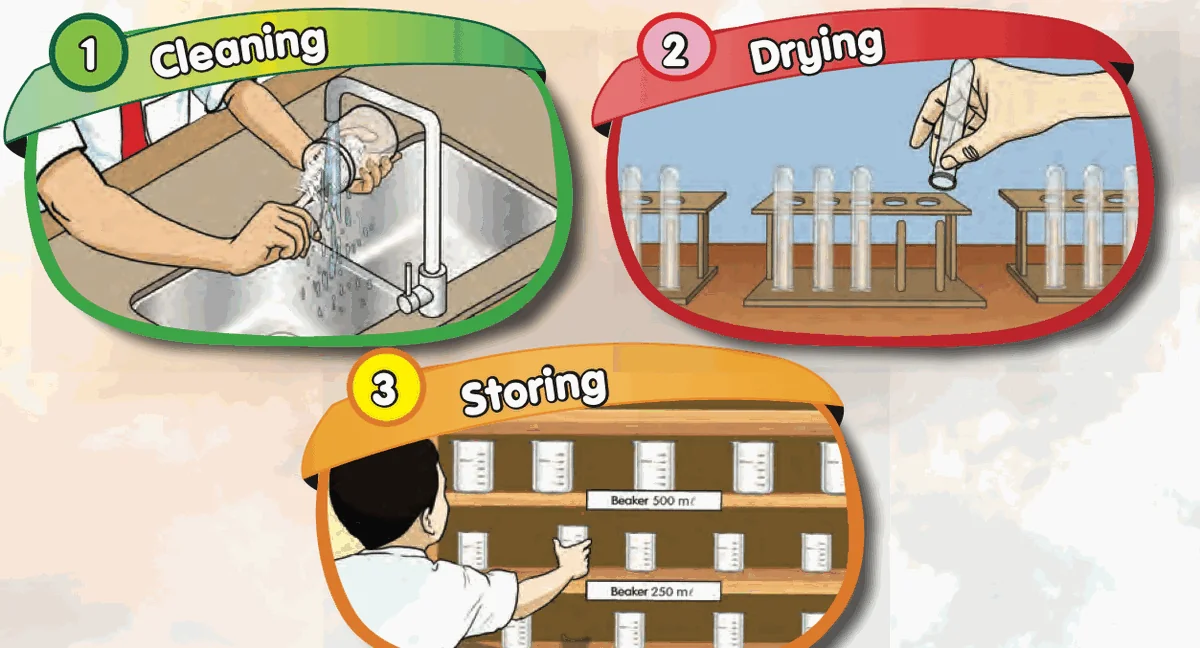
After an investigation, look after the apparatus in three steps:
Show answerHide answer
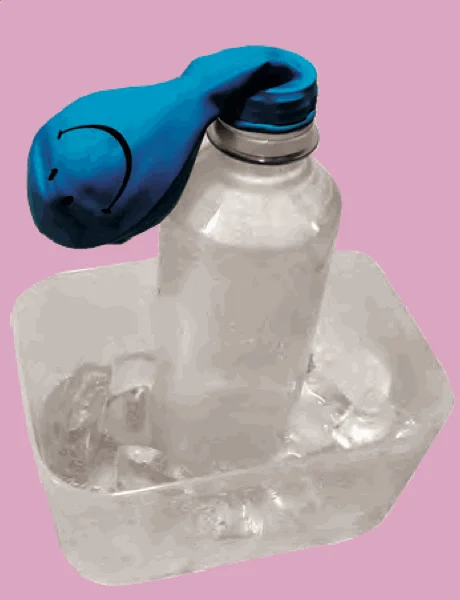
Fun at home: the magic balloon
Put a balloon on the mouth of an empty bottle. Stand the bottle in ice. The balloon goes floppy. Predict what happens in warm water. (Ask an adult to help with hot water.)
Pictures: Science Year 3 (DLP) textbook, pp. 1–22 (stall p. 1, fireworks p. 2, mimosa p. 3, stamps p. 5, stopwatch p. 6, ruler p. 7, plant p. 9, cake p. 11, fruit table and bar chart p. 13, beads p. 22, Science Room p. 15, jar p. 16, sketches pp. 18–19, cleaning p. 20, balloon p. 21). The crayon ruler is drawn for this site.
Summary
| Skill | What it means | Quick example |
|---|---|---|
| Observing | Using all five senses | The nasi lemak smells nice. |
| Classifying | Sorting by characteristics | Stamps by shape |
| Measuring | Using numbers and units | Pencil = 7 cm |
| Making inferences | A sensible first reason | Maybe the plant needs water. |
| Predicting | Saying what will happen next | Dark clouds, so it will rain. |
| Communicating | Sharing with tables, charts, pictures | Bar chart of favourite fruits |
| Manipulative skills | Using hands correctly | Handle, sketch, clean, dry and store |