Getting around
What this chapter covers
- I can name street safety words (seat belt, helmet, handlebars, pavement, zebra crossing) and follow street safety rules (6.1)
- I can give safety advice with Fasten..., Keep..., Wear..., Don't... and Look both ways (6.1)
- I can ask and answer about a trip with How are we going to get there? How long does it take? What time does the bus leave? (6.2)
- I can say how I travel with by bus / car / bike / train / plane and on foot (6.2)
- I can tell the time to the minute and work out when a journey ends (6.2)
- I can read about different means of transport (tuk-tuk, gondola, snowmobile) and make true sentences about them (6.3)
- I can ask about prices with How much is it? and buy a ticket politely (6.4)
- I can read a story and say what the characters do and why (6.5)
- I can read an extract from The Jungle Book, separate fact from opinion and summarise it (6.6)
- I can say and spell words with ow, which makes /au/ in cow, down and town and /əu/ in slow, pillow and window (6.7)
Welcome to Module 6! You will learn how to stay safe on the road, plan a trip, talk about different means of transport and buy a ticket. You will also meet Kelly and Amin in a story, and read about Mowgli in the jungle.
6.1Sing a song: Street safety
These words help us talk about being safe in the street.
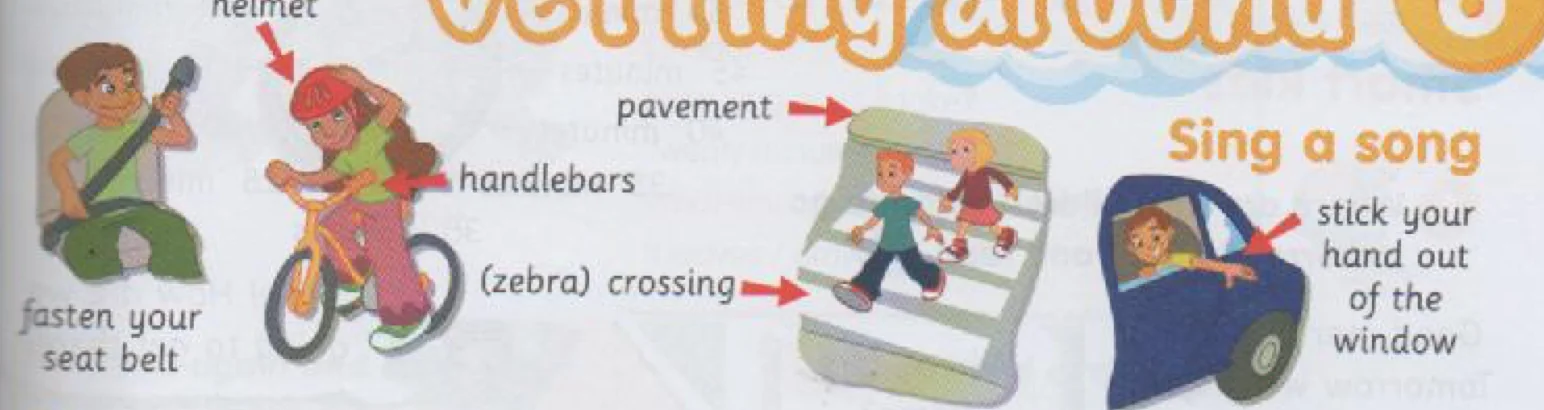
Get Smart Plus 4, p. 59.
| Word | What it is |
|---|---|
| seat belt | the strap you fasten in a car |
| helmet | the hard hat you wear on a bike |
| handlebars | the bars you hold to steer a bike |
| pavement | the path at the side of the road for people on foot |
| (zebra) crossing | the place with white stripes where you cross the road |
In the song "Street Safety", Joe and Jules say what to do in the car, on a bike and in the street.
| Where | Do | Don't |
|---|---|---|
| In the car | Fasten your seat belt. | Don't stick your head or your hand out of the window. |
| On a bike | Keep both hands on the handlebars. Wear a helmet. Watch out for cars. | Don't take your hands off the handlebars. |
| In the street | Walk on the pavement. Look both ways. Cross at the crossing. | Don't play in the street. |
Get Smart Plus 4, p. 59.
Value: Always follow street safety rules.
Show answerHide answer
6.2Smart kids: a school trip
Mrs Rama tells her class about a school trip to the zoo. Greg asks how they will get there and when.
Get Smart Plus 4, p. 60.
Telling the time to the minute
The clock face counts in fives: the long hand points to 1 for 5 minutes, 2 for 10 minutes, 3 for 15 minutes, and so on up to 12 for 60 minutes.
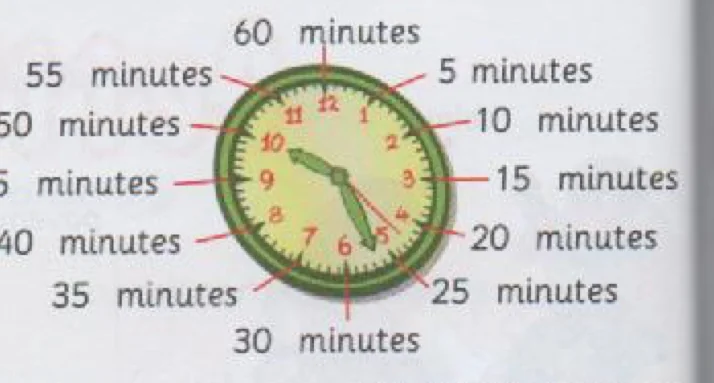
Get Smart Plus 4, p. 60.
We say a time such as 10:10 as "ten ten". The hour comes first and then the minutes.
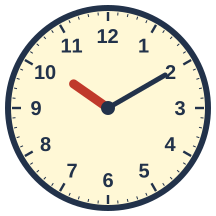 10:10the bus leaves
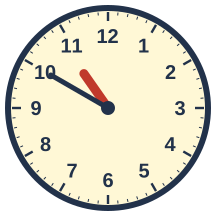 10:50the bus arrives
Pattern: talking about a trip
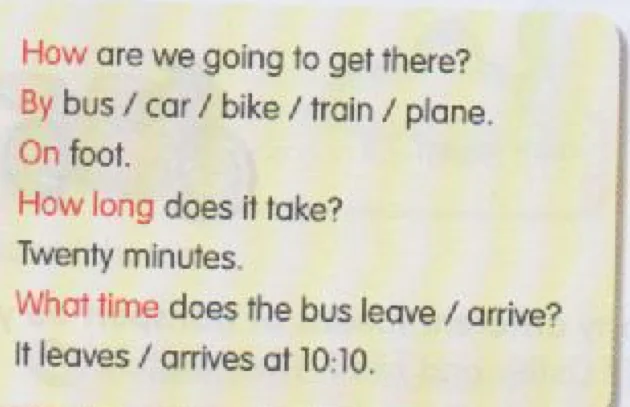
Get Smart Plus 4, p. 61.
| Question | Answer |
|---|---|
| How are we going to get there? | By bus / car / bike / train / plane. On foot. |
| How long does it take? | Twenty minutes. (It takes twenty minutes.) |
| What time does the bus leave / arrive? | It leaves / arrives at 10:10. |
| Where are you going to go? | I'm going to go to the park. |
Going to: we use am / is / are going to + verb for plans. "We're going to visit the zoo." "I'm going to go to the park."
Work out the arrival time
10:10 + 40 minutes = 10:50. It arrives at ten fifty.
Greg's notes for the trip (p. 61) use the same facts: the date, the place, how you go, when you leave and when you arrive.
Show answerHide answer
Value: Appreciate the benefits of school trips.
6.3Our world: different means of transport
A means of transport is a way to travel. This text is from Social Studies. New words: wheel, motorbike, taxi, comfortable, exciting, tourist, slow.
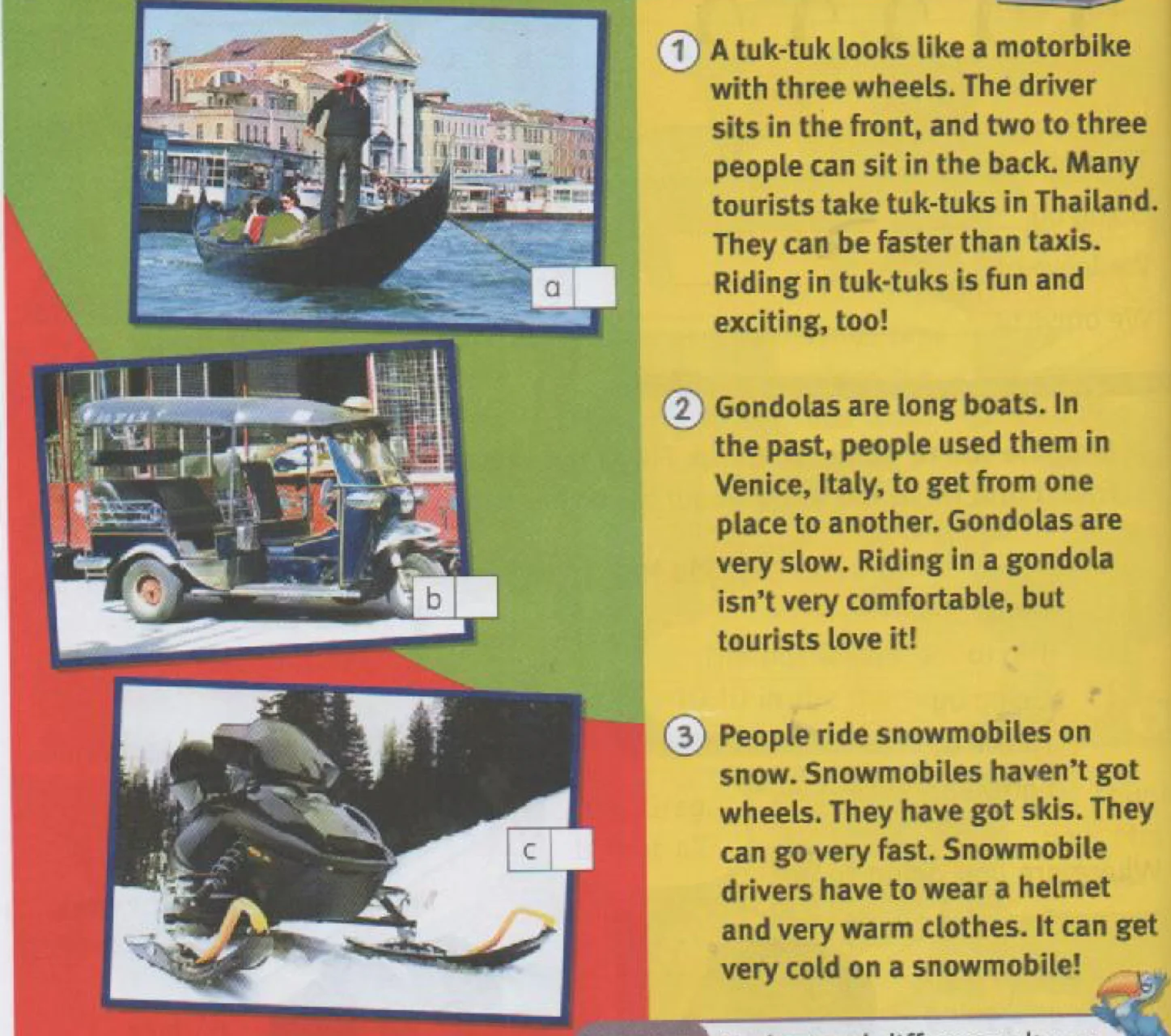
Get Smart Plus 4, p. 62.
| Transport | What it is like |
|---|---|
| tuk-tuk | looks like a motorbike with three wheels; the driver sits in the front and two or three people sit in the back; many tourists take it in Thailand; it can be faster than a taxi; fun and exciting |
| gondola | a long boat; people used it in Venice, Italy; very slow; not very comfortable, but tourists love it |
| snowmobile | goes on snow; it hasn't got wheels, it has got skis; can go very fast; drivers have to wear a helmet and very warm clothes |
To compare things, tick the facts in the table on p. 63: a tuk-tuk has got wheels, a gondola is a kind of boat, a snowmobile hasn't got wheels.
Make true sentences (p. 63)
Join three parts: a verb phrase + is + an adjective.
| Part 1 | Part 2 | Part 3 |
|---|---|---|
| Travelling by gondola | is | slow. |
| Travelling by snowmobile | is | exciting / fast. |
| Riding a bike to school | is | fun. |
Show answerHide answer
Value: Understand different cultures.
6.4Let's play: buying a ticket

Get Smart Plus 4, p. 64.
Money in Malaysia is ringgit (RM) and sen. A thing that costs little is cheap (RM5). A thing that costs a lot is expensive (RM500).
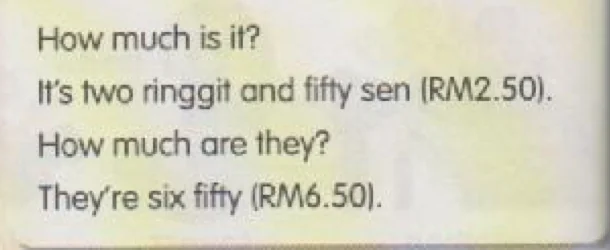
Get Smart Plus 4, p. 64.
| Question | Answer |
|---|---|
| How much is it? (one thing) | It's two ringgit and fifty sen (RM2.50). |
| How much are they? (more than one) | They're six fifty (RM6.50). |
Girl: Hello. I'd like a ticket for Cyberjaya, please.
Girl: What time does the bus leave?
Seller: The bus for Cyberjaya leaves in ten minutes.
Girl: Is the ticket expensive?
Seller: No, it isn't. It's six ringgit and fifty sen.
Girl: Wow, that's cheap. OK. One ticket, please.
Show answerHide answer
6.5Story time: The lost boy 1
Project (p. 65): choose a favourite means of transport, make it from card or recycled things, and tell the class why, for example "Tickets for the bus are cheap."
The story (pp. 66-67):
- It is the weekend. Amin is getting ready to go to the park with his friend Kelly. They are going to go by bike.
- In the garden, Kelly has got her helmet but Amin hasn't. Amin's mum brings it and reminds him to keep both hands on the handlebars and watch out for cars.
- The children ride to the park. It takes five minutes.
- They play with friends all afternoon. When it gets dark, they see something and Kelly asks, "What's that?"
Get Smart Plus 4, pp. 66-67.
Show answerHide answer
6.6Let's read: The Jungle Book
New words: panther, jungle, python, worried, shout.
Summary of the extract (p. 68): Mowgli lives in the jungle with Mother Wolf and Father Wolf. His friends are Baloo the bear and Bagheera the panther. Mowgli says he has made friends with the Monkey People, who want him to be their leader. Baloo and Bagheera are angry and tell him not to talk to them again. At night, the monkeys take Mowgli away. Mowgli calls to Chil the bird for help. Baloo and Bagheera are very worried and go to ask Kaa the python to help find him.
Story map
| Part | What happens |
|---|---|
| Where | In the jungle |
| Who | Mowgli, Baloo (bear), Bagheera (panther), the Monkey People, Chil (bird), Kaa (python) |
| Problem | The monkeys take Mowgli at night |
| Help | Chil tells Baloo and Bagheera; they go to Kaa |
Fact or opinion?
A fact is true and we can check it. An opinion is what a person thinks or feels.
| Sentence | Fact or opinion? |
|---|---|
| The monkeys jump from tree to tree. | Fact (it happens in the story) |
| Baloo and Bagheera are Mowgli's friends. | Fact |
| The monkeys are scary. | Opinion (Mowgli feels this) |
| The Monkey-People don't care about anyone. | Opinion (Baloo thinks this) |
Get Smart Plus 4, pp. 68-69.
Value: Choose your friends carefully.
Show answerHide answer
6.7Phonics: ow /au/ and /əu/
The letters ow can say two different sounds. Words with /au/ (like now): cow, down, town. Words with /əu/ (like go): slow, pillow, window.
Get Smart Plus 4, p. 124 (Phonics 6).
Show answerHide answer
Summary
| Topic | Remember |
|---|---|
| Street safety | Fasten your seat belt. Wear a helmet. Keep both hands on the handlebars. Walk on the pavement. Cross at the crossing. Don't play in the street. |
| Trips | How are we going to get there? By bus. On foot. How long does it take? What time does the bus leave? It leaves at 10:10. |
| Time | Leave time + journey time = arrive time (10:10 + 40 minutes = 10:50). |
| Transport | tuk-tuk (three wheels), gondola (slow boat), snowmobile (skis, no wheels). |
| Prices | How much is it? It's RM2.50. How much are they? They're RM6.50. cheap, expensive. |
| Polite requests | I'd like a ticket, please. Thank you. |
| Reading | Fact = true; opinion = what someone thinks. |
| Phonics | ow /au/: cow, down, town. ow /əu/: slow, pillow, window. |
| Values | Follow street safety rules. Appreciate school trips. Understand different cultures. Choose your friends carefully. |