How the Tiger Got Its Stripes
What this chapter covers
- I can predict what an animal is like from a picture, and say what animals are proud of and why (1.1, 1.3)
- I can listen to and read the story "How the Tiger Got Its Stripes" and answer questions on the details, sequence and reasons (1.2, 2.3, 2.2)
- I can use a dictionary to find synonyms, such as huge and big (2.2.4)
- I can name the setting, characters and plot of a story (3.2)
- I can compare and contrast two things with words like both, similarly, in contrast and however (3.2)
- I can write sentences using the four basic sentence patterns, and tell a short picture story (3.2.2, 4.2)
- I can join clauses with the conjunctions for, and, but, or, yet and so, and use since, although and because (5.1.4)
- I can imagine I am a character in a story and say how I would act (4.2)
Unit 8 is a folk tale about a very proud tiger. You will read the story, collect new words, learn how a story is built, compare two things and join sentences with conjunctions.
8.1Let's talk: the proud tiger
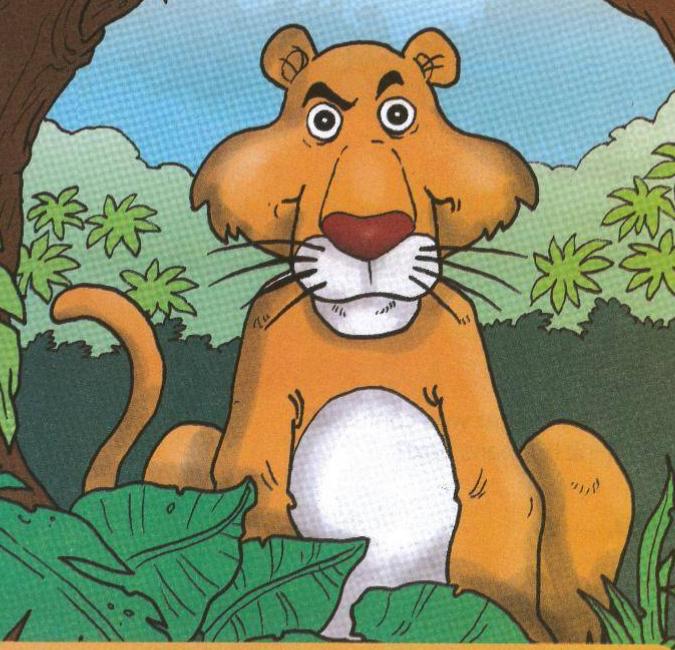
English Year 6 SK, p. 71.
When you predict, you use clues in a picture to make a sensible guess. On p. 72 and p. 73 you also talk about what animals are proud of.
| Animal | What it is proud of |
|---|---|
| The tiger | fangs, big paws, sharp claws and, most of all, its shiny coat |
| The buffalo | its huge, tough body and long, powerful horns |
| An eagle (p. 73) | sharp vision, powerful talons |
| A horse (p. 73) | powerful legs to run fast, a strong body to carry people and loads |
| A lion (p. 73) | sharp claws to catch prey and big paws to fight enemies |
English Year 6 SK, pp. 72-73.
The speaking frame on p. 73 is: "I am proud of my ______ because I can ______."
Show answerHide answer
8.2Reading: How the Tiger Got Its Stripes
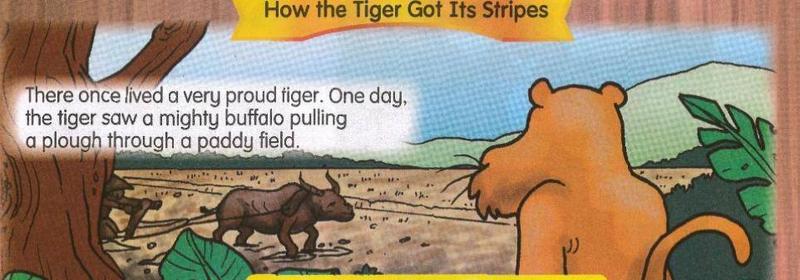
English Year 6 SK, p. 74.
Summary in order:
- A very proud tiger sees a mighty buffalo pulling a plough in a paddy field.
- The buffalo explains that man rules over the animals because of his wisdom.
- The tiger wants that wisdom so that it can control all the animals. It demands the wisdom from the man.
- The man pretends to fetch his wisdom from his house. He asks to tie the tiger to a tree to keep his goats safe, then runs home.
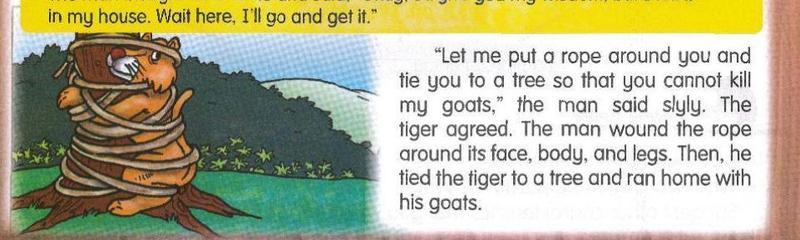
English Year 6 SK, p. 74.
- The tiger waits, then gets hungry and pulls at the rope until it breaks free. It does not notice that the rope has burnt stripes onto its coat.
- Angry, tired and thirsty, it goes to a lake. It screams when it sees its reflection.
- The animals laugh and the buffalo says it looks ugly. The tiger is embarrassed and hides deep in the jungle.
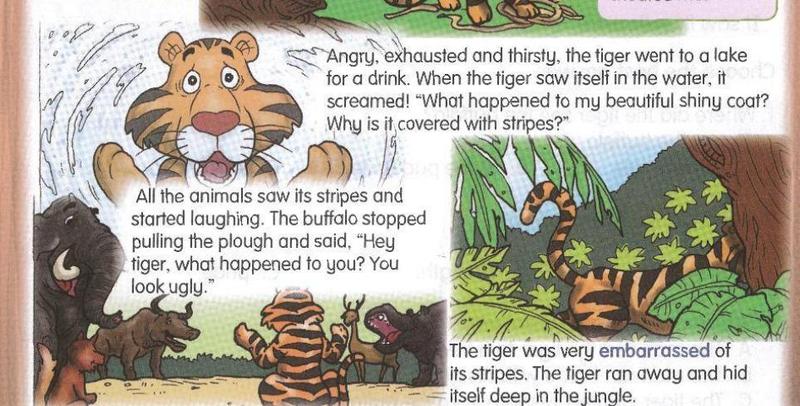
English Year 6 SK, p. 75.
Show answerHide answer
8.3Vocabulary: synonyms
The bridge map on p. 75 uses the words from the story.
| Story word | Synonyms |
|---|---|
| huge | big, enormous, giant |
| might | strength, power |
| being | creature, living thing |
| embarrassed | ashamed, shy (feeling awkward in front of others) |
| wisdom | good sense, knowledge |
English Year 6 SK, p. 75 (bridge map words).
Show answerHide answer
8.4Writing: elements of a story
| Element | What it tells you | In this story |
|---|---|---|
| Setting | the place and time | a jungle and a paddy field, many years ago |
| Characters | who is in the story (main and supporting) | main: the tiger. Supporting: the buffalo, the man, the other animals |
| Plot | beginning, middle and end | beginning: the tiger sees the buffalo. Middle: the man ties the tiger up. End: the tiger sees its stripes and hides. |
English Year 6 SK, p. 77.
Show answerHide answer
8.5Writing: compare and contrast
| Show | Words | Example |
|---|---|---|
| Similarities | Similarly, Likewise, Both | Cats are household pets. Similarly, rabbits are household pets. |
| Differences | On the other hand, However, In contrast | The apple is red. In contrast, the lemon is yellow. |
English Year 6 SK, p. 78.
The double bubble map compares a lion and a cow. In the middle are what they share (both are animals). On the outside are the differences: a lion is a carnivore (eats meat) and a cow is a herbivore (eats plants).
A lion is a carnivore. In contrast, a cow is a herbivore.
Show answerHide answer
8.6Writing: four sentence patterns
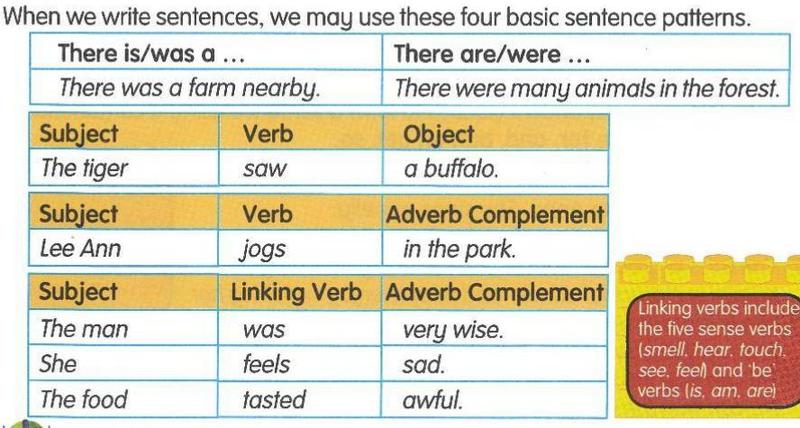
English Year 6 SK, p. 79.
| Pattern | Example |
|---|---|
| There is / was a ... There are / were ... | There was a farm nearby. There were many animals in the forest. |
| Subject + verb + object | The tiger saw a buffalo. |
| Subject + verb + adverb complement | Lee Ann jogs in the park. |
| Subject + linking verb + complement | The man was very wise. The food tasted awful. |
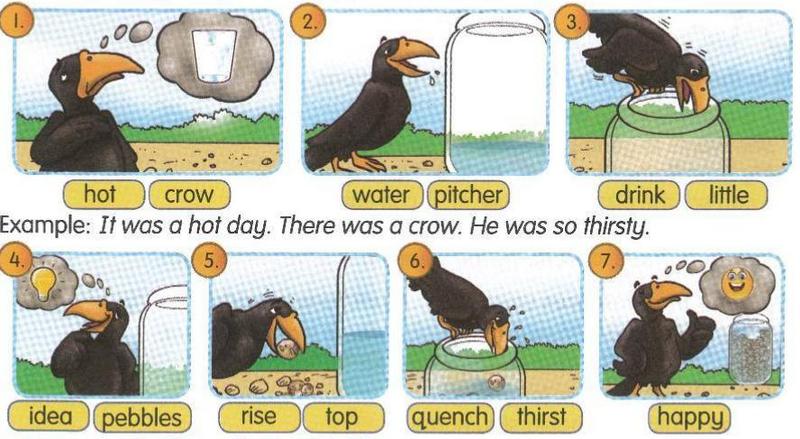
English Year 6 SK, p. 79.
Show answerHide answer
8.7Grammar: conjunctions
A conjunction joins two independent clauses. Put a comma before the conjunction.
| Conjunction | Meaning | Example |
|---|---|---|
| for | because (reason) | We love to listen to Anna, for she sings sweetly. |
| and | adds | Kamini is a graceful dancer, and people enjoy watching her. |
| but | contrast | She is a great swimmer, but she prefers golf. |
| or | choice | He can buy the book or borrow it from the library. |
| yet | surprising contrast | They did not succeed, yet they did not give up. |
| so | result | Asin felt cold, so he put on his jacket. |
English Year 6 SK, p. 80.
Since, although and because (p. 81)
| Word | Use | Example |
|---|---|---|
| since | cause and effect | Since you are very kind, I will buy you a gift. |
| although | contrast | Although the man is old, he is very strong. |
| because | reason | She is late because she missed the bus. |
English Year 6 SK, p. 81.
Show answerHide answer
8.8Language arts: Hansel and Gretel
P. 82 begins the story of Hansel and Gretel. A poor woodcutter and his second wife (the children's stepmother) agree to leave the two children in the forest because there is not enough food. Hansel drops breadcrumbs along the way, hoping to find the way home. You answer questions, compare the characters and write a dialogue.
Show answerHide answer
Summary
| Topic | Remember |
|---|---|
| Story | The tiger wanted the man's wisdom, was tied up, broke free, got stripes and hid in shame. |
| Synonyms | huge = big, might = strength, being = creature, embarrassed = ashamed. |
| Story elements | setting, characters, plot. |
| Compare and contrast | both, similarly, likewise / however, in contrast, on the other hand. |
| Sentence patterns | There was/were; S + V + O; S + V + adverb; S + linking verb + complement. |
| Conjunctions | for, and, but, or, yet, so; since, although, because. |