43 marks. Use Practice to check each answer as you go, or Exam to answer everything against the clock first.
Section A: objective questions
12 marks
Choose the best answer for each question.
1
Which statement about a virtual image is correct?
Show answerHide answer
A
A virtual image cannot be formed on a screen. A real image can be formed on a screen, like the candle image made by a pinhole.
RememberingLow8.1Textbook p. 222
2
During a storm, we see the lightning before we hear the thunder. Why?
Show answerHide answer
B
Both happen at the same time, but light (3.0 × 10⁸ m s⁻¹) travels much faster than sound, so the light reaches us first.
RememberingLow8.2Textbook p. 229
3
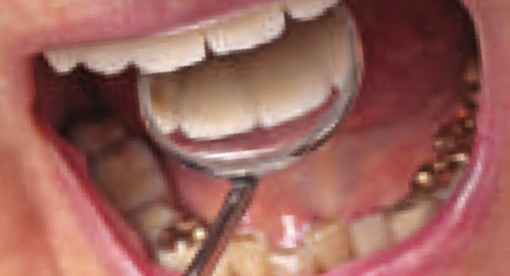
Diagram 1 shows a small mirror used by a dentist. Which type of mirror is it, and why is it used?
Diagram 1
Show answerHide answer
C
A dentist uses a concave mirror so that the image of the teeth is magnified (bigger and closer) and easier to examine.
UnderstandingMedium8.1Textbook p. 224
4
Which of the following is not a characteristic of the image formed by a plane mirror?
Show answerHide answer
D
The image in a plane mirror is the same size as the object — not bigger. It is upright, virtual and laterally inverted.
RememberingLow8.3Textbook p. 231
5
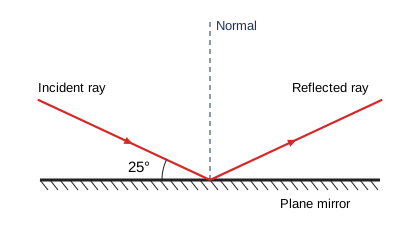
Diagram 2 shows a ray of light striking a plane mirror. The incident ray makes an angle of 25° with the mirror surface. What is the angle of reflection?
Diagram 2
Show answerHide answer
B
Angles are measured from the normal. Angle of incidence = 90° − 25° = 65°. By the Law of Reflection, angle of reflection = angle of incidence = 65°.
ApplyingMedium8.3Textbook p. 232
6
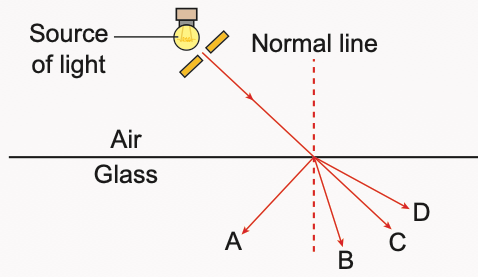
Diagram 3 shows a ray of light travelling from air into glass. Which ray, A, B, C or D, shows the correct path of the ray in the glass?
Diagram 3
Show answerHide answer
B
Glass is denser than air, so the ray bends towards the normal (ray B). C goes on almost without bending, D bends away from the normal, and A goes back to the wrong side of the normal.
UnderstandingMedium8.4Textbook p. 234
7
Which phenomenon is caused by the refraction of light?
Show answerHide answer
A
A pencil looks bent because light changes direction as it passes from water into air (refraction). Shadows come from light travelling in straight lines, mirror images from reflection, and the blue sky from scattering.
UnderstandingLow8.4Textbook p. 233
8
White light passes through a glass prism. Which colour is refracted the most?
Show answerHide answer
D
Violet light travels the slowest in glass, so it is refracted the most. Red is the fastest and is refracted the least.
RememberingLow8.5Textbook p. 236
9
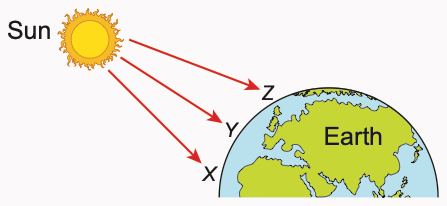
Diagram 4 shows sunlight reaching three observers, X, Y and Z, on the Earth. Which observers see the sky as reddish?
Diagram 4
Show answerHide answer
C
For X and Z the Sun is at the horizon (sunrise or sunset). Their light passes through more atmosphere, the blue light is scattered away and the red light, which is scattered least, reaches them. For Y the Sun is overhead, so the sky looks blue.
AnalysingHigh8.6Textbook p. 240
10
Which are the three primary colours of light?
Show answerHide answer
A
The primary colours of light are red, green and blue. Yellow, magenta and cyan are secondary colours.
RememberingLow8.7Textbook p. 241
11
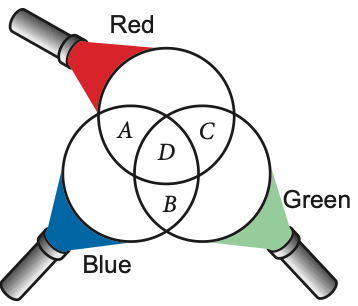
Diagram 5 shows red, green and blue torchlights shining on a white screen. What colour is seen in region A?
Diagram 5
Show answerHide answer
D
Region A is where only the red and blue lights overlap. Red + blue = magenta. (B = cyan, C = yellow, D = white.)
ApplyingMedium8.7Textbook p. 247
12
A yellow banana is placed in white light. Which colours of light does the banana reflect?
Show answerHide answer
C
A secondary-coloured object reflects its own colour and the two primary colours that make it. Yellow = red + green, so it reflects yellow, red and green and absorbs the rest.
UnderstandingMedium8.7Textbook p. 243
Section B: structured questions
31 marks
Answer all questions. Write your answers in the spaces provided.
13
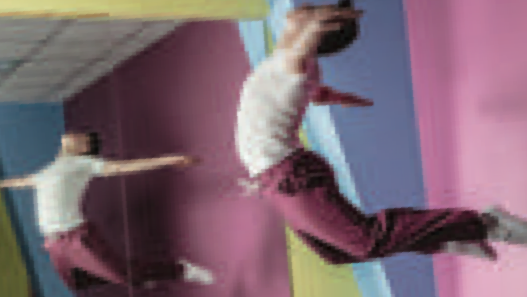
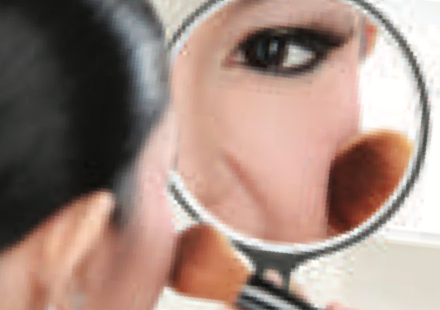
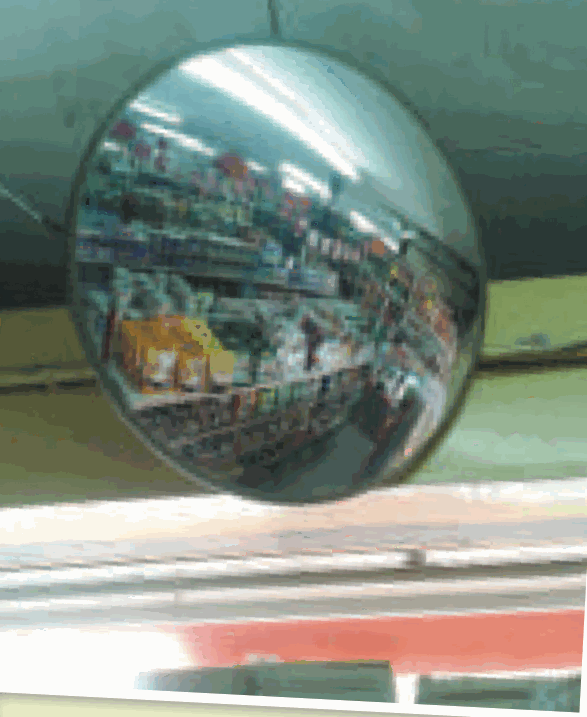
Diagram 6 shows three mirrors, P, Q and R, being used. Choose the type of mirror used in each.
[1 mark](a)Mirror P helps a dancer to correct his movements.PShow answerHide answer
Plane mirror
A plane mirror gives an image of the same size, so the dancer sees his movements exactly.
[1 mark](b)Mirror Q makes the face look bigger while applying make-up.QShow answerHide answer
Concave mirror
A concave mirror magnifies the image.
[1 mark](c)Mirror R lets a shopkeeper see every corner of the shop.RShow answerHide answer
Convex mirror
A convex mirror gives a wide view, so the whole shop can be seen.
RememberingLow8.1Textbook p. 224
14
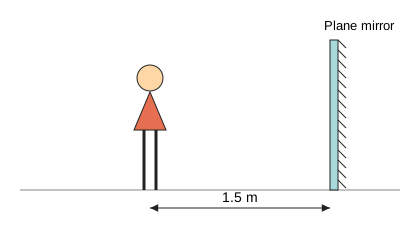
Diagram 7 shows Aina standing 1.5 m in front of a plane mirror.
Diagram 7
[1 mark](a)What is the distance of Aina's image from the mirror?
Show answerHide answer
1.5 m1
Image distance = object distance.
Tick each point you got.
[1 mark](b)What is the distance between Aina and her image?
Show answerHide answer
1.5 + 1.5 = 3.0 m1
Tick each point you got.
[1 mark](c)Aina walks 0.5 m towards the mirror. What is the new distance between Aina and her image?
Show answerHide answer
She is now 1.5 − 0.5 = 1.0 m from the mirror, so the distance is 1.0 + 1.0 = 2.0 m1
Tick each point you got.
[2 marks](d)Aina raises her right hand. Which hand does her image raise? Name this characteristic of the image.
Show answerHide answer
The left hand1
The image is laterally inverted1
Tick each point you got.
ApplyingMedium8.3Textbook p. 231
15
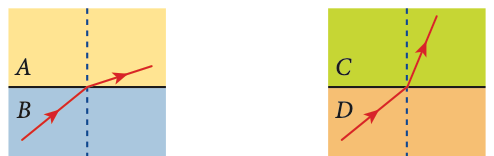
Diagram 8 shows a ray of light passing between two media in Case 1 (left) and Case 2 (right). The dotted line is the normal.
Diagram 8
[1 mark](a)In Case 1, which medium is denser?Show answerHide answer
Medium B
The ray bends away from the normal as it goes from B into A, so it is going from a denser to a less dense medium.
[1 mark](b)In Case 2, which medium is denser?Show answerHide answer
Medium C
The ray bends towards the normal as it goes from D into C, so C is denser.
[2 marks](c)Explain how you decided your answer for Case 2.
Show answerHide answer
The ray bends towards the normal when it enters medium C1
Light bends towards the normal when it moves from a less dense medium to a more dense medium1
Tick each point you got.
UnderstandingMedium8.4Textbook p. 236
16
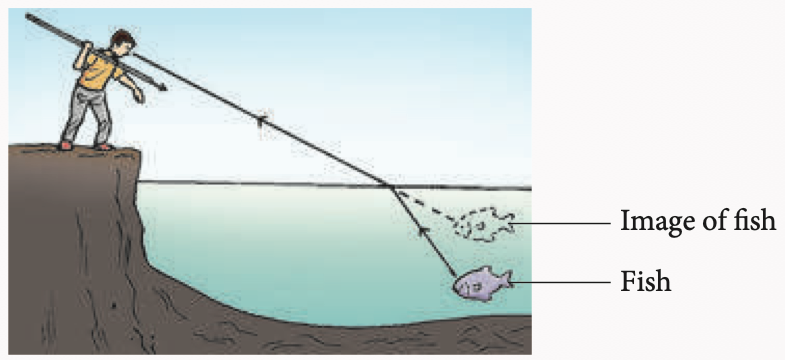
Khairul is learning to spear a fish in a river. He aims at the fish he sees but always misses. Diagram 9 shows the situation.
Diagram 9
[1 mark](a)Name the phenomenon of light that causes Khairul to miss.
Show answerHide answer
Refraction of light1
Tick each point you got.
[2 marks](b)Explain why the fish appears to be at a different position from its actual position.
Show answerHide answer
Light from the fish is refracted / bends away from the normal when it passes from water (denser) into air (less dense)1
The eye traces the light back in a straight line, so the image of the fish appears higher / shallower than the real fish1
Tick each point you got.
[1 mark](c)Suggest how Khairul should aim his spear so that he can catch the fish.
Show answerHide answer
Aim below / deeper than the image of the fish that he sees1
Tick each point you got.
AnalysingHigh8.4Textbook p. 234
17
The sky looks blue at midday but reddish at sunset.
[1 mark](a)What is meant by scattering of light?
Show answerHide answer
Light is reflected in all directions by clouds or (tiny) particles in the air1
Tick each point you got.
[2 marks](b)Explain why the sky looks blue at midday.
Show answerHide answer
Blue light is scattered the most (in all directions)1
by the tiny air particles / dust in the atmosphere, so blue light reaches our eyes from all parts of the sky1
Tick each point you got.
[1 mark](c)At sunset, which colour of light is scattered the least and reaches our eyes?Show answerHide answer
Red
At sunset the light passes through more atmosphere; blue is scattered away and red (and orange), which is scattered least, reaches our eyes.
UnderstandingMedium8.6Textbook p. 239
18
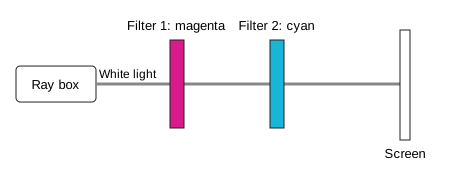
Diagram 10 shows white light from a ray box passing through a magenta filter and then a cyan filter before reaching a white screen.
Diagram 10
[1 mark](a)Name the colours of light that pass through Filter 1 (magenta).
Show answerHide answer
Red, blue (and magenta)1
Tick each point you got.
[1 mark](b)What colour is seen on the screen?
Show answerHide answer
Blue1
Tick each point you got.
[1 mark](c)Explain your answer to (b).
Show answerHide answer
The cyan filter lets only green and blue through, so it absorbs the red; only blue light passes both filters1
Tick each point you got.
[1 mark](d)Filter 2 is replaced by a green filter. What will be seen on the screen?Show answerHide answer
Black (no light)
The magenta filter lets red and blue through; the green filter absorbs both, so no light reaches the screen.
ApplyingHigh8.7Textbook p. 244
19
There is a sharp bend on the road near Danial's school. Cars coming round the bend cannot be seen. The school wants to put a mirror at the bend. Danial suggests a concave mirror because it makes the cars look bigger.
[2 marks](a)Do you agree with Danial? Give a reason.
Show answerHide answer
No (disagree) — a convex mirror should be used1
A convex mirror gives a wider view / field of vision, so drivers and pupils can see cars coming from round the corner1
Tick each point you got.
[1 mark](b)State one other place where the same type of mirror is useful, and explain why.
Show answerHide answer
Any 1 points
In a supermarket / shop — to see every corner and prevent theft1
On a bicycle or car (side mirror) — to see the wide area behind and avoid accidents1
Tick each point you got.
EvaluatingHigh8.1Textbook p. 228
20
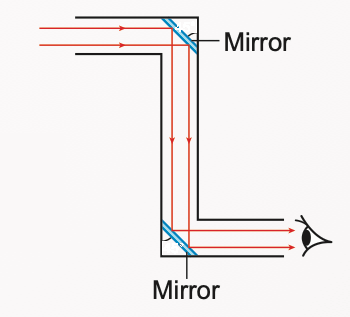
Amir wants to watch a football match on the other side of a high wall. Diagram 11 shows the path of light in an instrument that could help him.
Diagram 11
[1 mark](a)Name the instrument Amir should build.
Show answerHide answer
Periscope1
Tick each point you got.
[2 marks](b)Design the instrument: list the materials he needs and describe how the mirrors must be arranged.
Show answerHide answer
Two plane mirrors and a long box / tube (with two holes, one at the top and one at the bottom)1
Mirrors fixed at 45° and facing each other / parallel, one at the top and one at the bottom1
Tick each point you got.
[1 mark](c)Explain how light from the football field reaches Amir's eye.
Show answerHide answer
Light from the field is reflected by the top mirror down the tube, then reflected again by the bottom mirror into Amir's eye1