Science questions, unit 4
Nama / NameKelas / ClassTarikh / Date
Humans
28 marks. Use Practice to check each answer as you go, or Exam to answer everything first. Ask a grown-up to help you mark the written answers.
Section A: objective questions
10 marksChoose the best answer for each question.
1
Question 1
Which body part do we use to see?
Show answerHide answer
C
We see with our eyes. This is the sense of sight.
2
Question 2
The skin gives us which sense?
Show answerHide answer
A
We feel with our skin. This is the sense of touch.
3
Question 3
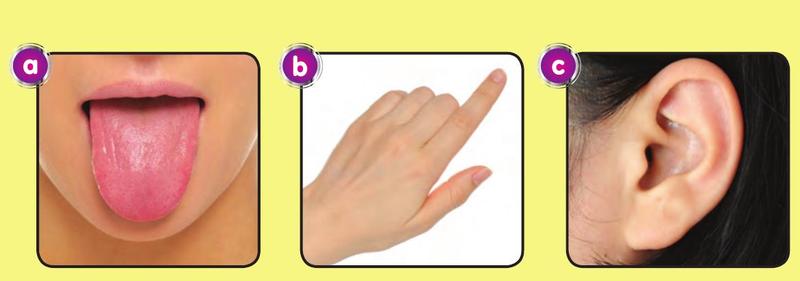
Diagram 1 shows three body parts. Which sense do we use with picture a?
Show answerHide answer
D
Picture a is the tongue. The tongue gives us the sense of taste.
4
Question 4
Which sense do we use to hear the school bell?
Show answerHide answer
B
We hear with our ears. This is the sense of hearing.
5
Question 5
Zaki says, "The lollipop tastes sweet." Which body part does he use?
Show answerHide answer
C
We taste with our tongue.
6
Question 6
How many human senses are there?
Show answerHide answer
B
There are five senses: sight, hearing, smell, taste and touch.
7
Question 7
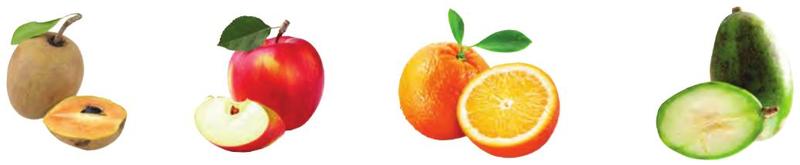
Diagram 2 shows four fruits. Which fruit is sour and oval?
Show answerHide answer
D
The ambarella is sour and oval. The orange is sour but round.
8
Question 8
Look at Diagram 2 again. Which two fruits belong to the sweet group?
Show answerHide answer
A
The apple and the sapodilla are sweet. The orange and the ambarella are sour.
9
Question 9
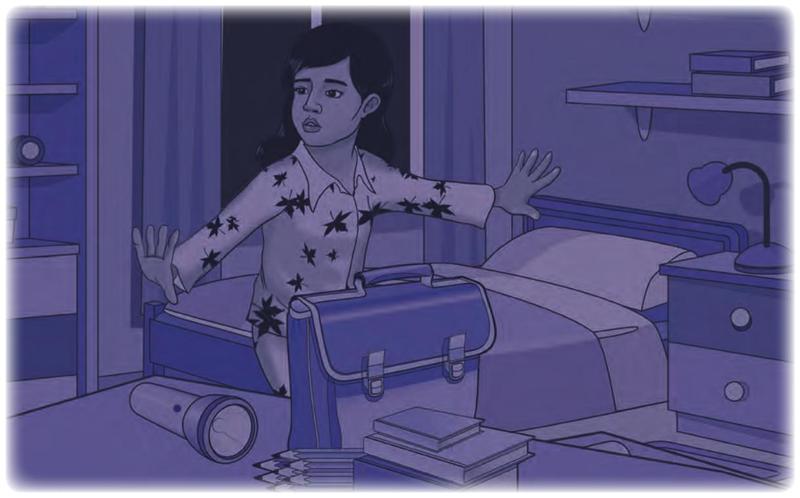
There is a power failure and it is dark. Linda finds her torch. Which sense does she use?
Show answerHide answer
C
It is dark, so she cannot see. She feels for the torch with her hands. This is touch.
10
Question 10
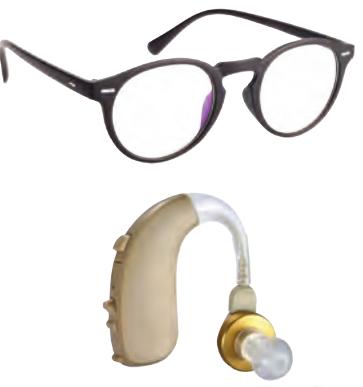
Which object helps the eyes to see clearly?
Show answerHide answer
B
Spectacles help the eyes to see clearly. A hearing aid helps the ears.
Section B: structured questions
18 marksAnswer all questions. Circle the answer or write it in the space.
11
Question 11
Diagram 3 shows three body parts.
[1 mark]
(a)Name the body part in picture a.
Show answerHide answer
Tick each point you got.
[1 mark]
(b)Name the body part in picture c.
Show answerHide answer
Tick each point you got.
[1 mark]
(c)Picture b shows the skin. Which sense does it give us?
Show answerHide answer
Touch
12
Question 12
Diagram 4 shows four fruits.
[1 mark]
(a)Which fruit is sweet and round?
Show answerHide answer
Tick each point you got.
[1 mark]
(b)Which sense do we use to find out that a fruit is sour?
Show answerHide answer
Taste
[2 marks]
(c)Write the names of the two sour fruits.
Show answerHide answer
Tick each point you got.
13
Question 13
Diagram 5 shows six objects. Dina sorts them into soft things and hard things.

[1 mark]
(a)Name one soft object.
Show answerHide answer
Tick each point you got.
[1 mark]
(b)Name one hard object.
Show answerHide answer
Tick each point you got.
[1 mark]
(c)Which sense does Dina use to tell soft from hard?
Show answerHide answer
Touch
14
Question 14
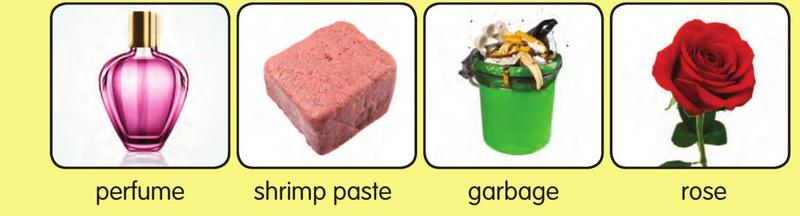
Diagram 6 shows four things. We use our nose to sort them by smell.
[1 mark]
(a)Name one thing that has a nice smell.
Show answerHide answer
Tick each point you got.
[1 mark]
(b)Name one thing that has a bad smell.
Show answerHide answer
Tick each point you got.
15
Question 15
Diagram 7 shows Linda in a dark room.
[1 mark]
(a)Which sense can Linda not use well in the dark?
Show answerHide answer
Sight
[1 mark]
(b)Which sense does she use to find the torch?
Show answerHide answer
Touch
16
Question 16
Diagram 8 shows two objects that help our senses.
[1 mark]
(a)Which object helps us to see clearly?
Show answerHide answer
Tick each point you got.
[1 mark]
(b)Which sense does the hearing aid help?
Show answerHide answer
Hearing
17
Question 17
In the dark, Linda feels a hard, long thing with a round end. She says, "It is my torch."
[1 mark]
(a)Which sense tells her the thing is hard and long?
Show answerHide answer
Touch
[1 mark]
(b)Why can Linda not tell the colour of the torch in the dark?
Show answerHide answer
Tick each point you got.