Science notes, unit 6
Plants
Textbook Science Year 1 (DLP), pages 51–60
What this chapter covers
- {'You can name the parts of a plant': 'flower, leaf, stem and root (6.1.1)'}
- You can say if a plant has flowers or no flowers, and a woody or non-woody stem (6.1.1)
- You can tell netted veins from parallel veins, and taproot from fibrous root (6.1.1)
- You can say what the flower, leaf, stem and root do for the plant (6.1.2)
- You can say how different plants have similar parts (6.1.3, 6.1.4)
Plants are all around us. In this unit you will learn the parts of a plant, what each part does, and how plants are alike and different.
6.1Parts of plants
The four parts
A plant has four main parts: the flower, the leaf, the stem and the root.
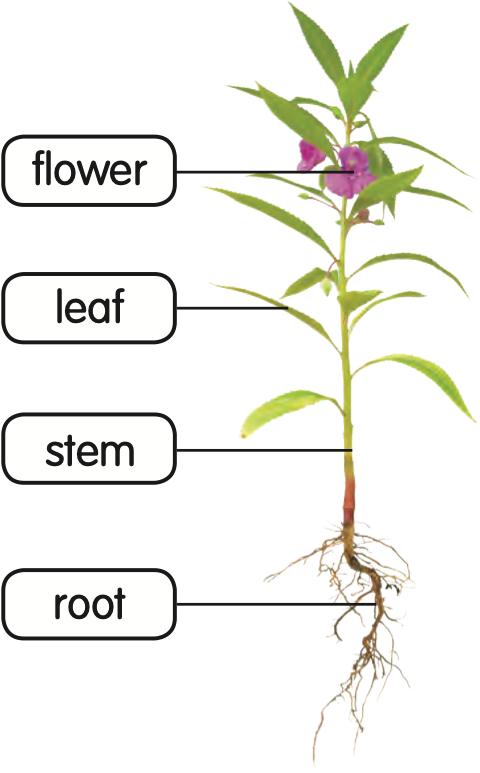
- The flower is at the top.
- The leaves grow on the stem.
- The stem holds up the plant.
- The roots are under the soil.
Which part of a plant is under the soil?
Show answerHide answer
The root.
Flowers and stems
| Part | One kind | Another kind |
|---|---|---|
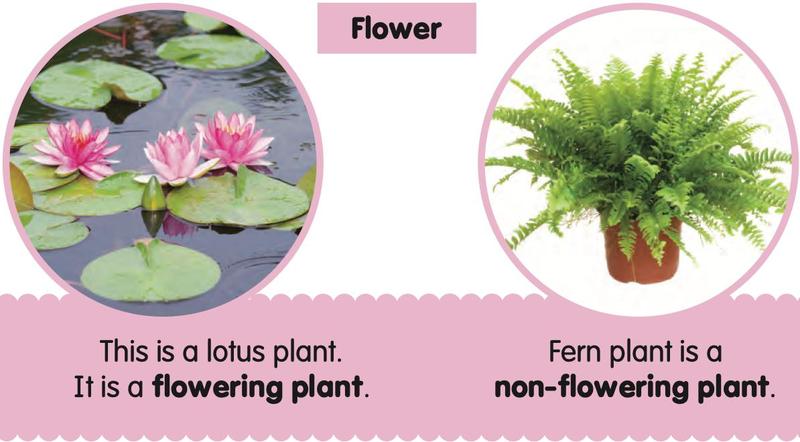
| Flower | Flowering plant, e.g. lotus | Non-flowering plant, e.g. fern |
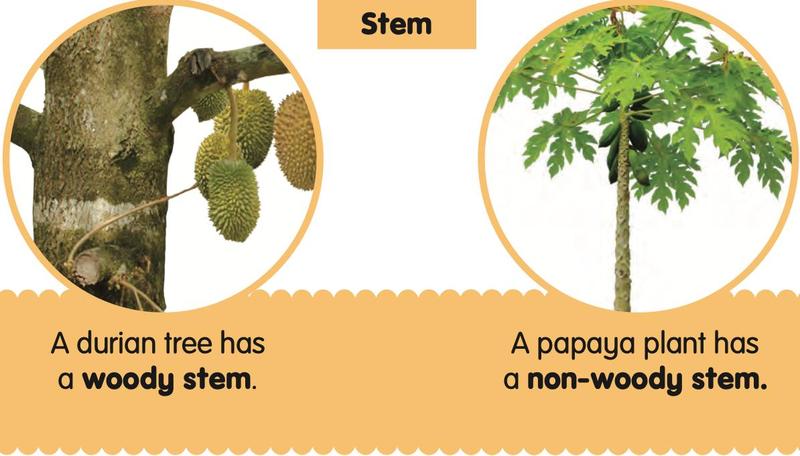
| Stem | Woody stem, e.g. durian tree | Non-woody stem, e.g. papaya plant |
Leaf veins and roots
| Part | Kind | Example |
|---|---|---|
| Leaf veins | Netted veins | Rose, hibiscus |
| Leaf veins | Parallel veins | Pandanus |
| Root | Taproot | Rose, hibiscus |
| Root | Fibrous root | Pandanus |
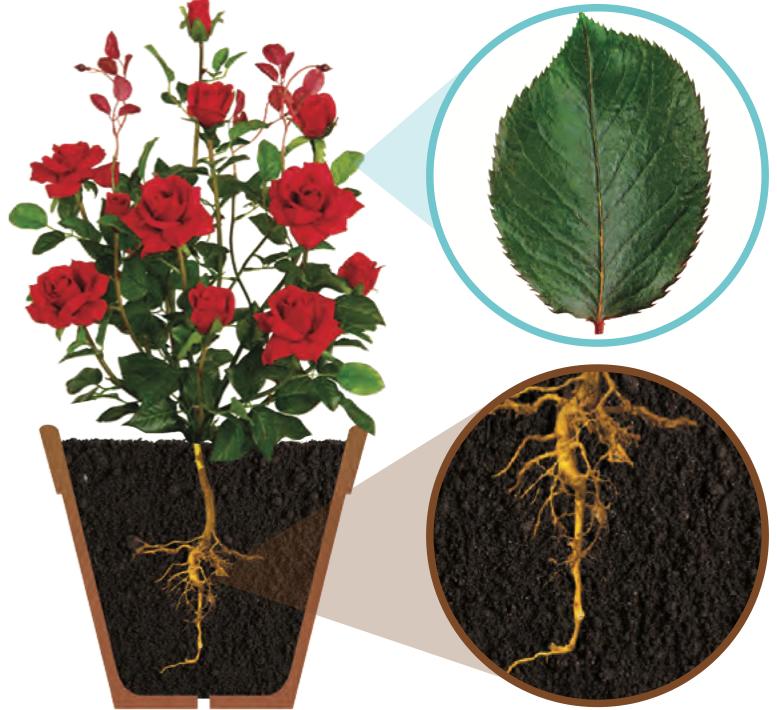
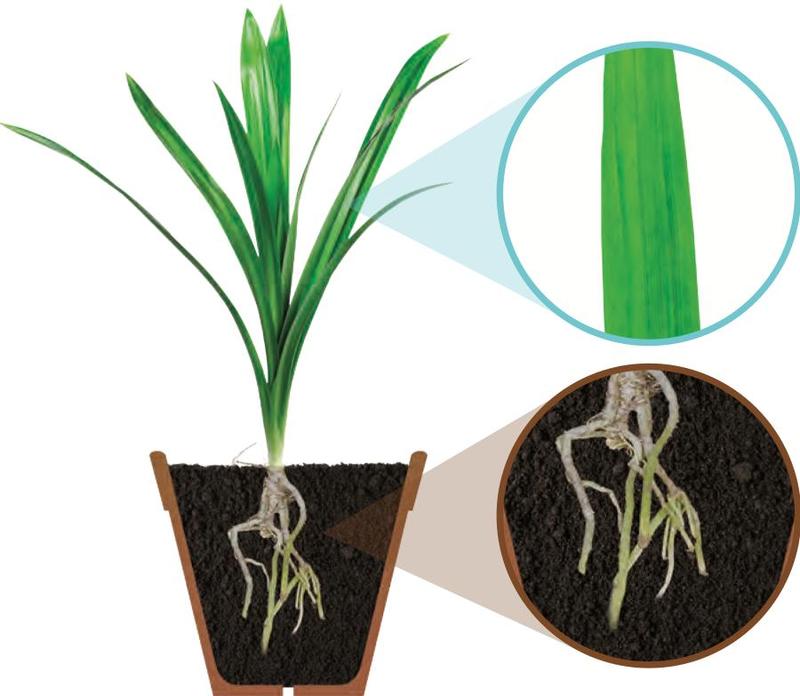
Remember: a net has lines that cross. Parallel lines run side by side.
A pandanus has parallel veins. What kind of root does it have?
Show answerHide answer
Fibrous root.
6.2What each part does
| Part | Job |
|---|---|
| Flower | Changes into fruit and seed |
| Leaf | Makes food for the plant |
| Stem | Carries food from the leaves, and water from the roots, to all parts |
| Root | Takes in water from the soil and holds the plant up |
The leaf makes the food. The stem only carries it.
Why does a tree fall over without roots?
The roots hold the tree in the soil. No roots, nothing to hold it.Which part of a plant makes food?
Show answerHide answer
The leaf.
6.3Different yet similar
Different plants can have the same kind of part. A hibiscus and a rose are both flowering plants. Both have woody stems, netted veins and taproots. A rose and a pandanus are different: the rose has netted veins and a taproot, the pandanus has parallel veins and fibrous roots. Lalang and love grass are grasses that both have flowers.
Pictures: Science Year 1 (DLP) textbook, pp. 52-54.
Summary
| Idea | Remember |
|---|---|
| Parts of a plant | Flower, leaf, stem, root |
| Flower | Flowering or non-flowering; becomes fruit and seed |
| Leaf | Netted or parallel veins; makes food |
| Stem | Woody or non-woody; carries food and water |
| Root | Taproot or fibrous; takes in water; holds plant |