Science notes, unit 9
The Earth
Textbook Science Year 1 (DLP), pages 81–88
What this chapter covers
- {'You can name eight landforms': 'mountain, hill, valley, river, lake, pond, beach and sea (9.1.1)'}
- You can say which landforms have water and which are high land (9.1.1)
- You can make a simple landforms model and explain it (9.1.1, 9.2.3)
- {'You can name three types of soil': 'garden soil, clay and sand (9.2.1)'}
- You can say what garden soil, clay and sand contain (9.2.2)
9.1Landforms
The Earth has many kinds of land and water. Each kind is a landform.
A landform is a natural shape on the Earth, such as a mountain, a river or a beach.
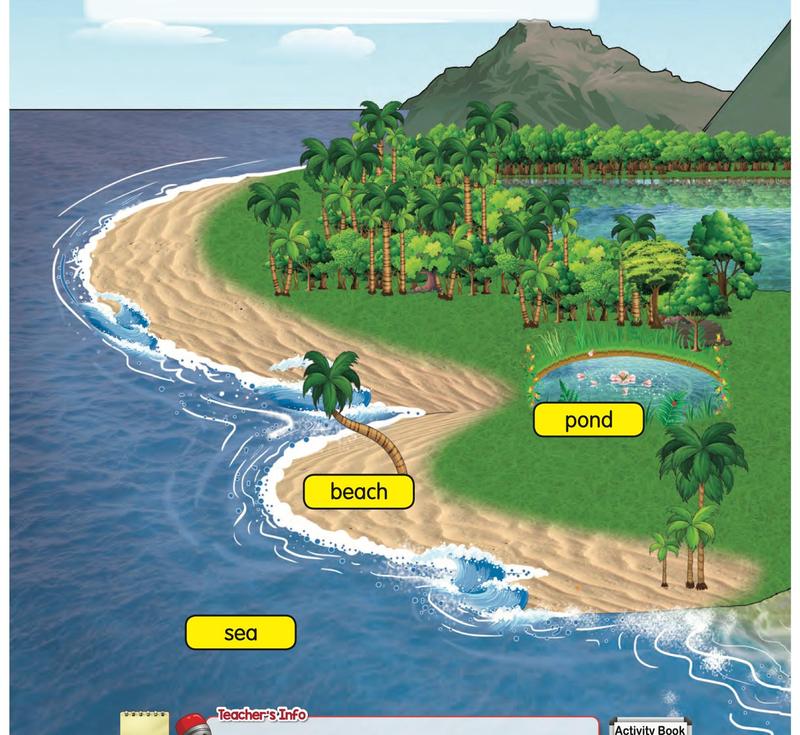
Picture: Science Year 1 (DLP) textbook, p. 82.
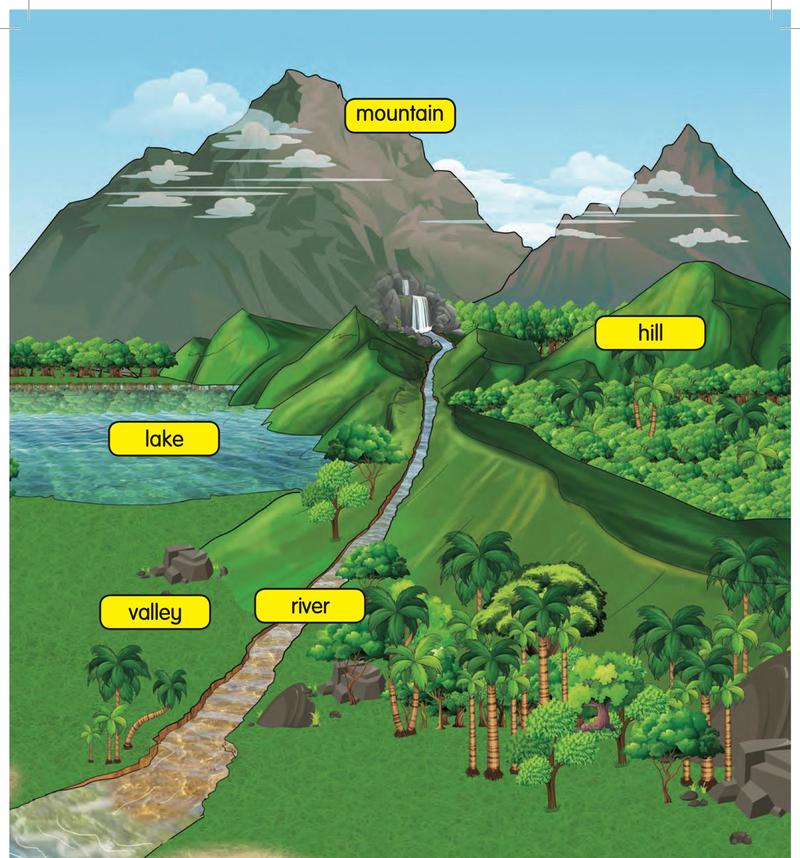
Picture: Science Year 1 (DLP) textbook, p. 83.
Eight landforms
| Landform | What it is like |
|---|---|
| Mountain | Very high land |
| Hill | High land, lower than a mountain |
| Valley | Low land beside a river or at the foot of a mountain or hill |
| River | Water that flows along the land |
| Lake | A big area of water on land |
| Pond | A small area of water on land |
| Beach | Sand beside the sea |
| Sea | A very big area of salty water |
Remember: mountain, hill, valley, river, lake, pond, beach, sea. That is eight landforms.
A lake and a pond both have water on land. A lake is big and a pond is small.
Name two landforms that have water.
Show answerHide answer
Any two of: river, lake, pond, sea.
Which landform is the sand beside the sea?
Show answerHide answer
The beach.
Make a landforms model
In a group, we can make a landforms model on a paper plate.
- Sketch where each landform goes on the paper plate.
- Make the landforms with clay.
- Make patterns of the landforms with a paper clip.
- Label every landform, then explain your model to the class.
Activity: Science Year 1 (DLP) textbook, p. 84.
9.2Soil
There are three types of soil on the surface of the Earth. They are important for life.
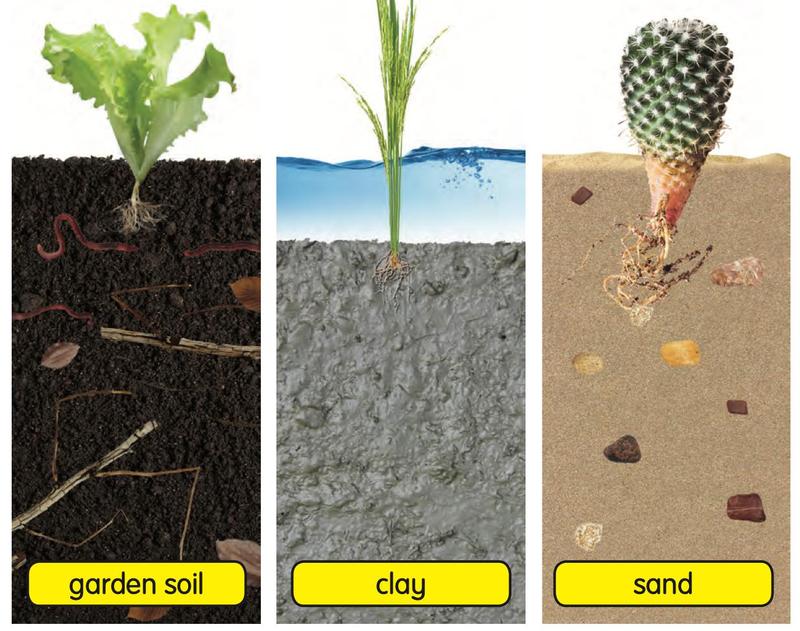
Picture: Science Year 1 (DLP) textbook, p. 85.
The three types of soil are garden soil, clay and sand.
What is in the soil?
We use a magnifying glass and a pair of forceps to look at what is in garden soil and sand.
| Soil | What it contains |
|---|---|
| Garden soil | Twigs, dry leaves, stones, sand particles and small animals |
| Clay | Very fine soil particles |
| Sand | Sand particles and small stones |
Activity: Science Year 1 (DLP) textbook, pp. 86-87.
Wash your hands after you touch soil. You may wear gloves.
Which soil contains very fine soil particles?
Show answerHide answer
Clay.
Which soil contains twigs and dry leaves?
Show answerHide answer
Garden soil.
Which tool helps us see the soil more closely?
Show answerHide answer
A magnifying glass.
Summary
| Topic | Remember |
|---|---|
| Landforms | Mountain, hill, valley, river, lake, pond, beach, sea |
| Soil types | Garden soil, clay, sand |
| Garden soil | Twigs, dry leaves, stones, sand particles, small animals |
| Clay | Very fine soil particles |
| Sand | Sand particles and small stones |