Mathematics notes, unit 4
Money
Textbook Mathematics Year 2 (DLP), Part 1 and Part 2 (one combined PDF), pages Part 2, 19–38
What this chapter covers
- You can recognise Malaysian notes and coins and say their value (4.1.1)
- You can read and write the value of money up to RM100, with ringgit and sen (4.1.2)
- You can add money up to RM100 and solve simple problems (4.2.1, 4.2.2)
- You can subtract money, find the difference and find the balance (4.3.1, 4.3.2)
- You can multiply money by 2, 3, 4, 5, 6, 7, 8, 9 and 10 (4.4.1)
- You can divide money equally by 2, 3, 4, 5, 6, 7, 8, 9 and 10 (4.5.1)
- You can plan to save and spend money wisely (4.6.1)
- You can solve money problems (4.7.1)
4.1Recognise money and its value
We use ringgit (RM) and sen to buy things. Money comes as notes and coins.


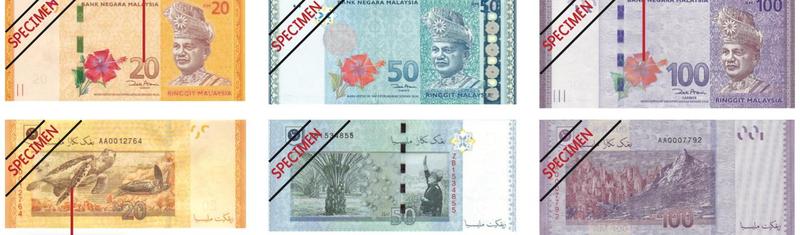
Based on the Year 2 textbook, Part 2, page 20.
RM1 = 100 sen. A decimal point separates the ringgit from the sen. In RM20.90, the 20 is ringgit and the 90 is sen.
| Money | Say it | Write it |
|---|---|---|
| RM50 | fifty ringgit | RM50 |
| RM20.90 | twenty ringgit and ninety sen | RM20.90 |
| RM37.50 | thirty-seven ringgit and fifty sen | RM37.50 |
| 5 sen | five sen | RM0.05 |
| 80 sen | eighty sen | RM0.80 |
Always write two digits after the decimal point. 5 sen is RM0.05, not RM0.5. RM0.5 would mean 50 sen.
Different ways to make the same amount

Worked example: find the value
Step 1. Add the notes first: RM20 + RM5 + RM1 = RM26.Step 2. Add the coins: 50 sen + 20 sen = 70 sen.
Step 3. Put them together: RM26.70.
What is the value of one RM10 note, two RM1 notes and one 50 sen coin?
Show answerHide answer
RM10 + RM2 = RM12, and 50 sen is RM0.50. The value is RM12.50.
4.2Adding money
We add money the way we add numbers. Keep the decimal points in a straight line, then add the sen first and the ringgit next.
Worked example: RM68.10 + 80 sen
Step 1. Write 80 sen as RM0.80.Step 2. Line up the decimal points:
| RM68.10 | |
| + | RM0.80 |
| RM68.90 |
Worked example: RM24.80 + RM56.70
Step 1. Sen: 80 + 70 = 150 sen. 150 sen is RM1.50, so write 50 sen and carry RM1 to the ringgit.Step 2. Ringgit: 24 + 56 + 1 = 81.
The total is RM81.50.
Whole ringgit can be written with .00. RM30 is the same as RM30.00. This helps you line up the numbers.
Do not forget to carry. 100 sen is RM1. If the sen add up to 100 or more, carry 1 to the ringgit column.
RM20 + RM70 = ? and RM51.30 + RM18.25 = ?
Show answerHide answer
RM20 + RM70 = RM90. RM51.30 + RM18.25 = RM69.55.
4.3Subtracting money
The difference is how much more one price is than another. The balance is the money you have left after paying.
Worked example: RM90 − RM20
RM90 − RM20 = RM70. The price difference is RM70.Worked example: RM74.80 − RM20.50
Step 1. Sen: 80 − 50 = 30 sen.Step 2. Ringgit: 74 − 20 = 54.
The answer is RM54.30.
Worked example: regrouping, RM30 − RM25.70
Step 1. Write RM30 as RM30.00. You cannot take 70 sen from 0 sen.Step 2. Take RM1 from the ringgit. RM1 = 100 sen. Now RM29 and 100 sen.
Step 3. 100 − 70 = 30 sen. 29 − 25 = 4 ringgit.
The balance is RM4.30.
Worked example: Siti pays RM100 for two toys, RM19.90 and RM57.50
Step 1. Subtract the first price: RM100 − RM19.90 = RM80.10.Step 2. Subtract the second price: RM80.10 − RM57.50 = RM22.60.
Siti's balance is RM22.60.
Check by adding. RM54.30 + RM20.50 = RM74.80. If you get back the money you started with, your answer is right.
Always take the smaller amount from the larger amount. RM25.70 − RM30 is not possible.
Ali has RM50. He buys a ruler for RM3.40. What is his balance?
Show answerHide answer
RM50 − RM3.40 = RM46.60.
4.4Multiplying money
Multiplying is the same as adding the same amount again and again.
Worked example: 3 packets of jackfruit at RM8 each
Repeated addition: RM8 + RM8 + RM8 = RM24.Multiplication: 3 × RM8 = RM24.
Worked example: 4 × RM5 and 10 × RM9
4 × RM5 = RM5 + RM5 + RM5 + RM5 = RM20.10 × RM9 = RM90 (use the 10 times table).
Use your times tables. 6 × 10 = 60, so 6 × RM10 = RM60.
What is the price of 5 pens at RM4 each?
Show answerHide answer
5 × RM4 = RM20.
4.5Dividing money
Dividing money means sharing it equally.
Worked example: RM15 shared equally among 3 persons
RM15 ÷ 3 = RM5. Each person gets RM5.Check: 3 × RM5 = RM15.
Worked example: 7 kg of durians cost RM63
RM63 ÷ 7 = RM9. The price of 1 kg is RM9. (Think: 7 × 9 = 63.)Division is the opposite of multiplication. To find RM72 ÷ 9, ask "9 times what is 72?" The answer is 8, so RM72 ÷ 9 = RM8.
RM48 is shared equally among 6 children. How much does each child get?
Show answerHide answer
RM48 ÷ 6 = RM8.
4.6Money literacy and solving problems
Zarif won RM300. He plans to save RM200 in the bank, spend RM50 on books, RM40 on toys and give RM10 to the orphans' fund. Good planning means we save some money, spend wisely and help others.
Solve a money problem in four steps
Step 1. Read and underline the important numbers.Step 2. Plan: decide whether to add, subtract, multiply or divide.
Step 3. Solve and write the number sentence.
Step 4. Check using the opposite operation.
Worked example: Ana has RM90
She buys a cake for RM54.60 and a gift for RM27.RM90 − RM54.60 − RM27 = RM8.40.
Check: RM54.60 + RM27 + RM8.40 = RM90. Correct!
Summary
- RM1 = 100 sen. The decimal point separates ringgit from sen. 5 sen is RM0.05.
- Notes: RM1, RM5, RM10, RM20, RM50, RM100. Coins: 5, 10, 20 and 50 sen.
- Add and subtract with the decimal points in line. 100 sen is regrouped to or from RM1.
- Difference = how much more. Balance = money left.
- Multiply by repeated addition or times tables. Divide to share equally.
- Solve problems: read, plan, solve, check.