Science notes, unit 1
Scientific skills
Textbook Science Year 2 (DLP), pages 1–16
What this chapter covers
- You can observe things using your five senses (1.1.1)
- You can sort things into groups by how they are the same and different (1.1.2)
- You can measure with the right tool and write the number and unit (1.1.3)
- You can share information in a table, picture, chart, graph or model (1.1.4)
- You can use, handle, sketch, clean and store science apparatus and specimens correctly (1.2)
Scientists find out about the world with scientific skills. In Year 2 you learn four science process skills (thinking skills) and some manipulative skills (hand skills).
1.1Science process skills
Observing
Observing means using our senses to find out about things around us.
| Sense | Body part | Example |
|---|---|---|
| Sight | Eyes | We see the dough rise. |
| Hearing | Ears | We hear the oven timer. |
| Smell | Nose | The bread smells nice. |
| Taste | Tongue | The bread tastes good. |
| Touch | Skin | The bread is soft and fluffy. |
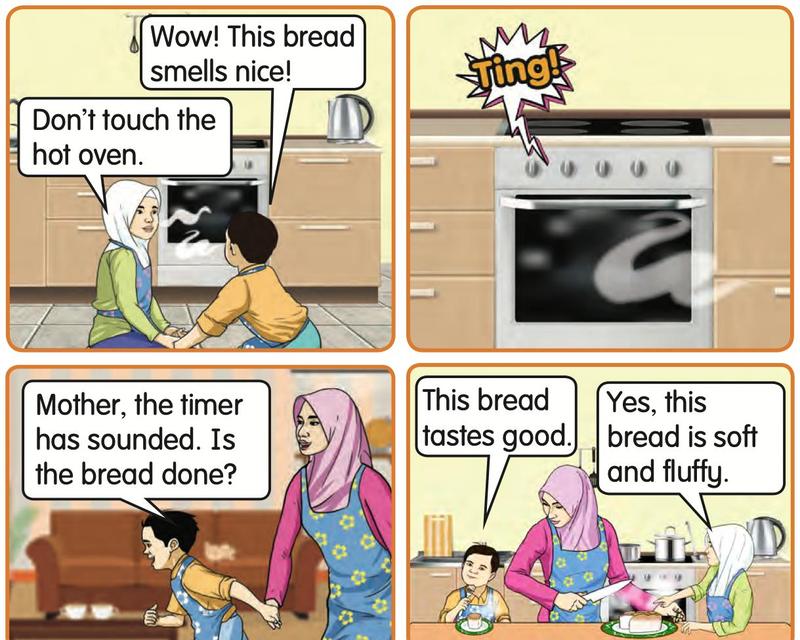
Do not touch a hot oven. Never taste or smell things in the Science Room unless your teacher says it is safe.
Which sense do you use to hear a bell?
Show answerHide answer
Hearing, with our ears.
Classifying
Classifying means putting things into groups. We look at how they are the same (similar) and how they are different.
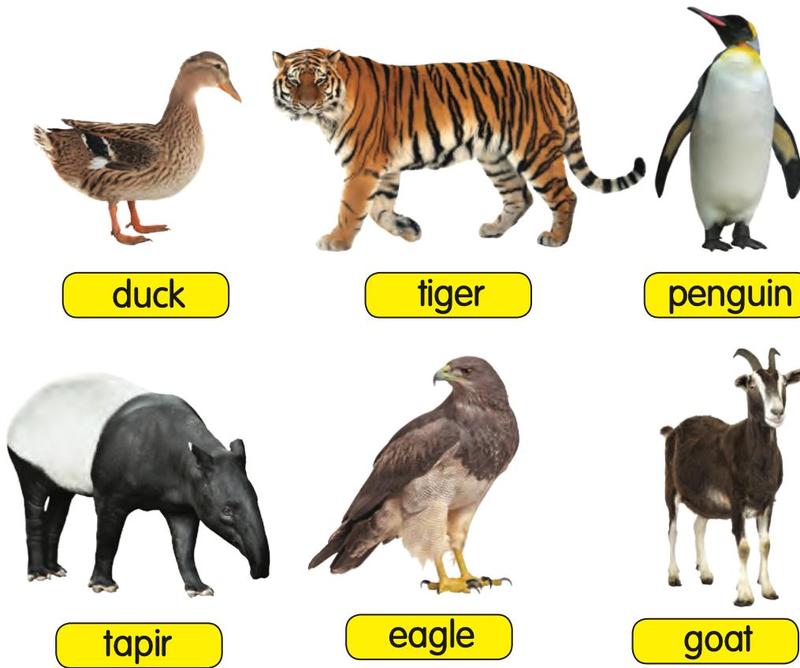
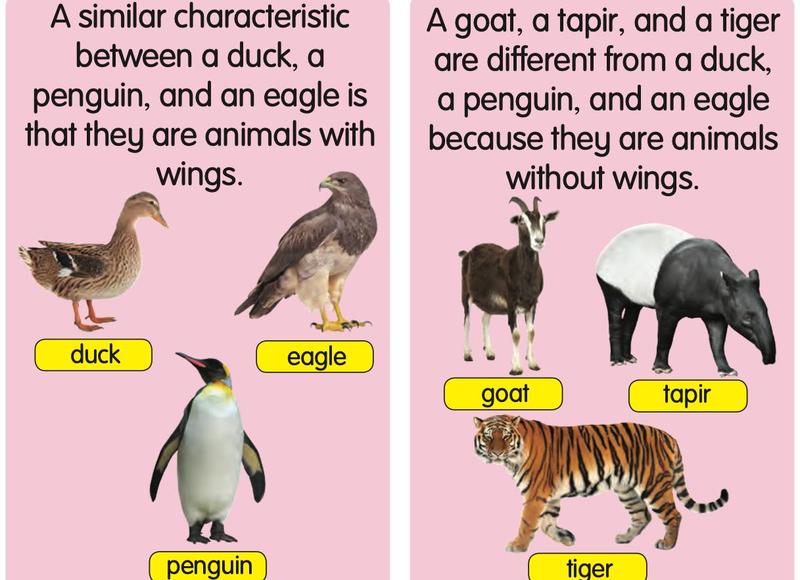
- Same: the duck, penguin and eagle all have wings.
- Different: the goat, tapir and tiger have no wings.
Did you know? You can sort the same animals in another way. Try sorting them by number of legs.
A cat and a rabbit both have fur. Is "fur" a similarity or a difference?
Show answerHide answer
A similarity. Both animals have it.
Measuring and using numbers
Measuring means using the right tool and writing a number with a unit.
| We measure | Tool | Unit |
|---|---|---|
| Length or height | Ruler, measuring tape | centimetre (cm) |
| Body weight | Weighing scale | kilogram (kg) |
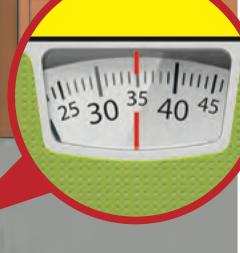

Write the unit too. "6" is not enough. Write 6 cm.
Which tool do you use to find your body weight?
Show answerHide answer
A weighing scale. The unit is kg.
Communicating
Communicating means sharing what we find out. We can write it, say it, or show it in a picture, chart, graph or model.
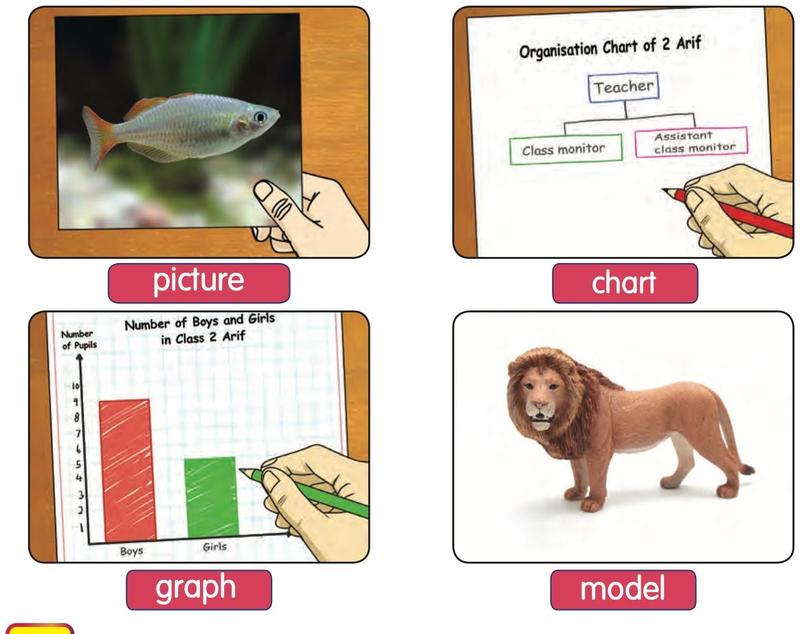
A table helps us find answers fast. A bar graph is easy to read: the taller the bar, the bigger the number.
Example: duty roster
A duty roster is a table that shows who does each job on each day. We can read it to find out who sweeps on Monday.1.2Manipulative skills
Manipulative skills are the ways we use and handle science apparatus and things correctly with our hands.
- Use apparatus and substances correctly, such as pouring a liquid.
- Handle specimens with care, such as a live snail.
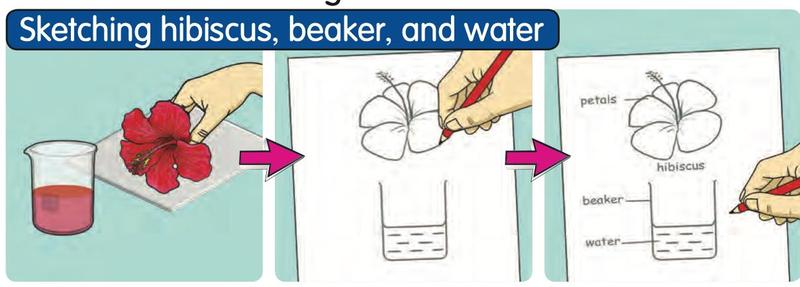
- Sketch specimens and apparatus, and label them.
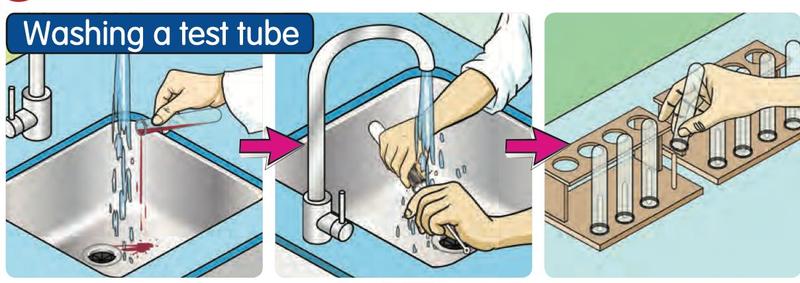
- Clean apparatus correctly.
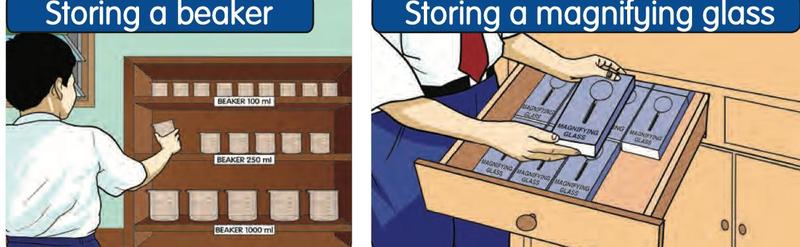
- Store apparatus safely in the right place.
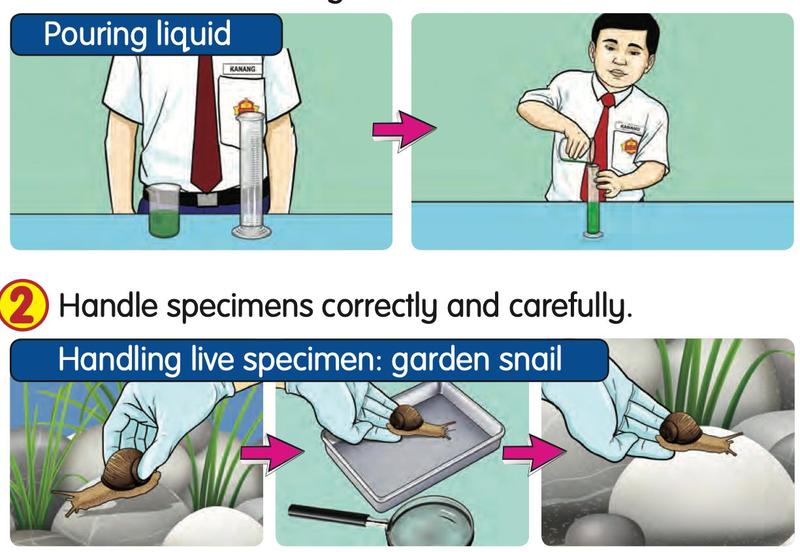
- Use a magnifying glass to see small parts.
- Wear gloves and be gentle with a live specimen.
- Release the snail back to its home after the activity.
- Wash your hands and the apparatus after the activity.
Pictures: Science Year 2 (DLP) textbook, pp. 2, 3, 5, 6, 9, 11, 12, 13. The crayon ruler is drawn for this site.
Summary
| Skill | What we do | Example |
|---|---|---|
| Observing | Use our senses | The bread smells nice. |
| Classifying | Group by same and different | With wings, without wings |
| Measuring | Use a tool, number and unit | Weight 35 kg |
| Communicating | Share information | Table, chart, graph |
| Manipulative skills | Use, handle, sketch, clean, store | Wash a test tube |