Science questions, unit 1
Nama / NameKelas / ClassTarikh / Date
Scientific skills
26 marks. Use Practice to check each answer as you go, or Exam to answer everything first. Ask a grown-up to help you mark the written answers.
Section A: objective questions
10 marksChoose the best answer for each question.
1
Question 1
Nisa sniffs the warm bread that her mother baked. Which sense does she use?
Show answerHide answer
C
We smell with our nose. This is the sense of smell.
2
Question 2
Which body part do we use to taste food?
Show answerHide answer
A
The tongue tastes food.
3
Question 3
What do we use when we are observing?
Show answerHide answer
B
Observing means using our senses: seeing, hearing, smelling, tasting and touching.
4
Question 4
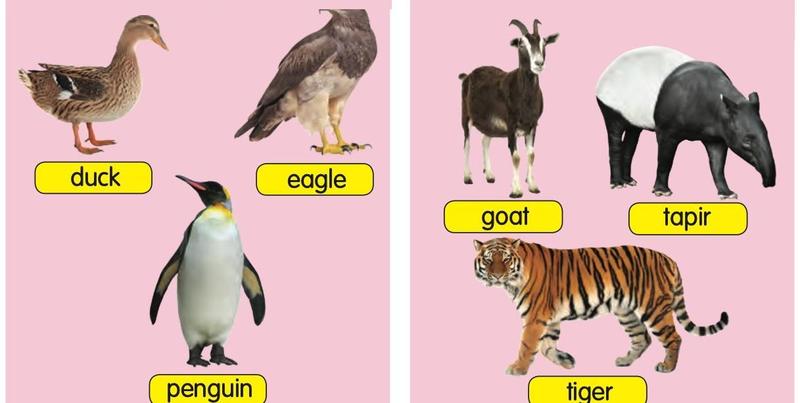
Diagram 1 shows two groups of animals. What is different about the goat, tapir and tiger?
Show answerHide answer
D
The goat, tapir and tiger are animals without wings.
5
Question 5
A penguin has wings. Which animal belongs in the same group as the penguin?
Show answerHide answer
B
The eagle has wings, like the penguin.
6
Question 6
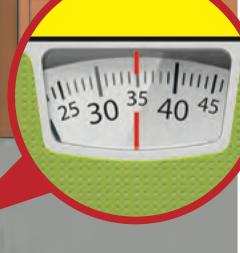
Diagram 2 shows the dial of a weighing scale. What is the body weight shown by the red pointer?
Show answerHide answer
C
The red pointer is at 35, so the weight is 35 kg.
7
Question 7
Which tool do we use to measure body weight?
Show answerHide answer
B
A weighing scale measures weight. A ruler measures length.
8
Question 8
Diagram 3 shows a pencil on a ruler. How long is the pencil?

Show answerHide answer
D
The pencil starts at 0 and ends at 8. It is 8 cm long.
9
Question 9
Which one is a way of communicating information?
Show answerHide answer
A
We can share information in a picture, chart, graph or model. A graph is a way to communicate.
10
Question 10
Why should we release the garden snail after the activity?
Show answerHide answer
C
A snail is a living thing. We must be kind to it and put it back in its home.
Section B: structured questions
16 marksAnswer all questions. Circle the answer or write it in the space.
11
Question 11
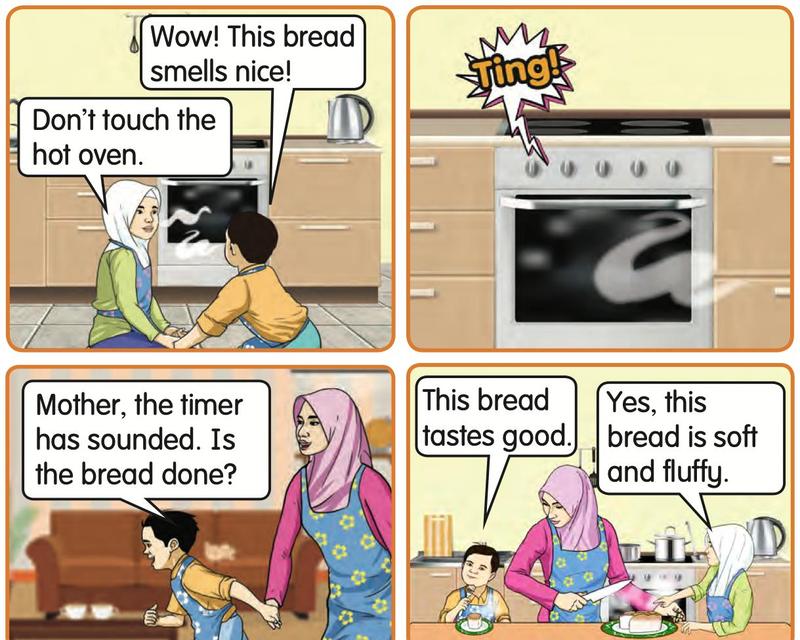
Diagram 4 shows Nisa and her brother with the bread. Which sense does each one use? Choose from: sight, hearing, smell, taste, touch.
[1 mark]
(a)"Mmm! What a yummy scent from the oven!"
Show answerHide answer
Smell
[1 mark]
(b)"Mother, the timer has sounded."
Show answerHide answer
Hearing
[1 mark]
(c)"This bread is soft and fluffy."
Show answerHide answer
Touch
We feel soft and hard things with our skin.
12
Question 12
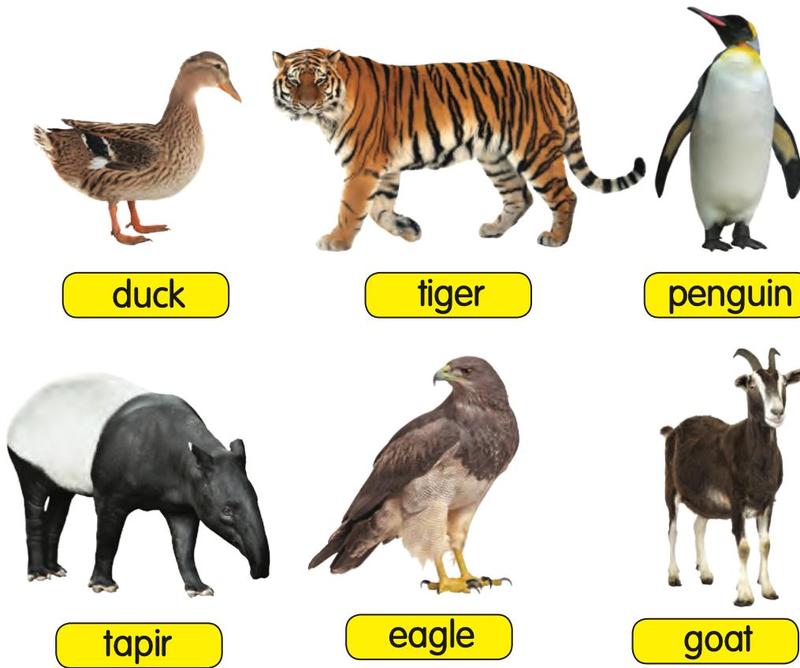
Diagram 5 shows six animals.
[1 mark]
(a)Name one animal that has wings.
Show answerHide answer
Tick each point you got.
[1 mark]
(b)Name one animal that has no wings.
Show answerHide answer
Tick each point you got.
[1 mark]
(c)Which group does the tiger belong to?
Show answerHide answer
Without wings
13
Question 13
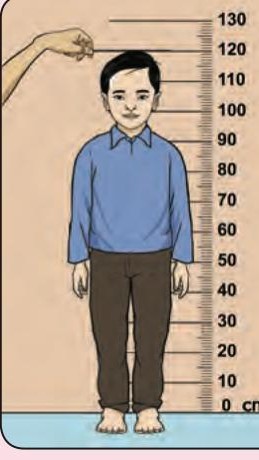
Diagram 6 shows a boy standing next to a height chart.
[1 mark]
(a)What is the height of the boy? Write the number and the unit.
Show answerHide answer
Tick each point you got.
[1 mark]
(b)Which unit do we use for body weight?
Show answerHide answer
kg
14
Question 14
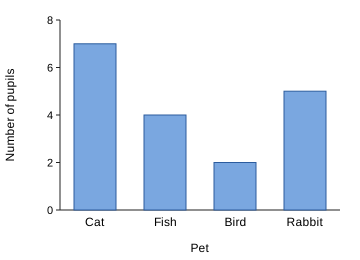
Class 2 Arif asked every pupil to choose a favourite pet. Diagram 7 shows the results.
[1 mark]
(a)Which pet is the most favourite?
Show answerHide answer
Tick each point you got.
[1 mark]
(b)How many pupils like fish?
Show answerHide answer
Tick each point you got.
[1 mark]
(c)How many more pupils like cat than fish?
Show answerHide answer
Tick each point you got.
15
Question 15
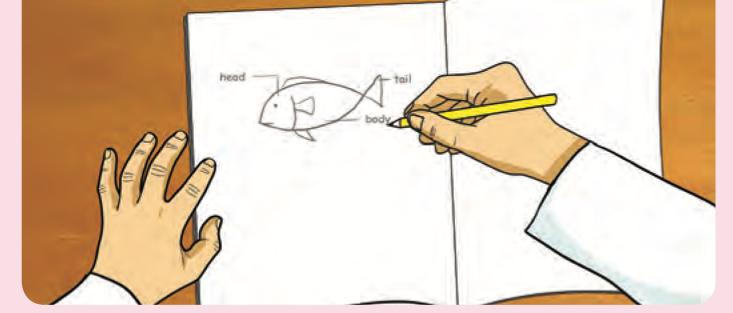
Diagram 8 shows what Dina is doing in her Science book.
[1 mark]
(a)Which manipulative skill is Dina practising?
Show answerHide answer
Sketching
[1 mark]
(b)Why does she write head, tail and body next to her drawing?
Show answerHide answer
Tick each point you got.
16
Question 16
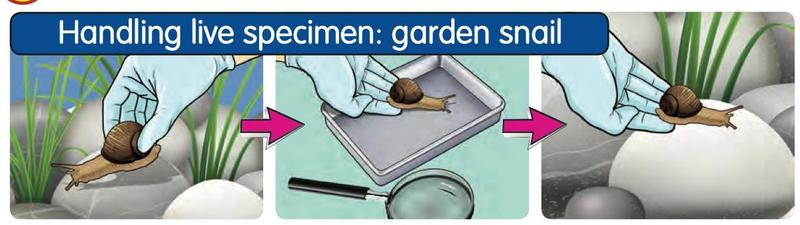
Diagram 9 shows a pupil handling a garden snail.
[1 mark]
(a)Which apparatus helps the pupil see the snail's small parts?
Show answerHide answer
Tick each point you got.
[1 mark]
(b)After the activity we should wash our hands.
Show answerHide answer
True
[1 mark]
(c)What does the pupil wear on the hand to hold the snail?
Show answerHide answer
Tick each point you got.