Science questions, unit 2
Nama / NameKelas / ClassTarikh / Date
Science room rules
25 marks. Use Practice to check each answer as you go, or Exam to answer everything first. Ask a grown-up to help you mark the written answers.
Section A: objective questions
12 marksChoose the best answer for each question.
1
Question 1
Where do solid wastes go?
Show answerHide answer
B
Solid wastes go into the waste container (p. 18).
2
Question 2
Where do liquid wastes go?
Show answerHide answer
C
Liquid wastes go into the sink (p. 18).
3
Question 3
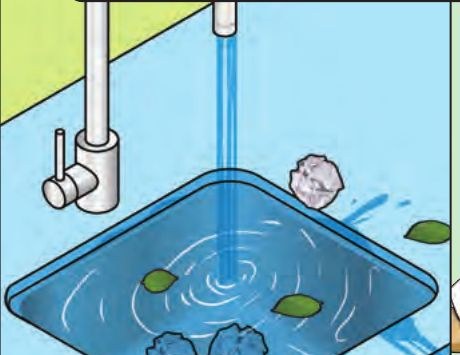
Diagram 1 shows a sink full of leaves and paper. Why is the sink clogged?
Show answerHide answer
A
Solid wastes block the sink. They should go into the waste container (p. 18).
4
Question 4
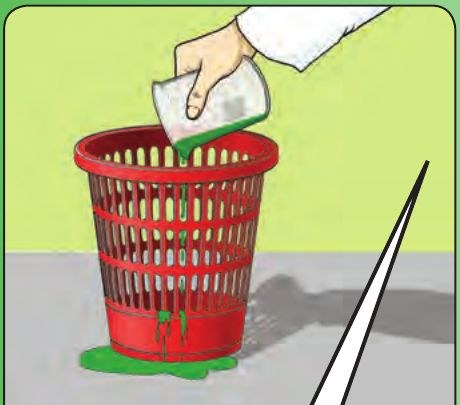
Diagram 2 shows a pupil pouring liquid into the waste container. What happens?
Show answerHide answer
B
A waste container cannot hold liquid. It flows onto the floor (p. 18).
5
Question 5
What must we do with tools and apparatus after use?
Show answerHide answer
D
Clean all tools and apparatus after use and store them in their original places (p. 19).
6
Question 6
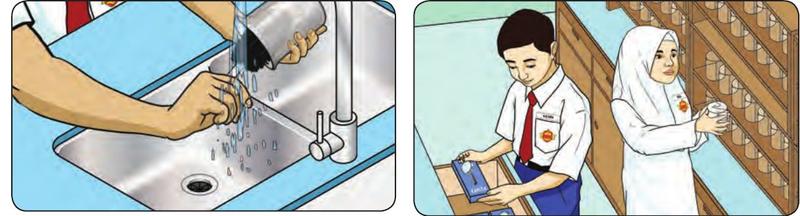
Diagram 3 shows what pupils do after an activity. What is the pupil at the sink doing?
Show answerHide answer
A
He is washing a beaker in the sink after use (p. 19).
7
Question 7
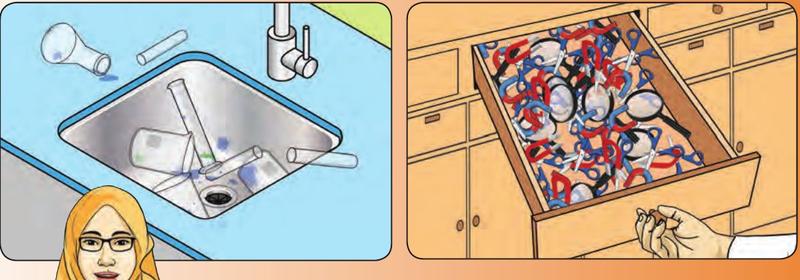
Diagram 4 shows a drawer of magnifying glasses. What is the problem?
Show answerHide answer
D
Apparatus must be stored neatly in its place so it is easy to find (p. 19).
8
Question 8
A pupil breaks a magnifying glass. What should he do first?
Show answerHide answer
C
All broken tools and apparatus must be reported to the teacher immediately (p. 19).
9
Question 9
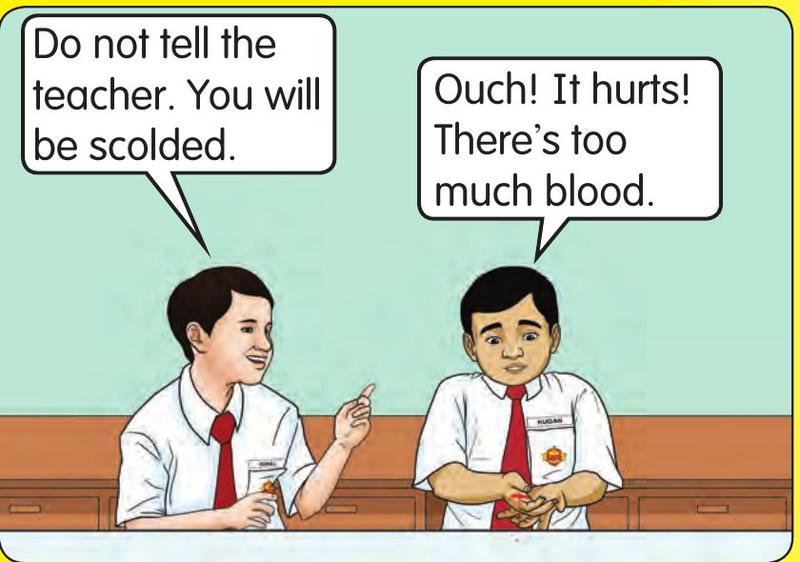
Diagram 5 shows a pupil with a hurt hand. Why must he tell the teacher?
Show answerHide answer
D
The teacher can treat the injury. Hiding it is wrong (p. 20).
10
Question 10
What can you bring into the Science Room?
Show answerHide answer
C
Bring only your books and stationery (p. 20).
11
Question 11
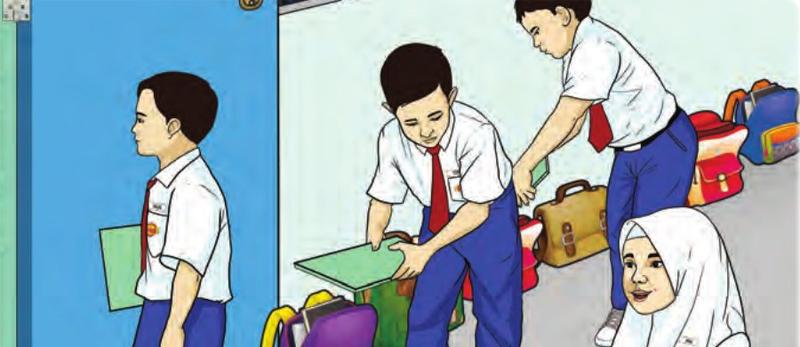
Diagram 6 shows bags on the floor of the Science Room. Why is this not good?
Show answerHide answer
C
School bags in the Science Room can interfere with pupils' movement (p. 20).
12
Question 12
Why must we follow the Science Room rules?
Show answerHide answer
A
Rules keep the Science Room clean, neat and safe (pp. 18, 22).
Section B: structured questions
13 marksAnswer all questions.
13
Question 13
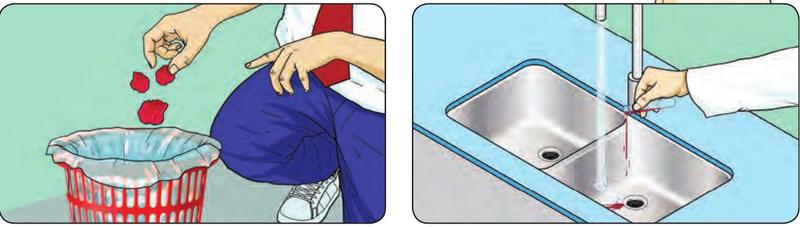
Diagram 7 shows a bin and a sink.
[1 mark]
(a)Where do we throw solid wastes?
Show answerHide answer
Waste container
[1 mark]
(b)Where do we pour liquid wastes?
Show answerHide answer
Sink
[1 mark]
(c)What happens if we put solid wastes in the sink?
Show answerHide answer
Tick each point you got.
14
Question 14
Aina has finished her activity.
[1 mark]
(a)"We must clean the apparatus after use."
Show answerHide answer
True
[1 mark]
(b)Where must she put the apparatus after cleaning it?
Show answerHide answer
Tick each point you got.
15
Question 15
Hamid has cut his hand on broken glass. Diagram 8 shows Hamid and his friend.
[1 mark]
(a)Should Hamid tell the teacher?
Show answerHide answer
Yes
[1 mark]
(b)Give one reason for your answer.
Show answerHide answer
Any 1 points
Tick each point you got.
16
Question 16
Kanang has broken a beaker in the Science Room. What should she do?
[1 mark]
(a)Write what Kanang should do.
Show answerHide answer
Tick each point you got.
17
Question 17
Cikgu Nora asks pupils to enter the Science Room.
[1 mark]
(a)Where should pupils leave their school bags?
Show answerHide answer
Outside the Science Room
[1 mark]
(b)Why must they do this?
Show answerHide answer
Any 1 points
Tick each point you got.
18
Question 18
Diagram 9 shows Azrai pouring liquid waste into the waste container.
[1 mark]
(a)Is Azrai doing the right thing?
Show answerHide answer
No
[1 mark]
(b)Give a reason for your answer.
Show answerHide answer
Any 1 points
Tick each point you got.
[1 mark]
(c)Where should Azrai pour the liquid waste?
Show answerHide answer
Tick each point you got.