myUASARevision for UASA
Science notes, unit 2

Science room rules

Textbook Science Year 2 (DLP), pages 17–22

What this chapter covers

  • You can say why we follow the Science Room rules (2.1.1)
  • You can put solid wastes in the waste container and liquid wastes in the sink (2.1.1)
  • You can clean tools and apparatus after use and keep them in their places (2.1.1)
  • You can tell the teacher at once about an accident or a broken tool (2.1.1)
  • You can leave your bag outside and bring only books and stationery (2.1.1)

2.1Science room rules

The Science Room is a place for fun science activities. It has glass tools and other things that can break or hurt us. So we need rules.

A rule tells us what to do. To adhere to a rule means to follow it every time.

Rules keep the Science Room clean, neat and safe for pupils and for the tools.

Rule 1: throw wastes in the right place
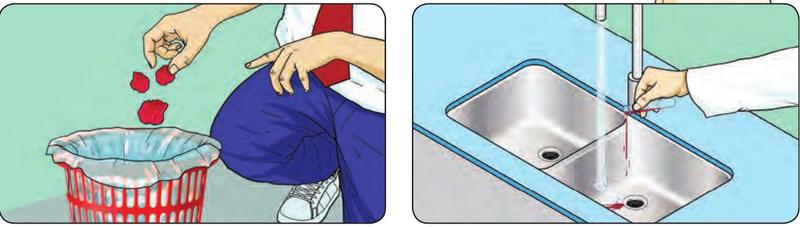
Solid wastes go into the waste container. Liquid wastes go into the sink.
Left: a pupil drops petals into a waste basket. Right: a hand pours liquid into the sink
Solid waste goes in the bin. Liquid waste goes in the sink.
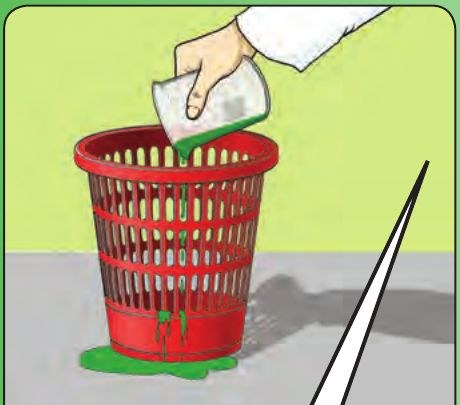
Liquid being poured into a waste basket and flowing onto the floor
Liquid in the bin flows onto the floor.
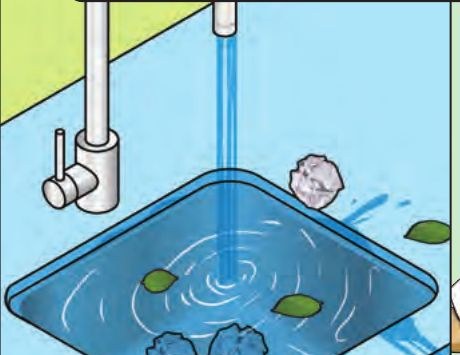
A sink full of leaves and paper, with the tap running
Solid waste in the sink blocks it.

Pictures: Science Year 2 (DLP) textbook, p. 18.

Do not put leaves, paper or soil in the sink. It will be clogged. Do not pour liquid into the bin. It will spill.

Rule 2: clean and store

After use, clean the tools and apparatus. Then store them in their original places.
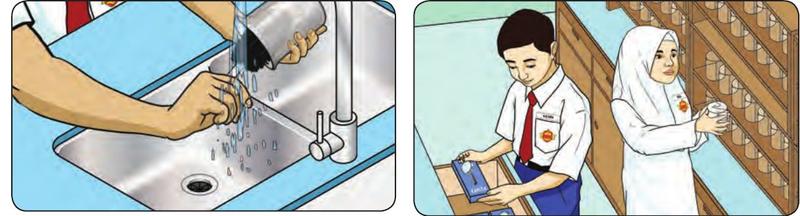
A pupil washes a beaker at the sink; two pupils put apparatus on shelves
Wash it. Put it back on the shelf.
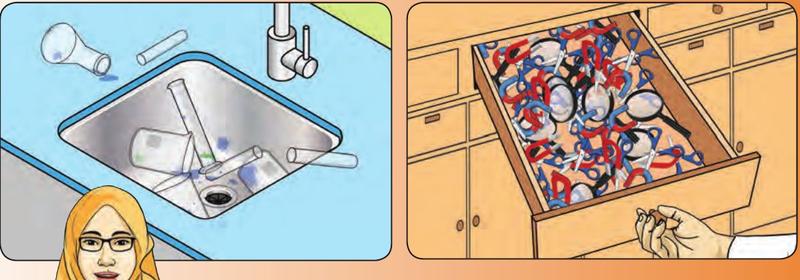
A sink full of dirty glassware and a drawer with tangled magnifying glasses
Messy sink and messy drawer. Can we do our work well?

Pictures: Science Year 2 (DLP) textbook, p. 19.

If tools are left dirty or lost, the next pupils cannot do their investigation smoothly.

Rule 3: tell the teacher

Tell the teacher at once if someone is hurt, or if a tool or apparatus is broken.
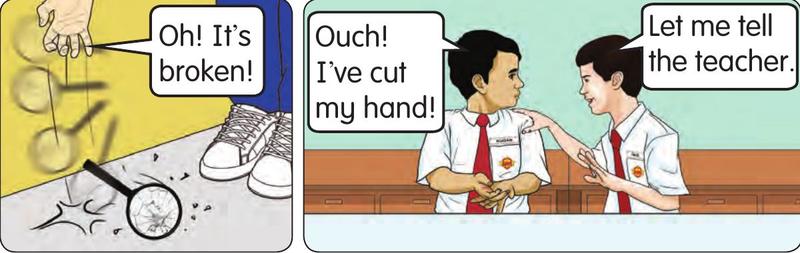
A broken magnifying glass on the floor, and a boy with a cut hand while his friend says he will tell the teacher
"Let me tell the teacher."
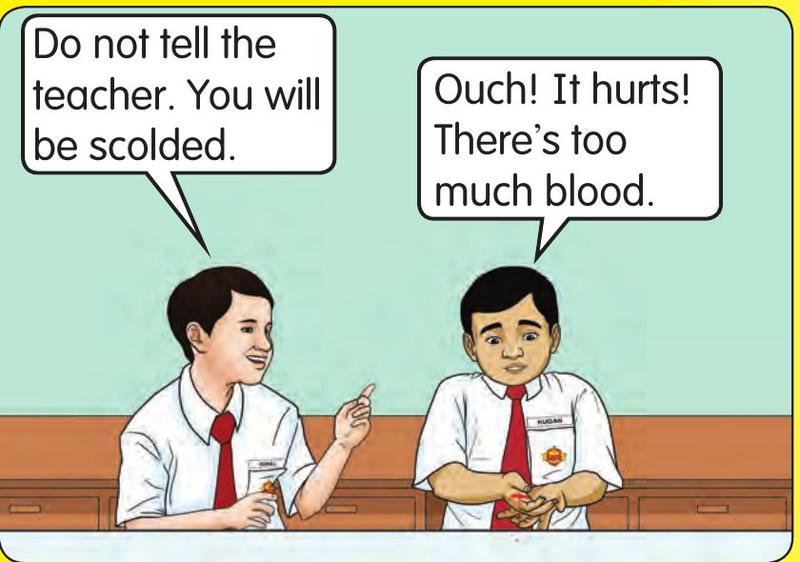
A boy with a bleeding hand while his friend says not to tell the teacher
Do not hide it. Hiding an injury is wrong. The teacher can help.

Pictures: Science Year 2 (DLP) textbook, pp. 19-20.

Never hide an accident or a broken tool because you are afraid to be scolded. Broken glass can hurt other pupils.

Rule 4: bags stay outside

Leave your school bag outside. Bring only your books and stationery. Bags on the floor get in the way when pupils move about.
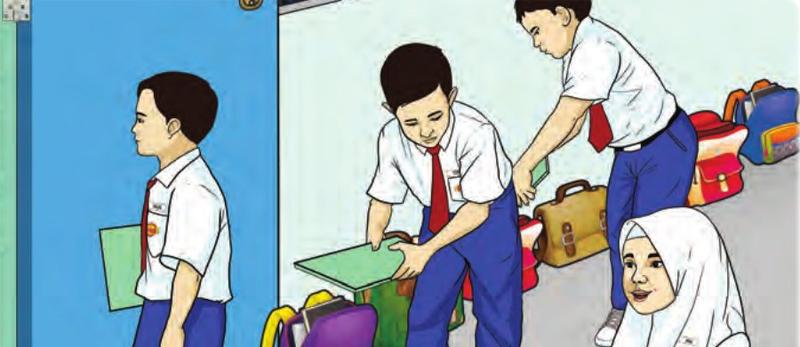
Bags lying on the Science Room floor with pupils stepping around them; the teacher points
Bags in the room block the way.

Picture: Science Year 2 (DLP) textbook, p. 20.

Did you know? You can make your own rule cards with numbers and flip them open, one rule at a time (textbook p. 21).
You broke a beaker by accident. What must you do?
Show answerHide answer
Tell the teacher at once.
Where does a used paper towel go? Where does dirty water go?
Show answerHide answer
The paper towel (solid) goes into the waste container. The dirty water (liquid) goes into the sink.

Summary

RuleWhy
Solid waste in the bin, liquid waste in the sinkNo blocked sink, no spills
Clean tools and keep them in their placesEasy to use again
Tell the teacher about accidents and broken toolsSo the teacher can help
Leave bags outsideSo pupils can move safely