Animals
What this chapter covers
- You can name animals that lay eggs and animals that give birth (4.1.1, 4.1.2)
- You can say which animals lay a few eggs and which lay many eggs (4.1.3)
- You can say which animals have a few young and which have many young (4.1.4)
- You can put the life cycle of a frog, a cow and a butterfly in order (4.1.5, 4.1.7)
- You can tell which young look like their parents and which do not (4.1.6)
Animals make more animals of their own kind. This is called reproduction. In this unit you will learn how animals have their young, how many young they have, and how the young grow.
4.1Animal reproduction
Lay eggs or give birth
Nisa and her father see a stork's eggs hatching in a nest. Storks lay eggs.
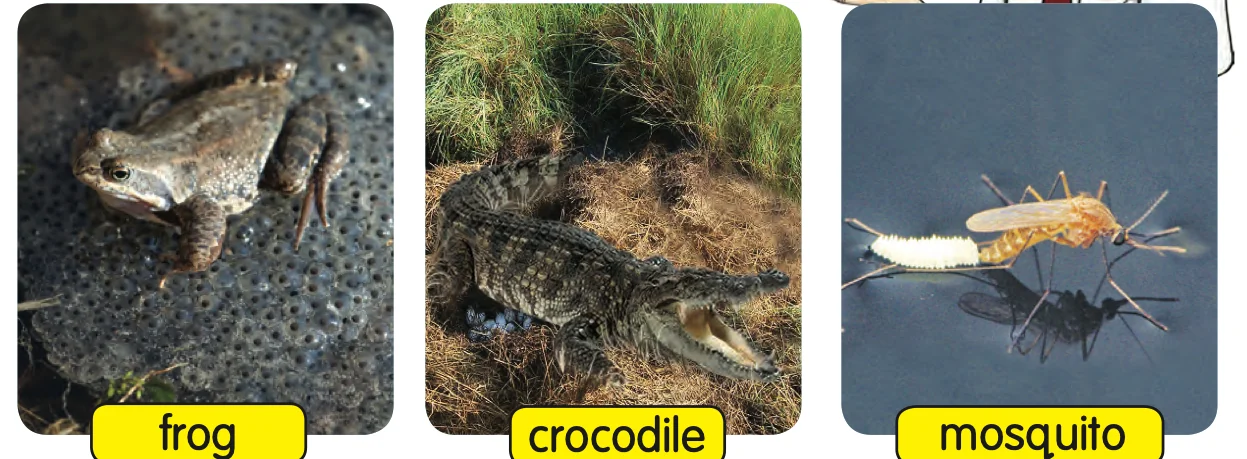
Figure: Science Year 2 (DLP), p.36.
| Animals that lay eggs | Animals that give birth |
|---|---|
| bird, chicken, frog, crocodile, fish, ant, butterfly, mosquito | cat, rabbit, elephant, dolphin, kangaroo, panda, monkey |
Show answerHide answer
A few eggs or many eggs
Some animals lay only a few eggs. Other animals lay many eggs.
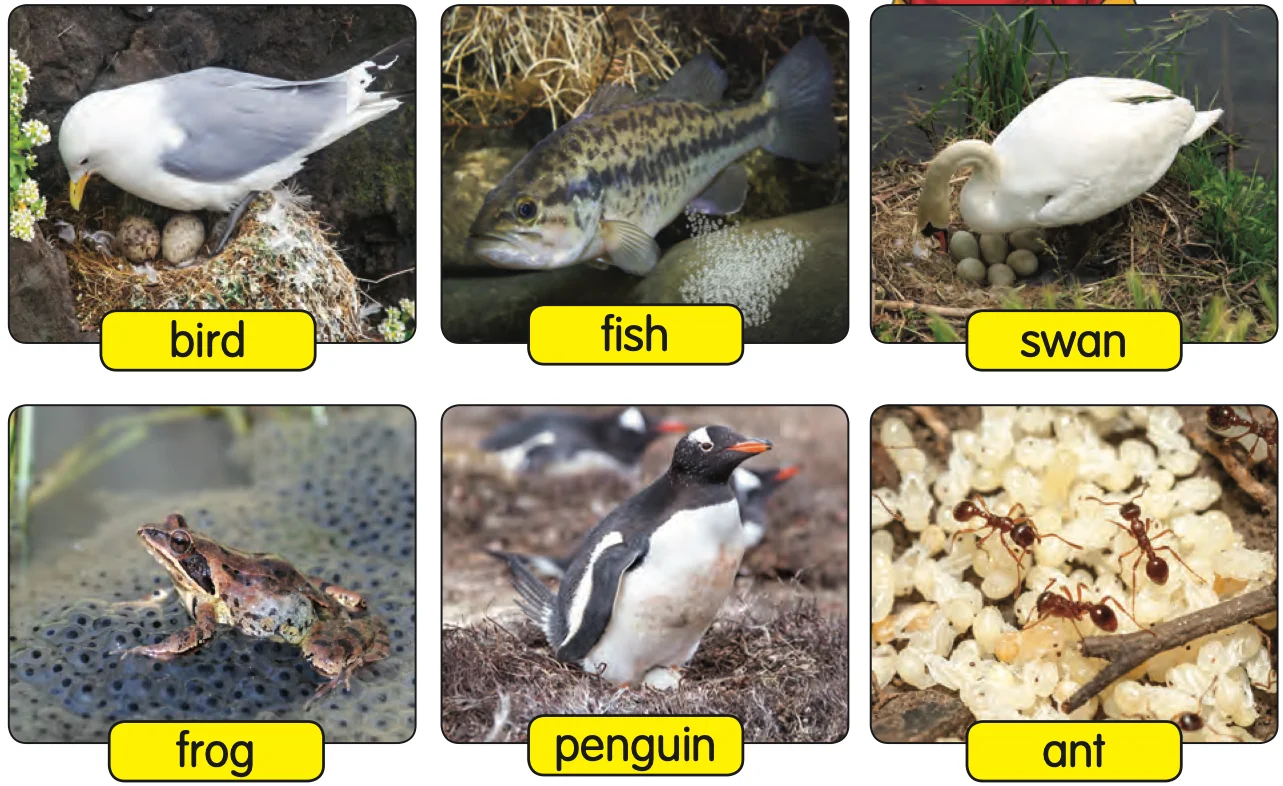
Figure: Science Year 2 (DLP), p.39.
| A few eggs | Many eggs |
|---|---|
| bird, swan, penguin, ostrich, chicken | fish, frog, ant, butterfly, crocodile |
Other animals sometimes eat eggs. So animals that lay eggs look after them. A bird builds a nest in a tree to keep its eggs safe from animals on the ground. (Extra fact: a turtle buries its eggs in the sand.)
A few young or many young
Animals that give birth also have different numbers of young.
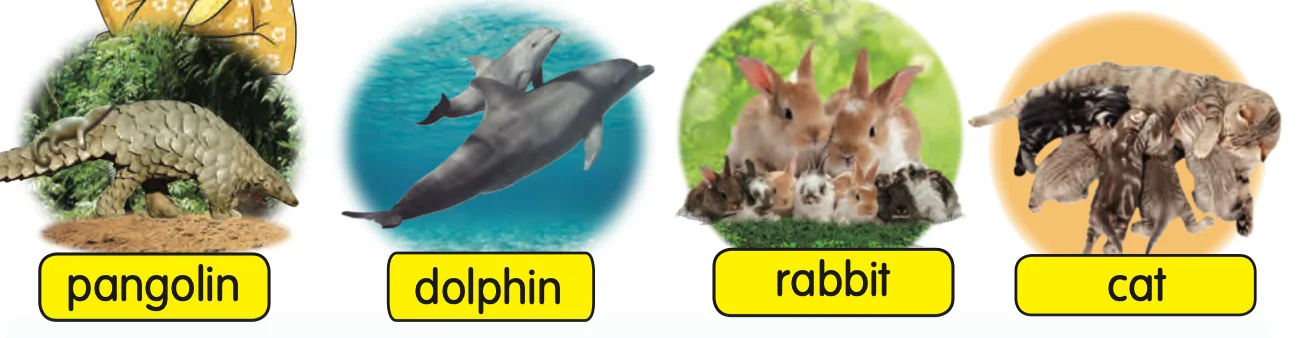
Figure: Science Year 2 (DLP), p.41.
| A few young | Many young |
|---|---|
| pangolin, dolphin, elephant, panda | rabbit, cat, porcupine, wolf |
A mother animal that gives birth looks after her young and feeds them with milk. A cat hides her kittens in a safe place.
Young that look like their parents
The mother and father are called parents. The babies are the young.
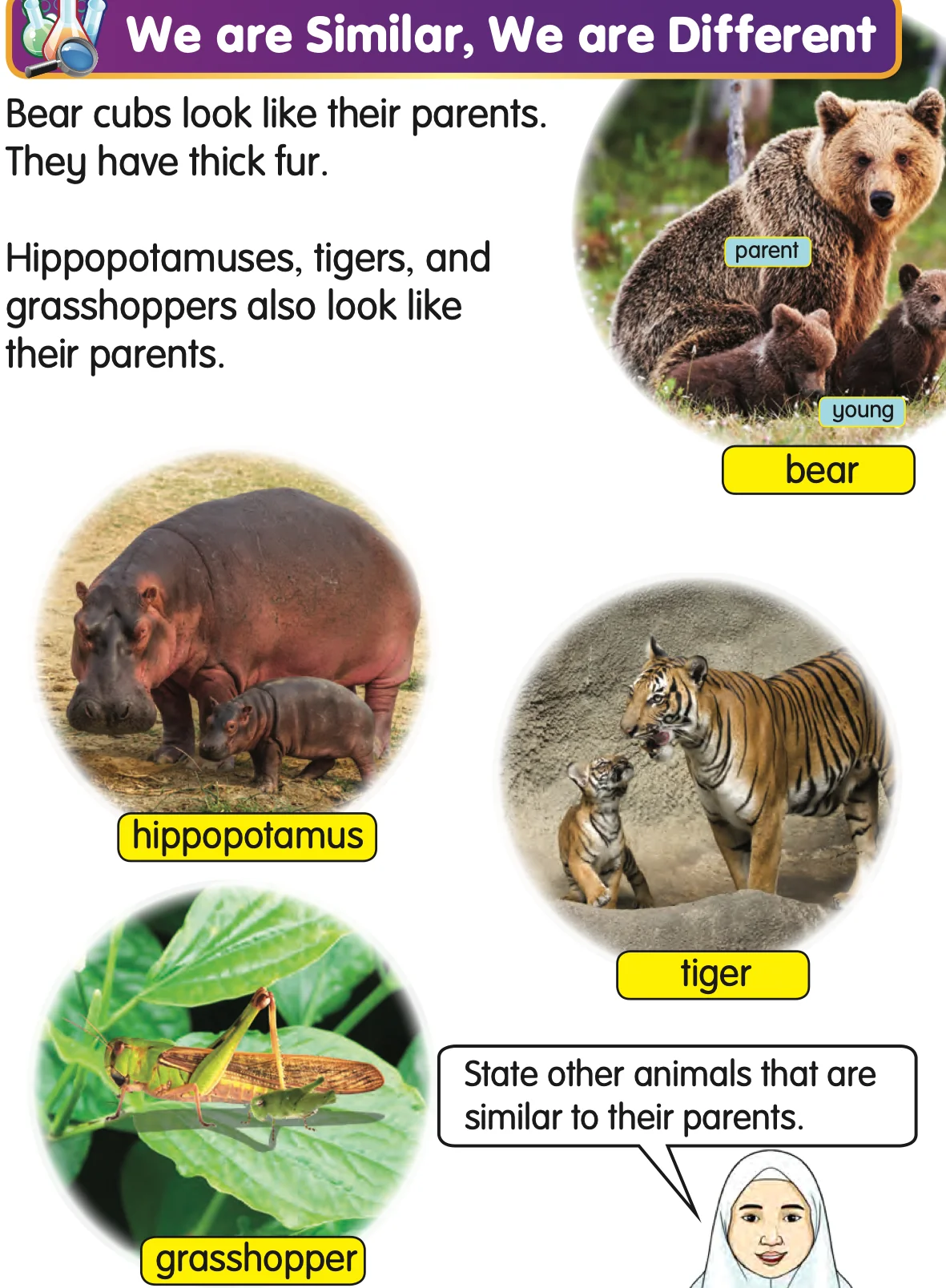
Figure: Science Year 2 (DLP), p.43.
Bear cubs, young hippopotamuses, tiger cubs and young grasshoppers look like their parents.
Young that do not look like their parents
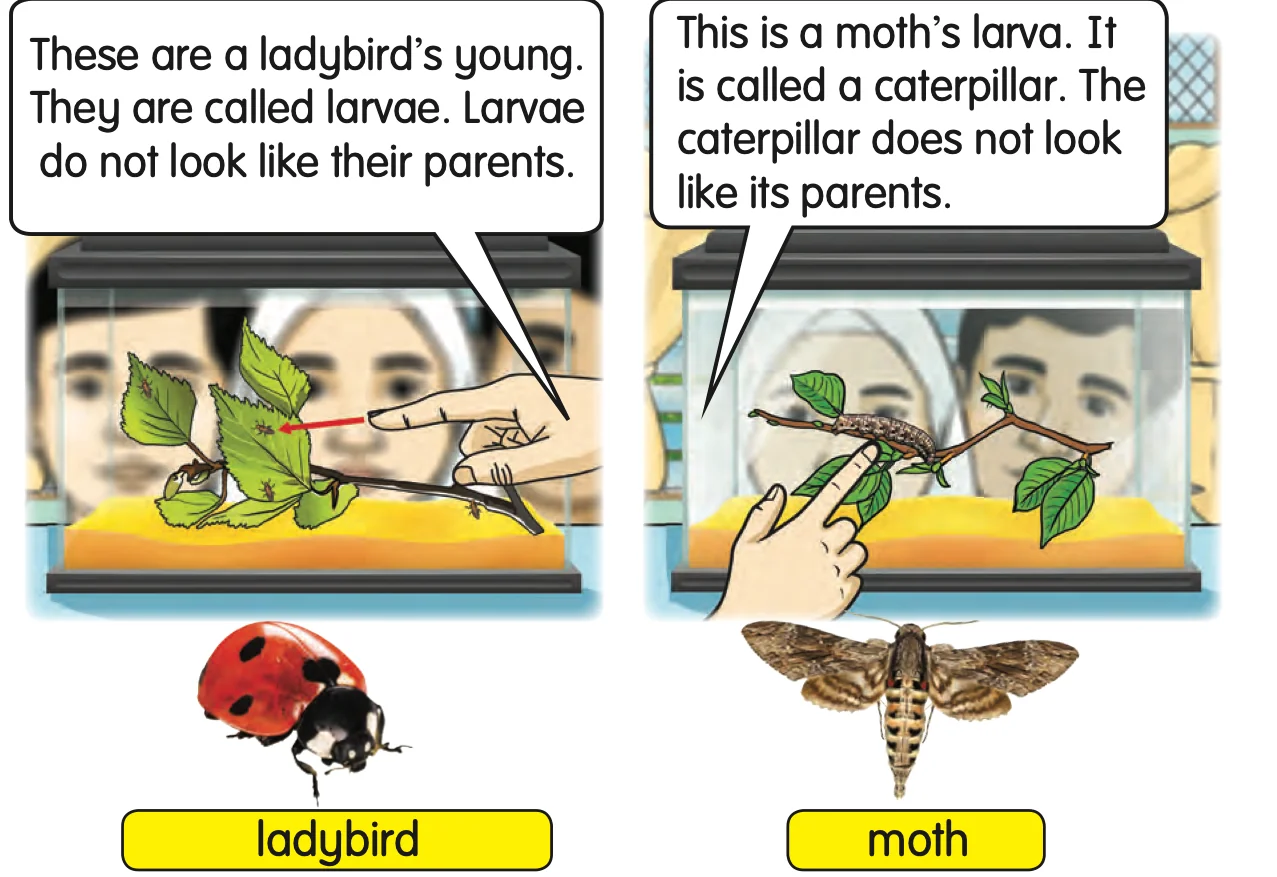
Figure: Science Year 2 (DLP), p.44.
The young of a ladybird are called larvae. The young of a moth is a caterpillar. Frogs and mosquitoes also have young that do not look like their parents.
Show answerHide answer
4.2Life cycle of animals
Frog
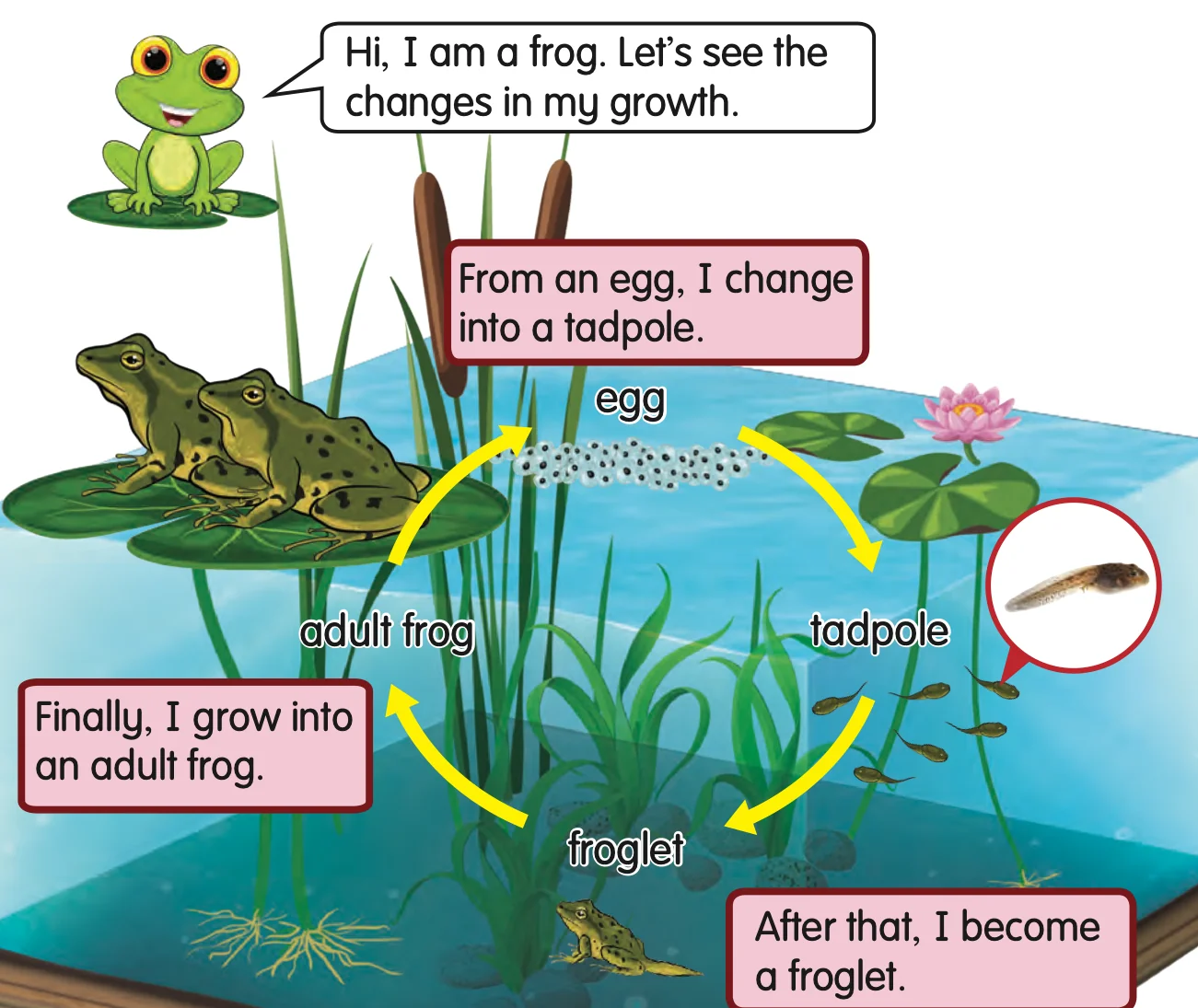
Figure: Science Year 2 (DLP), p.45.
- egg
- tadpole
- froglet
- adult frog
Cow
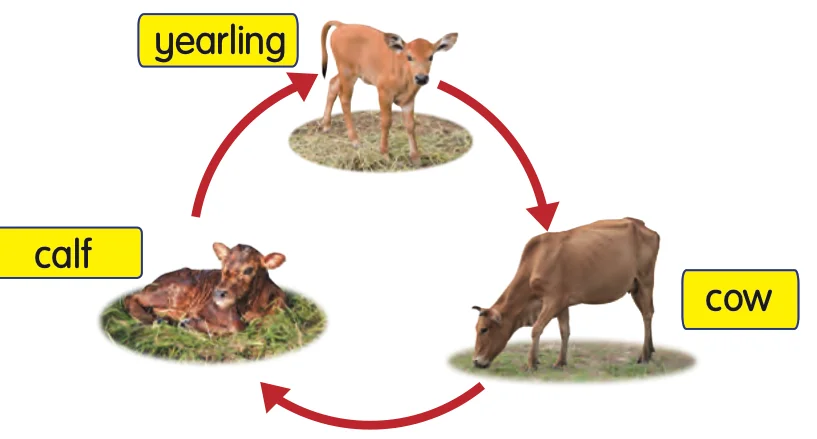
Figure: Science Year 2 (DLP), p.46.
A cow gives birth, so there is no egg. The young is a calf. It grows into a yearling and then an adult cow.
Butterfly
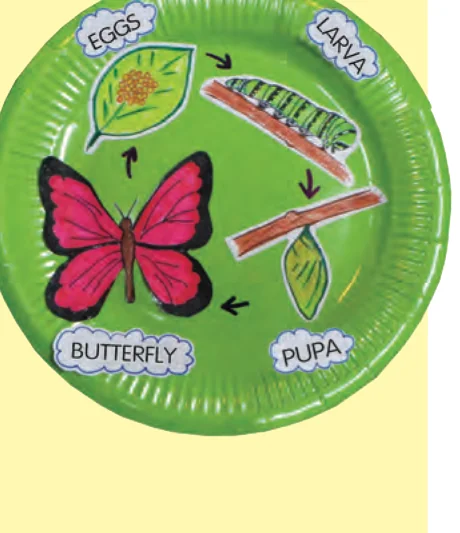
Figure: Science Year 2 (DLP), p.46.
A butterfly goes from egg to larva (caterpillar) to pupa to butterfly.