Science notes, unit 8
Mixture
Textbook Science Year 2 (DLP), pages 87–100
What this chapter covers
- You know that a mixture has two or more materials mixed together (8.1.1)
- You can separate a mixture by hand-picking, sieving, using a magnet, floatation and filtration (8.1.2)
- You can say which materials dissolve in water and which do not (8.1.3)
- You know that materials dissolve more quickly in hot water and when stirred (8.1.4)
- You know that small pieces dissolve more quickly than big pieces (8.1.5)
Muruku and nuts, flour and raisins, sand and paper clips. When two or more things are together, we have a mixture. In this unit you will learn how to separate mixtures and how things dissolve in water.
8.1Mixtures
What is a mixture?
Mixture: two or more materials that are mixed together.
We can separate the materials in a mixture. We choose a method that suits the materials.
Ways to separate a mixture
| Method | Use it to separate | Example |
|---|---|---|
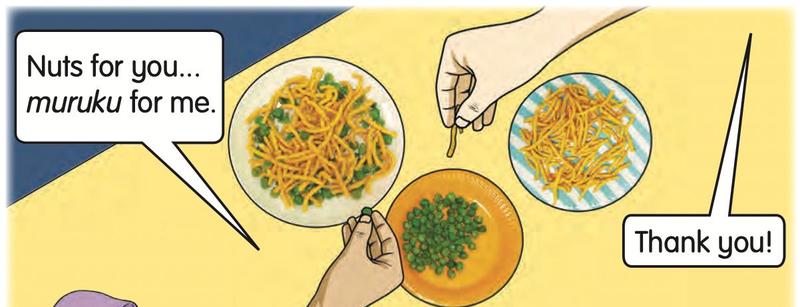
| Hand-picking | Two big materials with different shapes | Muruku and nuts |
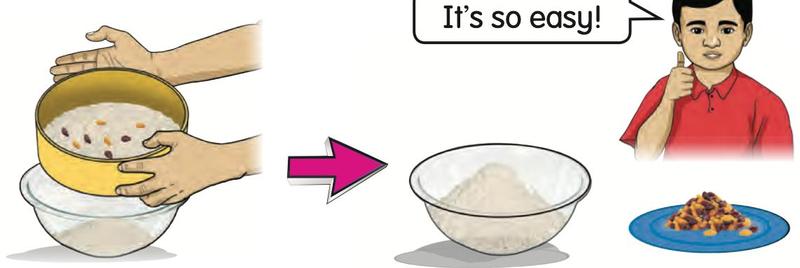
| Sieving | Fine materials from large materials | Flour and raisins |
| Magnet | Materials that a magnet attracts | Paper clips and sand |
| Floatation | Materials that float from materials that sink | Wood bits and sand |
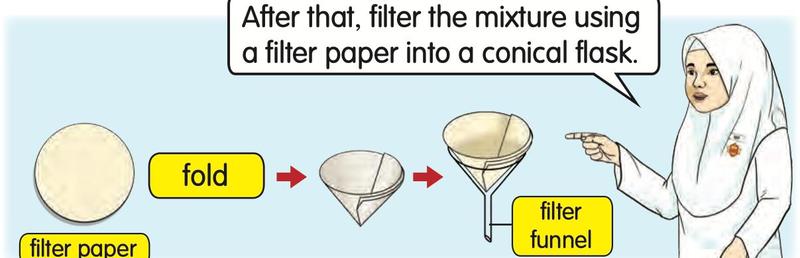
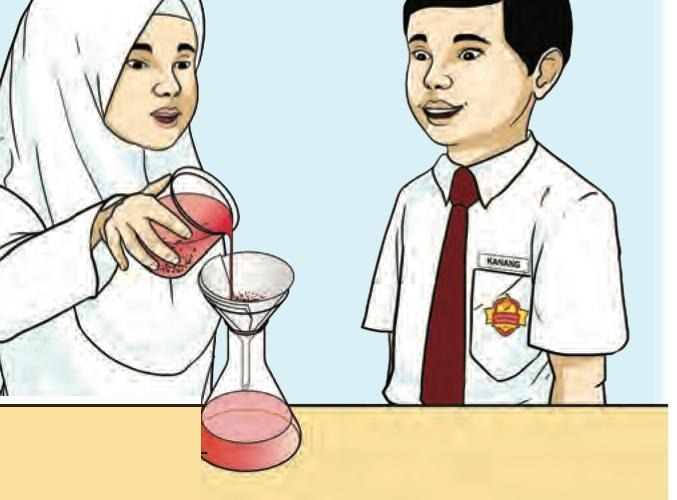
| Filtration | Solid from liquid | Hibiscus petals and coloured water |
Hand-picking
Sieving
Using a magnet
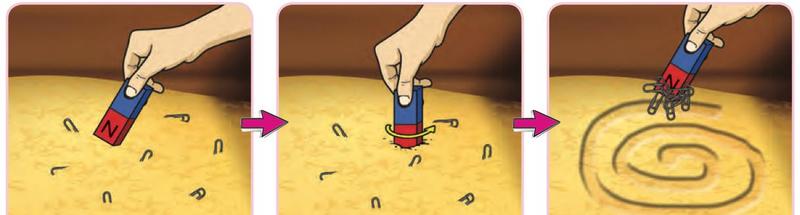
Careful! A magnet only attracts some metals, such as iron. It cannot pick up sand, wood or plastic.
Floatation
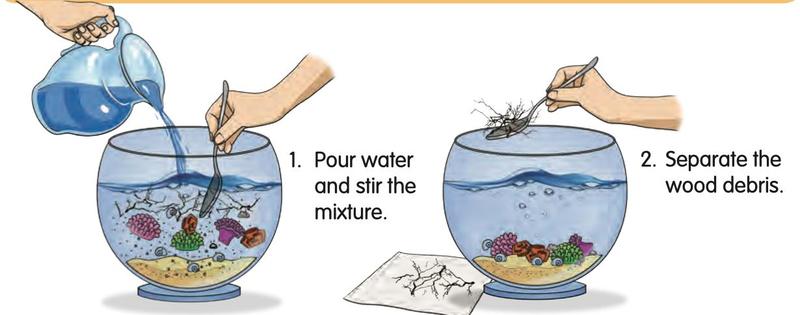
Filtration
Which method?
Green beans and flour: the beans are big and the flour is fine. Use sieving.How do we separate iron paper clips from sand?
Show answerHide answer
Use a magnet.
8.2Dissolving
Dissolve or not?
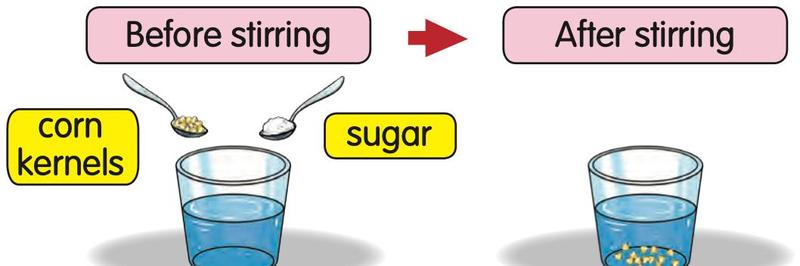
Some materials dissolve in water. We cannot see them after we stir. Some materials do not dissolve. We can still see them.
| Dissolves in water | Does not dissolve in water |
|---|---|
| Sugar, salt | Corn kernels, green beans, rice |
How can we dissolve things more quickly?
- Use hot water. Sugar dissolves more quickly in hot water than in cold water.
- Stir. Stirred sugar dissolves more quickly.
- Use small pieces. Coarse sugar dissolves more quickly than a sugar cube.
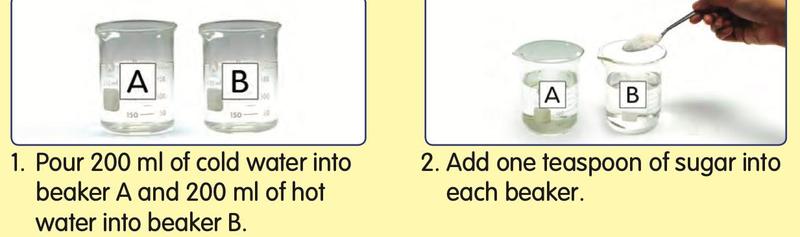
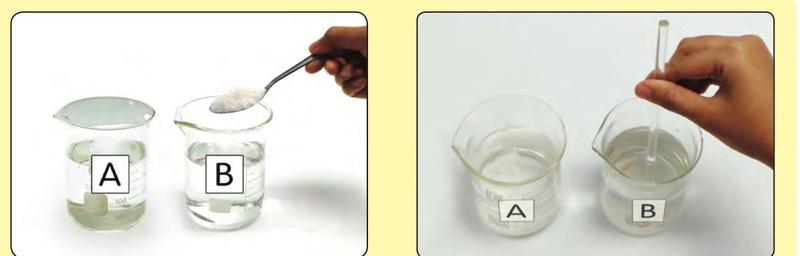
Remember: hot water, stir, small pieces.
Name one way to make sugar cubes dissolve more quickly.
Show answerHide answer
Stir them, use hot water, or crush them into small pieces.
Figures: Science Year 2 (DLP) textbook, pp. 89 to 94 and 96 to 99, cropped for revision.
Summary
| Idea | Remember |
|---|---|
| Mixture | Two or more materials mixed together |
| Separating | Hand-picking, sieving, magnet, floatation, filtration |
| Dissolve | Sugar and salt dissolve. Rice and beans do not. |
| Dissolve more quickly | Hot water, stirring, small pieces |