Science notes, unit 9
Earth
Textbook Science Year 2 (DLP), pages 101–116
What this chapter covers
- {'You can name the natural sources of water': 'rain, rivers, lakes, seas and springs (9.1.1)'}
- You can say that water flows from a high place to a low place (9.1.2, 9.1.3)
- You can say how rain, rivers and the sea join in the natural water cycle (9.1.4, 9.1.5)
- You can say that air is around us and that living things need air to breathe (9.2.1, 9.2.2)
- You can say that moving air is wind and how wind helps people (9.2.3)
- You can give an effect of strong winds and describe a simple wind rocket (9.2.4, 9.2.5, 9.2.6)
Water and air are the basic sources of life. In this unit you will find out where water comes from, where it flows, and how air and wind help us.
9.1Water
Natural sources of water
The natural sources of water on Earth are rain, rivers, lakes, seas and springs.
| Source | What it is |
|---|---|
| Rain | Water drops that fall from the clouds |
| River | A stream of water made when rain falls to the earth |
| Lake | A large area of water with land all around it |
| Sea | A big part of the earth covered with salt water |
| Spring | A place where water under the ground flows out |
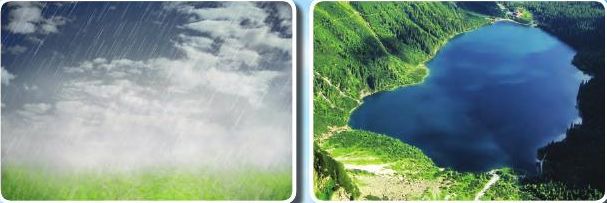
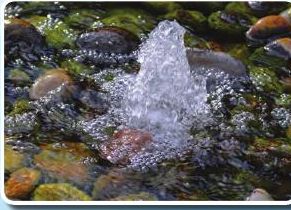
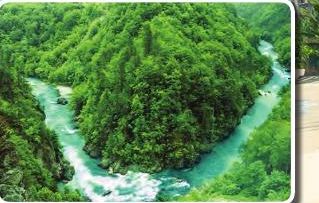
Did you know? Sea water is salty. Rain, river and lake water are not salty.
Name three natural sources of water.
Show answerHide answer
Any three: rain, rivers, lakes, seas, springs.
Water flows from high to low
Water always flows from a high place to a low place.
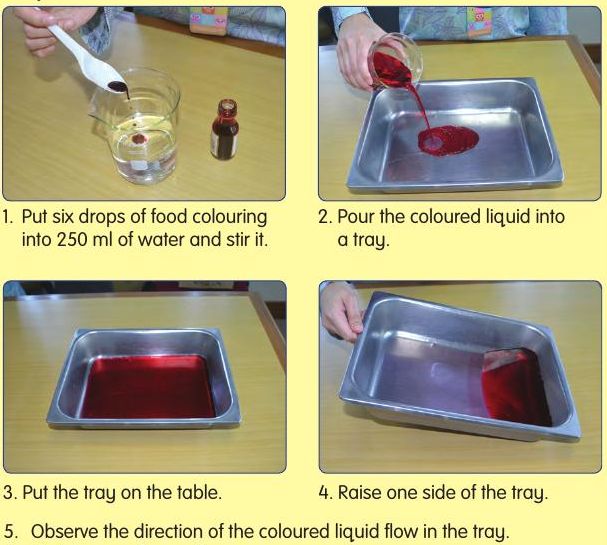
Rivers and waterfalls flow from highland (hills and mountains) to lowland. Then they flow into the sea.
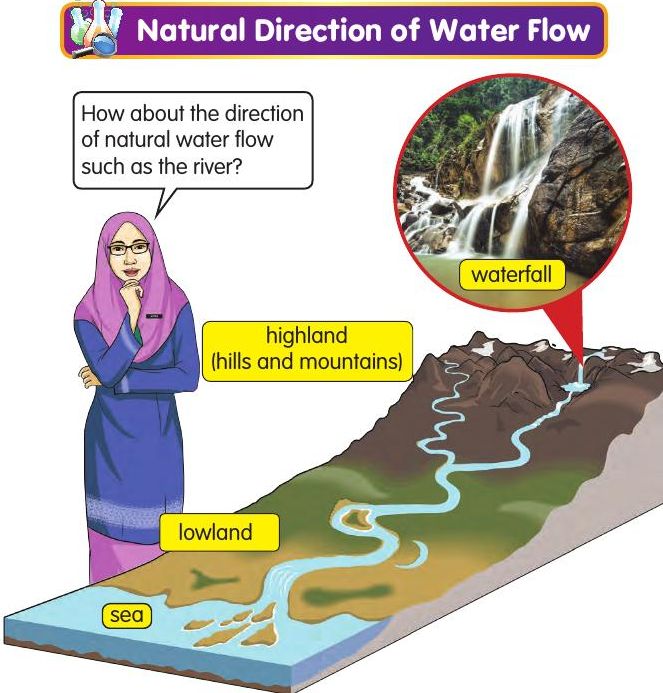
Water does not flow uphill by itself. It flows down.
The natural water cycle
The natural water cycle is a cycle that never stops. It gives water to living things and cools the earth.
- Water in the sea and rivers is heated by the sun.
- It turns into water vapour and rises up.
- The water vapour cools and makes clouds.
- Heavy clouds give rain. Rain flows back to rivers and the sea.
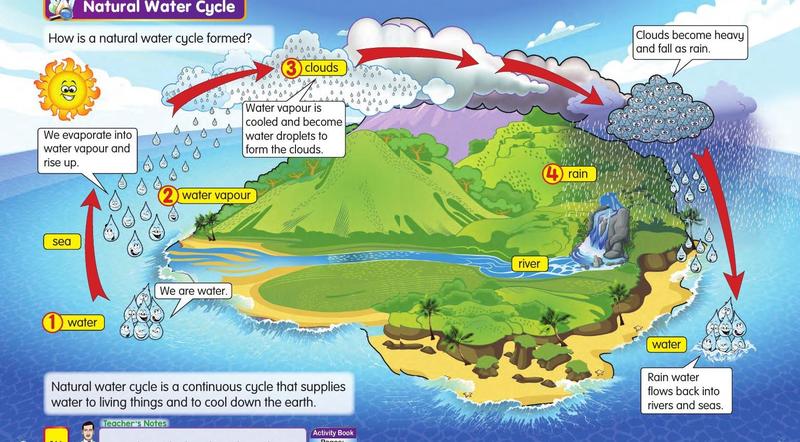
Put in order: rain, water vapour, clouds, water.
Show answerHide answer
Water, water vapour, clouds, rain.
9.2Air
Air and living things
Air is all around us. It is also in water and in soil. Air has gases such as oxygen and carbon dioxide.
Living things need air to breathe. Humans, animals and plants breathe. Fish breathe in water and termites breathe in the soil.
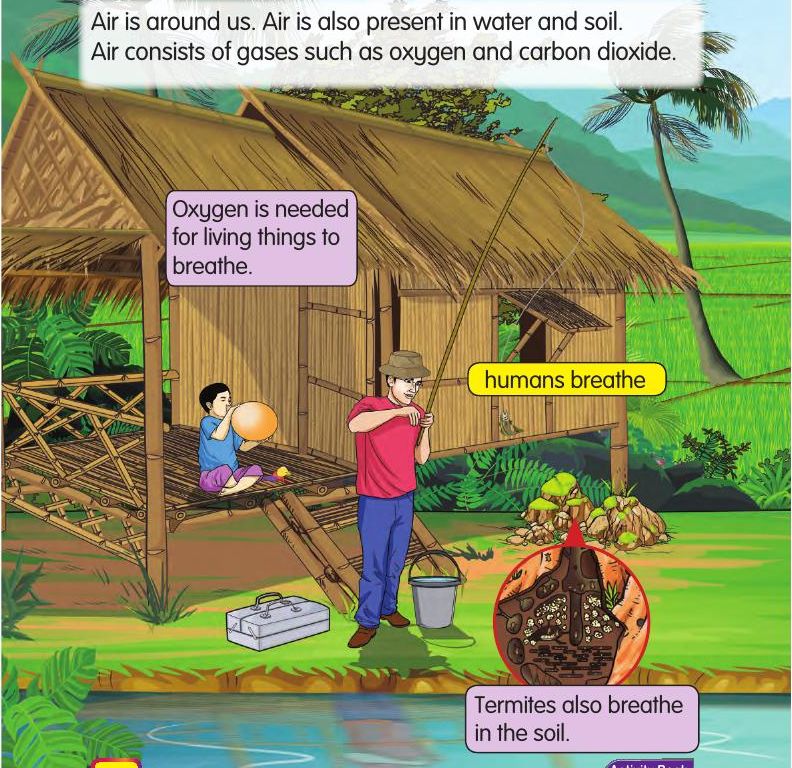
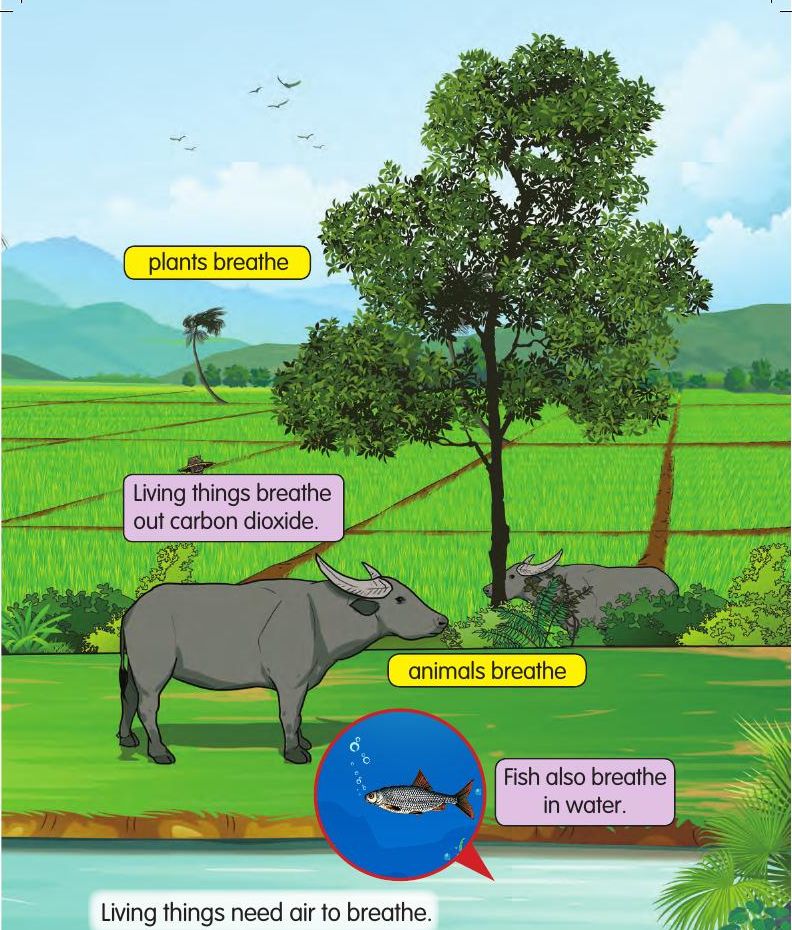
We need oxygen to breathe. We breathe out carbon dioxide.
Moving air: wind
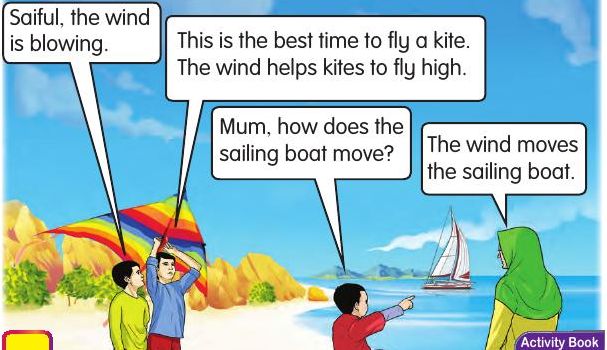
Moving air is called wind. We cannot see the wind, but we can feel it.
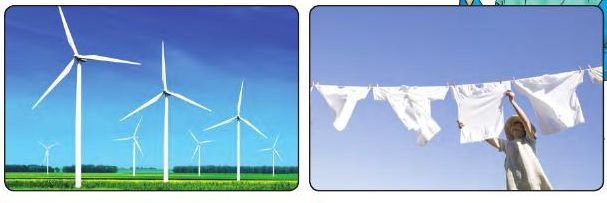
The wind helps people:
- It helps a kite fly high.
- It moves a sailing boat.
- It turns a windmill.
- It dries clothes on the clothes line.
Strong winds
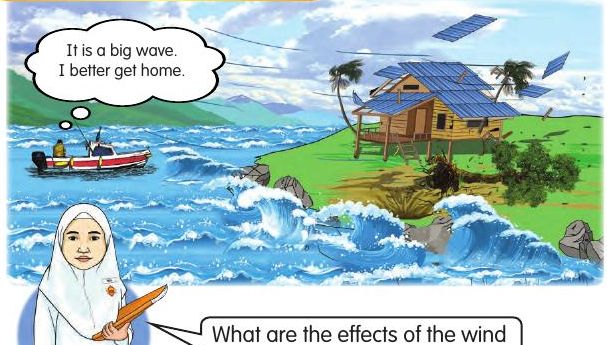
A very strong wind can cause big waves and storms. It can hurt people and break houses.
Wind rocket: cut out a paper rocket, tape a short straw to it, and put a long straw into the short straw. Blow into the long straw. Moving air makes the rocket fly!
Pictures: Science Year 2 (DLP) textbook, pp. 102-104, 105-107, 108-109, 110-111 and 112-113.
Summary
| Idea | Remember |
|---|---|
| Natural sources of water | Rain, rivers, lakes, seas, springs |
| Direction of water flow | High place to low place |
| Water cycle | Water, water vapour, clouds, rain |
| Air | Living things need air to breathe |
| Wind | Moving air; flies a kite, moves a boat |
| Strong wind | Big waves, storms |