Humans
What this chapter covers
- You can name the three types of teeth and say what each one does (3.1.1)
- You can name the parts of a tooth (3.1.2)
- You can compare milk teeth and permanent teeth (3.1.3)
- You can explain how to take care of your teeth (3.1.4)
- You can name the seven classes of food and give examples (3.2.1)
- You can say why each class of food is important (3.2.2)
- You can plan a balanced meal using the Malaysian Food Pyramid (3.2.3)
- You can explain what happens when we do not eat a balanced diet (3.2.4)
- You can explain what digestion means (3.3.1)
- You can put the parts of the food flow in order, from mouth to anus (3.3.2)
- You can say what happens to digested food and undigested food (3.3.3)
- You can name actions that disturb digestion and their effects (3.3.4)
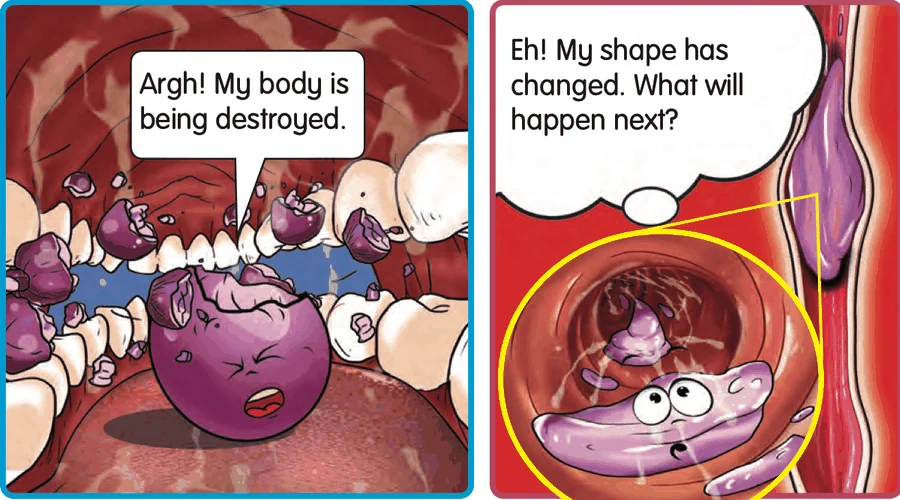
Kina pops a grape into her mouth. Where does the grape go? How does it change? In this unit you will learn about your teeth, the food you eat, and how your body digests food.
3.1Our teeth
Three types of teeth
We have three types of teeth. Each type has a different job.
| Type of tooth | Where it is | Its job (function) |
|---|---|---|
| Incisors | At the front | To cut food |
| Canines | Beside the incisors, pointed | To tear food |
| Molars | At the back, wide and flat | To grind food |
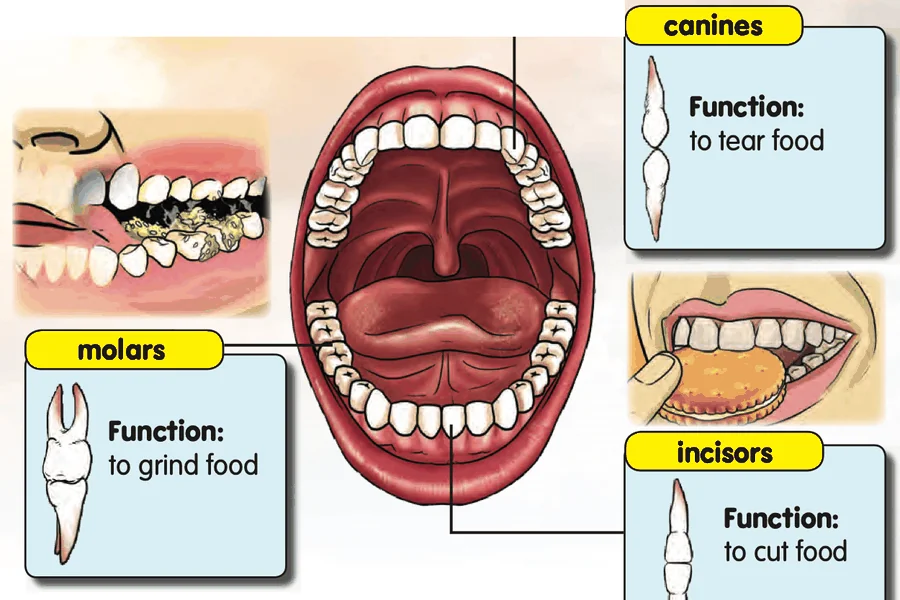
Pull a piece of chicken off the bone. Your canines tear it.
Chew a mouthful of rice. Your molars grind it until it is soft.
Inside a tooth
If we cut a tooth in half, we can see its parts. This cut is called a cross section.
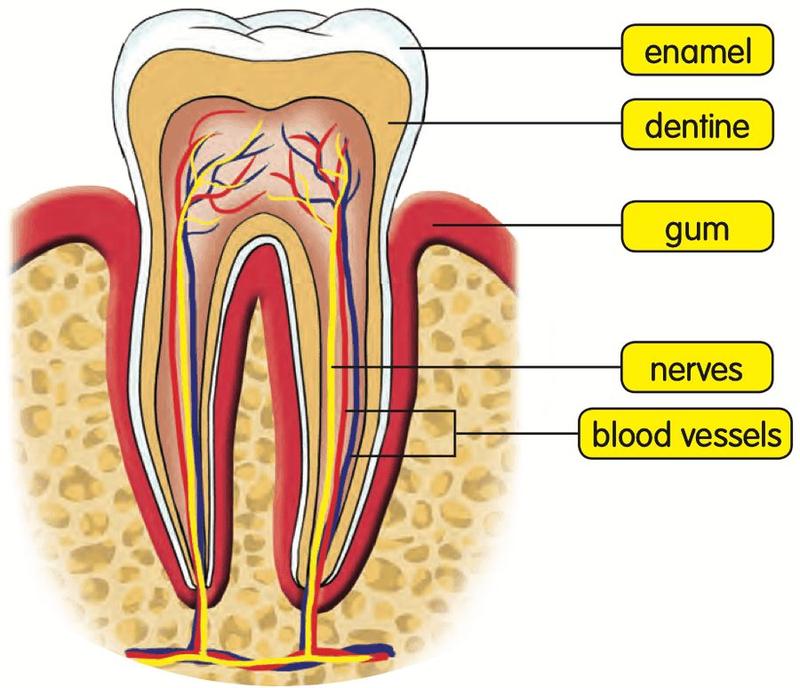
| Part | What it is |
|---|---|
| Enamel | The hard, white outside layer. It protects the tooth. |
| Dentine | The layer under the enamel. |
| Gum | The pink part that holds the tooth in place. |
| Nerves | They let you feel hot, cold and pain. |
| Blood vessels | Tiny tubes that carry blood to the tooth. |
Milk teeth and permanent teeth
Humans have two sets of teeth. The first set is the milk teeth. When a milk tooth falls out, a permanent tooth grows in its place. "Permanent" means it stays for life.
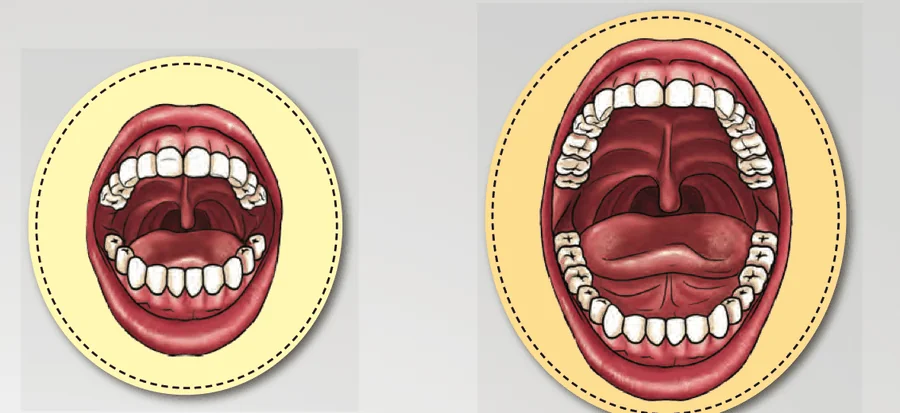
| Milk teeth | Permanent teeth | |
|---|---|---|
| Number of teeth | 20 (8 incisors, 4 canines, 8 molars) | 32 (8 incisors, 4 canines, 20 molars) |
| Enamel and dentine | Thin | Thick |
| Size and strength | Smaller, not strong | Bigger, stronger |
| Life span | Short (not permanent) | Long (permanent) |
| When they grow | Start at 6 months old, complete at 3 years old | Start at 6 years old, complete at 21 years old |
Taking care of our teeth
After we eat, bits of food get stuck between our teeth. If we do not remove them, germs grow there. Germs are tiny living things that can make us sick. They make our teeth decay (rot and get holes).
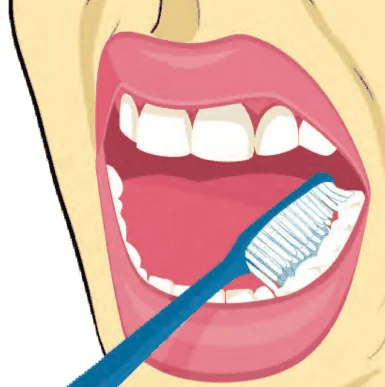 Brush
BrushBrush every surface with toothpaste, at least twice a day.
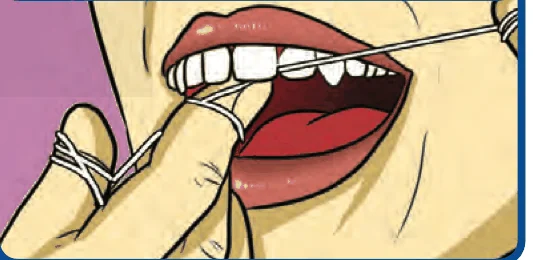 Floss
FlossMove dental floss back and forth between your teeth.
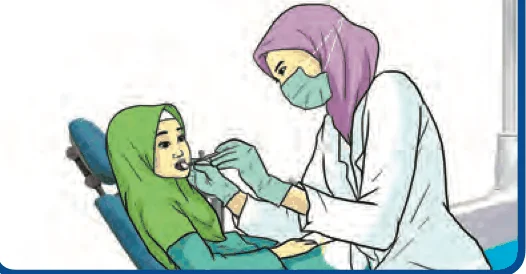 See a dentist
Go for a check-up once every six months.
- Rinse your mouth with water after eating.
- Eat less sweet food, like ice cream, cakes and sweet drinks.
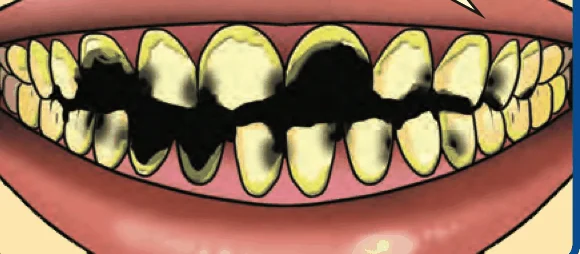
Dentists can help when teeth have problems. Some dental treatments are:
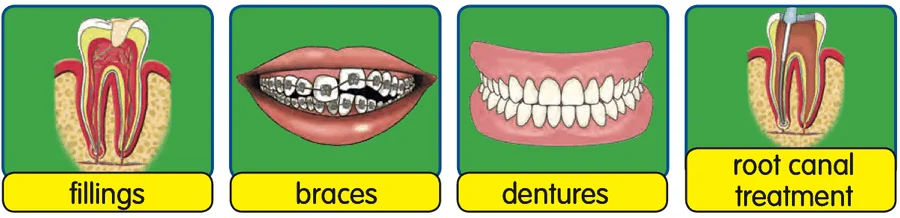
Teeth pictures: Science Year 3 (DLP) textbook, pp. 29–38.
Show answerHide answer
3.2Food and a balanced diet
Seven classes of food
Food can be put into seven groups. Each group is called a class of food.
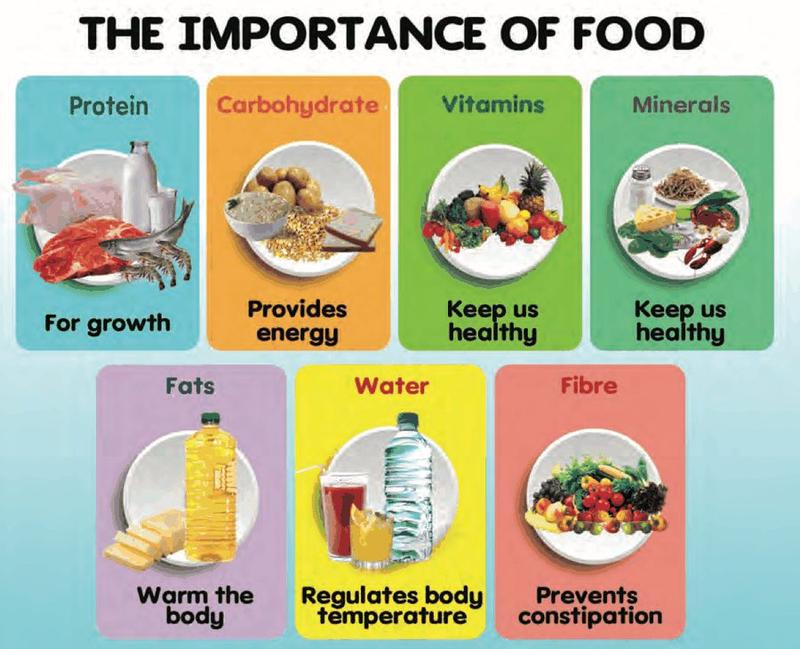
| Class of food | Examples | Why we need it |
|---|---|---|
| Carbohydrate | Rice, bread, noodles, potatoes | Gives us energy |
| Protein | Fish, chicken, meat, eggs, milk, prawns | For growth |
| Fats | Cooking oil, butter, cheese | Warms the body |
| Vitamins | Fruits and vegetables, like papaya and tomatoes | Keeps us healthy |
| Minerals | Anchovies (ikan bilis), salt, milk | Keeps us healthy |
| Fibre | Vegetables like cabbage and kangkung, fruits | Prevents constipation |
| Water | Plain water, juice | Controls body temperature |
A balanced diet
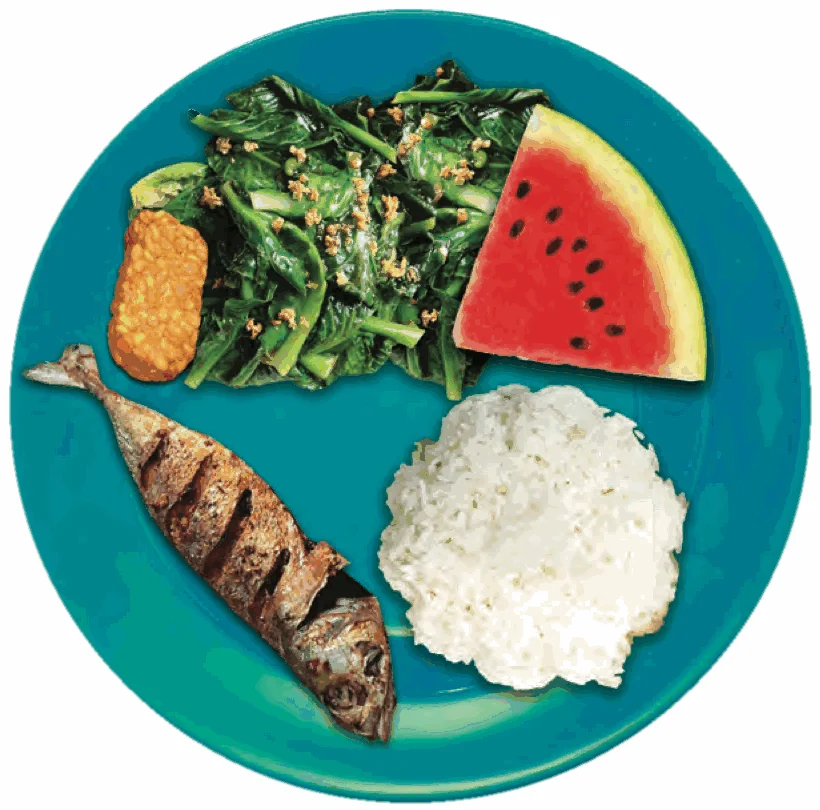
We can plan a balanced meal with the Malaysian Food Pyramid. The bottom is the biggest level, so we eat the most of it. The top is the smallest level, so we eat the least.
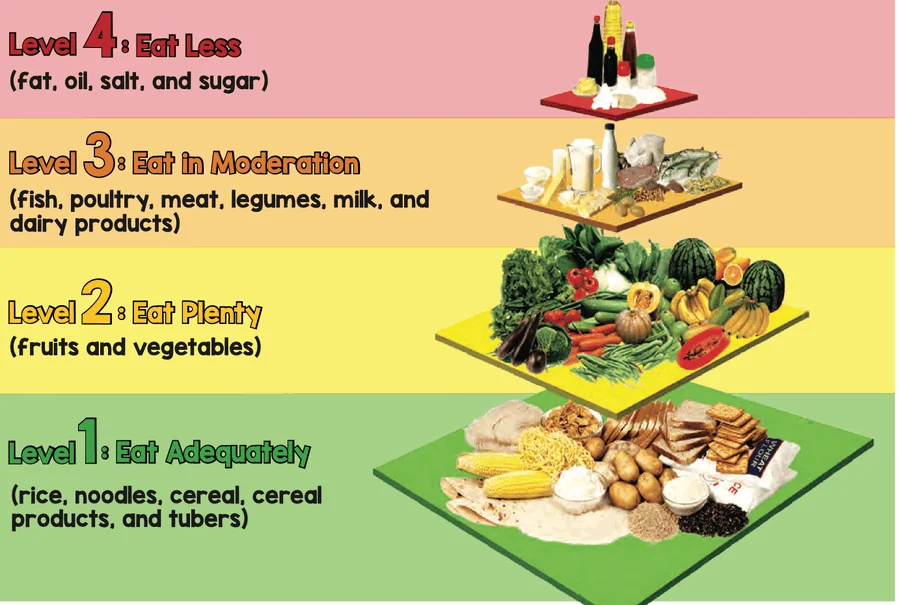
| Level | How much | Food |
|---|---|---|
| Level 4 (top) | Eat less | Fat, oil, salt and sugar |
| Level 3 | Eat in moderation (not too much) | Fish, chicken, meat, beans, milk |
| Level 2 | Eat plenty | Fruits and vegetables |
| Level 1 (bottom) | Eat adequately (enough) | Rice, noodles, bread, cereal, potatoes |
When we do not eat a balanced diet
Eating too much of one kind of food, or not enough of another, can make us unwell.
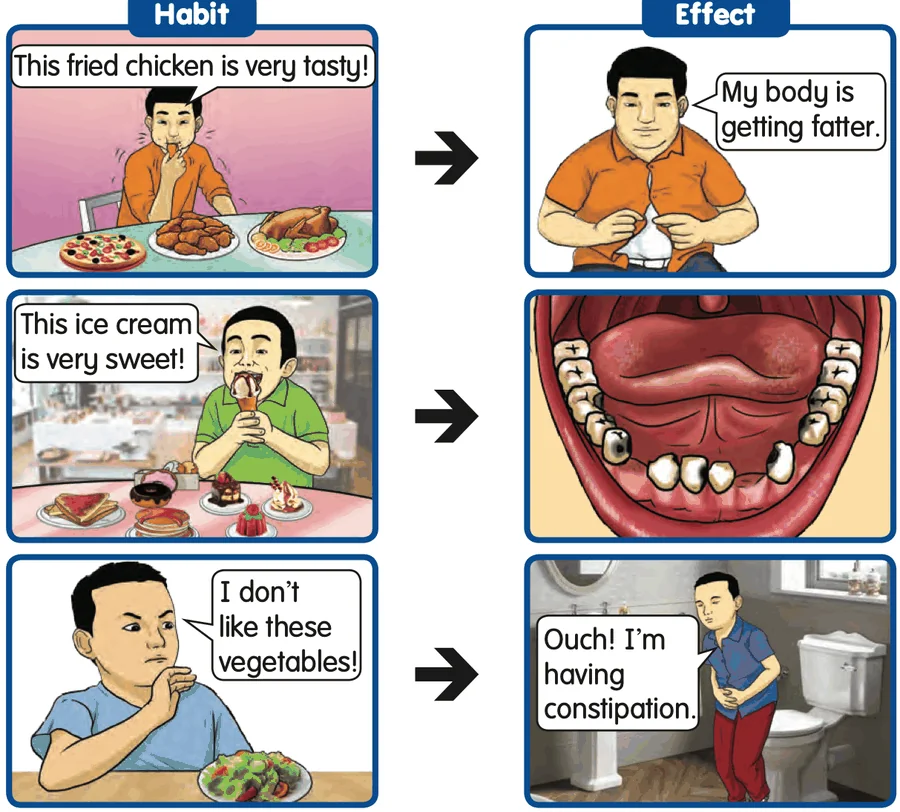
| Habit | Effect |
|---|---|
| Eating too much fried and oily food | Getting too fat (obesity) |
| Eating too many sweet foods | Tooth decay |
| Not eating vegetables | Constipation |
Food pictures: Science Year 3 (DLP) textbook, pp. 40–47.
Show answerHide answer
3.3Digestion
In the mouth
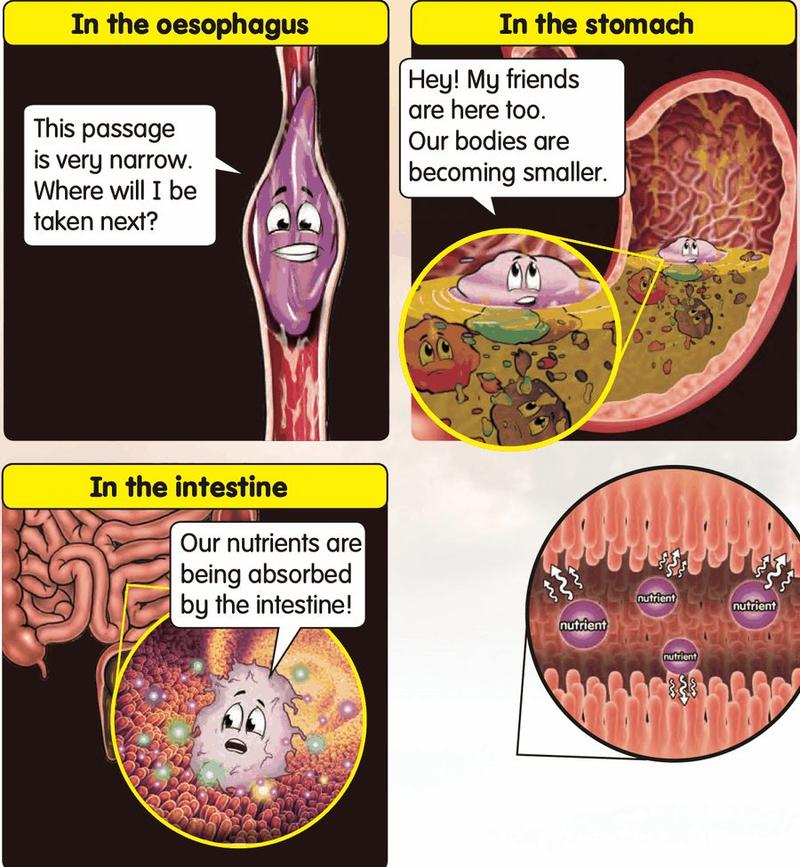
Digestion starts in the mouth. Our teeth break food into small pieces. Our tongue and saliva (spit) make the food soft. Then it is easy to swallow.
The flow of food
Food travels through five parts of the body, in this order:
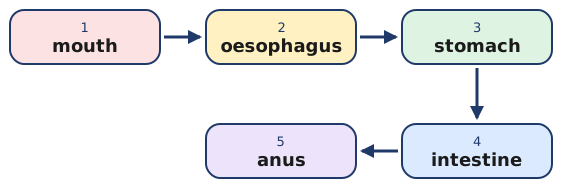
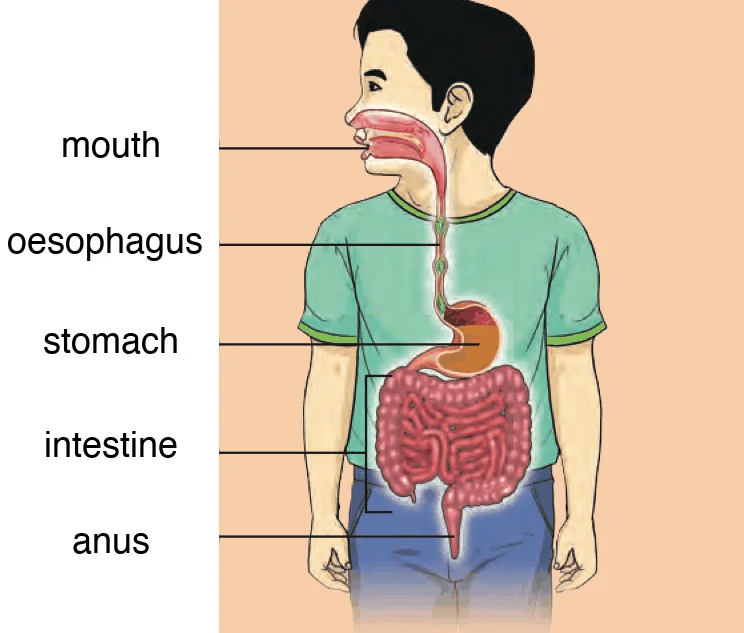
| Part | What happens |
|---|---|
| 1. Mouth | Teeth chew. Tongue and saliva make the food soft. |
| 2. Oesophagus | A narrow tube. It takes food from the mouth to the stomach. |
| 3. Stomach | Food is broken into even smaller pieces. |
| 4. Intestine | Nutrients are absorbed into the body. |
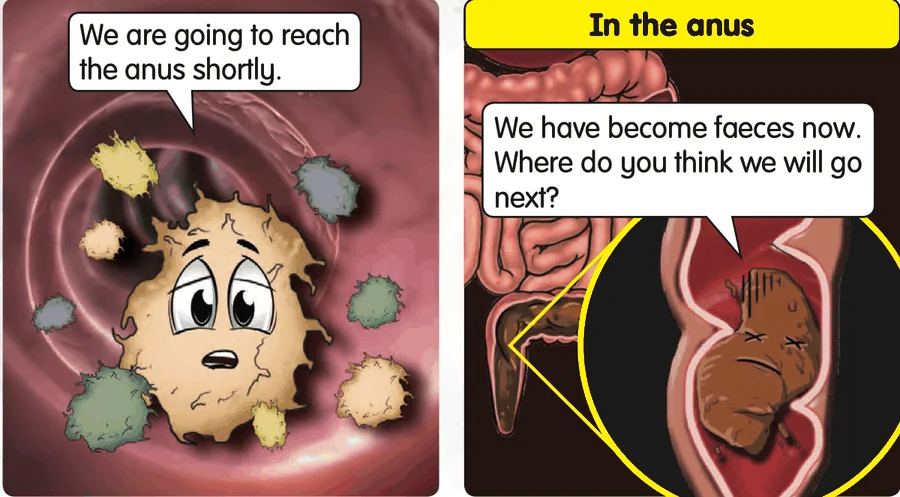
| 5. Anus | Food the body does not need leaves as faeces (stool). |
Actions that disturb digestion
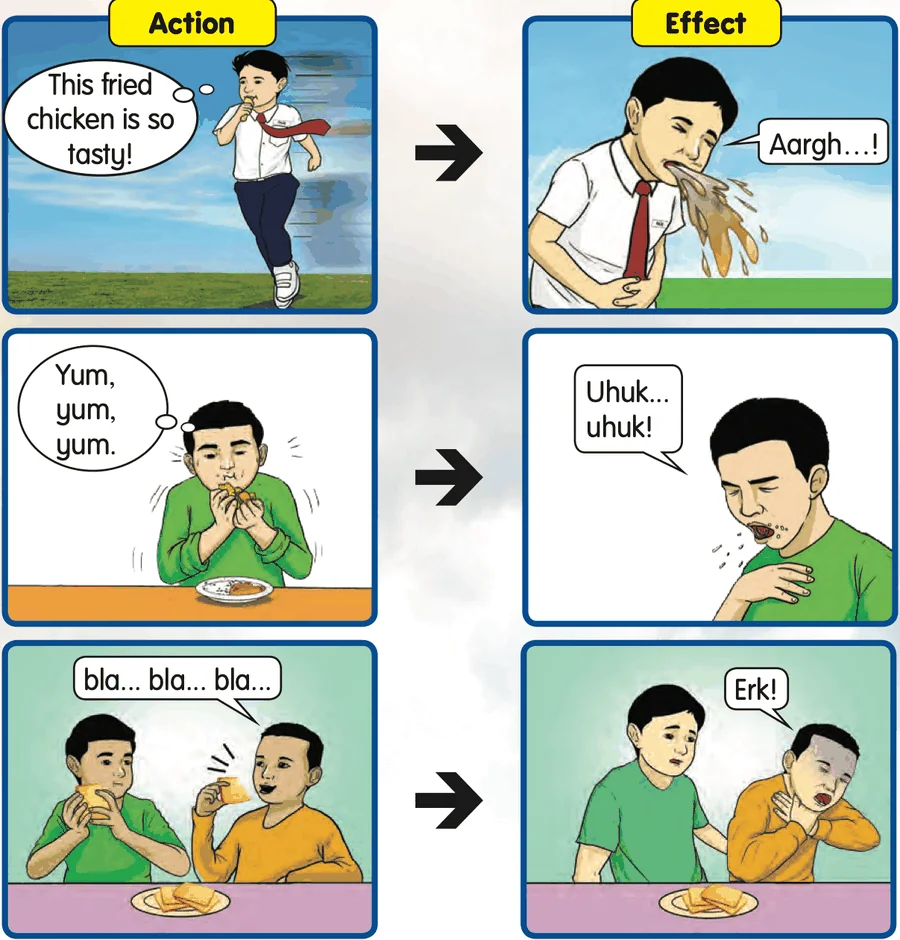
| Action | Effect |
|---|---|
| Eating while running or jumping | Vomiting, stomach ache |
| Eating too fast | Coughing, choking |
| Talking or laughing while eating | Choking |
| Eating late at night | Stomach ache |
Digestion pictures: Science Year 3 (DLP) textbook, pp. 29, 50, 52–54.
Show answerHide answer
Summary
| Remember | Key fact |
|---|---|
| Types of teeth | Incisors cut, canines tear, molars grind |
| Parts of a tooth | Enamel, dentine, gum, nerves, blood vessels |
| Milk teeth / permanent teeth | 20 teeth, short life / 32 teeth, long life |
| Dental care | Rinse, brush twice a day, floss, see the dentist every six months |
| 7 classes of food | Carbohydrate, protein, fats, vitamins, minerals, fibre, water |
| Balanced diet | All classes of food in the right amounts (Malaysian Food Pyramid) |
| Digestion | Breaking food into small pieces so nutrients can be absorbed |
| Flow of food | Mouth, oesophagus, stomach, intestine, anus |
| Disturbs digestion | Eating while running, talking or laughing; eating too fast or late at night |