Animals
What this chapter covers
- You can group animals by what they eat (4.1.1)
- You can say what herbivores, carnivores and omnivores eat (4.1.2)
- You can give examples of herbivores, carnivores and omnivores (4.1.3)
- You can match the teeth of an animal to what it eats (4.1.4)
- You can explain why some animals change what they eat (4.1.5)
4.1What do animals eat?
All animals need food to live and grow. But animals do not all eat the same food. Look at the pictures. What is each animal eating?
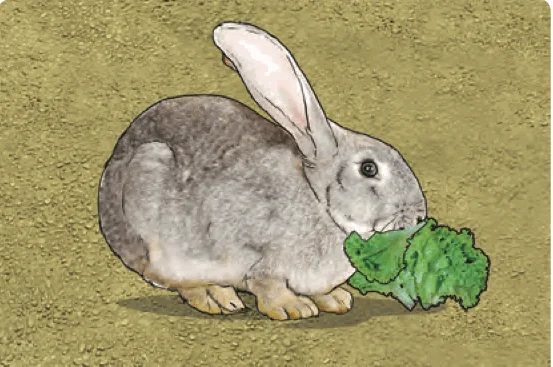 Rabbiteats leaves
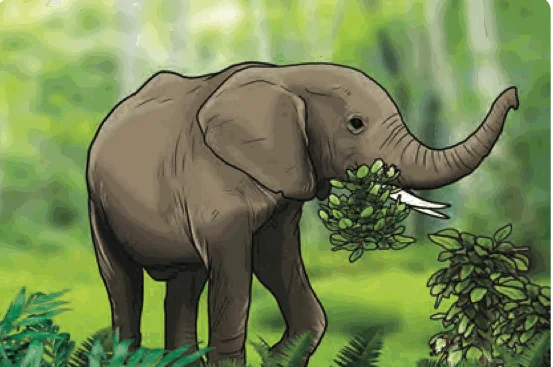 Elephanteats leaves and grass
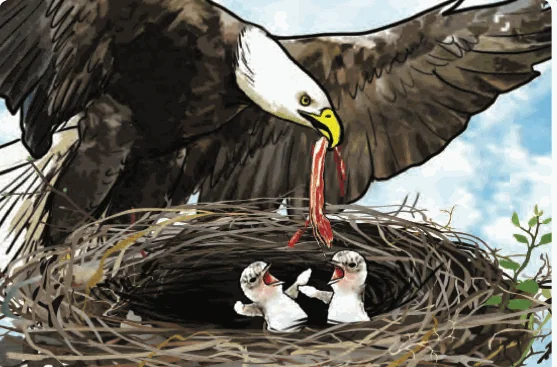 Eagleeats other animals
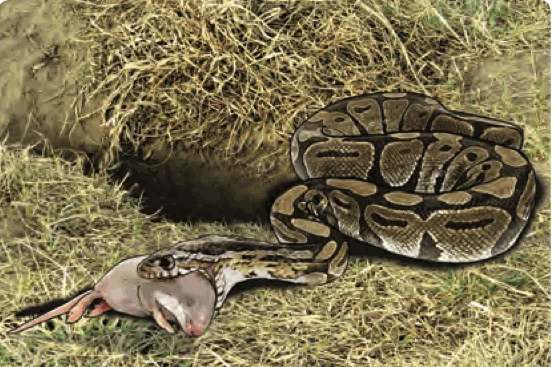 Snakeeats mice and frogs
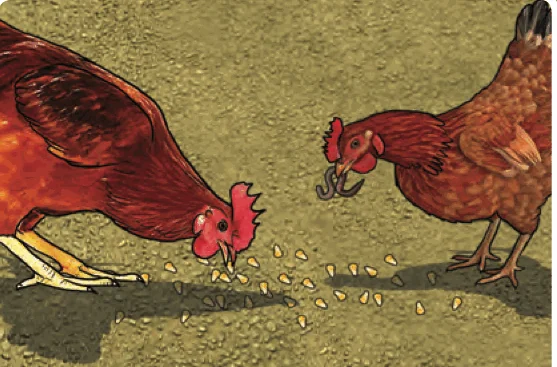 Chickeneats seeds and worms
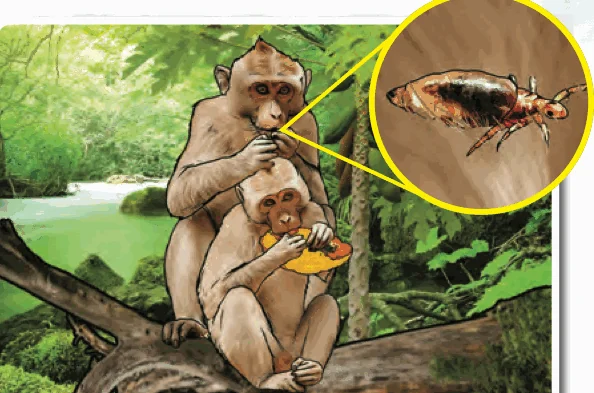 Monkeyeats fruit and insects
Pictures: Science Year 3 (DLP) textbook, p. 60.
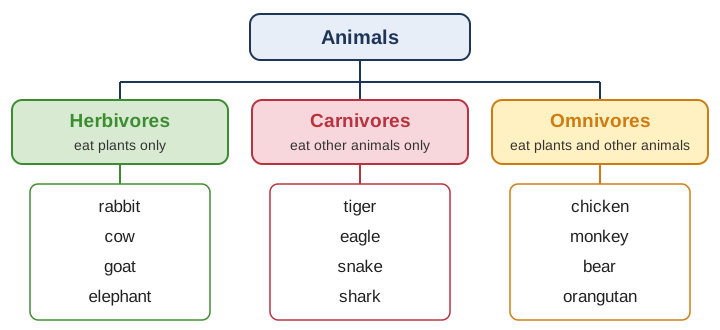
Scientists sort animals into groups. To classify means to put things into groups that are alike. We can classify animals by their eating habits. There are three groups:
- animals that eat plants only
- animals that eat other animals only
- animals that eat plants and other animals
Show answerHide answer
4.2Herbivores, carnivores and omnivores
Each group has a special science name. Learn these three words well.
Carnivore: an animal that eats other animals only. Example: tiger, eagle, snake.
Omnivore: an animal that eats plants and other animals. Example: chicken, monkey, bear.
Animals around us
Think about the animals you see every day.
- The goats and cows in the kampung eat grass. They are herbivores.
- The eagle flying over the padi field catches fish and mice. It is a carnivore.
- The ayam kampung eats rice grains and worms. It is an omnivore.
Food: other animals only, so the frog is a carnivore.
Show answerHide answer
4.3Teeth of animals
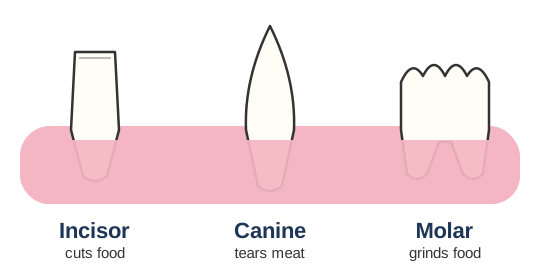
Animals use their teeth to eat. The dentition of an animal means the kind of teeth it has. An animal's teeth match the food it eats.
| Tooth | Shape | Job |
|---|---|---|
| Incisor | Flat and sharp at the edge, at the front of the mouth | Cuts food |
| Canine | Long and pointed | Tears meat |
| Molar | Big and wide, at the back of the mouth | Grinds (crushes) food into small pieces |
Teeth of each group
| Group | Skull | Mouth | Teeth |
|---|---|---|---|
| Carnivore (tiger) | 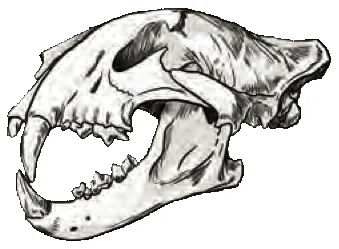 | 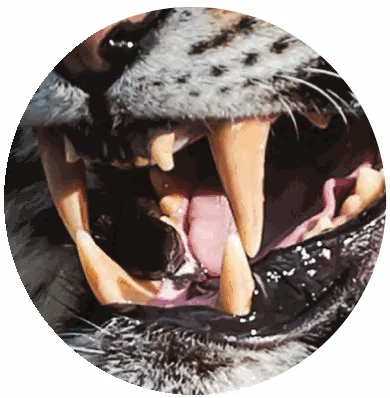 | Very sharp canines to tear meat |
| Herbivore | 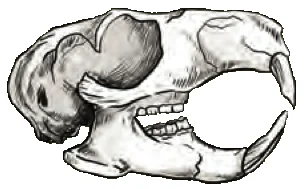 | 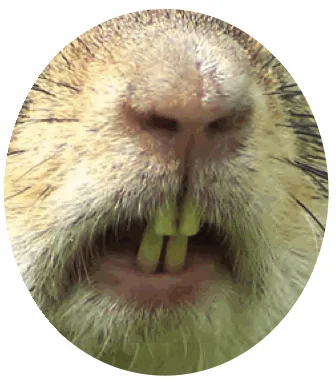 | Strong incisors to cut plants and big molars to grind plants so they are easy to swallow |
| Omnivore | 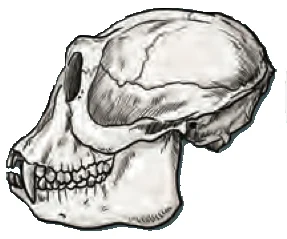 | 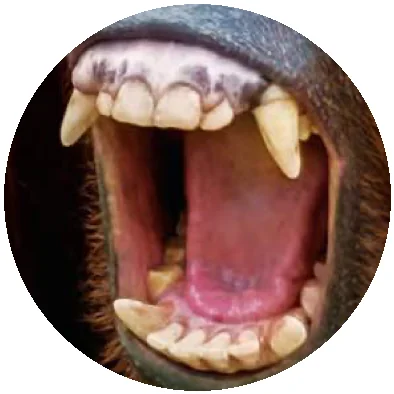 | Incisors to cut, canines to tear and molars to grind |
Skulls and photos: Science Year 3 (DLP) textbook, p. 64.
What if the teeth were wrong?
Imagine a goat with the pointed teeth of a lion. It could not cut grass well. A lion with flat front teeth could not tear meat. Teeth must suit the food.
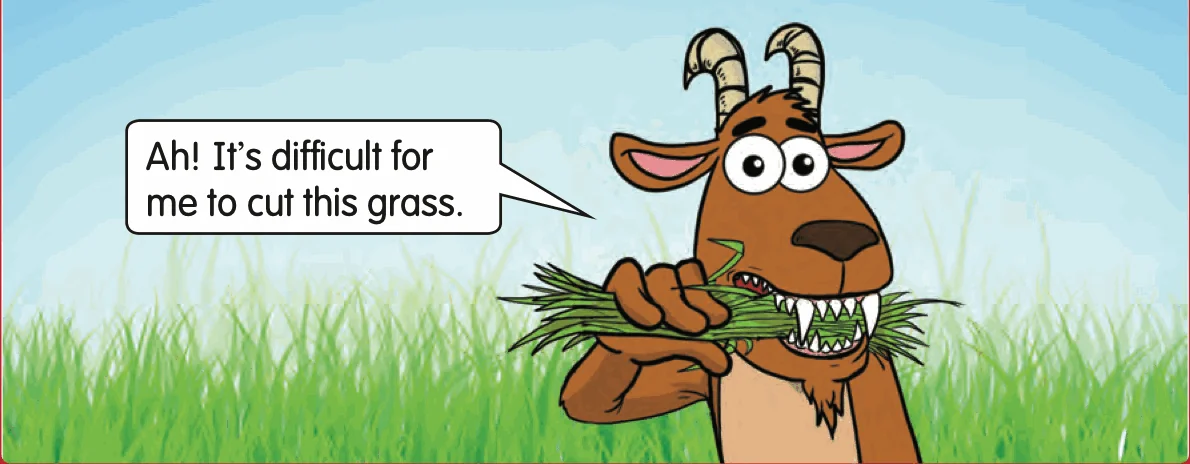
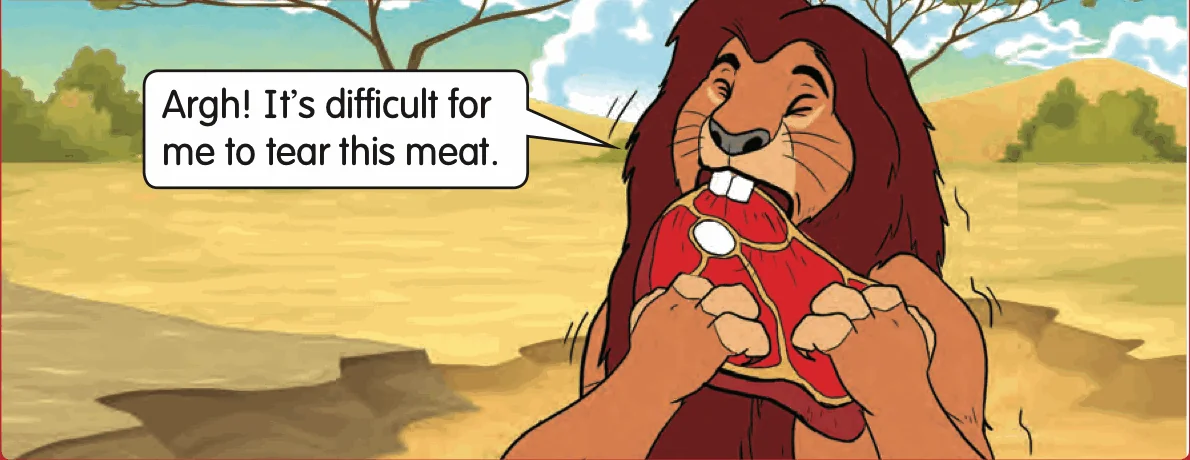
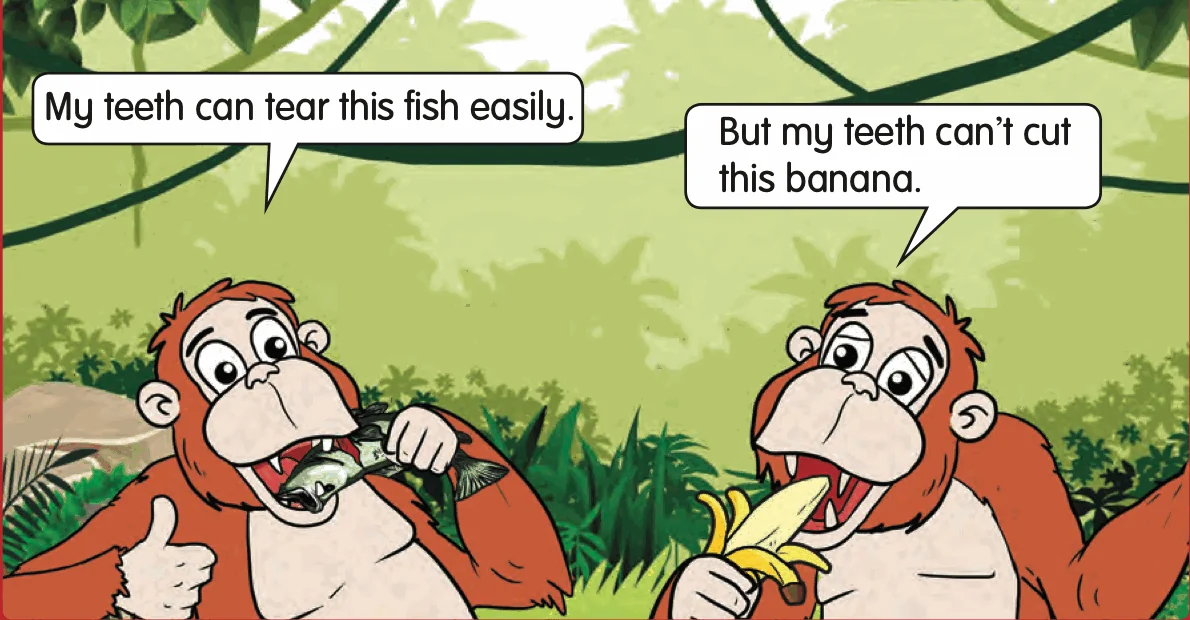
Cartoons: Science Year 3 (DLP) textbook, pp. 65–66.
Show answerHide answer
4.4Animals can change what they eat
Most bears are omnivores. They eat fruit, honey, fish and other animals.
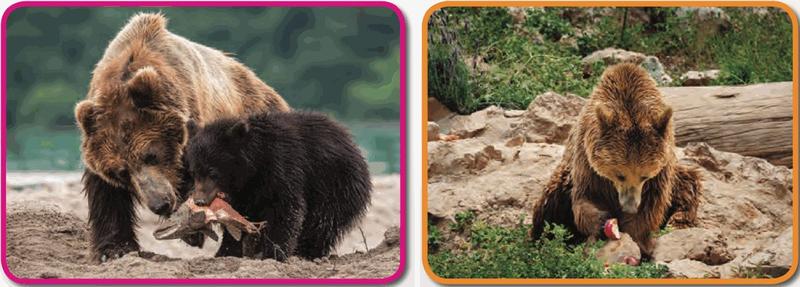
Photos: Science Year 3 (DLP) textbook, p. 67.
The polar bear lives near the North Pole. It is always cold there and the ground is covered in ice. Plants cannot grow on ice. So the polar bear eats seals and fish only. The polar bear has changed its eating habit. It is a carnivore.
Show answerHide answer
Summary
| Group | Eats | Teeth | Examples |
|---|---|---|---|
| Herbivore | Plants only | Strong incisors and big molars | Rabbit, cow, goat, elephant |
| Carnivore | Other animals only | Very sharp canines | Tiger, eagle, snake, frog |
| Omnivore | Plants and other animals | Incisors, canines and molars | Chicken, monkey, bear, bat |
- Incisors cut, canines tear, molars grind.
- Animals may change their eating habits when their surroundings change (polar bear).