Plants
What this chapter covers
- You can name six ways plants reproduce and give an example of each (5.1.1)
- You can explain why plants must keep reproducing (5.1.2)
- You can name plants that reproduce in two different ways (5.1.3)
- You can describe how tissue culture and marcottage help us grow more plants (5.1.4)
Picture: Science Year 3 (DLP) textbook, p. 71.
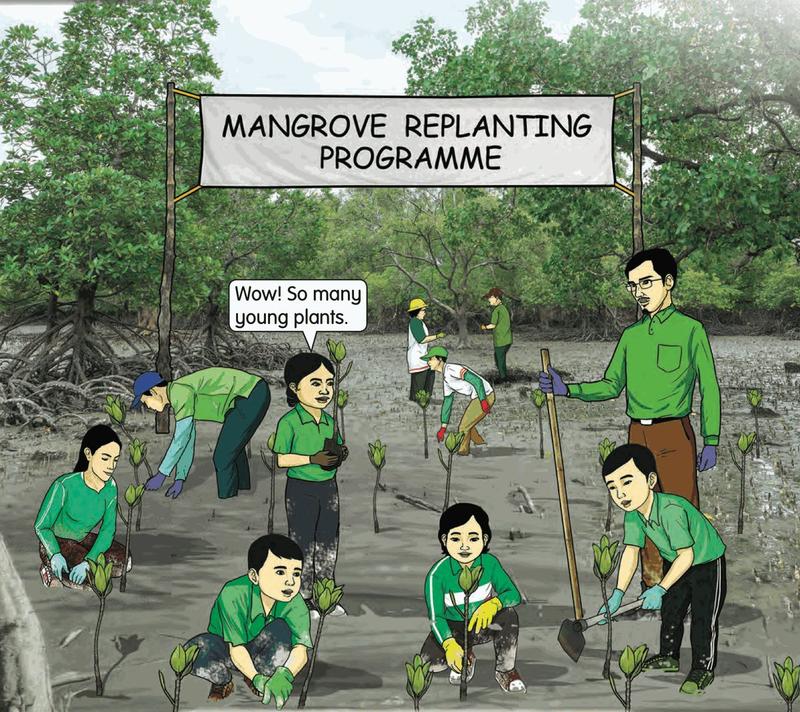
Look at the picture. The pupils are planting young mangrove trees. Old trees die or get cut down. New trees must grow to take their place. In this unit you will learn how plants make new plants.
5.1Ways plants reproduce
Plants need to reproduce so they do not die out. When a kind of plant dies out completely and is gone forever, we call it extinction.
Plants can reproduce in six ways. Let's meet them one by one.
1. Seeds
Plants that make fruits reproduce through seeds. The seeds are inside the fruit. Plant a seed in soil, water it, and a new plant grows.
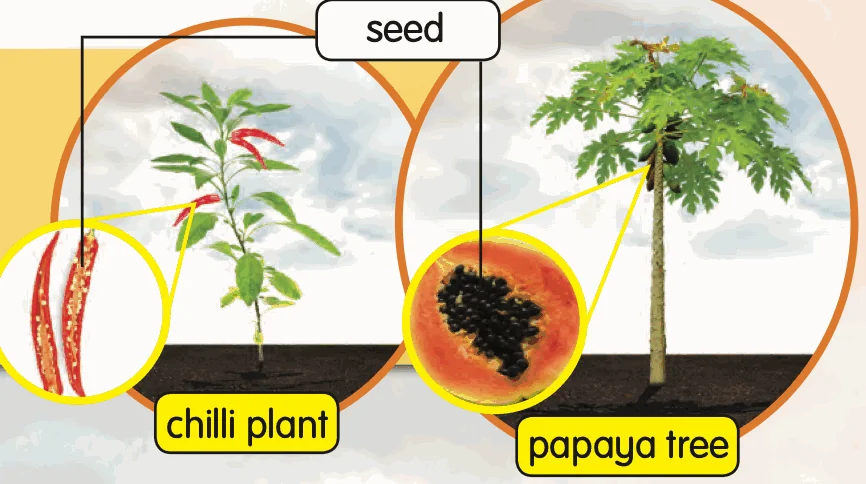
More examples: durian, rambutan, watermelon, rice (padi) and the sunflower.
2. Suckers
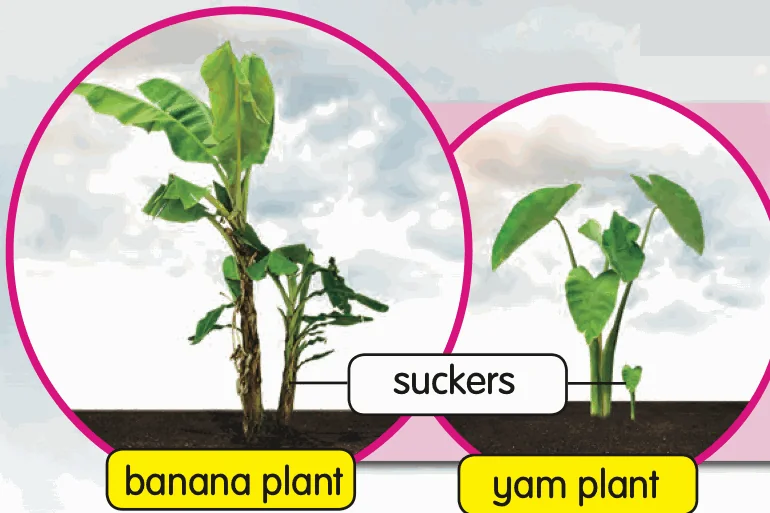
A sucker can be dug up and planted somewhere else. It grows into a new plant.
3. Underground stems
Some plants keep a fat stem under the soil. This underground stem stores food. When we plant it, a new plant grows from it.
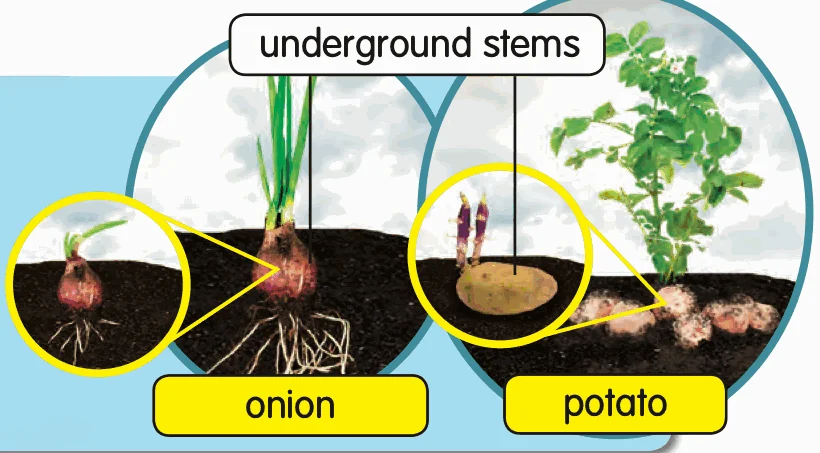
Ginger (halia) and turmeric (kunyit) are underground stems too. Your mother uses them in the kitchen!
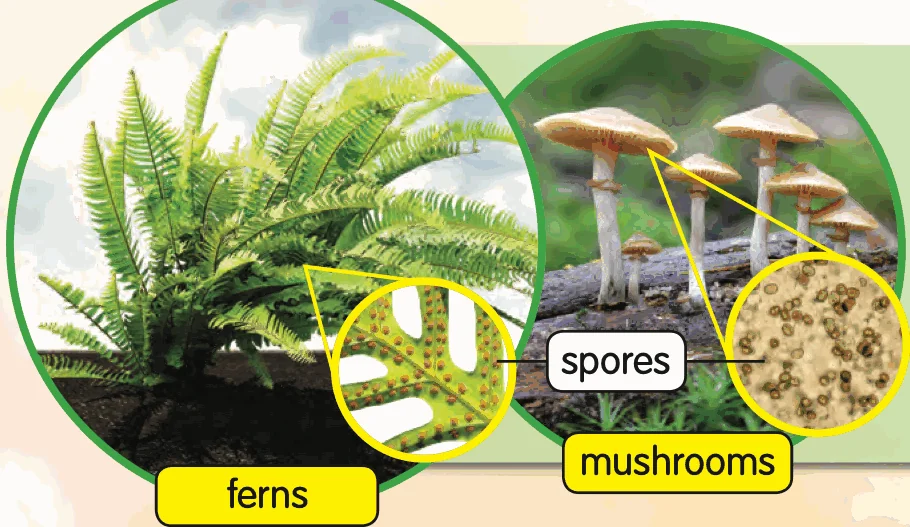
4. Spores
Plants that do not have flowers reproduce through spores. Ferns and mushrooms use spores.
5. Stem cuttings
A stem cutting is a piece of stem cut from a plant. Push it into the soil. Roots and new leaves grow, and soon it is a new plant.
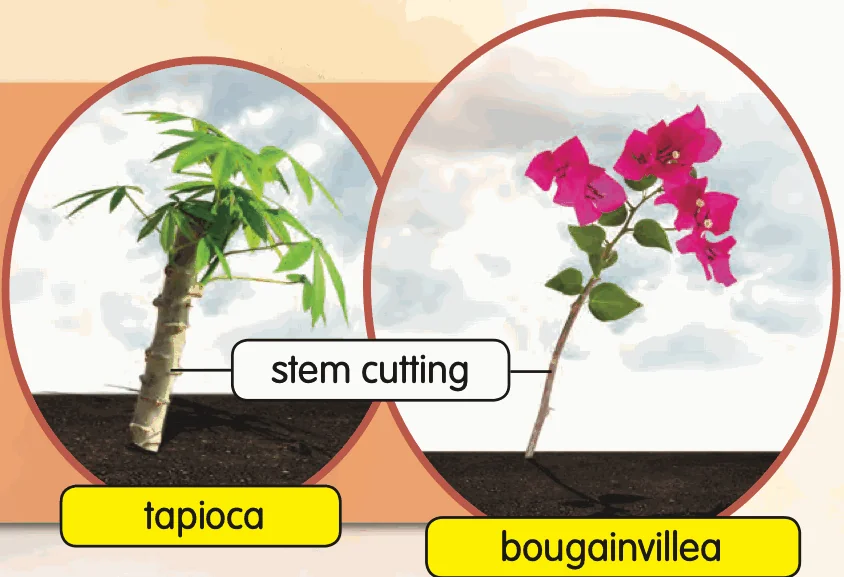
Hibiscus (bunga raya) and sweet potato can also grow from stem cuttings.
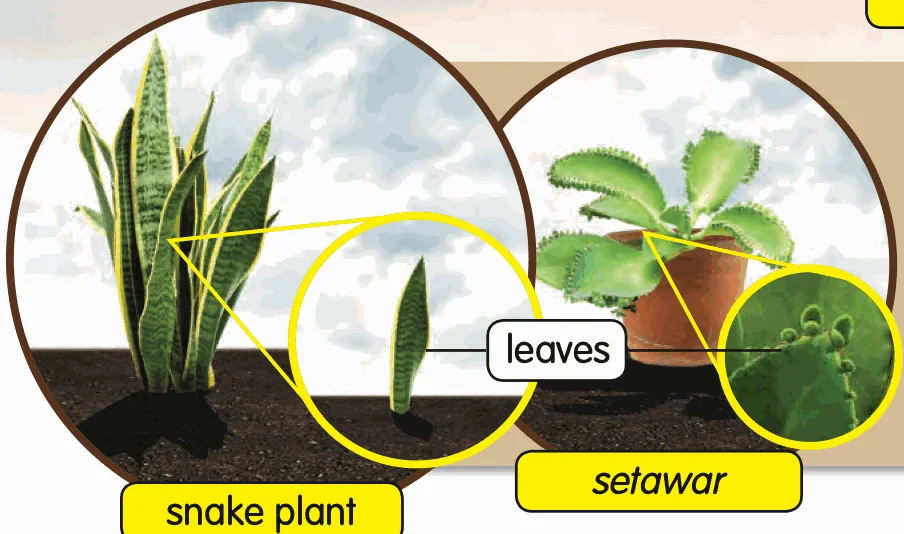
6. Leaves
A few plants can grow new plants from their leaves. A leaf falls on the soil and tiny new plants grow from it.
Pictures: Science Year 3 (DLP) textbook, pp. 72–73.
| Way | Examples |
|---|---|
| Seeds | chilli, papaya, durian |
| Suckers | banana, yam |
| Underground stems | onion, potato, ginger |
| Spores | fern, mushroom |
| Stem cuttings | tapioca, bougainvillea |
| Leaves | snake plant, setawar |
Show answerHide answer
5.2Why plants must reproduce
Plants reproduce to make more plants of their own kind. This keeps their kind, or species, alive.
Why does this matter to us? Plants give living things four important things. A habitat is a home. Oxygen is a gas in the air that we need to breathe.
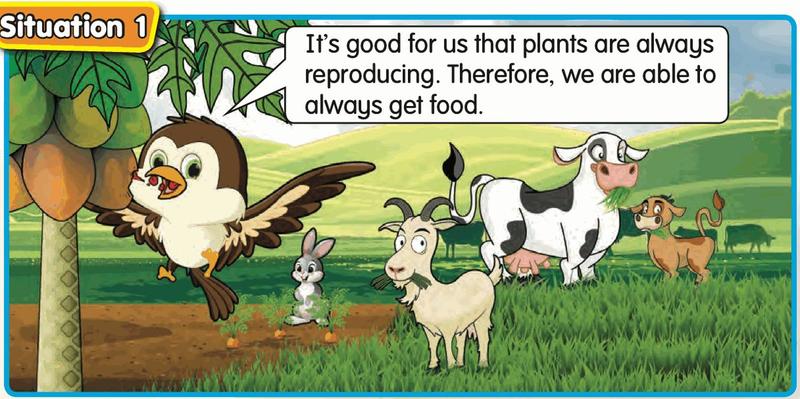
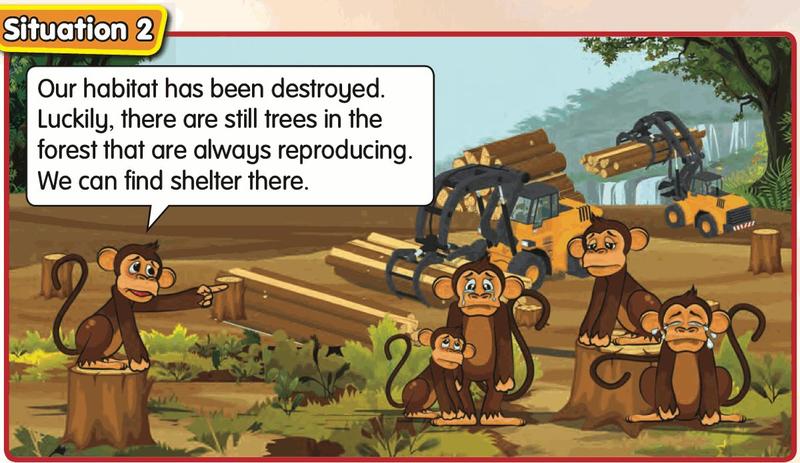
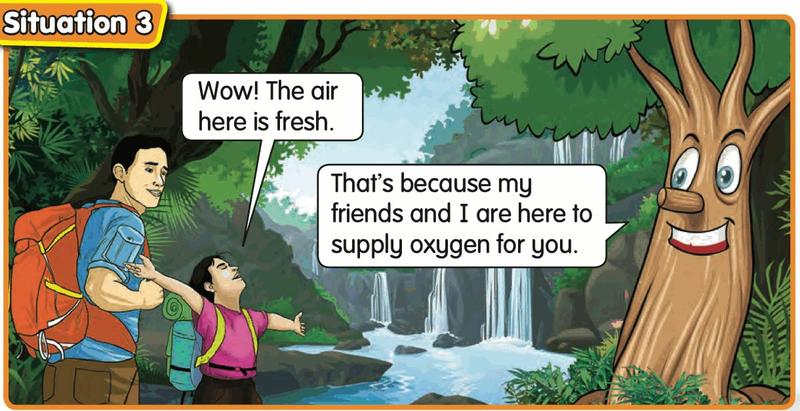
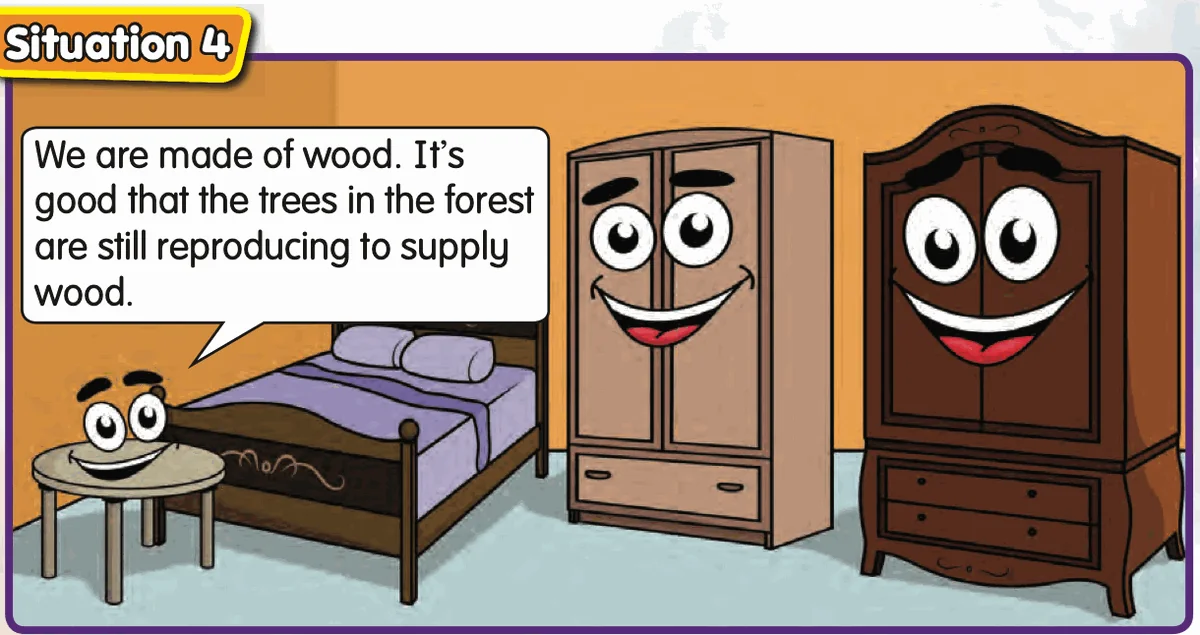
Situations 1–4: Science Year 3 (DLP) textbook, pp. 74–75.
If plants stop reproducing, we would lose our food, animals would lose their homes, the air would have less oxygen, and we would have no wood.
Think about it
The nasi lemak at the school canteen comes from plants too! Rice, coconut milk, cucumber, groundnuts and the chilli in the sambal all come from plants. Plants must keep reproducing so we can enjoy it again tomorrow.
Show answerHide answer
5.3One plant, two ways
Some plants can reproduce in two different ways.
Water spinach (kangkung) is one of them. Pupils tested it in two ways.
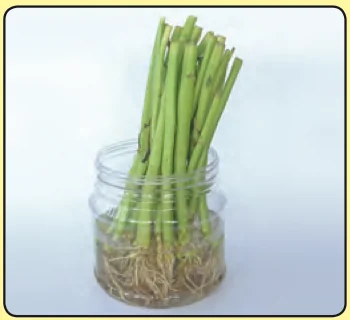
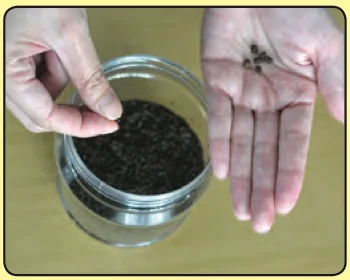
Photos: Science Year 3 (DLP) textbook, p. 76.
They looked at the plants every day. New shoots grew in both containers. A shoot is a new young stem with leaves.
| Way of reproduction | Did shoots grow? |
|---|---|
| Stem cutting | Yes |
| Seeds | Yes |
So water spinach can reproduce in more than one way: by stem cuttings and by seeds.
| Plant | Two ways it reproduces |
|---|---|
| Water spinach (kangkung) | Stem cuttings and seeds |
| Basil (selasih) | Stem cuttings and seeds |
| Sweet potato (ubi keledek) | Stem cuttings and underground stems |
Show answerHide answer
5.4Technology helps plants reproduce
Scientists and farmers use technology to grow many new plants quickly. Technology means using clever tools and methods. Here are two ways.
Tissue culture
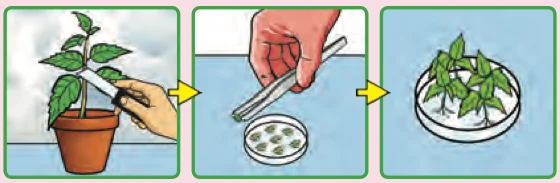
Examples: banana plants and orchid plants.
Marcottage
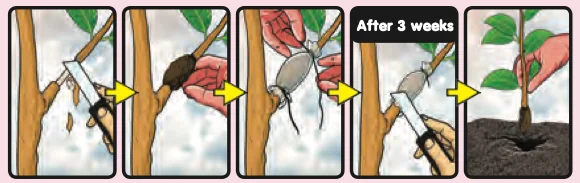
Examples: mango trees and lime trees.
Pictures: Science Year 3 (DLP) textbook, p. 77.
Show answerHide answer
Try it at home: a hanging garden
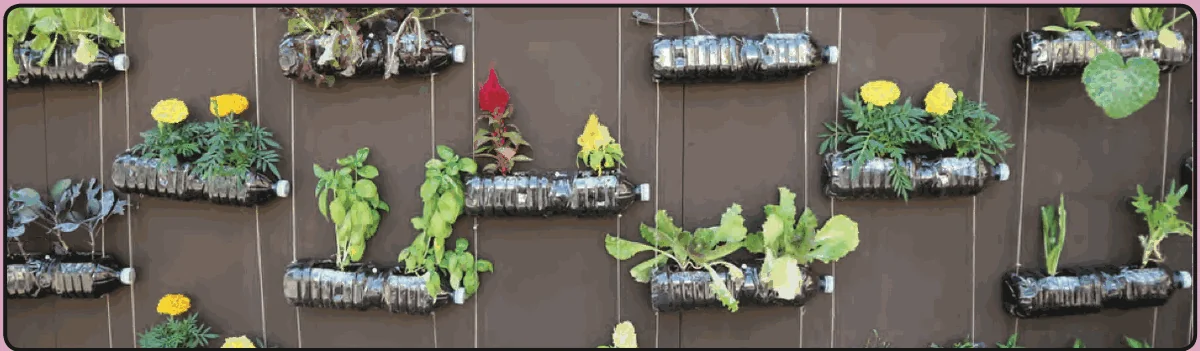
Ask an adult to help you cut an old plastic bottle. Fill it with soil and plant a stem cutting or some seeds. Hang it near a sunny window and water it.
Summary
| Topic | Remember this |
|---|---|
| Six ways plants reproduce | Seeds, suckers, underground stems, spores, stem cuttings, leaves |
| Why plants reproduce | So there is always food, habitat, oxygen and wood |
| Plants with two ways | Water spinach, basil, sweet potato |
| Technology | Tissue culture (banana, orchid) and marcottage (mango, lime) |