Science questions, unit 6
Nama / NameKelas / ClassTarikh / Date
Measurement
28 marks. Use Practice to check each answer as you go, or Exam to answer everything first and then check.
Section A: objective questions
8 marksChoose the best answer for each question.
1
Question 1
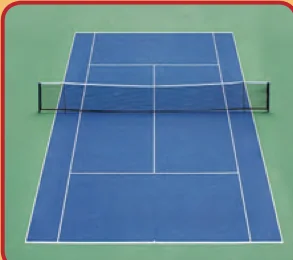
Diagram 1 shows a tennis court. Which unit is suitable for its area?
Show answerHide answer
B
A court is a big place, but not as big as a state. Its area is measured in square metre (m²).
2
Question 2
What is volume?
Show answerHide answer
D
Volume is the amount of space which can be filled with solid, liquid or gas. The size of a flat surface is area.
3
Question 3
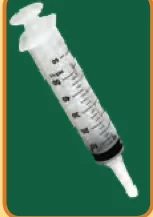
Diagram 2 shows a syringe with medicine. Which unit is best for the volume of the medicine?
Show answerHide answer
A
A syringe holds a small amount of liquid, so we use millilitre (mℓ). Units with ² are for area, not volume.
4
Question 4
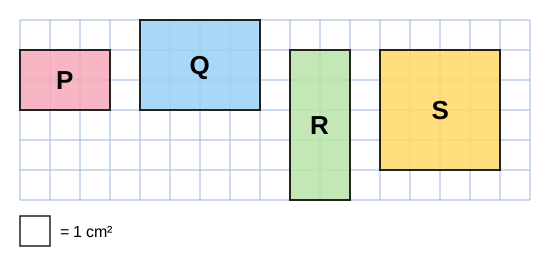
Diagram 3 shows four cards, P, Q, R and S, on 1 cm × 1 cm squares. Which card has the biggest area?
Show answerHide answer
D
Count the squares: P = 6 cm², Q = 12 cm², R = 10 cm², S = 16 cm². S covers the most squares.
5
Question 5
What is the name of the curve on the surface of a liquid in a measuring cylinder?
Show answerHide answer
C
The meniscus is the curve on the surface of the liquid in a container.
6
Question 6
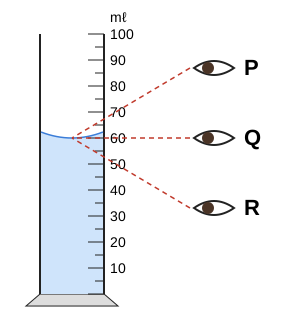
Diagram 4 shows three eye positions, P, Q and R. Which is the correct position to read the volume of water?
Show answerHide answer
B
The eye must be level with the bottom of the meniscus. Eye Q is level with it.
7
Question 7
We use the water displacement method to find the volume of which object?
Show answerHide answer
A
A stone has an irregular shape. We put it in water and measure how much the water level rises.
8
Question 8
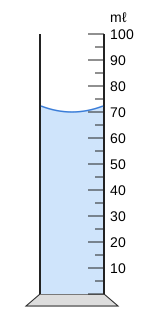
Diagram 5 shows some coloured water in a measuring cylinder. What is the volume of the water?
Show answerHide answer
C
The bottom of the meniscus is at the line marked 70, so the volume is 70 mℓ.
Section B: structured questions
20 marksAnswer all questions. Circle the answer or write it in the space given.
9
Question 9
Choose the correct unit for each object.
[1 mark]
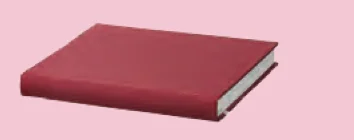
(a)Area of a book cover
Show answerHide answer
square centimetre (cm²)
A book is small, so we use cm².
[1 mark]
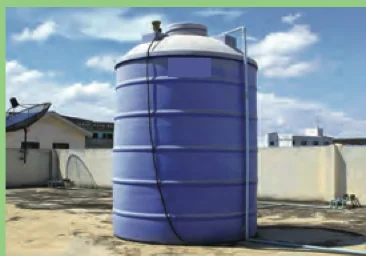
(b)Volume of water in a water tank
Show answerHide answer
cubic metre (m³)
A water tank is very big, so we use cubic metre (m³).
[1 mark]
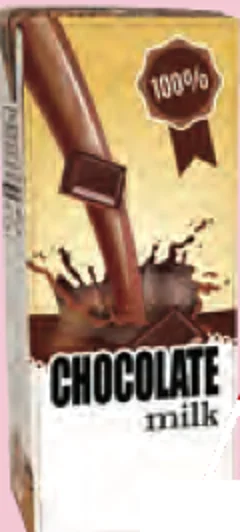
(c)Volume of a carton of milk
Show answerHide answer
millilitre (mℓ)
A small carton holds only a little drink (200 mℓ), so we use millilitre.
10
Question 10
Classify each surface as regular or irregular.
[1 mark]
(a)Leaf
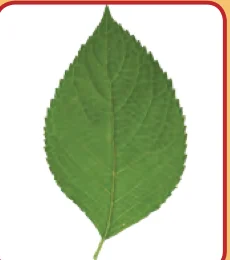
Show answerHide answer
Irregular
A leaf has a curvy, odd shape.
[1 mark]
(b)Swimming pool
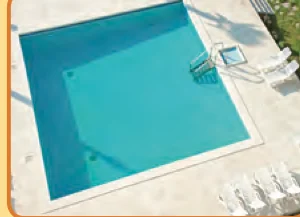
Show answerHide answer
Regular
The pool is a rectangle with straight sides.
[1 mark]
(c)Lake
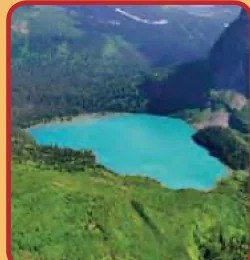
Show answerHide answer
Irregular
A lake has a wavy, odd-shaped edge.
11
Question 11
Mei Ling drew around a puddle on graph paper. Each square is 1 cm × 1 cm. She ticked (✓) some squares. Diagram 6 shows her work.
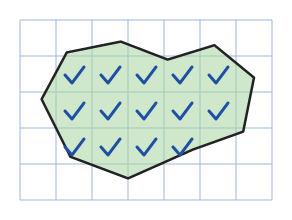
[1 mark]
(a)Which squares should Mei Ling tick?
Show answerHide answer
Full squares and squares half full or more
We tick full squares and squares that are half full or more.
[1 mark]
(b)Estimate the area of the puddle.
Show answerHide answer
Count the ticks: 5 + 5 + 4 = 14.
Tick each point you got.
12
Question 12
Three hollow boxes, P, Q and R, are filled with 1 cm³ cubes. Diagram 7 shows the cubes in each box.
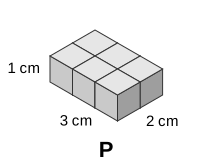
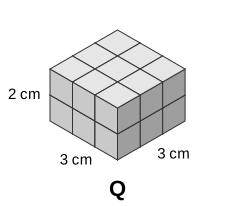
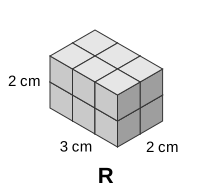
[1 mark]
(a)Count the cubes in box R. What is the volume of box R?
Show answerHide answer
Box R has 3 × 2 = 6 cubes in each layer and 2 layers: 6 + 6 = 12 cubes, so 12 cm³.
Tick each point you got.
[1 mark]
(b)Which box has the biggest volume?
Show answerHide answer
Q
P = 6 cubes (6 cm³), Q = 18 cubes (18 cm³), R = 12 cubes (12 cm³). Q needs the most cubes.
13
Question 13
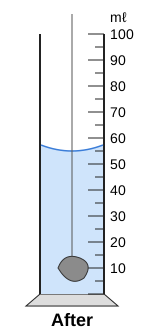
Hafiz tied a stone with thread and put it into a measuring cylinder of water. Diagram 8 shows the water level before and after.
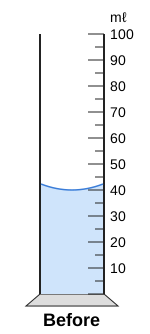
[1 mark]
(a)What is the initial volume of the water?
Show answerHide answer
Tick each point you got.
[1 mark]
(b)What is the volume of the stone?
Show answerHide answer
Volume of stone = final volume − initial volume.
Tick each point you got.
[1 mark]
(c)Name the method Hafiz used.
Show answerHide answer
Water displacement method
The stone pushes (displaces) the water up. The water that moves up has the same volume as the stone.
14
Question 14
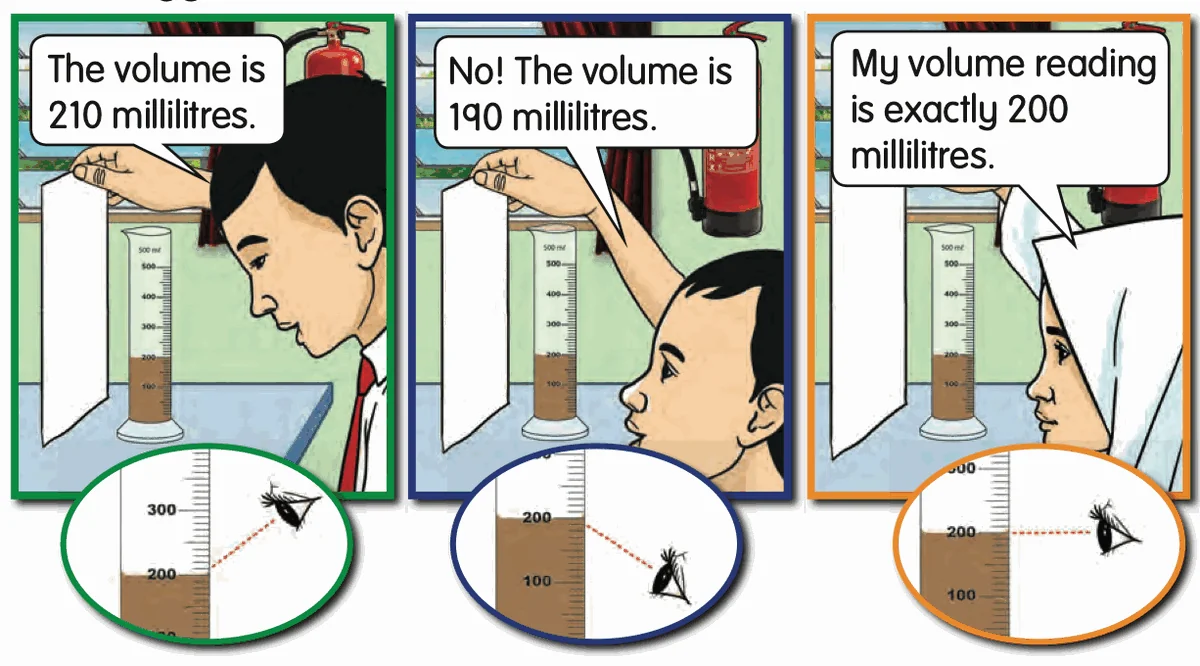
Lim, Langgi and Aishah read the volume of the same milk. Lim says 210 mℓ. Langgi says 190 mℓ. Aishah says 200 mℓ. Diagram 9 shows how they read it.
[1 mark]
(a)Who has the correct reading?
Show answerHide answer
Aishah
[1 mark]
(b)Give a reason for your answer.
Show answerHide answer
Tick each point you got.
15
Question 15
Lim's father wants to put new tiles on the floor of his house.
[1 mark]
(a)What will happen if he does not measure the floor first?
Show answerHide answer
Any 1 points
Tick each point you got.
[2 marks]
(b)Lim wants to find the volume of a nail. He has a full glass of water, a basin, thread and a syringe. Write the steps he should follow.
Show answerHide answer
Tick each point you got.
16
Question 16
Is each sentence true or false?
[1 mark]
(a)A 1 cm × 1 cm paper square has an area of 1 cm².
Show answerHide answer
True
[1 mark]
(b)We read a measuring cylinder with our eyes above the meniscus.
Show answerHide answer
False
Our eyes must be level with the meniscus, not above it.