Density
What this chapter covers
- You can sort objects into those that float and those that sink (7.1.1)
- You can say that objects less dense than water float and objects more dense than water sink (7.1.2)
- You can show that adding salt or sugar makes water more dense (7.1.3)
- You can compare how dense different liquids are by looking at their layers (7.1.3)
- You can explain how density helps us in daily life, such as life jackets, anchors and fish farm floats (7.1.4)
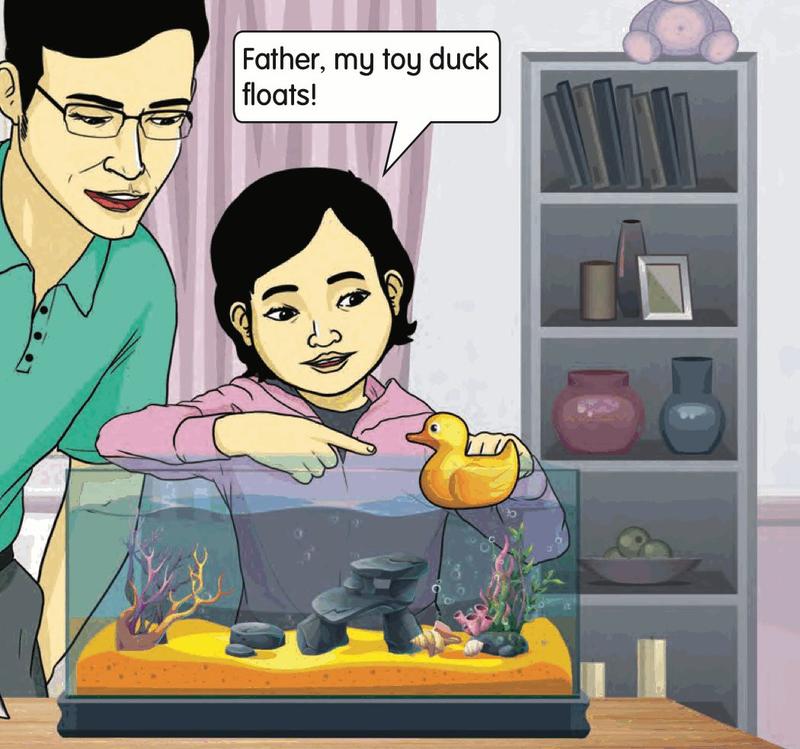
Picture: Science Year 3 (DLP) textbook, p. 95.
7.1Float and sink
Drop a stone into a river. Plop! It goes down. Now drop a dry twig. It stays on top. Some things float and some things sink.
An object sinks when it goes down under the water.
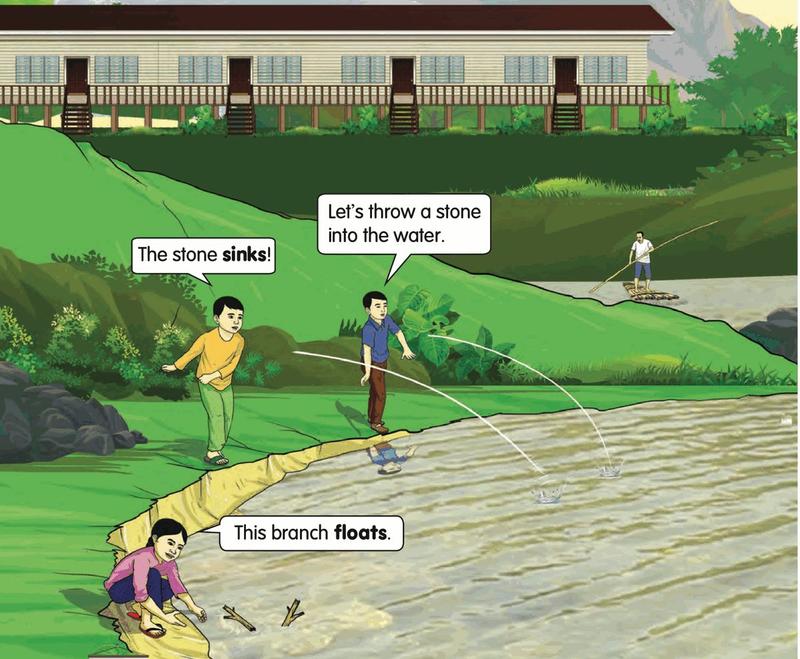
Picture: Science Year 3 (DLP) textbook, p. 96.
Let's test some objects
In the textbook, pupils put six objects into a small aquarium full of water. Then they looked carefully. Did each object float or sink? Here is what they found.
| Object | Float or sink? |
|---|---|
| Coin | Sinks |
| Ping-pong ball | Floats |
| Marble | Sinks |
| Soap | Sinks |
| Cork | Floats |
| Sponge | Floats |
We can classify them. Classify means to sort things into groups.
| Objects that float | Objects that sink |
|---|---|
| Ping-pong ball, cork, sponge | Coin, marble, soap |
Look at these two photos. The big, heavy logs float. The small, light rubber bands sink! So floating is not just about being big or small.
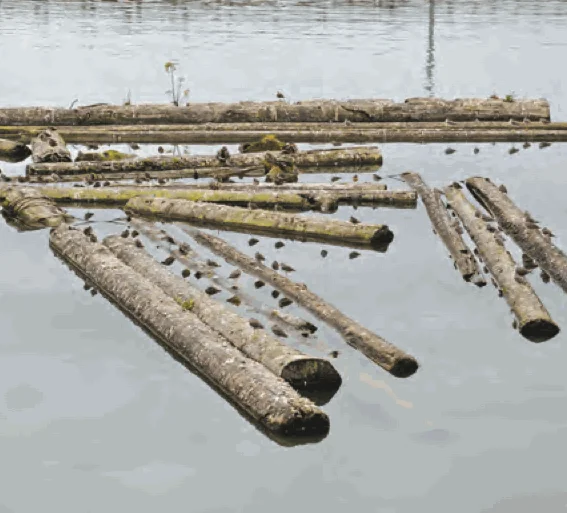
Float
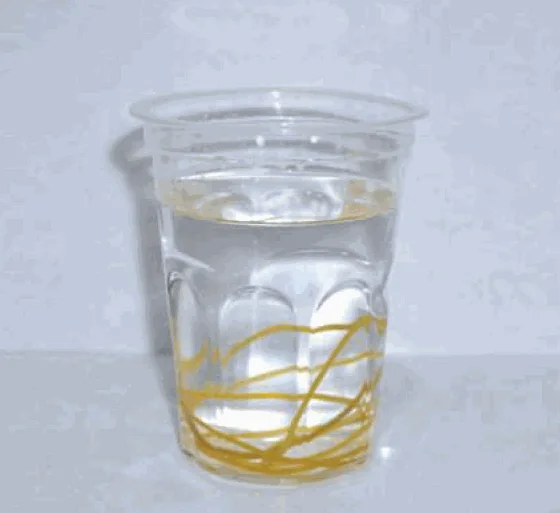
Sink
Photos: Science Year 3 (DLP) textbook, p. 99.
Show answerHide answer
7.2Density
So why do some things float and others sink? The answer is density.
Look at the sponge and the soap. They are about the same size.
- The sponge has lots of tiny holes full of air. We call them air spaces.
- The soap has no air spaces. It is solid all the way through.
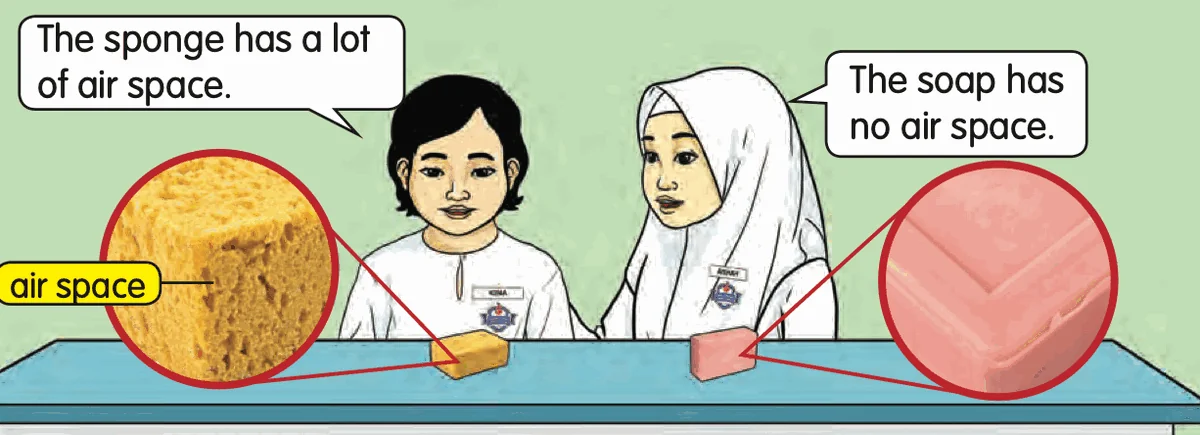
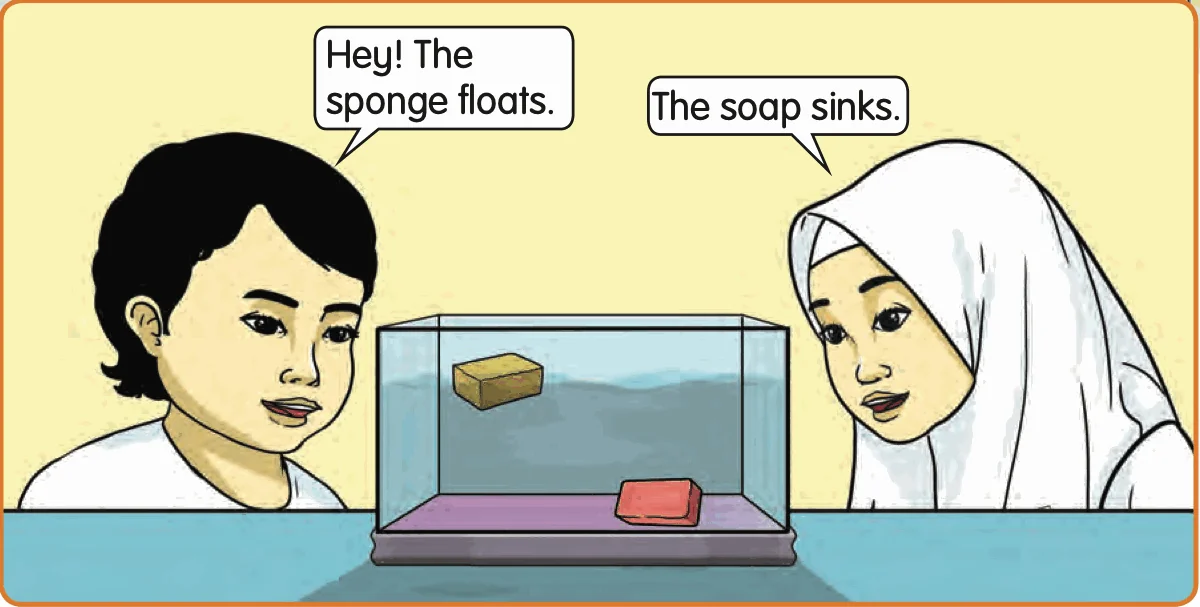
Pictures: Science Year 3 (DLP) textbook, p. 98.
Floating and sinking depend on the density of the object compared with the density of water.
Objects that are more dense than water will sink.
| Float | Sink | |
|---|---|---|
| Where is the object? | On the surface of the water | Under the water |
| Density | Less dense than water | More dense than water |
| Examples | Cork, sponge, log, apple, feather | Coin, soap, marble, stone, paper clip |
Show answerHide answer
7.3Making water more dense
A grape is more dense than water. So a grape sinks in plain water. Can we make it float without touching it? Yes! We can change the water.
Adding salt
Stir some salt into the water. The salt dissolves. Dissolve means it mixes into the water until we cannot see it any more. Now the water is more dense. The grape that sank before now floats!
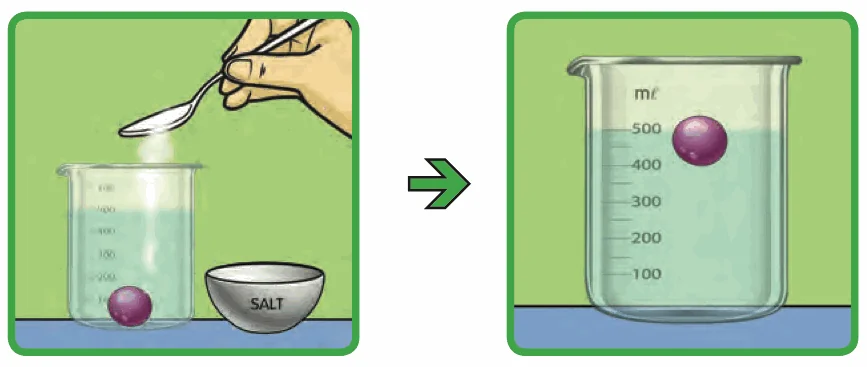
Picture: Science Year 3 (DLP) textbook, p. 100.
Adding sugar
Sugar works too. In the textbook, pupils carved a fish shape from a carrot. The carrot fish sank in plain water. They added sugar one spoonful at a time and stirred. After enough sugar, the fish floated!
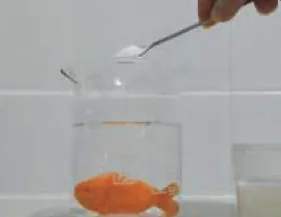
The carrot fish sinks
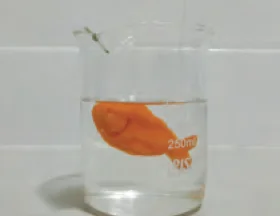
The carrot fish floats
Photos: Science Year 3 (DLP) textbook, p. 100.
Layers of liquids
Liquids have density too. Pour coloured water, cooking oil and glycerine slowly into one bottle. They do not mix. They make layers, like a kuih lapis!
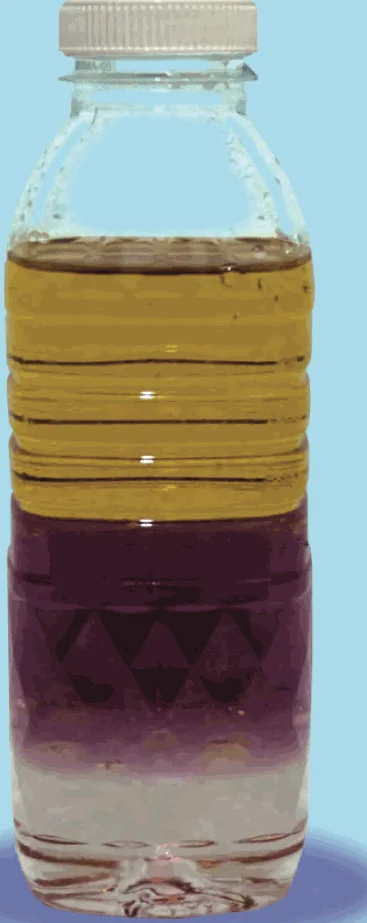
Three layers
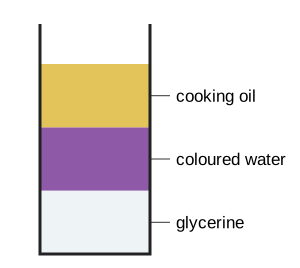
Oil, water, glycerine
Photo: Science Year 3 (DLP) textbook, p. 101.
- The most dense liquid goes to the bottom. Here it is glycerine.
- The least dense liquid stays at the top. Here it is cooking oil.
- Cooking oil floats on water because oil is less dense than water.
Show answerHide answer
7.4Density in daily life
People use what they know about density to stay safe and to work.
Ship and anchor
A ship and an anchor are both made of iron. But the ship floats and the anchor sinks. Why?
- The ship is hollow. It has lots of air inside. So the whole ship is less dense than water. It floats.
- The anchor is solid iron. It is more dense than water. It sinks to the sea bed and holds the boat in place.
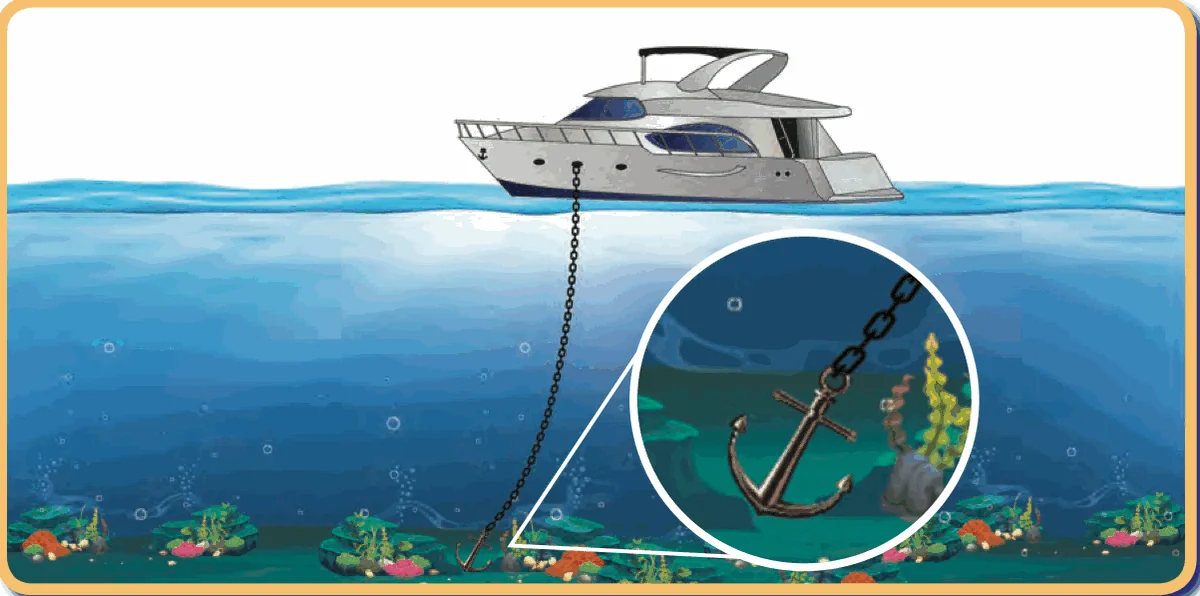
Picture: Science Year 3 (DLP) textbook, p. 102.
Life jacket and fish farm
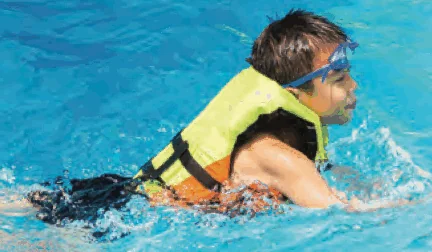
It is less dense than water, so it floats. It keeps us from drowning.
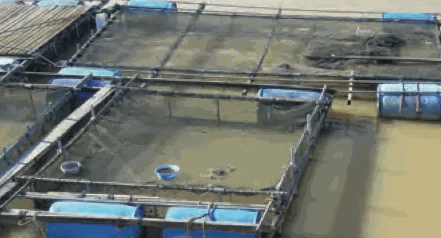
Floats called buoys are less dense than water. They hold the cages up.
Photos: Science Year 3 (DLP) textbook, p. 102.
Adik's orange floats in a beaker of water. How can we make it sink?
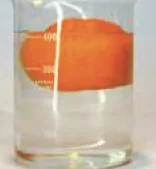
Peel the skin off. Orange skin has lots of tiny air spaces, like a sponge, so it acts like a little life jacket. Without the skin, the orange is more dense than water, so it sinks.
Picture: Science Year 3 (DLP) textbook, p. 104 (HOTS question and answer).
Show answerHide answer
Summary
| Idea | Remember |
|---|---|
| Float | The object stays on the surface of the water. It is less dense than water. |
| Sink | The object goes under the water. It is more dense than water. |
| Air spaces | Things with lots of air inside (sponge, cork, ship) are less dense, so they float. |
| Making water more dense | Dissolve salt or sugar in it. A grape or a carrot fish that sank can now float. |
| Layers of liquids | The most dense liquid is at the bottom. Oil floats on water because oil is less dense. |
| Uses | Life jackets, iron anchors and buoys at fish farms. |