My week
What this chapter covers
- I can name school subjects and say which ones I like and am good at, like "I'm very good at Maths, but my favourite subject is English." (2.1)
- I can ask and answer how often I do things, with once a week, twice a week, three times a week and every day (2.2)
- I can read a short story and understand its value, "Be responsible." (2.2)
- I can name jobs at home, like set the table, clear the table, take out the rubbish, rake leaves, shovel snow and feed the fish (2.3)
- I can say what I have to do and what I don't have to do, like "I have to rake leaves. I don't have to shovel snow." (2.3)
- I can ask and answer about other people, like "What does he have to do? He has to wash the car." (2.4)
- I can do a survey, show the results in a bar chart and talk about them (2.5)
- I can read a story about a birthday surprise and understand its value, "Believe in your dream to make it come true." (2.6)
- I can read a story about an emperor and a nightingale, put events in order and understand its value, "Appreciate the beauty of nature." (2.7)
- I can say and spell words with the /eə/ sound spelt ere, air and ear, like where, hair and pear (2.8)
Welcome to Module 2! You will talk about your school week, say how often you do things and say what you have to do at home. You will also read two stories and practise a new sound.
2.1Sing a song: My favourite school subject
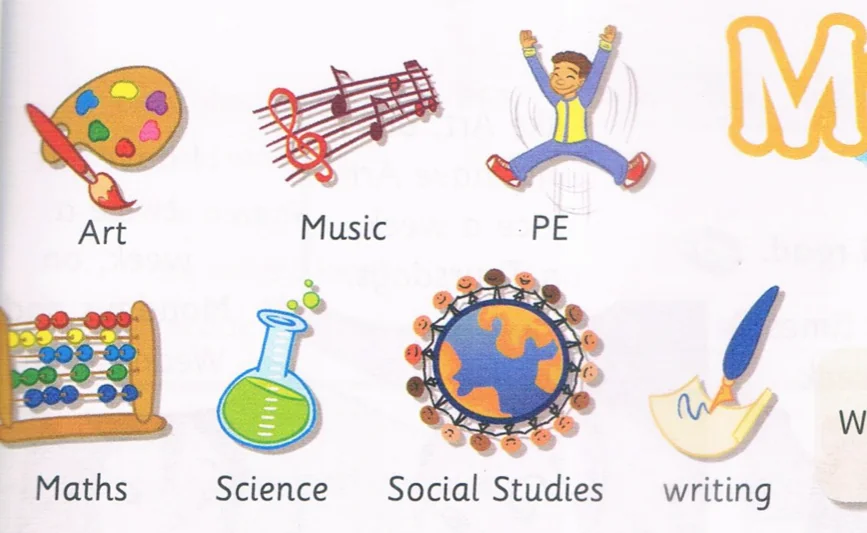
Get Smart Plus 4, p. 15.
In the song, a boy says what he is good at and what he likes. He loves Art and Social Studies, likes Music and PE, and says English is his favourite subject.
| To say | We use | Example |
|---|---|---|
| what you are good at | I'm good at ... / I'm very good at ... / I'm really good at ... | I'm very good at Maths. |
| what you like | I like ... / I love ... | I love Art. I like Music, too. |
| the one you like best | My favourite subject is ... | My favourite subject is English. |
| to ask a friend | What's your favourite subject? | Science. |
Show answerHide answer
2.2Smart kids: How often do you have PE?
Use How often to ask about the number of times something happens in a week.
| Question | Answer | Number of days |
|---|---|---|
| How often do you have PE? | Once a week. | 1 |
| Twice a week. | 2 | |
| Three times a week. (four times, five times ...) | 3 or more | |
| Every day. | Monday to Friday |
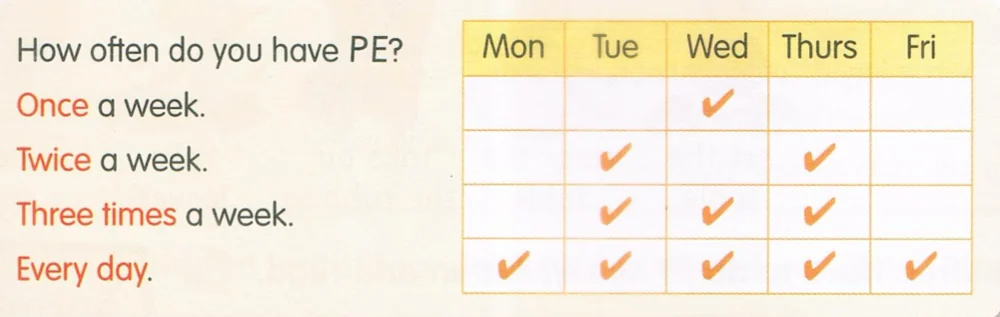
Get Smart Plus 4, p. 17.
You can add the days: "I have Art twice a week, on Mondays and Wednesdays." Use on before a day.
How often ...? also works with other activities: How often do you go to the park? How often do you go swimming? How often do you play sports? For he or she, use does and has: "How often does Daisy have Maths? She has Maths once a week." (Grammar reference, p. 162.)
Story: Anna and Sandy's timetables (p. 16)
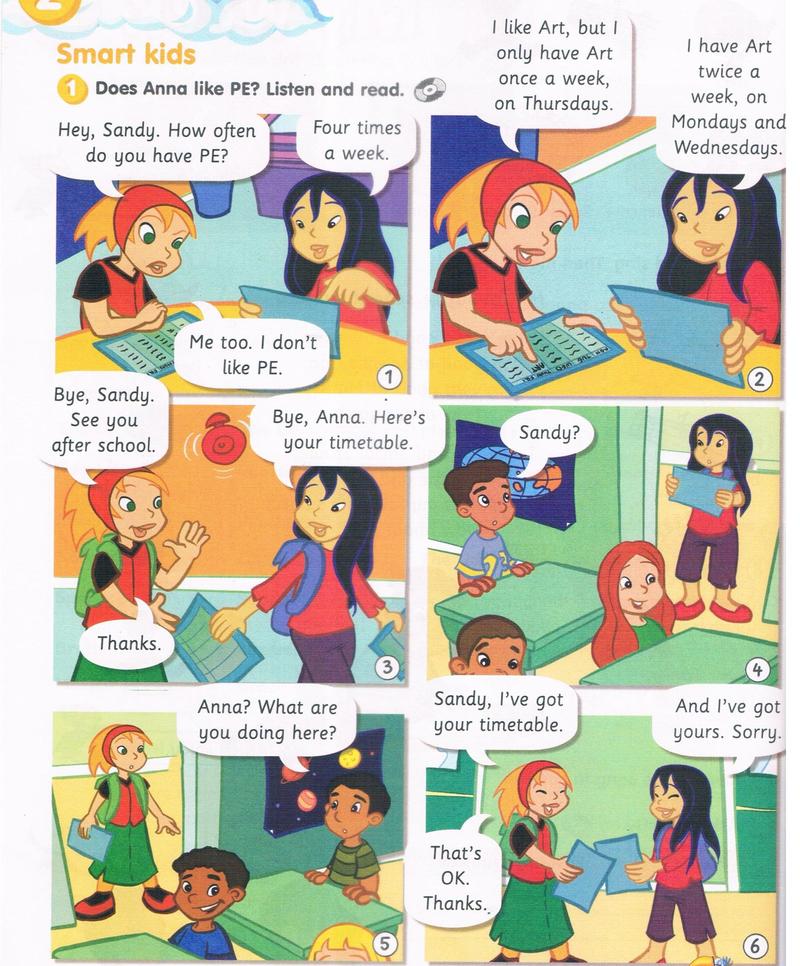
Get Smart Plus 4, p. 16.
Summary: Sandy has PE four times a week. Anna does not like PE. Anna likes Art but has it only once a week, on Thursdays. Sandy has Art twice a week, on Mondays and Wednesdays. At the end, each girl has the other's timetable by mistake, so they swap back.
Show answerHide answer
2.3Our world: Housework
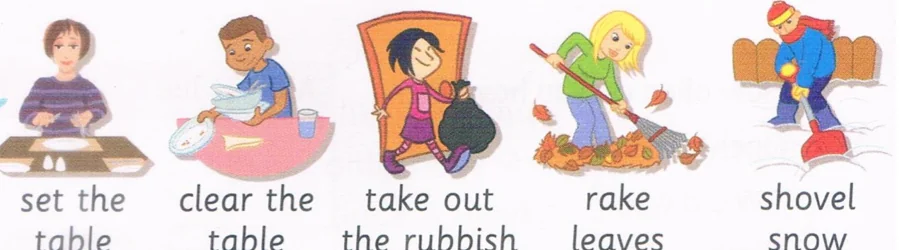
Get Smart Plus 4, p. 18.
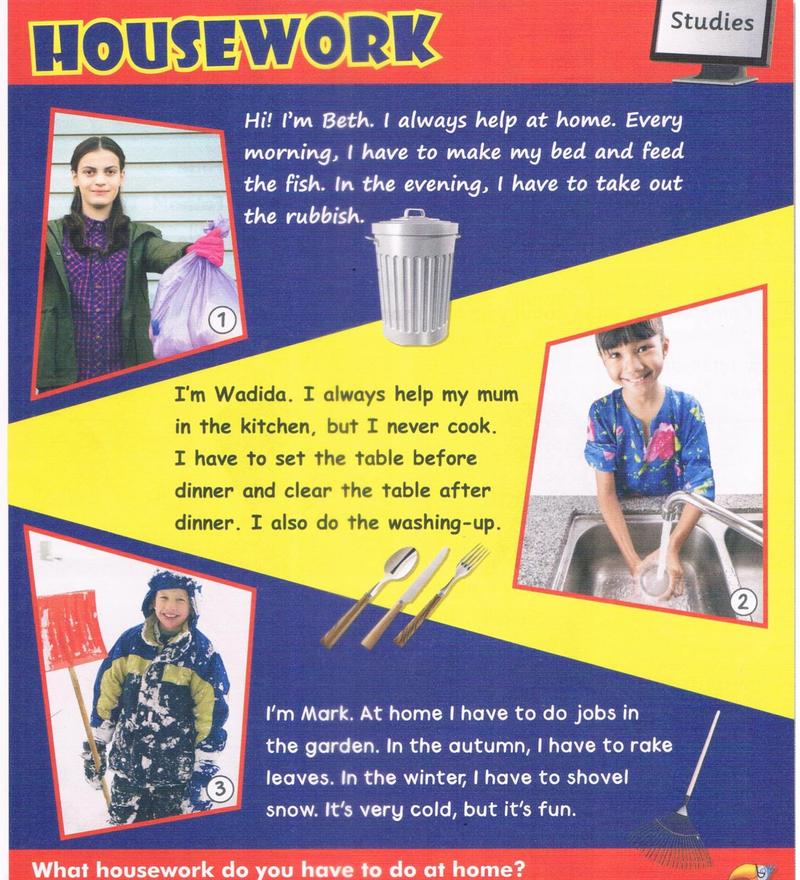
Get Smart Plus 4, p. 18.
| Child | What they have to do |
|---|---|
| Beth | Every morning she makes her bed and feeds the fish. In the evening she takes out the rubbish. |
| Wadida | She sets the table before dinner, clears the table after dinner and does the washing-up. She never cooks. |
| Mark | In the autumn he rakes leaves. In the winter he shovels snow. |
Pattern: have to / has to
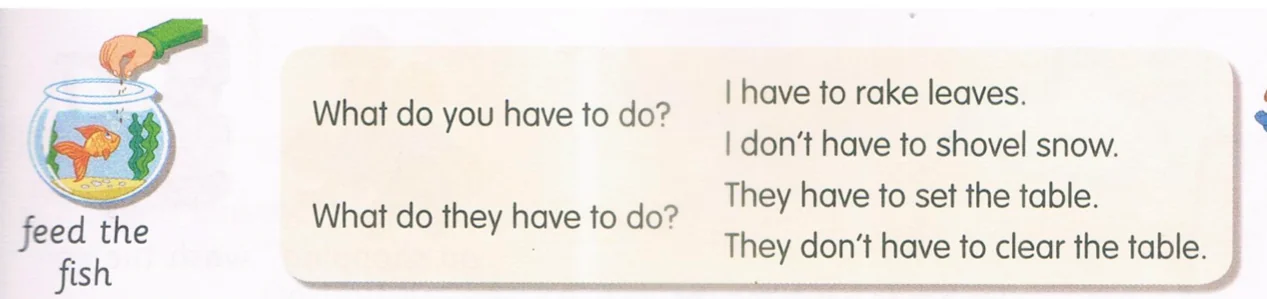
Get Smart Plus 4, p. 19.
| Who | Must do | Does not need to do | Question |
|---|---|---|---|
| I, You, We, They | have to set the table. | don't have to set the table. | What do you have to do? |
| He, She, It | has to set the table. | doesn't have to set the table. | What does he have to do? |
Adverbs of frequency say how often too: always (every time), usually, sometimes, never (not at any time). They go before the main verb: "I always help at home." "I never cook."
Show answerHide answer
2.4Let's play: John's week and Mandy's week

Get Smart Plus 4, p. 20.
| Question | Answer |
|---|---|
| What does he have to do? | He has to wash the car. He doesn't have to shovel snow. |
| What does she have to do? | She has to go shopping. She doesn't have to set the table. |
| What does John have to do on Monday? | He has to go shopping. |
In the game, Student A fills in John's week and Student B fills in Mandy's week. Then you ask each other, "What does John have to do on Tuesday?" and write the answer in the right day.
Show answerHide answer
2.5Project: Do a survey (Maths)
Ask your classmates, "Do you have to take out the rubbish at home?" and write Yes, I do. or No, I don't. Then make a bar chart called "What we have to do at home".
- Draw a line along the bottom of the paper and a line going up on the left.
- Divide the bottom line into five parts, one for each activity (for example make their beds, take out the rubbish, set the table, clear the table, do the washing-up). Colour each bar.
- Write numbers going up the left line (1, 2, 3 ...).
Talk about the chart: "Five students have to clear the table at home."
Get Smart Plus 4, p. 21.
2.6Story time: Charlie's Birthday Surprise
Summary: On Monday afternoon Charlie comes home from school and does his jobs: he rakes leaves with his father, takes out the rubbish and feeds the fish. His mother is making a chocolate cake for his birthday party. His father says they have a surprise, but Charlie has to wait. On his birthday, his friends come, and his father says the surprise is in his bedroom. Charlie finds nothing there, but someone touches his shoulder. He does a karate move, and it is Bruce Chang! Bruce says Charlie is good at karate, and Charlie says it is a great surprise.
Get Smart Plus 4, pp. 22–23.
Show answerHide answer
2.7Let's Read: The Emperor's Nightingale
New words: emperor (ruler of an empire), palace (a big house for a king or emperor), nightingale (a small bird with a beautiful song), mechanical (made by a machine), diamond (a shiny stone), ill (sick).
- The Emperor of China learns about a nightingale in his forest from a new book.
- His men find the bird and bring it to him.
- The nightingale sings for the emperor every day.
- The Emperor of Japan sends a mechanical nightingale with diamonds on it.
- The real nightingale is sad and flies away.
- Many years later, the mechanical nightingale stops singing.
- The emperor is very sad and becomes ill.
- The real nightingale comes back to the palace and sings again, and the emperor is happy.
Get Smart Plus 4, pp. 24–25.
Show answerHide answer
2.8Phonics: the /eə/ sound
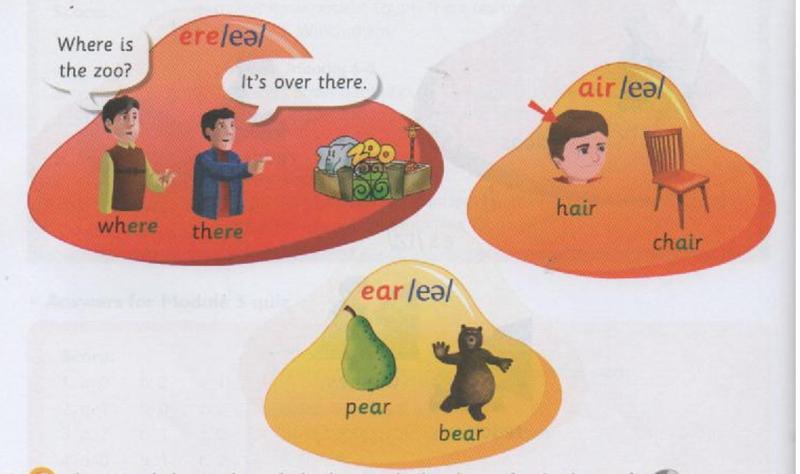
Get Smart Plus 4, p. 120 (Phonics 2).
| Spelling | Words |
|---|---|
| ere | where, there |
| air | hair, chair |
| ear | pear, bear |
Show answerHide answer
2.9Revision 2 (p. 26)
Revision 2 asks you to answer about yourself and then ask a friend: What's your favourite subject? How often do you have Maths? What do you have to do at home? What do you have to do tomorrow morning? How often does your friend play sports?
Get Smart Plus 4, p. 26.
Summary
| Topic | Remember |
|---|---|
| School subjects | Art, Music, PE, Maths, Science, Social Studies, English. I'm good at ... My favourite subject is ... |
| How often | How often do you have PE? Once / twice / three times a week. Every day. He has PE four times a week. |
| Housework | set the table, clear the table, take out the rubbish, rake leaves, shovel snow, feed the fish, make my bed, do the washing-up. |
| have to | I / you / we / they have to; he / she has to. Negative: don't / doesn't have to. Question: What do you / does he have to do? |
| Frequency words | always, usually, sometimes, never (before the main verb). |
| Values | Enjoy learning. Be responsible. Help out with the housework. Believe in your dream to make it come true. Appreciate the beauty of nature. |
| Phonics | /eə/: where, there, hair, chair, pear, bear. |