Towns and cities
What this chapter covers
- I can name places in a town or city, such as library, bridge, market, monument and shopping centre (2.1)
- I can use there's, there isn't, there are, there aren't with a, an, some and any (2.1)
- I can read a description of a place and find the facts in it (2.2)
- I can ask and answer with Is there ...?, Are there ...? and How many ...? (2.3)
- I can use opposite adjectives such as clean and dirty, noisy and quiet, safe and dangerous (2.4)
- I can compare two things with comparative adjectives, such as bigger than and more modern than (2.5)
- I can ask and say where places are and how far they are (2.6)
- I can write a description of a town or city, with the adjective in the right place (2.7)
Welcome to Towns and cities (Unit 1 in the textbook, Unit 2 on this site)! You will learn the names of places in a town or city, say what there is (and isn't) in a place, compare places, ask for directions and write a short description of a town or city.
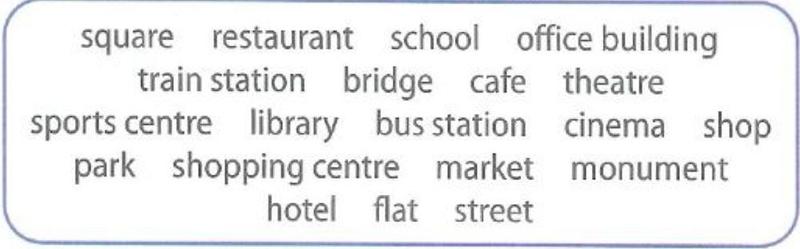
2.1Vocabulary: places in a town or city
The unit starts with a "London Guide" map. These are the places you must know.
English Plus 1 Year 5, p. 12.
| Place | What you do there |
|---|---|
| library | borrow and read books |
| train station / bus station | catch a train or a bus |
| cinema, theatre | watch a film or a play |
| market, shopping centre, shop | buy things |
| bridge | cross a river |
| monument | look at a famous building or statue |
| sports centre, park | play sport or relax |
| flat, hotel | a place to live or stay |
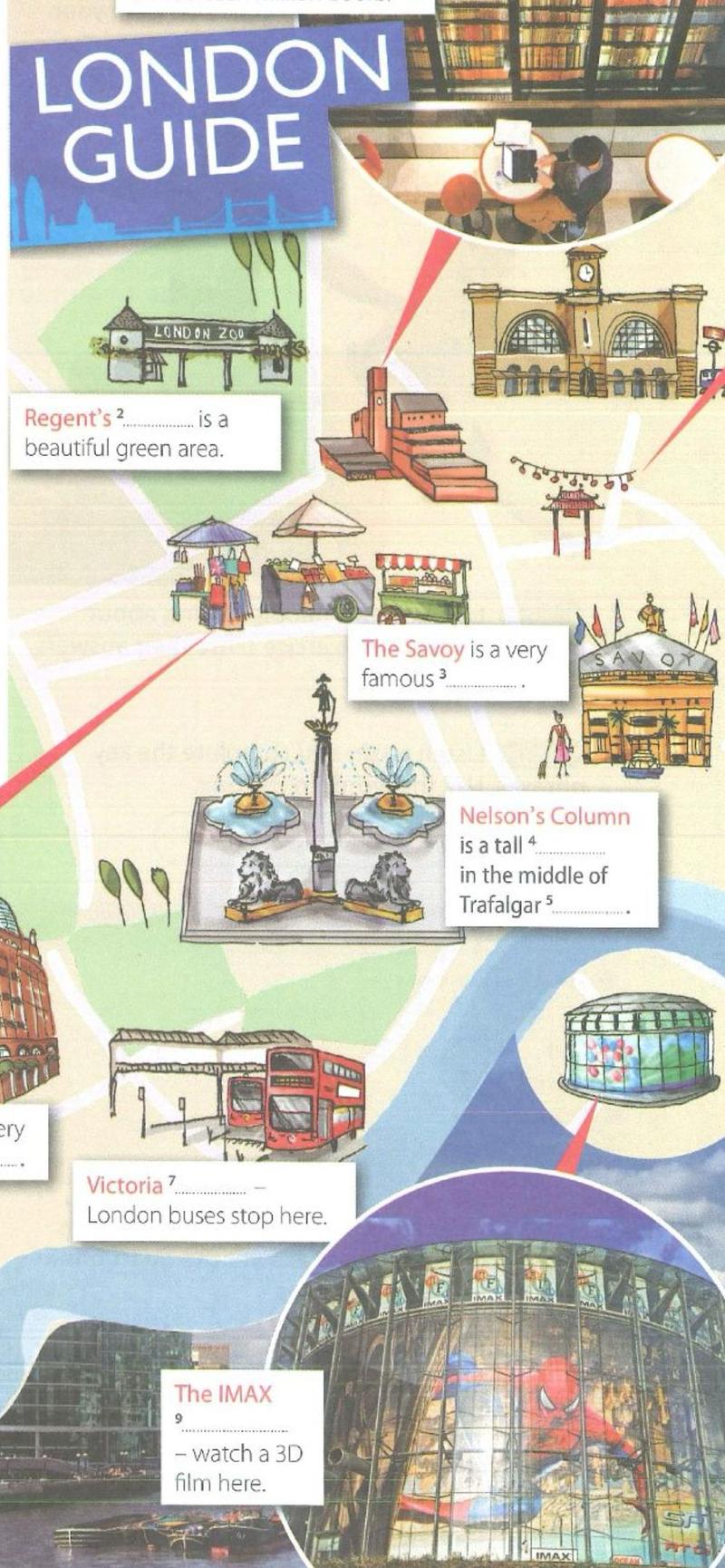
English Plus 1 Year 5, pp. 12–13.
Pattern: there's, there are, a, an, some, any
| Use | Singular noun (one) | Plural noun (more than one) |
|---|---|---|
| Affirmative (+) | There's a bus station. There's an old bridge. | There are some nice cafes. |
| Negative (-) | There isn't a cinema. | There aren't any good shops. |
Show answerHide answer
2.2Reading: City on the sea
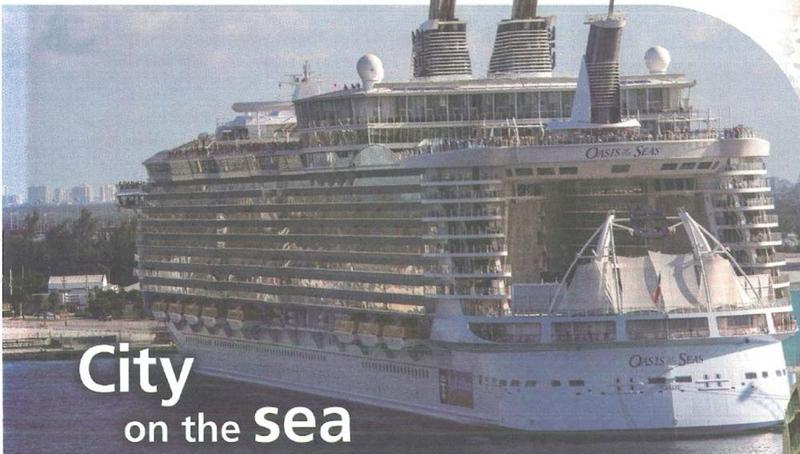
English Plus 1 Year 5, p. 14.
The text describes a giant cruise ship, Oasis of the Seas. Here are the facts.
| Topic | Fact in the text |
|---|---|
| People who work on the ship | more than 2,000, from eighty countries |
| Passengers | cabins for 6,360 passengers |
| Cafes and restaurants | twenty |
| Chefs | 250 chefs prepare 250,000 meals in one week |
| Central Park | the first park on a ship: fifty real trees and 12,000 plants |
| Sport | five swimming pools and a sports area with a climbing wall |
| Reading and school | there is a library, but there isn't a school |
Show answerHide answer
2.3Language focus: Is there ...? Are there ...? How many ...?
| Question | Short answer |
|---|---|
| Is there a school on the ship? | Yes, there is. / No, there isn't. |
| Are there any swimming pools? | Yes, there are. / No, there aren't. |
| How many swimming pools are there? | There are five. (give a number) |
- Is there ...? goes with one thing (singular): Yes, there is. No, there isn't.
- Are there ...? goes with more than one (plural): Yes, there are. No, there aren't.
- How many ...? goes with a plural noun and the answer is a number, not Yes or No.
Show answerHide answer
2.4Vocabulary: comparing places
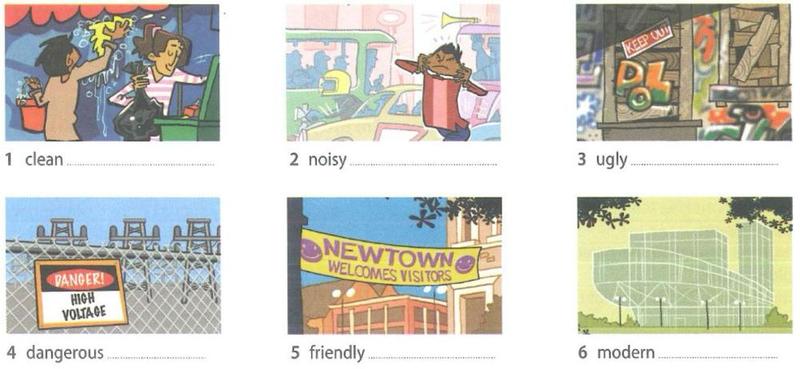
English Plus 1 Year 5, p. 16.
| Adjective | Opposite |
|---|---|
| clean | dirty |
| noisy | quiet |
| ugly | pretty |
| dangerous | safe |
| friendly | unfriendly |
| modern | old |
Give a reason when you say what you like: "I like the park. It's quiet and pretty."
Show answerHide answer
2.5Language focus: comparative adjectives
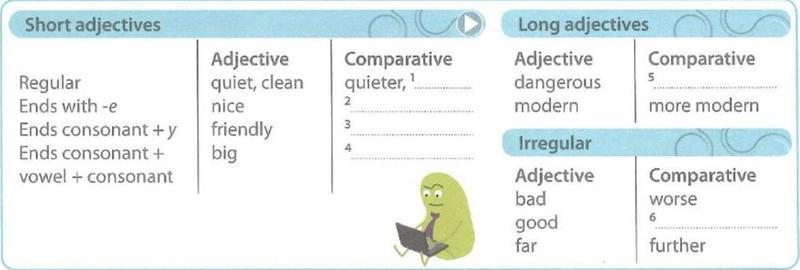
We use a comparative adjective plus than to compare two things: "New York is bigger than Washington."
| Rule | Adjective | Comparative |
|---|---|---|
| Short adjective: add -er | quiet, clean | quieter, cleaner |
| Ends with -e: add -r | nice, safe | nicer, safer |
| Consonant + y: change y to -ier | friendly, pretty | friendlier, prettier |
| Consonant + vowel + consonant: double the last letter, add -er | big, hot | bigger, hotter |
| Long adjective: put more before it | dangerous, modern, expensive | more dangerous, more modern, more expensive |
| Irregular | good, bad, far | better, worse, further |
English Plus 1 Year 5, p. 17.
English Plus 1 Year 5, p. 17.
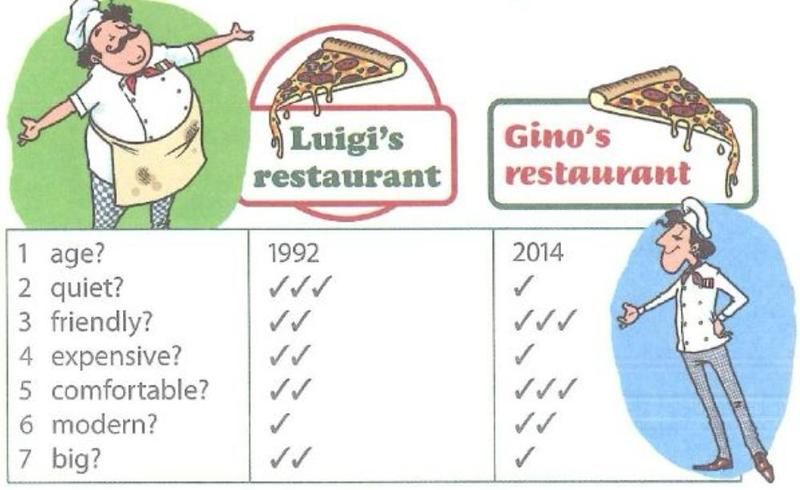
Friendly: Luigi's has two ticks, Gino's has three. So Gino's is friendlier than Luigi's.
Show answerHide answer
2.6Speaking: where places are
English Plus 1 Year 5, p. 18.
English Plus 1 Year 5, p. 18.
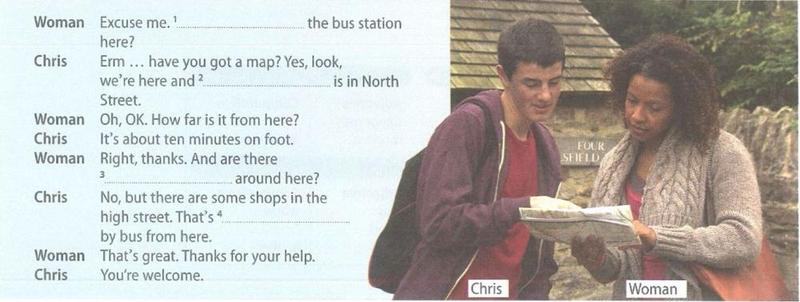
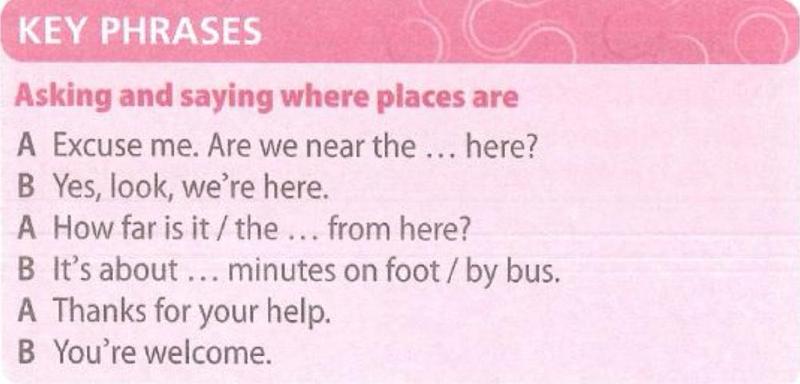
B: Yes, look, we're here.
A: How far is it from here?
B: It's about ten minutes on foot.
A: Thanks for your help.
B: You're welcome.
On foot means walking. You can also say "by bus": "It's about five minutes by bus."
Show answerHide answer
2.7Writing: a description of a town or city
The model text describes Edinburgh, a city in the south of Scotland. A good description has three paragraphs.
| Paragraph | What to write | Useful phrases |
|---|---|---|
| 1 Location | where it is, how big, old or new | It's in the north / south / east / west of ... It's a big / an old city. It's got a population of about ... |
| 2 Good things | why you like it, favourite places | I like ... because ... My favourite places are ... and ... |
| 3 Other places and transport | nice places near it, buses and trains | It's only ... kilometres from ... There are trains and buses to ... |
Language point: position of adjectives
- The adjective goes before the noun: an old castle, some nice friends.
- Really, very and quite go before the adjective: a really old castle, quite expensive, not very big.
Show answerHide answer
Summary
| Topic | Remember |
|---|---|
| Places | library, bridge, market, monument, station, shopping centre, sports centre, hotel, flat. |
| There is / are | There's a / an ... There are some ... There isn't a ... There aren't any ... |
| Questions | Is there a ...? Are there any ...? How many ... are there? |
| Opposites | clean / dirty, noisy / quiet, pretty / ugly, safe / dangerous, friendly / unfriendly, modern / old. |
| Comparatives | quieter, safer, friendlier, bigger, more modern; better, worse, further; + than. |
| Directions | Excuse me. How far is it from here? It's about ten minutes on foot / by bus. |
| Writing | Location, good things, other places and transport. Adjective before the noun; really / very / quite before the adjective. |