Wild life
What this chapter covers
- I can name animals and identify them with key phrases like "It looks like a camel" and "Maybe it's a giraffe" (4.1)
- I can ask and answer questions to describe an animal, such as "Does it live in the water, or on land?" (4.1)
- I can read a text about the blobfish and find specific information (4.2)
- I can make and use superlative adjectives, such as the ugliest, the most colourful and the best (4.3)
- I can use can and can't for ability and ask questions with How far, How big, How fast and How many (4.4)
- I can ask for permission and give or refuse it politely (4.5)
- I can write an information leaflet about an animal in danger and give examples with such as, like and For example (4.6)
Welcome to Wild life (Unit 3 in the textbook, Unit 4 on this site)! You will name animals, describe them, read about the "ugliest" animals, use superlative adjectives, say what animals can do, ask for permission and write a leaflet about an animal in danger.
4.1Vocabulary: Animals
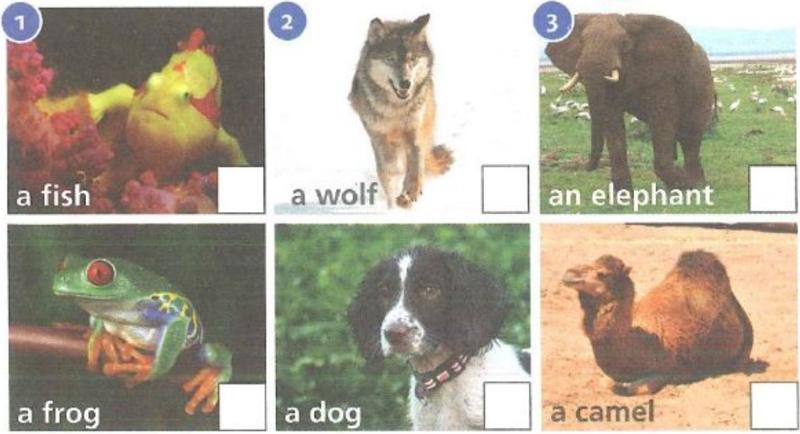
English Plus 1 Year 5, p. 32.
The unit uses these animal words: camel, ostrich, butterfly, frog, panda, bear, snake, bat, spider, eagle, scorpion, gorilla, giraffe, cat, whale, rat, crocodile, octopus, fish, elephant, rabbit.
Key phrases: identifying things
| Use | Phrase |
|---|---|
| Ask | What do you think it is? |
| Not sure | I've got no idea. |
| From what you see | It looks like a camel. |
| From what you hear | It sounds like a cat. |
| A guess | Maybe it's a giraffe. |
Questions to describe an animal
| Question | Possible answer |
|---|---|
| Does it live in the water, or on land? | It lives on land and in the water. |
| Has it got wings / legs / a tail? | It's got legs and a tail. |
| How many legs has it got? | Four. |
| Is it bigger or smaller than a dog? | It's bigger than a dog. |
| Does it eat other animals? | Yes, it does. |
| Does it live in this country? | No, it doesn't. |
| Is it dangerous? | Yes, it is. |
| What colour is it? | Green and brown. |
English Plus 1 Year 5, p. 33.
Show answerHide answer
4.2Reading: The ugliest animals?
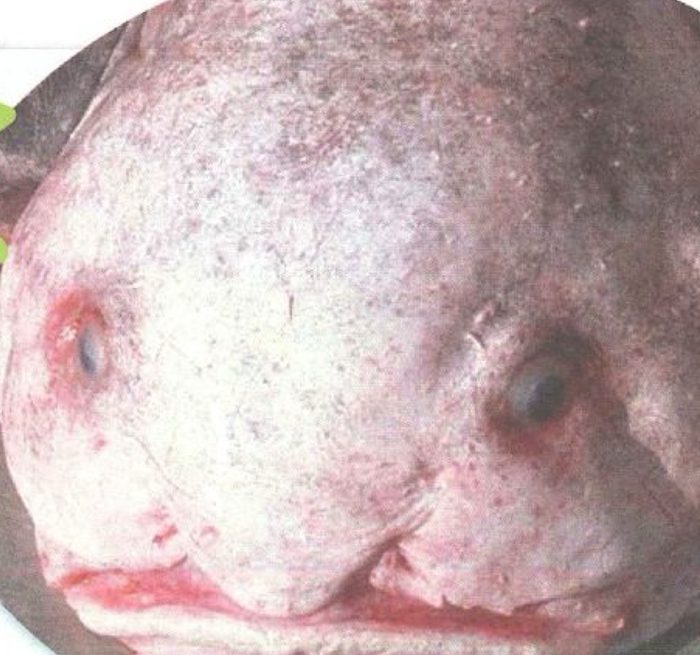
English Plus 1 Year 5, p. 34.
Main points of the text "Blobfish, we love you!":
- The blobfish is not the most beautiful or the most common fish. It has a dull colour and lives about 1,000 metres under the seas near Australia, so we do not usually see it.
- People call it the ugliest animal in the world. Photos and articles about it are good for the blobfish and for other "ugly" animals.
- Thousands of species become extinct every year. We see a lot about beautiful animals, such as whales, butterflies and pandas, but some of the ugliest animals are also some of the rarest, and they need our help too.
- Other animals on the lists are the proboscis monkey (the biggest nose) and the purple frog (the weirdest face). They are interesting and rare.
- The writer's idea: protect all animals.
Show answerHide answer
4.3Language focus: Superlative adjectives
We use a superlative to say that one thing is more than all the others (the ugliest animal in the world).
| Kind of adjective | Adjective | Comparative | Superlative |
|---|---|---|---|
| short | weird | weirder | the weirdest |
| long | colourful | more colourful | the most colourful |
| ending in -e | rare | rarer | the rarest |
| ending in -y | ugly | uglier | the ugliest |
| double consonant | big | bigger | the biggest |
| irregular | good | better | the best |
| irregular | bad | worse | the worst |
| irregular | far | further | the furthest |
English Plus 1 Year 5, p. 35 (Language focus; comparatives from p. 17).
Show answerHide answer
4.4Vocabulary and listening: Amazing animals
Verbs for animal skills: swim, drink, hear, communicate, fly, jump, survive, kill, climb, grow, move, run, see.
can for ability
| Use | Example |
|---|---|
| Yes (affirmative) | An eagle can see a small animal from far away. |
| No (negative) | Ostriches can't fly. |
| Question | Can a scorpion kill a human? |
| Short answers | Yes, it can. / No, it can't. |
English Plus 1 Year 5, pp. 36–37.
Questions with How ...?
| Question | It asks about |
|---|---|
| How far can an eagle see? | distance |
| How big can a gorilla grow? | size |
| How fast can the fastest person run? | speed |
| How many countries are there in the world? | number |
| How tall is an adult giraffe? | height |
| How long is an adult crocodile? | length |
| How heavy is a new baby? | weight |
Facts from the unit
| Question | Estimate |
|---|---|
| How heavy is a new baby? | usually between 2.5 and 4.5 kilos |
| How fast can the fastest person run? | about 44 kilometres an hour |
| How many countries are there in the world? | 196 |
| How tall is an adult giraffe? | between 5 and 6 metres |
| How long is an adult crocodile? | about 4 metres |
| How far is the North Pole from the South Pole? | 20,014 kilometres |
Use the key phrase for estimating: "I think that a new baby is between 2.5 and 4.5 kilos." Gorillas can grow to around 250 kilos, and camels can survive about six months without water.
Show answerHide answer
4.5Speaking: Asking for permission
| Purpose | Phrases |
|---|---|
| Ask for permission | Is it OK if I / we watch TV later? Can I / we / you go to the cinema? |
| Give permission | Yes, of course you can. |
| Refuse permission | No, I'm afraid you can't. I'm sorry, but it's time for dinner. I'm sorry, but it's late and you've got school tomorrow. |
English Plus 1 Year 5, p. 38.
Dad: No, I'm afraid you can't.
Lottie: But Dad, why not? It's really good.
Dad: I'm sorry, but it's time for dinner.
Lottie: Oh, OK. Can I watch TV later, then?
Dad: Yes, of course you can.
Show answerHide answer
4.6Writing: Animals in danger
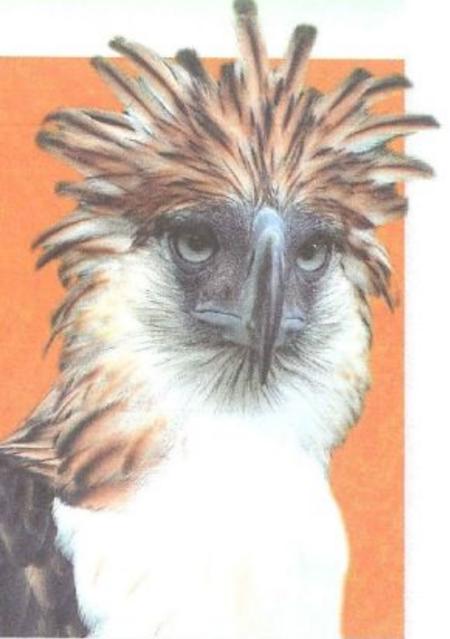
English Plus 1 Year 5, p. 39.
The leaflet "The Philippine eagle" has three parts: What is it? (it lives in the forests of the Philippines; adult birds can be one metre long and can weigh eight kilos; it eats snakes and small animals such as bats, rats and small monkeys), What's the problem? (it is rare and in danger because of human activity like farming) and How can we help? (find information on the website of the Philippine Eagle Foundation; for example, it is possible to "adopt" an eagle).
Key phrases
- They can weigh / grow to / be ...
- It's one of the biggest birds in the world.
- The Philippine eagle is now in danger.
- You can find information on the website.
Giving examples
| Phrase | How to use it |
|---|---|
| such as | in the middle: "small animals such as bats and rats" |
| like | in the middle: "human activity like farming" |
| For example, | at the start of a sentence, with a comma after it |
Plan your own leaflet: Where does it live and what does it eat? How rare is it? Why is it in danger? How can we help? Then write three paragraphs, and check comparatives, superlatives, examples and can / can't.
Show answerHide answer
Summary
| Topic | Remember |
|---|---|
| Identifying | It looks like... It sounds like... Maybe it's a... I've got no idea. |
| Describing animals | Does it live in the water or on land? Has it got a tail? Is it dangerous? |
| Superlatives | the weirdest, the rarest, the ugliest, the biggest, the most colourful, the best, the worst, the furthest. |
| can | Same for I, you, he, she, it, we and they. Can a camel survive without water? Yes, it can. / No, it can't. |
| How ...? | far, big, fast, many, tall, heavy, long. |
| Permission | Is it OK if I...? Can I...? Yes, of course you can. No, I'm afraid you can't. |
| Examples | such as, like, For example, |
| Value | Protect all animals, even the ones that look ugly. |