Growing up
What this chapter covers
- I can describe people's height, build, hair, face, eyes and other features, like "She's tall and slim. She's got long, straight, black hair." (8.1)
- I can guess answers with key phrases, like "I think it's ..." and "I'm not sure." (8.1)
- I can read a short text and understand the general idea of it (8.2)
- I can use object pronouns (me, you, him, her, it, us, them) in place of nouns and names (8.3)
- I can make affirmative and negative past simple sentences with didn't + the base verb (8.3)
- I can use life event words and past simple forms, like grew up, left school and got a job (8.4)
- I can ask and answer past simple questions with Did ...? and question words (8.5)
- I can take part in an interview using key phrases like "Good question!" and "Thanks for your time." (8.6)
- I can write questions and answers about a person's life, with correct punctuation (8.7)
Welcome to Growing up (Unit 7 in the textbook, Unit 8 on this site)! In this unit we describe people, talk about life events and use the past simple to say what happened. You will learn object pronouns, how to say what did not happen, how to ask past simple questions, and how to write a short question-and-answer article about someone's life.
8.1Vocabulary: describing people
To describe a person we say their height and build, their hair, their face and eyes and any other features.
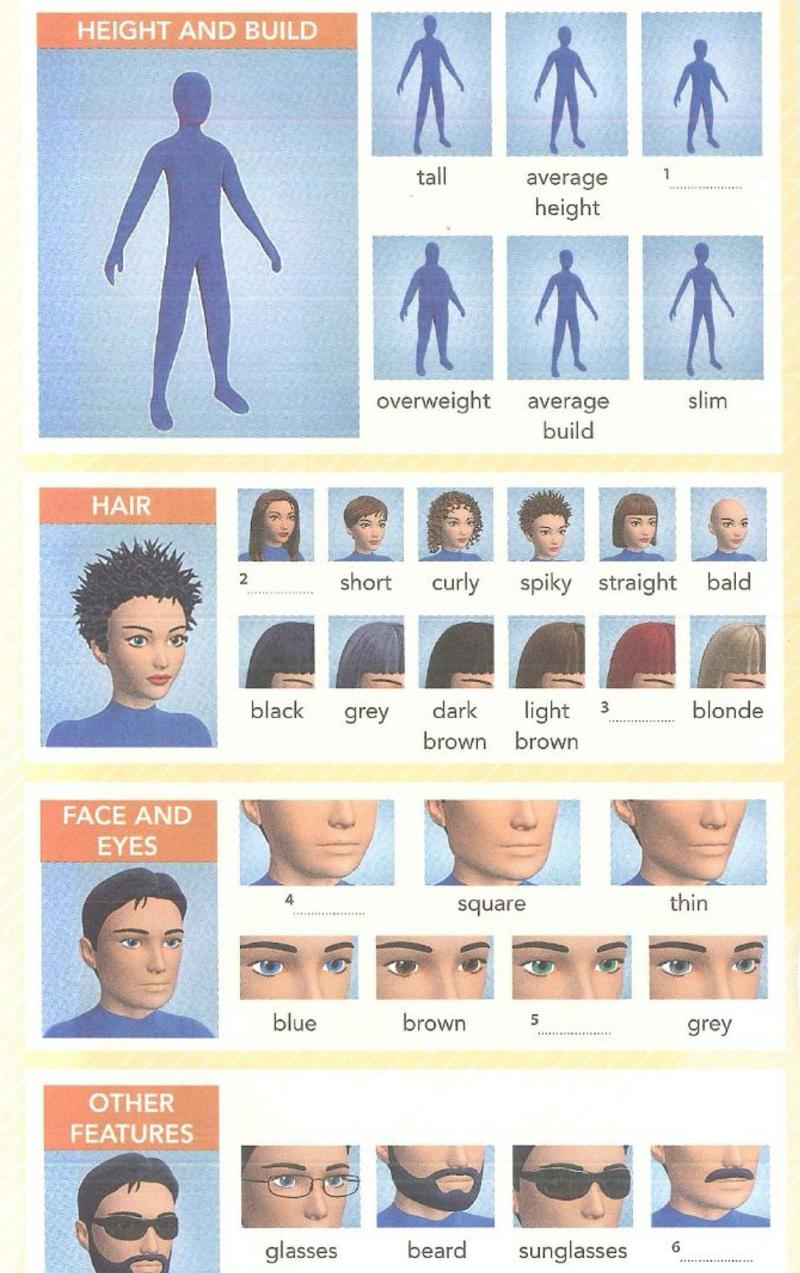
English Plus 1 Year 5, p. 72.
| Part | Words |
|---|---|
| Height | tall, average height, short |
| Build | overweight, average build, slim |
| Hair | short, long, curly, spiky, straight, bald |
| Hair colour | black, grey, dark brown, light brown, red, blonde |
| Face | round, square, thin |
| Eyes | blue, brown, green, grey |
| Other features | glasses, a beard, sunglasses, a moustache |
Pronunciation: diphthongs
A diphthong is a vowel sound that glides from one sound to another. In the odd-one-out exercise on p. 72, three words in each group share the sound and one word does not.
| Sound | Words | Odd one out |
|---|---|---|
| /ai/ | light, height, hair, quite | hair (it has /eə/) |
| /au/ | round, brown, board, mouth | board (it has /ɔː/) |
| /iə/ | height, beard, ear, we're | height (it has /ai/) |
| /eə/ | their, bald, fair, hair | bald (it has /ɔː/) |
Key phrases: guessing answers
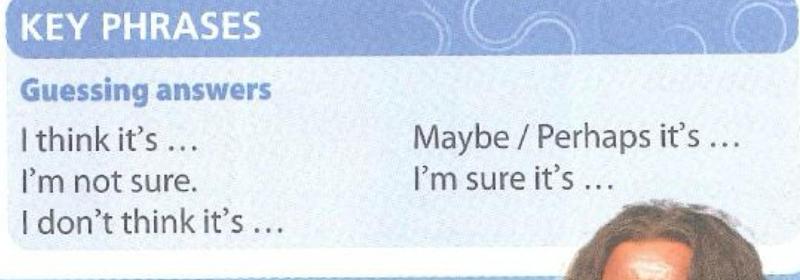
English Plus 1 Year 5, p. 73.
| How sure are you? | Say |
|---|---|
| Very sure | I'm sure it's ... |
| Quite sure | I think it's ... |
| Not very sure | Maybe it's ... / Perhaps it's ... |
| Not sure at all | I'm not sure. |
| Think it is not | I don't think it's ... |
Show answerHide answer
8.2Reading: A life in photos
The general idea of a text is what the whole text is about. Read the title, look at the picture, then read the text once without stopping at every new word.
The photos. Suman was sometimes tired or sad, sometimes happy. She usually had long hair, but sometimes it was short. She sometimes had glasses and sometimes she did not. From one day to the next she did not change a lot, but she grew and changed a little every month and year.
The present. On her eighteenth birthday, 6,575 days after she was born, Munish took the last photo. He collected all 6,575 photos, made one big picture from them and gave it to Suman as a present. It was the picture of her life.
English Plus 1 Year 5, p. 74 (retold in our own words).
| Word in the text | What it means |
|---|---|
| took (a photo) | made a photo with a camera (take, took) |
| grew | became bigger or older (grow, grew) |
| changed | became different |
| collected | brought many things together |
| made / gave | past forms of make and give |
Show answerHide answer
8.3Language focus: object pronouns and the past simple
Object pronouns
He gave the picture to Suman. → He gave it to her.
| Subject pronoun | Object pronoun | Example |
|---|---|---|
| I | me | Dad took a photo of me. |
| you | you | I can see you. |
| he | him | We like him. |
| she | her | Munish gave a picture to her. |
| it | it | I love this song. I listen to it every day. |
| we | us | Come with us. |
| they | them | He made a picture from them. |
Past simple: affirmative and negative
| Affirmative | Negative |
|---|---|
| She had glasses. | She didn't have glasses. |
| Daniel loved the job. | Daniel didn't love the job. |
| He went to school. | He didn't go to school. |
Irregular: go → went, have → had, make → made, give → gave, take → took, eat → ate, see → saw
Show answerHide answer
8.4Vocabulary and listening: life events
Life events are the important things that happen in a person's life. Here is the life of Robert Wadlow, the tallest man who ever lived, in order.
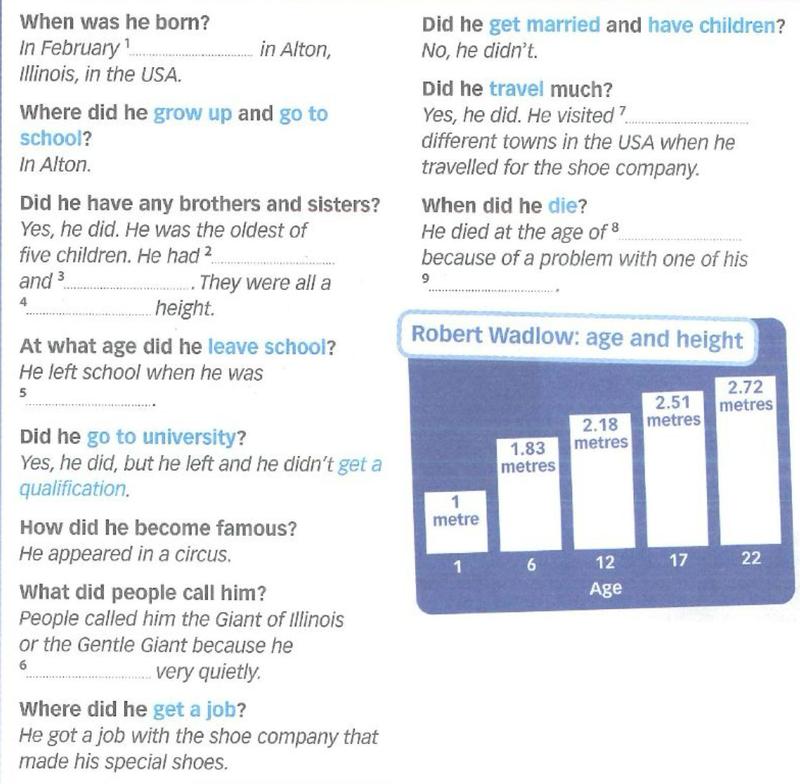
English Plus 1 Year 5, p. 76.
| Life event | Past simple |
|---|---|
| be born | was / were born |
| grow up | grew up |
| go to school | went to school |
| leave school | left school |
| go to university | went to university |
| get a qualification | got a qualification |
| get a job | got a job |
| travel | travelled |
| get married | got married |
| have children | had children |
| die | died |
Show answerHide answer
8.5Language focus: past simple questions
| Question word | Auxiliary | Subject | Main verb | Other words |
|---|---|---|---|---|
| (none) | Did | he | have | any brothers and sisters? |
| (none) | Did | he | go to | university? |
| How | did | he | become | famous? |
| What | did | people | call | him? |
| When | did | he | die? |
| Question | Short answers |
|---|---|
| Did he travel much? | Yes, he did. / No, he didn't. |
| Did you go to the cinema? | Yes, I did. / No, I didn't. |
His family moved to the USA when he was seventeen. → When did his family move to the USA?
He learned about films from books and articles. → How did he learn about films?
He didn't go to university. → Did he go to university?
| Question word | Asks about |
|---|---|
| Where | a place |
| When | a time |
| How | the way something happened |
| What | a thing |
| Who | a person |
Show answerHide answer
8.6Speaking: an interview with a famous person
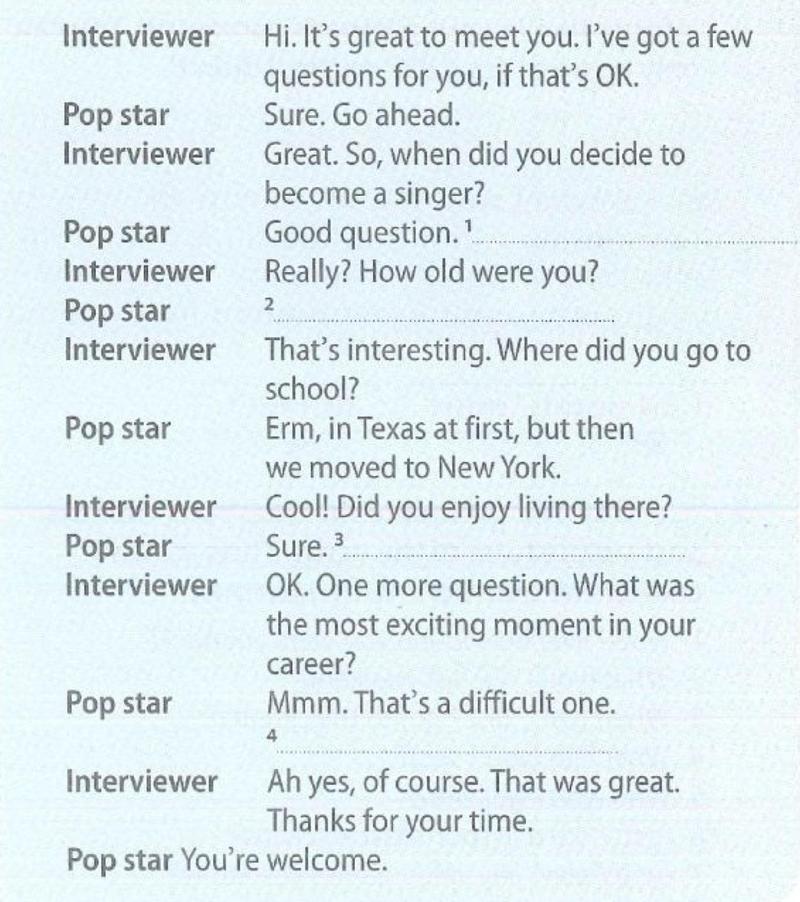
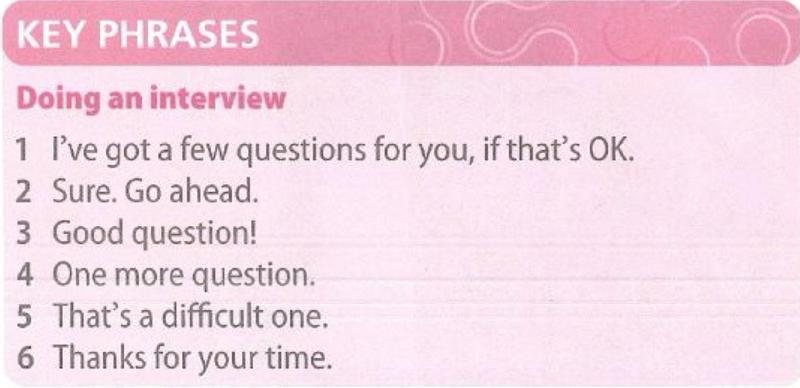
English Plus 1 Year 5, p. 78.
| The interviewer says | The pop star says |
|---|---|
| I've got a few questions for you, if that's OK. | Sure. Go ahead. |
| One more question. | Good question! / That's a difficult one. |
| Thanks for your time. | You're welcome. |
B: Really? When did you go?
A: I was eight.
B: That's interesting. Where did you stay?
Show answerHide answer
8.7Writing: biographical questions and answers
A biography tells the story of a person's life. A question-and-answer article for a magazine gives information in a short question, then a short answer.
Key phrases
| Use | Phrase |
|---|---|
| Describe the person | What's ... like in real life? |
| Ask about a place or time | Where / When / How exactly did he ...? |
| Say when a person became famous | He / She became well known in ... |
| Say what a person is famous for | He's / She's best known for his / her role(s) in ... / for his / her song ... |
| Ask about another topic | What about his / her personal life? |
| Say what you think is true | It looks like he / she enjoys ... |
She's tall and slim. She's got long, straight black hair and brown eyes.
Where exactly did she grow up?
She grew up in Ipoh, then her family moved to Kuala Lumpur.
How did she become well known?
She became well known when she won a singing contest.
What about her hobbies?
It looks like she enjoys swimming and reading.
Punctuation
| Mark | We use it ... | Example |
|---|---|---|
| Capital letter (A, B, C) | at the start of a sentence, and for names, countries, nationalities and names of books, films and songs | Malaysia, a Malaysian actress |
| Full stop (.) | at the end of a sentence | She was born in Ipoh. |
| Question mark (?) | at the end of a question | Where did she live? |
| Exclamation mark (!) | for an exclamation or an order | What a great photo! |
| Comma (,) | in lists and for pauses | She's tall, slim and strong. |
| Apostrophe (') | in short forms and to show who owns something | she's, Susan's |
Ali is a Malaysian footballer. He was born in Johor. He is tall and he's got short black hair.
Show answerHide answer
Summary
- Describing people: He's tall / slim. She's got long, curly, dark brown hair, a round face, green eyes and glasses.
- Guessing: I'm sure it's ... / I think it's ... / Maybe it's ... / I'm not sure. / I don't think it's ...
- Object pronouns: me, you, him, her, it, us, you, them. They replace nouns or names after verbs and prepositions.
- Past simple negative: didn't + base verb. She didn't have glasses.
- Past simple question: (question word) + did + subject + base verb. When did he die? Did he go to university? Yes, he did. / No, he didn't.
- Life events: be born, grow up (grew up), go to school (went), leave school (left), get a job (got), get married, have children (had), die.
- Interview: I've got a few questions for you. / Good question! / One more question. / Thanks for your time. React, then ask a follow-up question.
- Writing: capital letters for names, full stops, question marks, commas in lists, apostrophes in short forms.