Rusting
What this chapter covers
- You can describe the characteristics of rusty objects: reddish-brown, rough surface and brittle (7.1.1)
- You can state that objects made of iron rust and that plastic and wood do not (7.1.2)
- You can explain that water and air together cause iron to rust, using a fair test (7.1.3)
- You can describe ways to prevent rusting: oil or grease, a rustproof coating, a rustproof metal plating, and paint (7.1.4)
- You can explain why preventing rusting is important (7.1.5)
- You can communicate what you learned about rusting, for example in a mind map (7.1.6)
Look at an old bicycle, a gate or a window hinge. Some have reddish-brown patches on them. That is rust. In this unit you will find out what rusty objects are like, which things rust, what makes iron rust, how to stop it, and why this matters.
7.1Rusting
Characteristics of rusty objects
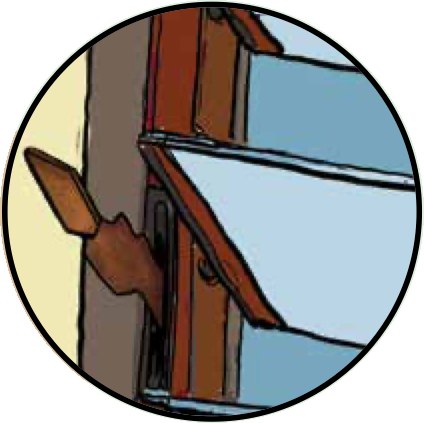
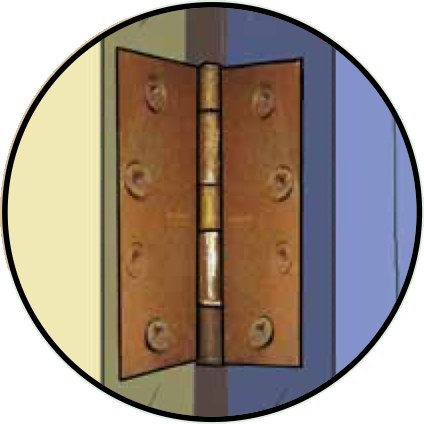
Mr Zaki shows his pupils a rusty window handle and a rusty hinge. They can tell it is rusty by looking and touching.
| Characteristic | What you notice |
|---|---|
| Colour | It is reddish-brown. |
| Surface | The surface is rough. |
| Strength | It is brittle. It breaks or crumbles easily, for example the screws of the hinge. |
Show answerHide answer
Objects that rust
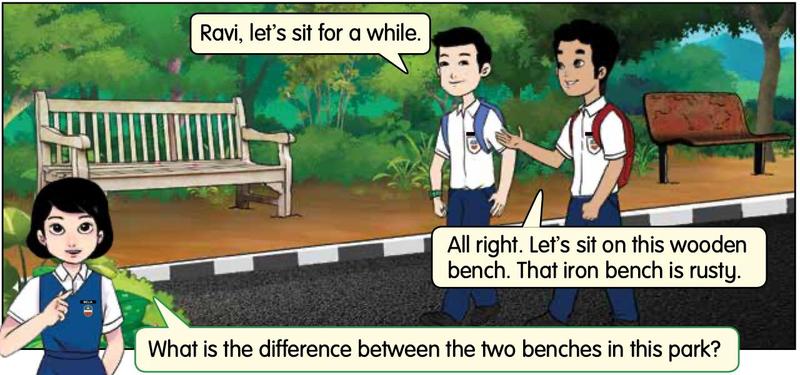
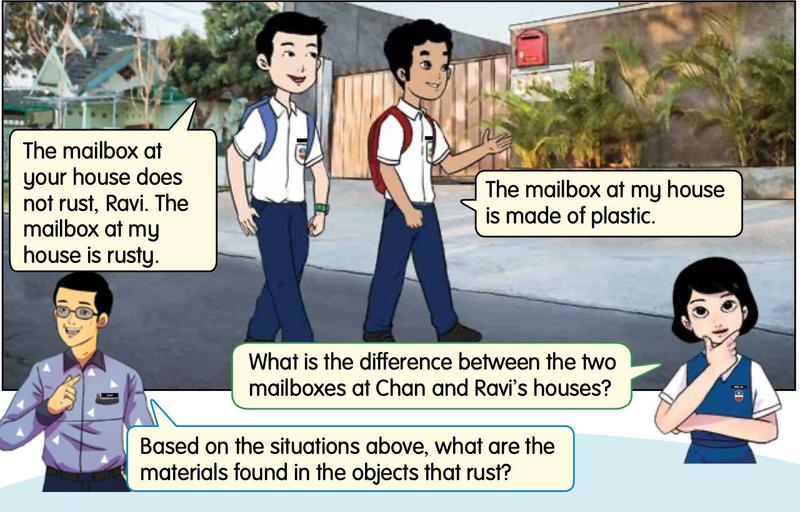
Not every material rusts. Ravi and Chan compare two benches and two mailboxes.
| Material | Does it rust? | Examples |
|---|---|---|
| Iron | Yes | Nail, needle, bench, hinge, axe |
| Plastic | No | Plastic mailbox, drinking straw |
| Wood | No | Wooden bench, wooden skewer |
| Glass | No | Glass rod |
In the textbook activity, a needle, a glass rod, a drinking straw, a wooden skewer and a nail are wrapped in wet cotton (with vinegar) for five days. You expect only the iron objects (the needle and the nail) to rust.
Factors that cause rusting
What makes iron rust? The textbook investigates this with iron wool in four test tubes (A, B, C and D). After four days the pupils look at the iron wool.
| Part of the investigation | What the textbook says |
|---|---|
| Problem statement | Do air and water cause rusting? |
| Hypothesis | Water and air will cause iron wool to rust. |
| Manipulated variable | Presence of water and air |
| Responding variable | Condition of the iron wool |
| Constant variable | Quantity of the iron wool (20 g in each tube) |
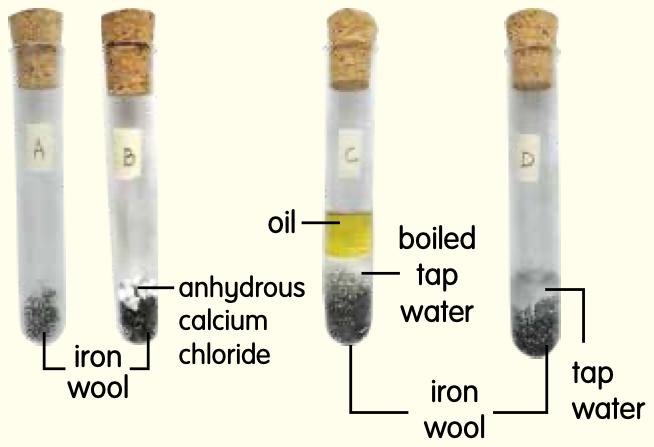
| Tube | Condition | Water? | Air? | Iron wool |
|---|---|---|---|---|
| A | Iron wool only, nothing added | No | Yes | Does not rust |
| B | Anhydrous calcium chloride | No | Yes | Does not rust |
| C | Boiled water and oil | Yes | No | Does not rust |
| D | Tap water | Yes | Yes | Rusts |
The textbook leaves the results column blank for you to fill in. The results above are what you expect from the conclusion.
Conclusion: the hypothesis is accepted. The presence of water and air causes iron wool to rust. Both are needed.
Show answerHide answer
Ways to prevent rusting
Iron objects left in water and air will rust. We can stop this by keeping water and air away from the iron.
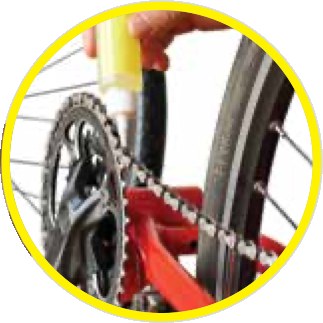 Apply oil or grease
For moving parts such as a bicycle chain.
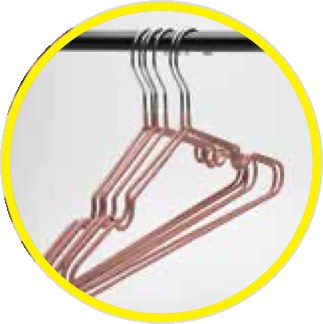 Coat with a rustproof material
Plastic is coated onto the surface of the iron, for example on a coat hanger.
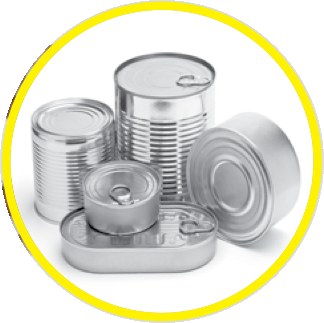 Plate with a rustproof metal
Tin or aluminium is plated onto the iron, for example on food cans.
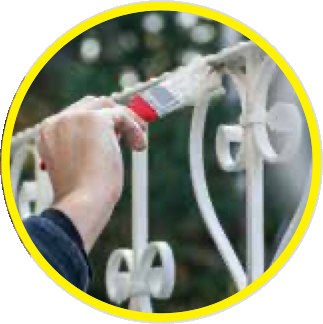 Paint
PaintPaint covers the surface of a fence or gate.
Show answerHide answer
Why preventing rusting is important
Rusting causes problems. The textbook shows four situations.
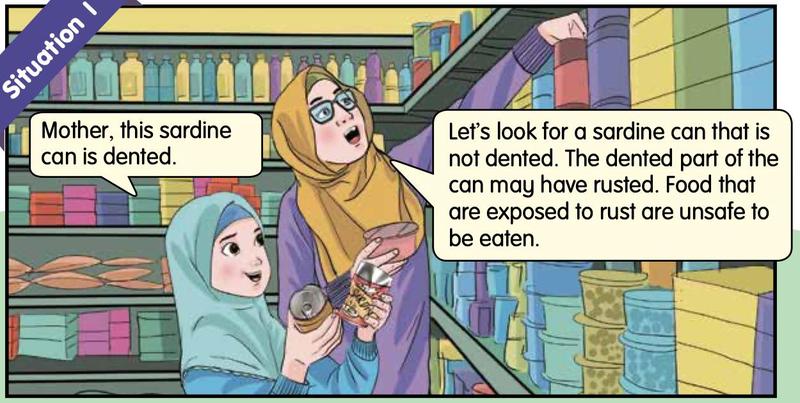
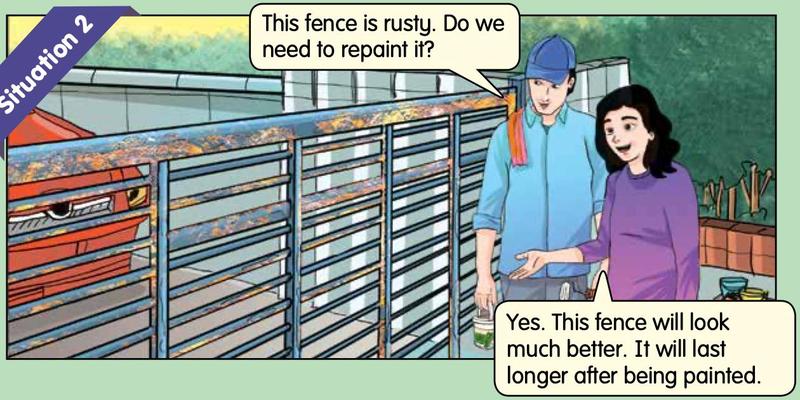
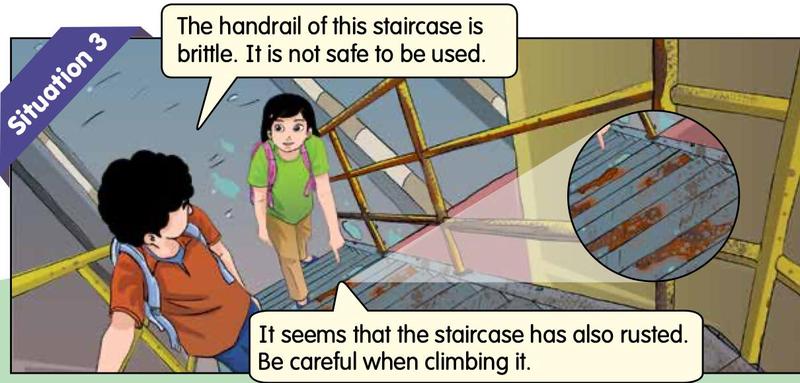
In situation 4 a man finds that his axe is rusty and has to buy a new one. Preventing rusting is important because objects made of iron are:
- safe to use;
- durable and not easily damaged;
- cheaper to look after, so we save on maintenance cost;
- pleasant to look at.
Show answerHide answer
Fun science: rust removal solution
To make a rust removal solution, mix 100 mL of vinegar, three tablespoons of salt and three tablespoons of soda bicarbonate. Stir, pour into a spray bottle and spray on a rusty object. Leave it for five minutes, clean with a wire brush, then rinse with clean water.
Show what you learned
Draw a mind map with Rusting in the middle. Add one branch each for the characteristics of rusty objects, objects that rust, what causes rusting, ways to prevent it, and why preventing it is important. Use the summary table below to check your branches.
Pictures: Science Year 5 (DLP) textbook, Unit 7, pp. 164 (handle, hinge), 166 (benches, mailboxes), 169 (test tubes), 170 (oil, hanger, cans, painting), 171 (sardine can, fence), 172 (staircase).
Summary
| Topic | Remember |
|---|---|
| Rusty object | Reddish-brown, rough, brittle |
| Materials that rust | Iron rusts. Plastic, wood and glass do not. |
| Cause of rusting | Water and air together |
| Ways to prevent rusting | Oil or grease, rustproof coating, rustproof metal plating, paint |
| Why prevent it | Safe to use, lasts longer, saves cost, looks pleasant |