Biology questions, chapter 7
Nama / NameKelas / ClassTarikh / Date
Cellular Respiration
45 marks. Use Practice to check each answer as you go, or Exam to answer everything against the clock first.
Section A: objective questions
11 marksChoose the best answer for each question.
1
Question 1
Which substance is the main substrate for cellular respiration?
Show answerHide answer
A
Glucose is the main substrate for energy production (p. 114).
2
Question 2
Where does glycolysis occur?
Show answerHide answer
C
Glycolysis takes place in the cytoplasm; pyruvate oxidation is in the mitochondrion.
3
Question 3
What is produced when one glucose molecule undergoes glycolysis?
Show answerHide answer
D
One glucose is broken into two pyruvate molecules.
4
Question 4
Which is the correct word equation for aerobic respiration?
Show answerHide answer
D
Aerobic respiration oxidises glucose with oxygen to carbon dioxide, water and energy.
5
Question 5
In a respirometer, soda lime is placed in the boiling tube. What is its function?
Show answerHide answer
C
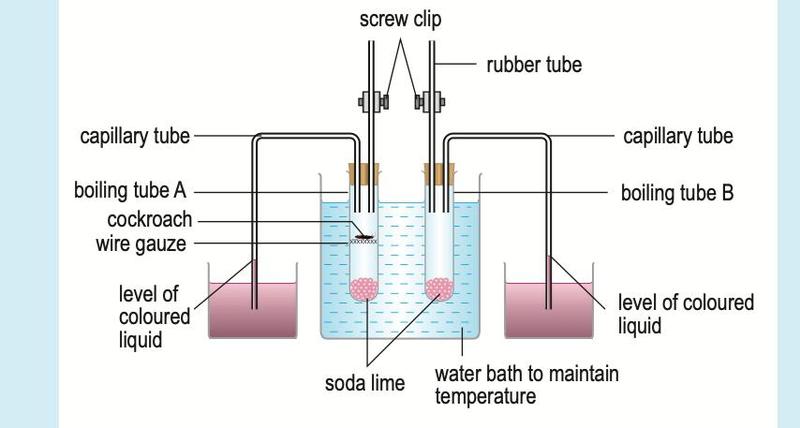
Soda lime absorbs carbon dioxide so that the change in liquid level shows only the oxygen used.
6
Question 6
In the respirometer experiment, tube B has no cockroach. What is its purpose?
Show answerHide answer
B
Tube B is the control, to show the liquid level does not change without a living organism.
7
Question 7
Which pair of products is formed by alcohol fermentation in yeast?
Show answerHide answer
A
Glucose → ethanol + carbon dioxide + energy.
8
Question 8
Why does yoghurt taste sour?
Show answerHide answer
A
Lactobacillus ferments lactose to lactic acid, which gives the sour taste and coagulates casein.
9
Question 9
During a sprint, a runner's muscle cells accumulate lactic acid. This is because
Show answerHide answer
C
Oxygen demand exceeds supply, so glucose is only partly broken down to lactic acid (oxygen debt).
10
Question 10
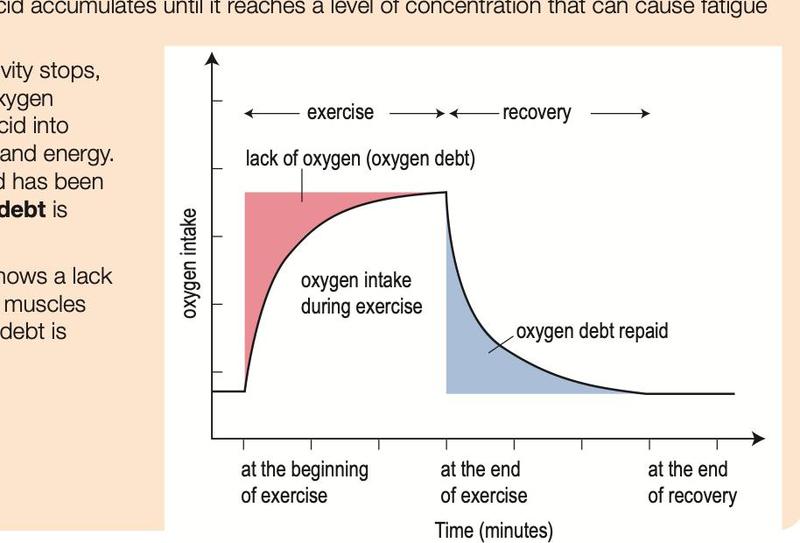
Diagram 1 shows oxygen intake before, during and after exercise. What does the shaded area after exercise represent?
Show answerHide answer
B
Extra oxygen taken in after exercise oxidises lactic acid; this repays the oxygen debt.
11
Question 11
Which statement is true of fermentation but NOT aerobic respiration?
Show answerHide answer
D
Fermentation produces no water; the other statements are true of both.
Section B: structured questions
34 marksAnswer all questions. Write your answers in the spaces provided.
12
Question 12
Answer the following about cellular respiration.
[1 mark]
(a)State the meaning of cellular respiration.
Show answerHide answer
Tick each point you got.
[2 marks]
(b)Name the two types of cellular respiration and the alternative way of obtaining energy.
Show answerHide answer
Tick each point you got.
13
Question 13
Aerobic respiration takes place in two stages.
[2 marks]
(a)Name the first stage and state where it occurs.
Show answerHide answer
Tick each point you got.
[2 marks]
(b)State what happens to pyruvate in the mitochondrion.
Show answerHide answer
Tick each point you got.
[1 mark]
(c)Write the word equation for aerobic respiration.
Show answerHide answer
Tick each point you got.
[2 marks]
(d)Explain how the energy is made available to the cell.
Show answerHide answer
Tick each point you got.
14
Question 14
Diagram 2 shows a respirometer with a cockroach in boiling tube A. Boiling tube B contains soda lime but no cockroach. After one hour the coloured liquid in tube A has risen.
[2 marks]
(a)Explain why the liquid in tube A rises.
Show answerHide answer
Tick each point you got.
[2 marks]
(b)What happens to the level in tube B? Give a reason.
Show answerHide answer
Tick each point you got.
[1 mark]
(c)State one way to make the apparatus airtight.
Show answerHide answer
Tick each point you got.
[1 mark]
(d)State the conclusion of the experiment.
Show answerHide answer
Tick each point you got.
15
Question 15
Fermentation occurs in yeast, paddy plants and Lactobacillus.
[3 marks]
(a)Name the type of fermentation in yeast and write its word equation.
Show answerHide answer
Tick each point you got.
[1 mark]
(b)State one use of the carbon dioxide produced in bread making.
Show answerHide answer
Tick each point you got.
[2 marks]
(c)Explain why paddy plants can survive in waterlogged soil.
Show answerHide answer
Tick each point you got.
[2 marks]
(d)Name the bacterium that makes yoghurt and the sugar it acts on.
Show answerHide answer
Tick each point you got.
16
Question 16
A student sprints 100 m at full speed.
[2 marks]
(a)State the type of respiration that mainly occurs in her leg muscles and the product that causes cramps.
Show answerHide answer
Tick each point you got.
[2 marks]
(b)Explain why this respiration supplies less energy than aerobic respiration.
Show answerHide answer
Tick each point you got.
[2 marks]
(c)How is the oxygen debt repaid after the race?
Show answerHide answer
Tick each point you got.
17
Question 17
Compare aerobic respiration with fermentation.
[1 mark]
(a)State one similarity.
Show answerHide answer
Tick each point you got.
[3 marks]
(b)State three differences.
Show answerHide answer
Tick each point you got.