Cellular Respiration
What this chapter covers
- Justify why energy is needed in metabolic processes and name glucose as the main substrate (7.1)
- {'List the types of cellular respiration': 'aerobic, anaerobic and fermentation (7.1)'}
- Describe glycolysis and the oxidation of pyruvate, and write the word equation for aerobic respiration (7.2)
- Plan and interpret an experiment on aerobic respiration using a respirometer (7.2)
- Explain alcohol and lactic acid fermentation with examples and write their word equations (7.3)
- Interpret oxygen debt in muscle cells and the yeast fermentation experiment (7.3)
- Compare and contrast aerobic respiration and fermentation (7.3)
7.1Production of energy through cellular respiration
Metabolism has two kinds of reaction. Catabolism breaks molecules down and releases energy. Anabolism builds molecules up and uses energy. Without energy, anabolic reactions such as making protein for muscle cannot happen. Energy is also needed for growth, active transport, cell division, muscle contraction and keeping the body warm.
The main substrate
The main substrate for cellular respiration is glucose. Its chemical energy is released in stages.
| Organism | How glucose is obtained |
|---|---|
| Humans and animals | By digesting carbohydrates in the food they eat |
| Green plants | By photosynthesis, using light energy trapped by chlorophyll |
Types of cellular respiration
- Aerobic respiration: occurs in the presence of oxygen.
- Anaerobic respiration: occurs in the absence of oxygen.
- Fermentation: an alternative way of getting energy, in which glucose is broken down incompletely when oxygen is limited or absent.
This chapter studies aerobic respiration and fermentation.
Show answerHide answer
7.2Aerobic respiration
| Stage | Where | What happens |
|---|---|---|
| Glycolysis | Cytoplasm | Enzymes break one glucose molecule into two pyruvate molecules |
| Oxidation of pyruvate | Mitochondrion | Pyruvate is oxidised to carbon dioxide, water and a large amount of energy |
Much of the energy is used to make ATP: ADP combines with an inorganic phosphate. ATP has weak phosphate links. When a link is broken, the energy released is supplied to the cell for its activities.
ATP → ADP + phosphate + energy
Glucose + oxygen → carbon dioxide + water + energy (2898 kJ per glucose molecule)
Activity 7.1: aerobic respiration in a respirometer
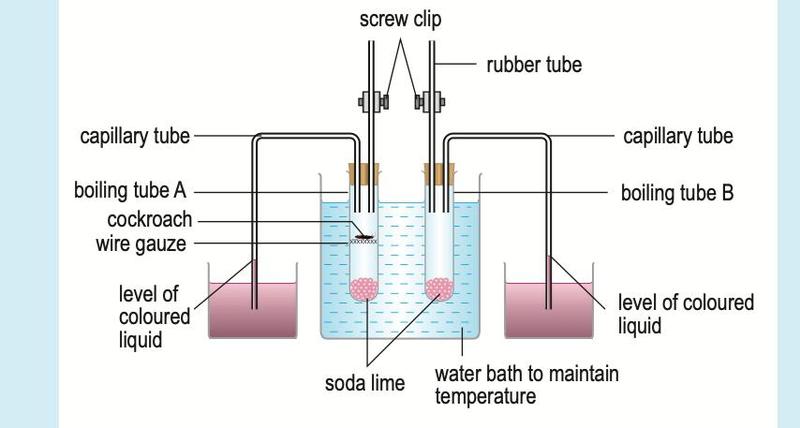
Figure: textbook Activity 7.1, p. 116.
- Manipulated variable: presence of a living organism. Responding: rise in the coloured liquid. Fixed: initial liquid level.
- Soda lime absorbs the carbon dioxide released, so the pressure falls only because oxygen is used up. The coloured liquid then rises in tube A.
- Tube B (no organism) is the control: its liquid level stays the same.
- Connections are sealed with petroleum jelly so the apparatus is airtight; the water bath keeps the temperature constant.
- Conclusion: living organisms use oxygen in aerobic respiration (hypothesis accepted).
Show answerHide answer
7.3Fermentation
| Type | Equation | Where it happens |
|---|---|---|
| Alcohol fermentation | Glucose → ethanol + carbon dioxide + energy (210 kJ) | Yeast; paddy plants in waterlogged soil |
| Lactic acid fermentation | Glucose → lactic acid + energy | Lactobacillus; human muscle cells in vigorous exercise |
Examples
- Yeast: ethanol is used for beer and wine; the carbon dioxide makes bread dough rise.
- Paddy plants: in waterlogged soil with little oxygen they ferment to ethanol. They make plenty of alcohol dehydrogenase, which breaks ethanol into non-toxic carbon dioxide, so they tolerate it.
- Lactobacillus: changes lactose (milk sugar) to lactic acid. The acid coagulates casein (milk protein) into yoghurt and gives the sour taste.
- Muscle cells: during vigorous exercise oxygen is used faster than the blood can supply it. This is oxygen debt. Only 2 ATP (150 kJ) are produced per glucose, and lactic acid builds up and causes fatigue and cramps. After exercise, extra oxygen oxidises the lactic acid to carbon dioxide, water and energy and the debt is repaid.
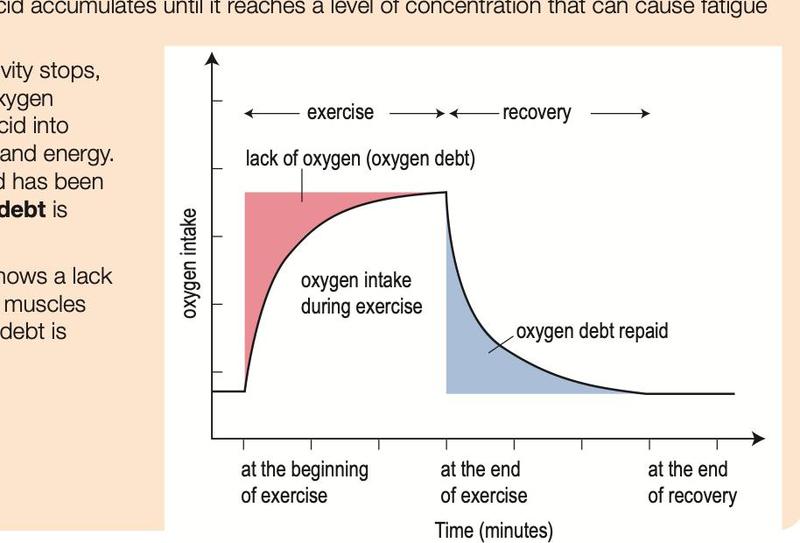
Figure: textbook Figure 7.1, p. 119.
Activity 7.3: yeast fermentation
- Tube A: boiled, cooled glucose solution + yeast suspension; tube B: glucose solution only (control). Both are covered with paraffin oil.
- Glucose is boiled to remove dissolved oxygen and kill other microorganisms; paraffin oil keeps conditions anaerobic.
- Results in A: temperature rises (energy released), lime water turns cloudy (carbon dioxide), smell of ethanol. No change in B.
Aerobic respiration compared with fermentation
Similarities: both begin with glycolysis in the cytoplasm, both turn glucose into pyruvate, both produce ATP, and both occur in yeast, bacteria, animals and plants.
| Aspect | Aerobic respiration | Fermentation |
|---|---|---|
| Oxygen | Present | Absent or limited |
| Breakdown of glucose | Complete | Incomplete |
| Site | Cytoplasm and mitochondrion | Cytoplasm only |
| Products | Carbon dioxide, water, energy | Ethanol and carbon dioxide, or lactic acid |
| Water produced | Yes | No |
| Energy per glucose | 2898 kJ | 210 kJ (alcohol) or 150 kJ (lactic acid) |