Biology questions, chapter 15
Nama / NameKelas / ClassTarikh / Date
Sexual Reproduction, Development and Growth in Humans and Animals
38 marks. Use Practice to check each answer as you go, or Exam to answer everything against the clock first.
Section A: objective questions
12 marksChoose the best answer for each question.
1
Question 1
Which structure secretes mucus to help sperm swim to the Fallopian tubes?
Show answerHide answer
B
The cervix secretes mucus (p. 286).
2
Question 2
Which part of the male system produces testosterone?
Show answerHide answer
C
The testis makes sperm and testosterone.
3
Question 3
Why is the midpiece of a sperm packed with mitochondria?
Show answerHide answer
A
Mitochondria release energy for swimming to the Fallopian tube.
4
Question 4
How many functional gametes result from one oogonium after meiosis?
Show answerHide answer
D
One secondary oocyte and polar bodies that die.
5
Question 5
At what stage is meiosis II of the secondary oocyte completed?
Show answerHide answer
C
Meiosis II is completed only after a sperm penetrates the secondary oocyte.
6
Question 6
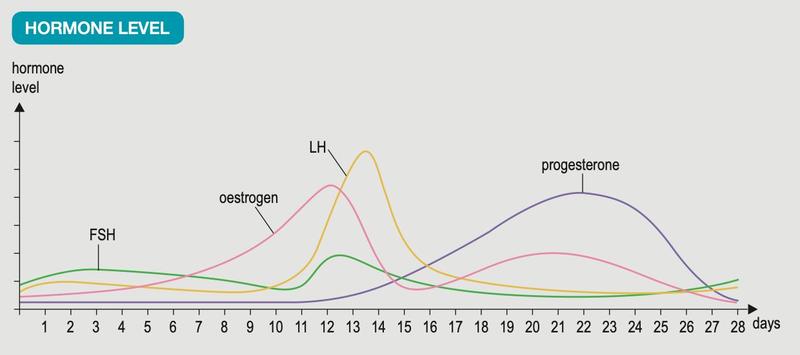
Diagram 1 shows hormone levels in a 28-day menstrual cycle. Which hormone peaks on day 13 and causes ovulation?
Show answerHide answer
D
The LH peak on day 13 triggers ovulation on day 14.
7
Question 7
Which hormone is mainly responsible for thickening the endometrium during days 15 to 21?
Show answerHide answer
A
Corpus luteum progesterone thickens the endometrium.
8
Question 8
What is the role of HCG in early pregnancy?
Show answerHide answer
C
HCG maintains the corpus luteum until the placenta takes over.
9
Question 9
Which blood vessel carries oxygen-rich blood to the foetus?
Show answerHide answer
A
The umbilical vein carries oxygenated blood from placenta to foetus.
10
Question 10
Which is a reason why maternal and foetal blood must not mix?
Show answerHide answer
B
Mixed blood of different groups may agglutinate.
11
Question 11
A grasshopper has a life cycle of egg, nymph and adult. This is
Show answerHide answer
D
No pupa stage means incomplete metamorphosis.
12
Question 12
In which phase of the sigmoid growth curve is the growth rate highest?
Show answerHide answer
B
Cell division and elongation are most active in the exponential phase.
Section B: structured questions
26 marksAnswer all questions.
13
Question 13
Compare spermatogenesis and oogenesis.
[2 marks]
(a)State where each process takes place.
Show answerHide answer
Tick each point you got.
[2 marks]
(b)State two differences in the number and fate of the gametes produced from one germ cell.
Show answerHide answer
Tick each point you got.
14
Question 14
Diagram 2 shows hormone levels in a 28-day menstrual cycle. Use it to answer.
[1 mark]
(a)Name the hormone with its peak at about day 22.
Show answerHide answer
Tick each point you got.
[3 marks]
(b)Explain what happens to the endometrium towards day 28 if there is no fertilisation.
Show answerHide answer
Tick each point you got.
[2 marks]
(c)Explain why high progesterone prevents ovulation in pregnancy.
Show answerHide answer
Tick each point you got.
15
Question 15
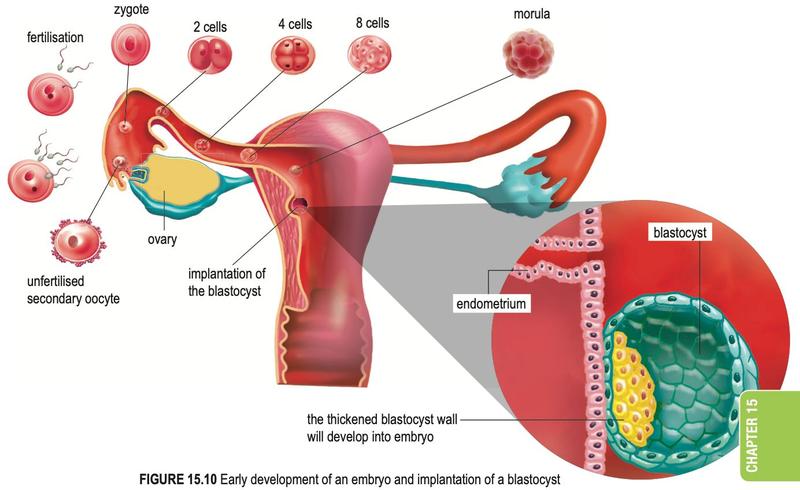
Diagram 3 shows early embryo development.
[2 marks]
(a)Arrange in order: blastocyst, zygote, morula, two-cell embryo.
Show answerHide answer
Tick each point you got.
[1 mark]
(b)Name the process in which the blastocyst attaches to the endometrium.
Show answerHide answer
Tick each point you got.
[1 mark]
(c)Which type of cell division produces the cells of the embryo?
Show answerHide answer
Tick each point you got.
16
Question 16
Twins can be identical or fraternal.
[2 marks]
(a)How are identical twins formed?
Show answerHide answer
Tick each point you got.
[1 mark]
(b)Why can fraternal twins be a boy and a girl?
Show answerHide answer
Tick each point you got.
[1 mark]
(c)How are conjoined twins formed?
Show answerHide answer
Tick each point you got.
17
Question 17
A pregnant mother smokes.
[2 marks]
(a)Explain why the foetus is still harmed although its blood does not mix with its mother's.
Show answerHide answer
Tick each point you got.
[2 marks]
(b)State two substances moved from the foetus to the mother across the placenta.
Show answerHide answer
Tick each point you got.
18
Question 18
A grasshopper grows by ecdysis.
[1 mark]
(a)What is ecdysis?
Show answerHide answer
Tick each point you got.
[2 marks]
(b)Explain why the growth of an insect is intermittent.
Show answerHide answer
Tick each point you got.
[1 mark]
(c)Give one disadvantage of using dry mass to measure growth in animals.
Show answerHide answer
Tick each point you got.