Acid and alkali
What this chapter covers
- You can use litmus paper to tell if a substance is acidic, alkaline or neutral (8.1.1)
- You can describe how acidic, alkaline and neutral substances taste and feel (8.1.2)
- You can name turmeric, purple cabbage and hibiscus extracts as other indicators (8.1.3)
- You can give examples and uses of acidic, alkaline and neutral substances around you (8.1.4)
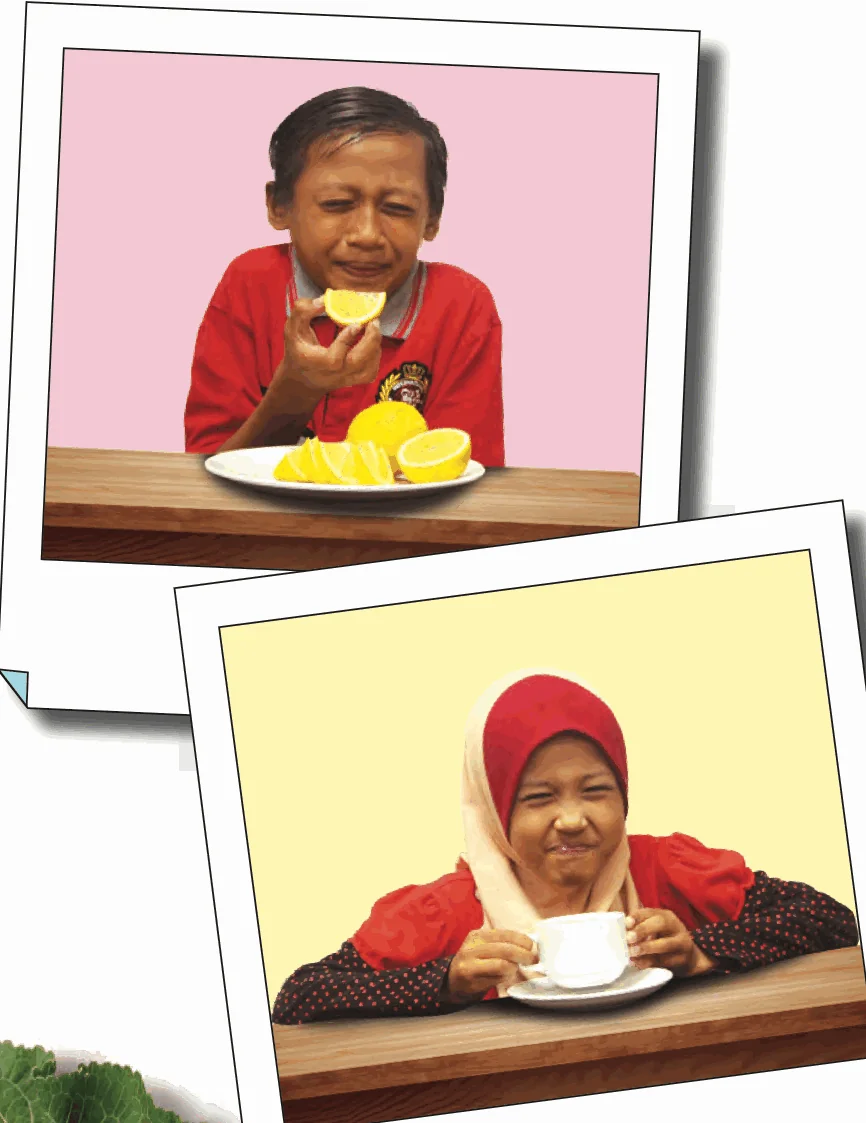
Picture: Science Year 3 (DLP) textbook, p. 105.
8.1Acidic, alkaline and neutral
Things around us can be acidic, alkaline or neutral. This is called the property of a substance. A property is what a thing is like.
Alkaline – like soap or slaked lime.
Neutral – not acidic and not alkaline, like drinking water or sugar solution.
How do we find out? We use litmus paper. Litmus paper is an indicator. An indicator is something that changes colour to show us the property.
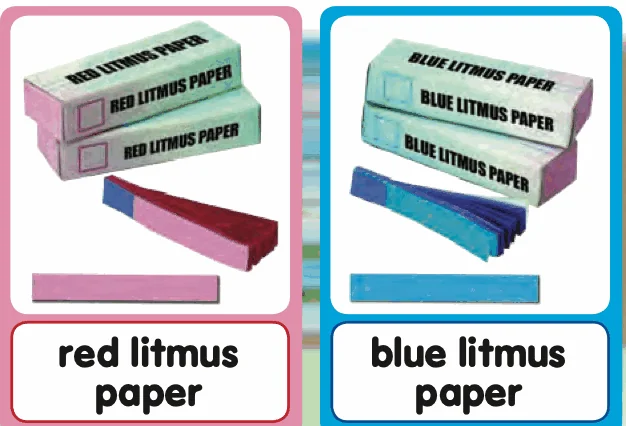
Picture: Science Year 3 (DLP) textbook, p. 106.
How to test
- Put the two strips (red and blue) on a filter paper on a tile.
- Use a dropper to put one drop of the substance on each strip.
- Look at the colours. Write down what you see.
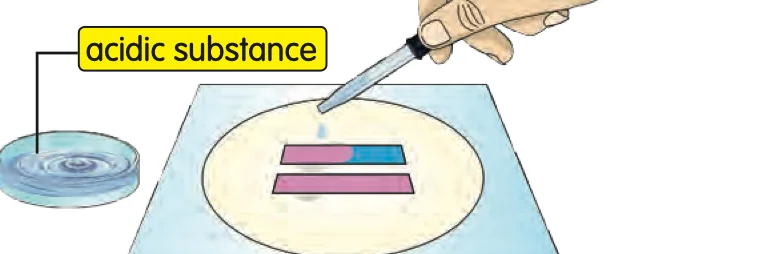
Picture: Science Year 3 (DLP) textbook, p. 106.
What the colours tell us
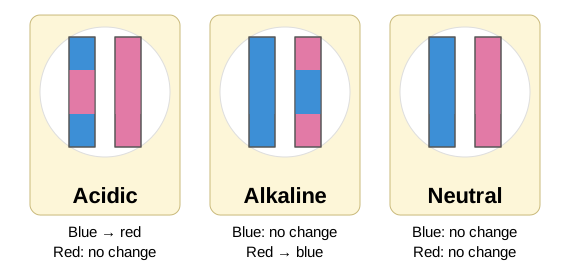
| Litmus paper | Acidic | Alkaline | Neutral |
|---|---|---|---|
| Blue | Changes to red | No change | No change |
| Red | No change | Changes to blue | No change |
Show answerHide answer
8.2Taste and touch
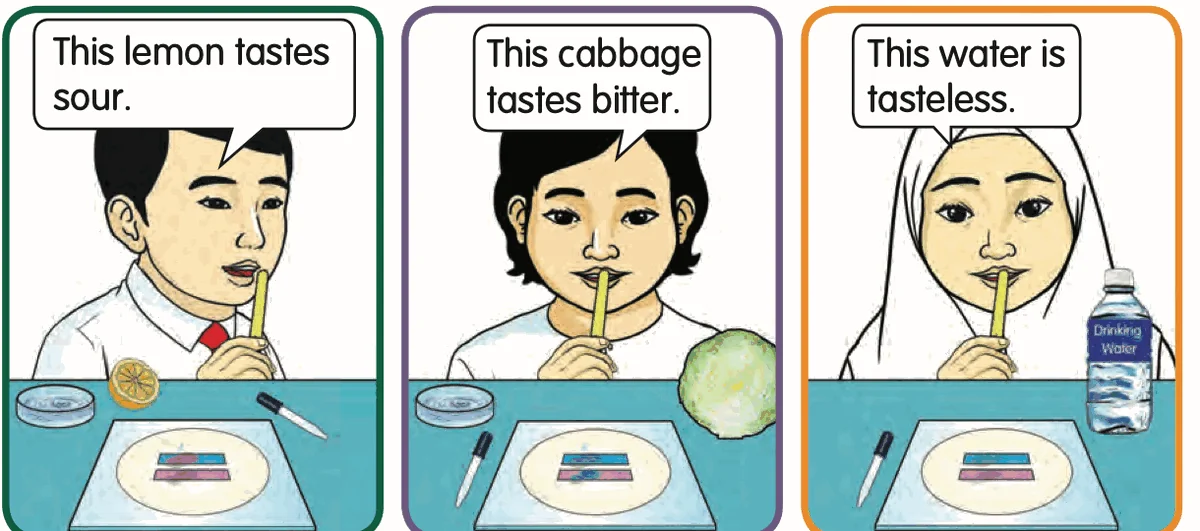
We can also use our senses of taste and touch. Our tongue tastes. Our fingers feel.
Picture: Science Year 3 (DLP) textbook, p. 109.
| Property | Taste | Touch |
|---|---|---|
| Most acidic substances | Sour (like lime, tamarind) | Can feel burning (pedih) |
| Most alkaline substances | Bitter | Slippery, like soap |
| Neutral substances | Tasteless, sweet or salty | Slippery or coarse (kasar) |
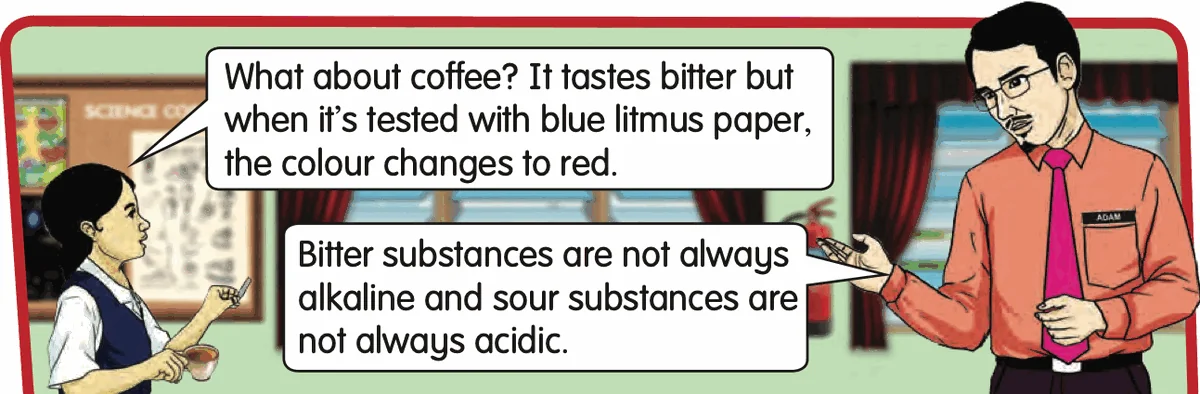
But be careful! Taste and touch are not scientific indicators. They do not always give the right answer.
Picture: Science Year 3 (DLP) textbook, p. 109.
Show answerHide answer
8.3Litmus paper substitutes
No litmus paper at home? No problem! Some plants can be used as indicators too. We crush them in a little water to make an extract. An extract is the coloured juice we get from a plant.
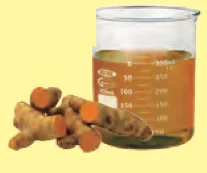 Turmeric (kunyit)
Yellow extract
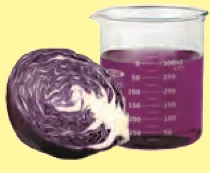 Purple cabbage
Purple extract
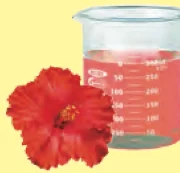 Hibiscus (bunga raya)
Pinkish-red extract
Pictures: Science Year 3 (DLP) textbook, p. 112.
In the textbook test, we put a drop of each extract into lime juice (acidic) and sodium bicarbonate solution (alkaline). Then we look for a colour change.
| Extract | In lime juice (acidic) | In sodium bicarbonate (alkaline) |
|---|---|---|
| Turmeric | Stays yellow | Turns reddish-brown |
| Purple cabbage | Turns pink or red | Turns green |
| Hibiscus | Turns bright pink | Turns green |
Show answerHide answer
8.4Acidic, alkaline and neutral substances around us
Acidic, alkaline and neutral substances are everywhere: in the kitchen, in the bathroom, at the pasar and on the farm.
| Acidic | Alkaline | Neutral |
|---|---|---|
| Lime (limau nipis) | Soap | Salt solution |
| Tamarind (asam jawa) | Slaked lime (kapur) | Sugar solution |
| Vinegar | Toothpaste | Drinking water |
| Orange juice | Sodium bicarbonate | Cooking oil |
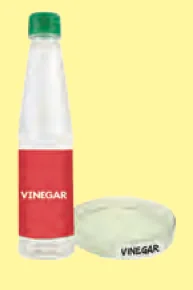 Vinegar
Acidic
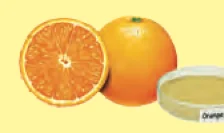 Orange juice
Acidic
 Slaked lime
Alkaline
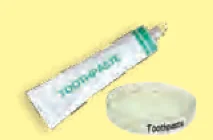 Toothpaste
Alkaline
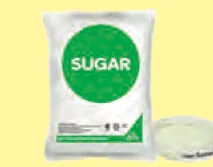 Sugar solution
Neutral
 Drinking water
Neutral
Pictures: Science Year 3 (DLP) textbook, pp. 108 and 110.
How we use them
An acid and an alkali can cancel each other out. That is why we use one to fix a problem caused by the other.
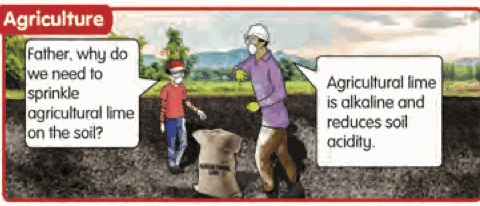
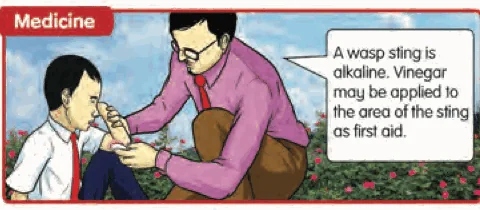

Situation cards: Science Year 3 (DLP) textbook, p. 111.
Show answerHide answer
Summary
| Remember | Key fact |
|---|---|
| Litmus paper | An indicator. Two colours: red and blue. |
| Acidic | Blue litmus turns red. Most taste sour. Lime, tamarind, vinegar. |
| Alkaline | Red litmus turns blue. Most taste bitter and feel slippery. Soap, slaked lime, toothpaste. |
| Neutral | No change in either colour. Tasteless, sweet or salty. Water, salt solution, sugar solution. |
| Taste and touch | Not scientific indicators. Coffee is bitter but acidic. |
| Other indicators | Turmeric, purple cabbage and hibiscus extracts. |
| Uses | Agriculture (lime for acidic soil), medicine (vinegar for wasp sting), home (tamarind for slippery bleach). |