The solar system
What this chapter covers
- You can name the members of the Solar System and say the planets in order from the Sun (9.1.1)
- You can say that planets nearer the Sun are hotter than planets farther away (9.1.2)
- You can explain that every planet moves around the Sun in its own path called an orbit (9.1.3)
- You can say that a planet farther from the Sun takes longer to go once around the Sun (9.1.4)
- You can make a model to show the Solar System (9.1.5)
9.1Members of the solar system
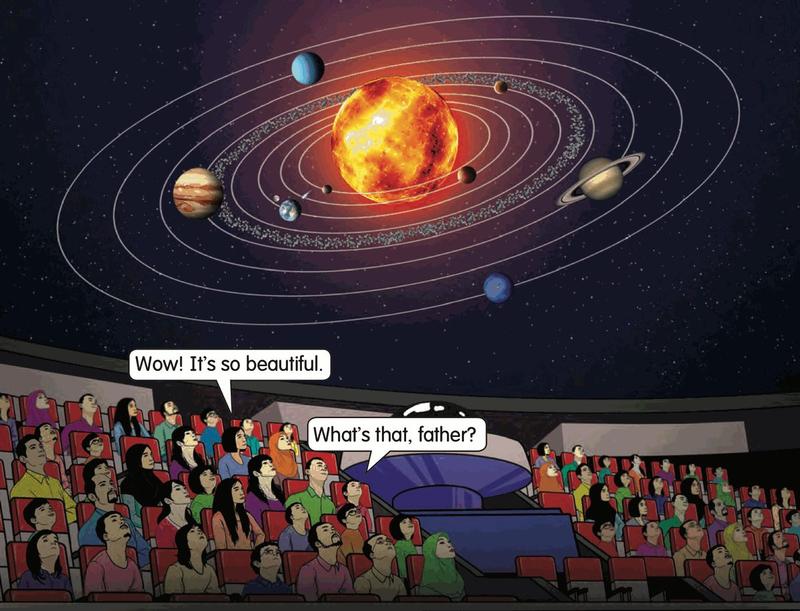
Look up at night. You can see the Moon and the stars. Far away in space is our home, the Solar System.
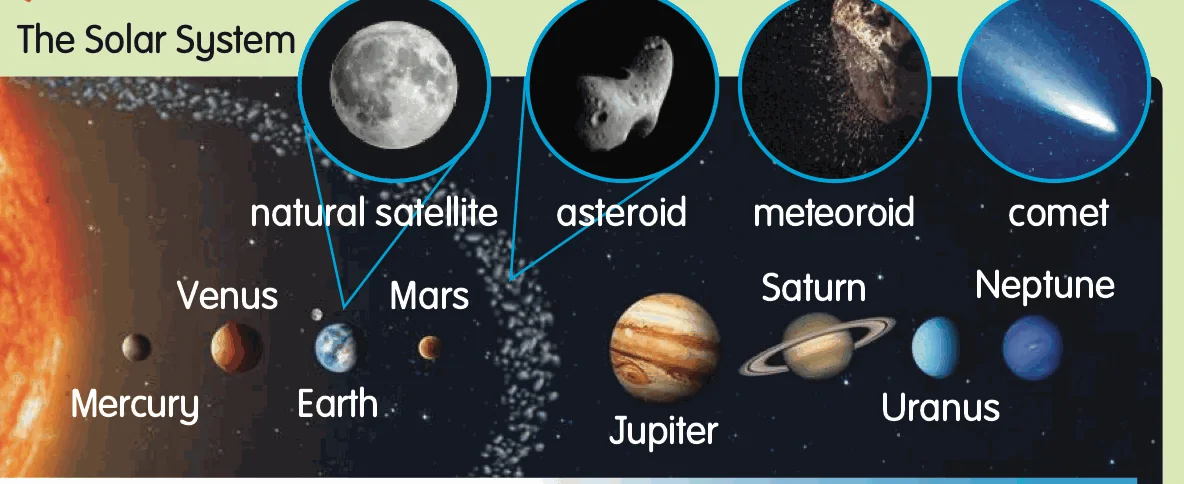
The Solar System has six kinds of members:
| Member | What it is |
|---|---|
| Sun | A very big, very hot star. It is at the centre of the Solar System. |
| Planets | Eight big round worlds that move around the Sun. Earth is one of them. |
| Natural satellites | Natural objects that move around a planet. The Moon is Earth's natural satellite. |
| Asteroids | Big pieces of rock. Most are between Mars and Jupiter. |
| Meteoroids | Small pieces of rock. They break off when asteroids crash into each other. |
| Comets | Balls of ice and dust with a long, bright tail. |
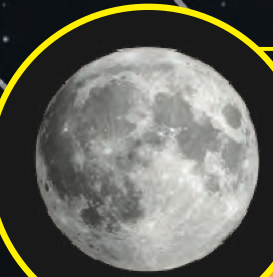 Natural satellite
The Moon
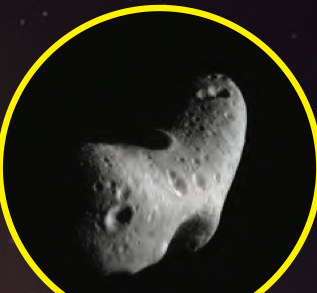 Asteroid
A big rock
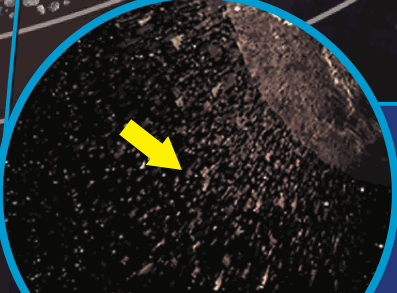 Meteoroids
Small pieces of rock
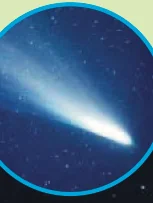 Comet
CometHas a bright tail
Pictures: Science Year 3 (DLP) textbook, pp. 116–117.
The eight planets in order
The planets go around the Sun in a fixed order (sequence). Start from the planet nearest the Sun:
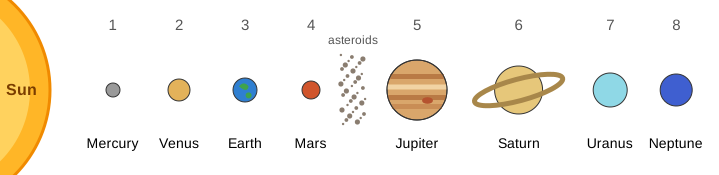
| Order | Planet | Easy clue |
|---|---|---|
| 1 | Mercury | Nearest the Sun and the smallest |
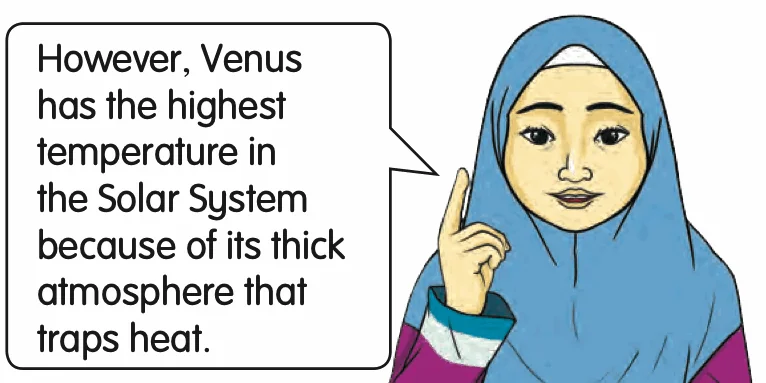
| 2 | Venus | The hottest planet |
| 3 | Earth | Our home. It has air, water and living things. |
| 4 | Mars | The red planet |
| 5 | Jupiter | The biggest planet |
| 6 | Saturn | Has big, beautiful rings |
| 7 | Uranus | Pale blue-green |
| 8 | Neptune | Farthest from the Sun and the coldest |
2. Where are most asteroids found?
Show answerHide answer
2. Between Mars and Jupiter.
9.2Temperature of the planets
Lim's family is having a barbecue in the kampung. Lim stands next to the fire. He is sweating! His friends stand far away. They do not feel hot.
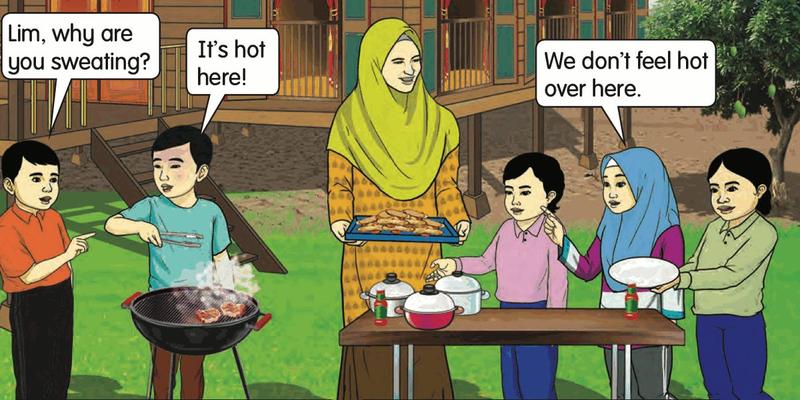
The Sun is like the fire. The Sun gives heat to the whole Solar System. Temperature tells us how hot or cold something is.
Planets farther from the Sun have a lower temperature (colder).
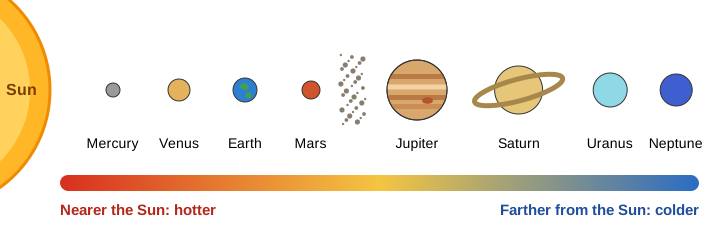
So Mercury is very hot. Neptune is the coldest planet, because it is the farthest from the Sun.
Show answerHide answer
9.3Orbit of planets
Have you played with a toy car track? The cars go round and round on the same track.
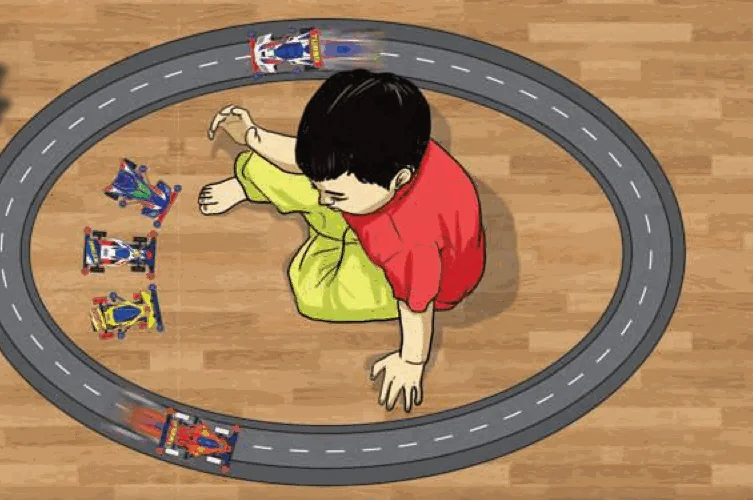
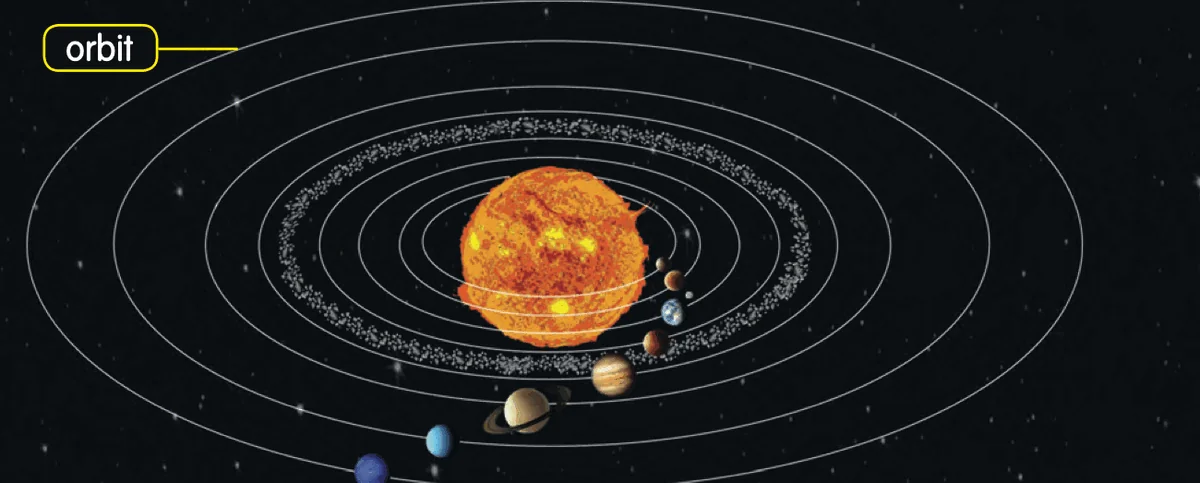
Planets are like the cars. Each planet moves around the Sun on its own path. We say the planet revolves around the Sun. Revolve means to move round and round something.
Show answerHide answer
9.4Revolution time of the planets
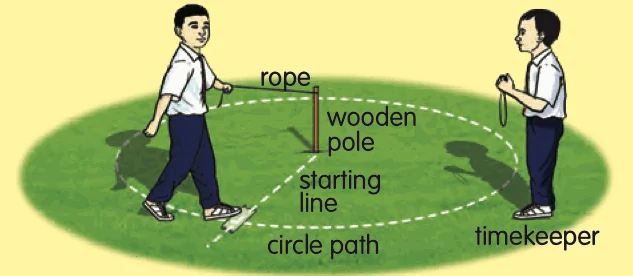
Look at the orbits of the Earth and Mars. Mars is farther from the Sun, so its orbit is longer. Mars needs more time to go once around the Sun.
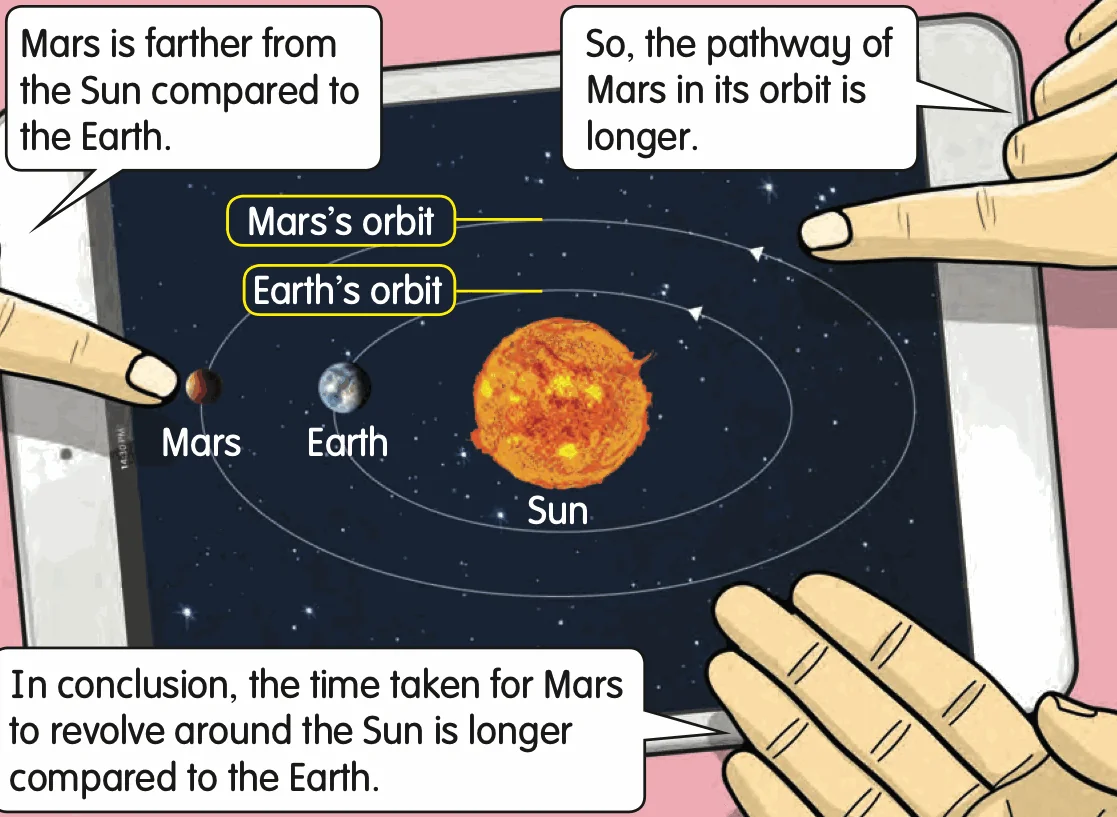
The farther a planet is from the Sun, the longer its revolution time.
The Earth takes one year to go around the Sun once. That is why we have a birthday once a year!
| Planet | Time to go once around the Sun |
|---|---|
| Mercury | About 88 days (shortest) |
| Venus | About 225 days |
| Earth | 1 year (365 days) |
| Mars | About 2 years |
| Jupiter | About 12 years |
| Saturn | About 29 years |
| Uranus | About 84 years |
| Neptune | About 165 years (longest) |
Show answerHide answer
9.5Make your own solar system
You can make fun models to show what you learnt.
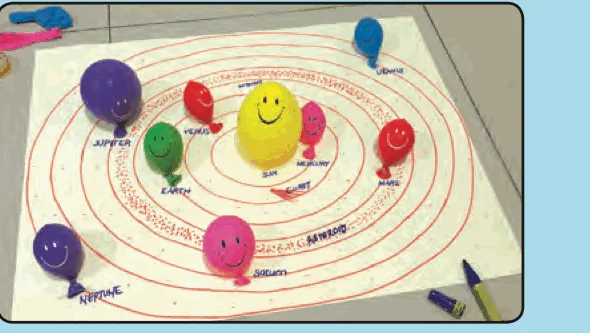 Solar System balloons
Big balloon for the Sun. Smaller balloons for the planets, in order.
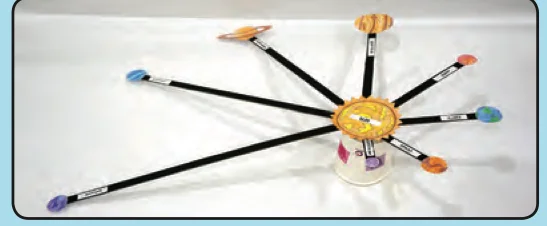 Orrery
Strips of different lengths. A longer strip means farther from the Sun.
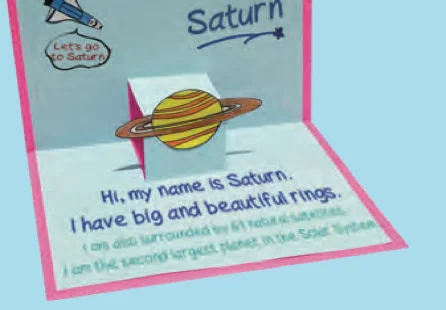 Pop-up card
Write facts about one planet.
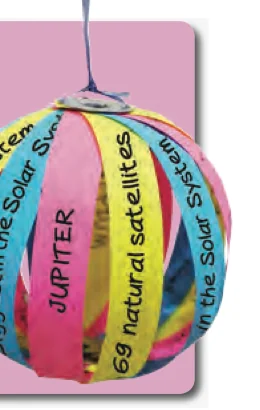 Planet lantern
Paper strips with planet facts.
Pictures: Science Year 3 (DLP) textbook, pp. 118–119, 123, 125.
Show answerHide answer
Summary
| Topic | Remember |
|---|---|
| Members | Sun, planets, natural satellites, asteroids, meteoroids and comets. The Sun is at the centre. |
| Order of planets | Mercury, Venus, Earth, Mars, Jupiter, Saturn, Uranus, Neptune |
| Temperature | Nearer the Sun = hotter. Farther = colder. Venus is the hottest. Neptune is the coldest. |
| Orbit | Every planet revolves around the Sun in its own oval path called an orbit. |
| Revolution time | Farther from the Sun = longer time to go once around. Mercury is the shortest. Neptune is the longest. |