28 marks. Use Practice to check each answer as you go, or Exam to answer everything first.
Section A: objective questions
8 marks
Choose the best answer for each question.
1
Question 1
Which member is at the centre of the Solar System?
Show answerHide answer
C
The Sun is at the centre. The other members move around it.
For the teacher: Remembering, low difficulty, standard 9.1.1
Textbook p. 116
2
Question 2
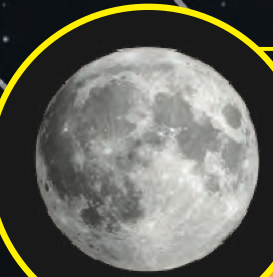
Diagram 1 shows the natural satellite of the Earth. What is it?
Diagram 1
Show answerHide answer
A
The Moon moves around the Earth, so it is the Earth's natural satellite.
For the teacher: Remembering, low difficulty, standard 9.1.1
Textbook p. 116
3
Question 3
Which planet is the nearest to the Sun?
Show answerHide answer
B
The order from the Sun is Mercury, Venus, Earth, Mars, Jupiter, Saturn, Uranus, Neptune.
For the teacher: Remembering, low difficulty, standard 9.1.1
Textbook p. 116
4
Question 4
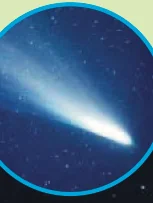
Diagram 2 shows a member of the Solar System. It has a long, bright tail. What is it?
Diagram 2
Show answerHide answer
D
A comet is a ball of ice and dust with a long, bright tail.
For the teacher: Understanding, low difficulty, standard 9.1.1
Textbook p. 116
5
Question 5
How are meteoroids formed?
Show answerHide answer
A
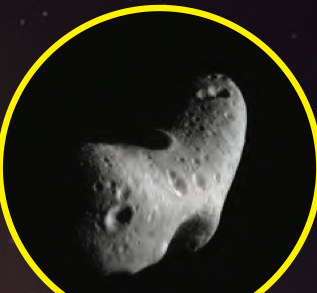
Collisions between asteroids produce smaller pieces of rock called meteoroids (textbook p. 117).
For the teacher: Understanding, medium difficulty, standard 9.1.1
Textbook p. 117
6
Question 6
Which planet is hotter than the Earth?
Show answerHide answer
C
Venus is nearer the Sun than the Earth, and it is the hottest planet. Mars, Jupiter and Neptune are farther from the Sun, so they are colder.
For the teacher: Applying, low difficulty, standard 9.1.2
Textbook p. 121
7
Question 7
Each planet moves around the Sun in its own path. What is this path called?
Show answerHide answer
D
An orbit is the oval (elliptical) path of a planet around the Sun.
For the teacher: Remembering, low difficulty, standard 9.1.3
Textbook p. 122
8
Question 8
Saturn takes about 29 years to go once around the Sun. Uranus takes about 84 years. A new planet takes 50 years. Where could this planet be?
Show answerHide answer
B
50 years is longer than Saturn's time and shorter than Uranus's time. The farther a planet is, the longer it takes, so it must be between Saturn and Uranus.
For the teacher: Analysing, high difficulty, standard 9.1.4
Textbook p. 124
Section B: structured questions
20 marks
Answer all questions.
9
Question 9
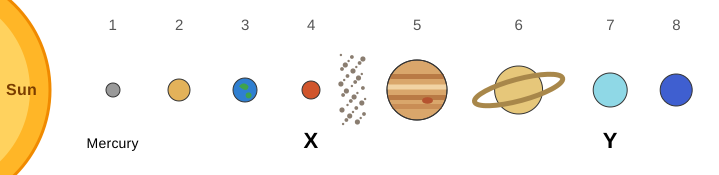
Diagram 3 shows the eight planets in order from the Sun.
Diagram 3
[1 mark](a)Name planet X.
Show answerHide answer
Tick each point you got.
[1 mark](b)Name planet Y.
Show answerHide answer
Tick each point you got.
For the teacher: Remembering, low difficulty, standard 9.1.1
Textbook p. 117
10
Question 10
Circle the correct name for each member of the Solar System.
[1 mark](a)A big piece of rock. Most of these are between Mars and Jupiter.Show answerHide answer
Asteroid
[1 mark](b)It moves around a planet, like the Moon moves around the Earth.Show answerHide answer
Natural satellite
For the teacher: Understanding, low difficulty, standard 9.1.1
Textbook p. 117
11
Question 11
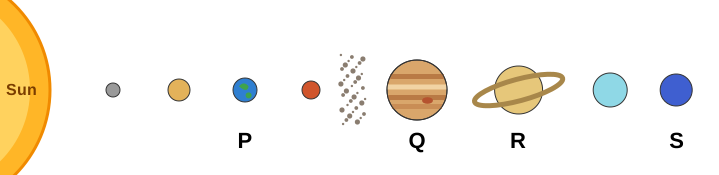
Diagram 4 shows four planets, P, Q, R and S.
Diagram 4
[1 mark](a)Name planet P. Living things live on it.
Show answerHide answer
Tick each point you got.
[1 mark](b)Which planet has big, beautiful rings?Show answerHide answer
R
R is Saturn, the sixth planet.
[1 mark](c)Which planet is the coldest?Show answerHide answer
S
S is Neptune. It is the farthest from the Sun, so it is the coldest.
For the teacher: Applying, medium difficulty, standard 9.1.1
Textbook p. 116
12
Question 12
Diagram 5 shows pupils with a model of the Sun and the planets. Are these statements true or false?
Diagram 5
[1 mark](a)The Sun gives heat to the Solar System.Show answerHide answer
True
[1 mark](b)Planets farther from the Sun are colder.Show answerHide answer
True
[1 mark](c)Mercury is the hottest planet.Show answerHide answer
False
Venus is the hottest planet because its thick atmosphere traps heat.
For the teacher: Understanding, low difficulty, standard 9.1.2
Textbook p. 121
13
Question 13
Look at these five planets. Earth Jupiter Neptune Saturn Venus
[2 marks](a)Arrange the planets from the coldest to the hottest.
Show answerHide answer
Neptune, Saturn, Jupiter, Earth, Venus
Farther from the Sun is colder. Venus is the hottest of all.
Tick each point you got.
[1 mark](b)Why is Venus the hottest planet?
Show answerHide answer
Tick each point you got.
For the teacher: Applying, medium difficulty, standard 9.1.2
Textbook p. 126
14
Question 14
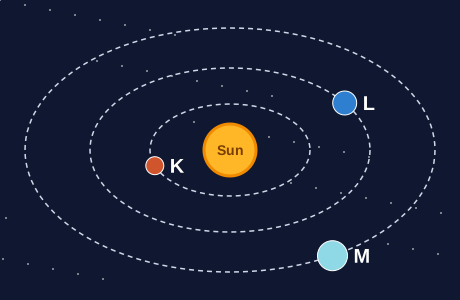
Diagram 6 shows three planets, K, L and M, in their orbits. They do not have thick atmospheres.
Diagram 6
[1 mark](a)Which planet is the hottest?Show answerHide answer
K
K is the nearest to the Sun.
[1 mark](b)Which planet takes the longest time to go once around the Sun?Show answerHide answer
M
[1 mark](c)Explain your answer to (b).
Show answerHide answer
Tick each point you got.
For the teacher: Analysing, medium difficulty, standard 9.1.4
Textbook p. 124
15
Question 15
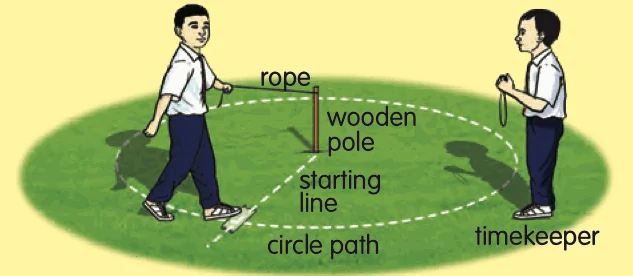
Ali holds a rope tied to a pole. He walks once around the pole at the same speed. His friend times him. He repeats with longer ropes.
Length of rope (m)
Time for one circle (seconds)
1
6
2
13
3
19
4
25
Diagram 7
[1 mark](a)When the rope is longer, the time takenShow answerHide answer
increases
[1 mark](b)Predict the time for a 5 m rope.Show answerHide answer
31 seconds
Each extra metre adds about 6 seconds: 25 + 6 = 31 seconds. The time must be more than 25 seconds.
For the teacher: Analysing, high difficulty, standard 9.1.4
Textbook p. 125
16
Question 16
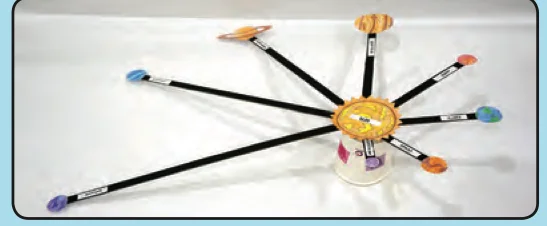
Aiman makes an orrery, shown in Diagram 8. The length of each strip shows how far the planet is from the Sun. He puts Neptune on the shortest strip.
Diagram 8
[2 marks](a)Is Aiman right? Explain.
Show answerHide answer
No. Neptune is the farthest planet from the Sun, so it should be on the longest strip.
Tick each point you got.
For the teacher: Evaluating, high difficulty, standard 9.1.5