Machine
What this chapter covers
- You can say what a pulley is and name the parts of a fixed pulley (10.1.1)
- You can explain how a fixed pulley lifts a load, using a crane model (10.1.2)
- You can give examples of how pulleys are used in daily life (10.1.3)
- You can name other types of pulleys and say how cranes at a port and a construction site use them (10.1.3)
- You can plan and build a working pulley model from recycled materials (10.1.4, 10.1.5)
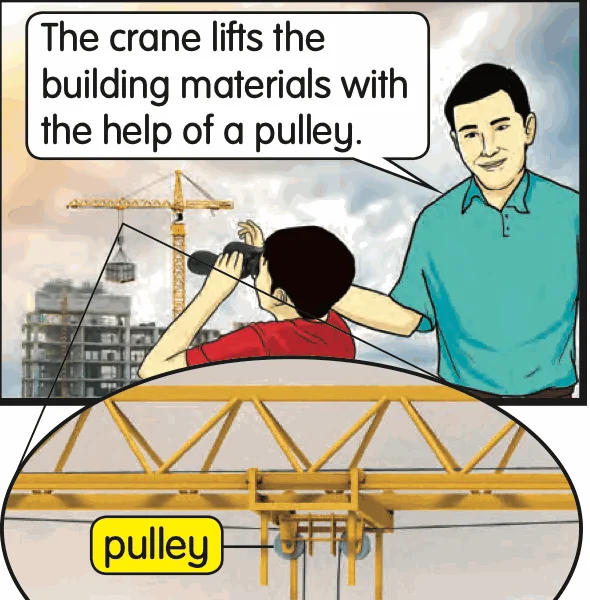
Lim and his father are on their balcony. Far away, a tall crane is lifting heavy building materials. How can a crane lift such heavy things? It uses a pulley! In this unit you will find out what a pulley is, how it works and where we use it.
10.1What is a pulley?
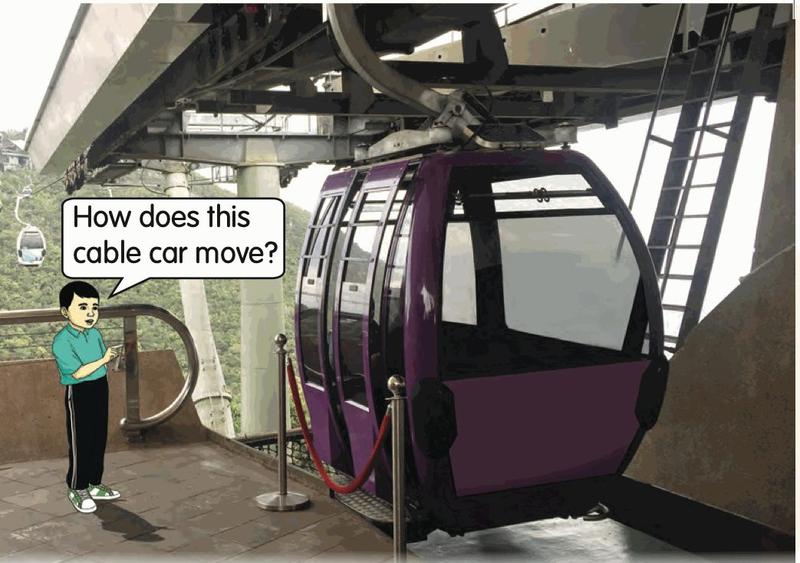
Have you ridden a cable car, like the one at Langkawi or Genting? A cable car also moves with the help of pulleys.
A load is the heavy thing we want to lift. A force is a push or a pull. With a pulley, we pull the rope and the load goes up.
Parts of a fixed pulley
A fixed pulley is tied to one place. It does not move up or down. It has four parts.
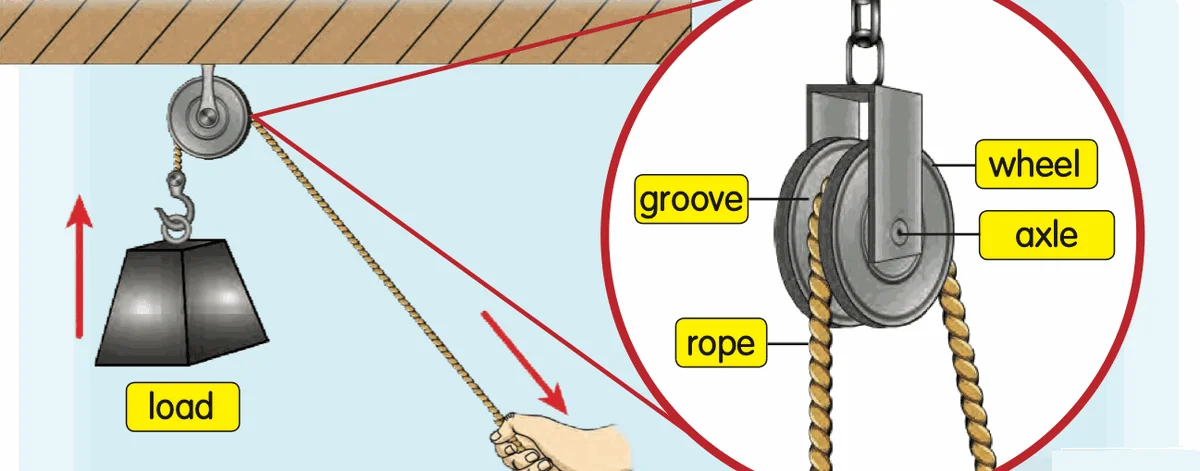
| Part | What it is |
|---|---|
| Wheel | The round part that turns. |
| Groove | The deep line around the edge of the wheel. The rope sits in it. |
| Axle | The rod in the centre. The wheel turns around it. |
| Rope | It passes through the groove. We pull it to lift the load. |
Show answerHide answer
10.2How a fixed pulley works
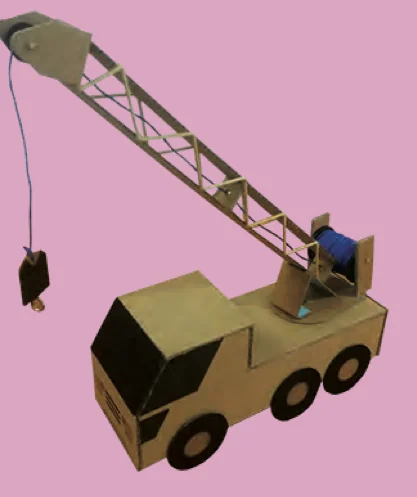
Let us look at a crane model. A crane is a tall machine that lifts heavy things. This model has a fixed pulley at the end of its arm.
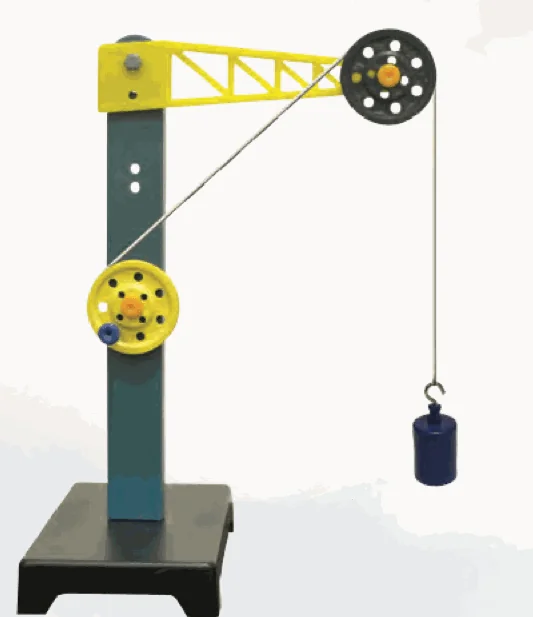
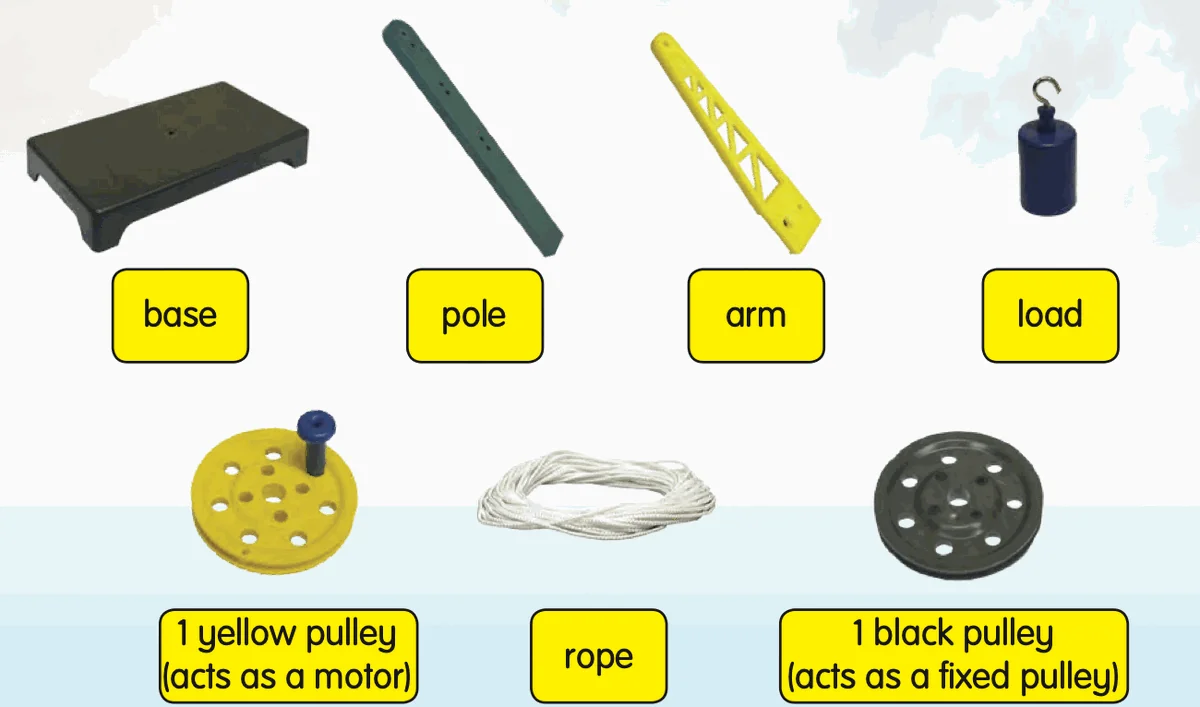
Crane model photos: Science Year 3 (DLP) textbook, pp. 129–130.
The black pulley is the fixed pulley. The yellow pulley acts like a motor. We turn it to pull the rope. The model only works when all the parts are joined together.
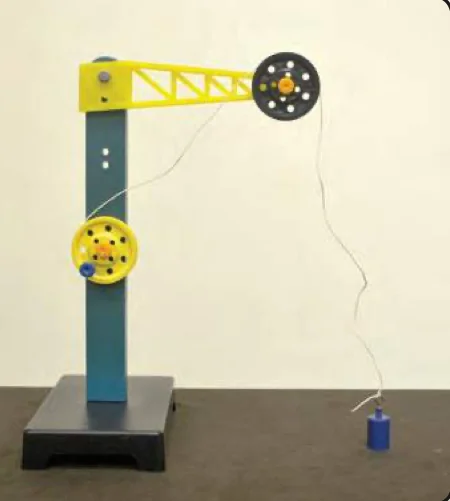
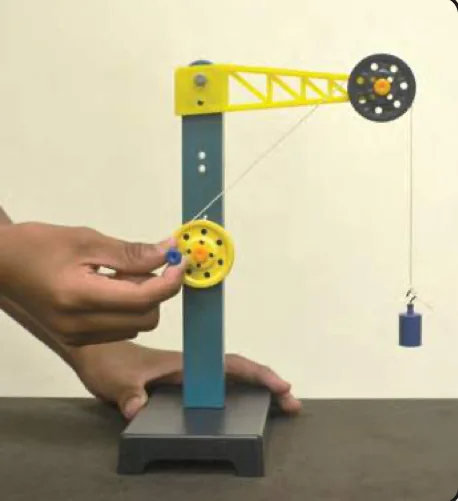
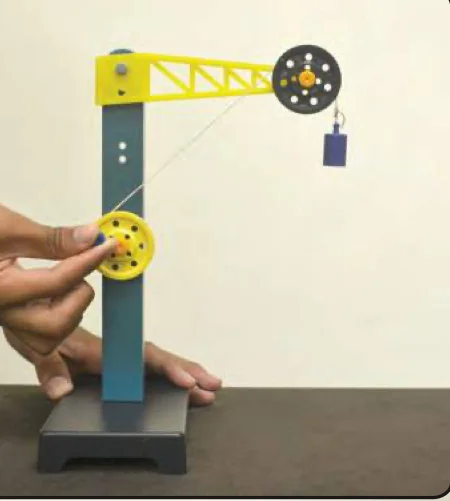
Show answerHide answer
10.3Uses of pulleys
Pulleys are all around us. Here are four uses of the fixed pulley.
- Raising the flag. We pull the rope down. The Jalur Gemilang goes up.
- Lifting water from a well. The bucket comes up easily.
- Pulling up fishing nets. Fishermen pull heavy nets full of fish onto the boat.
- Lifting building materials. Workers lift buckets of cement to the upper floor.
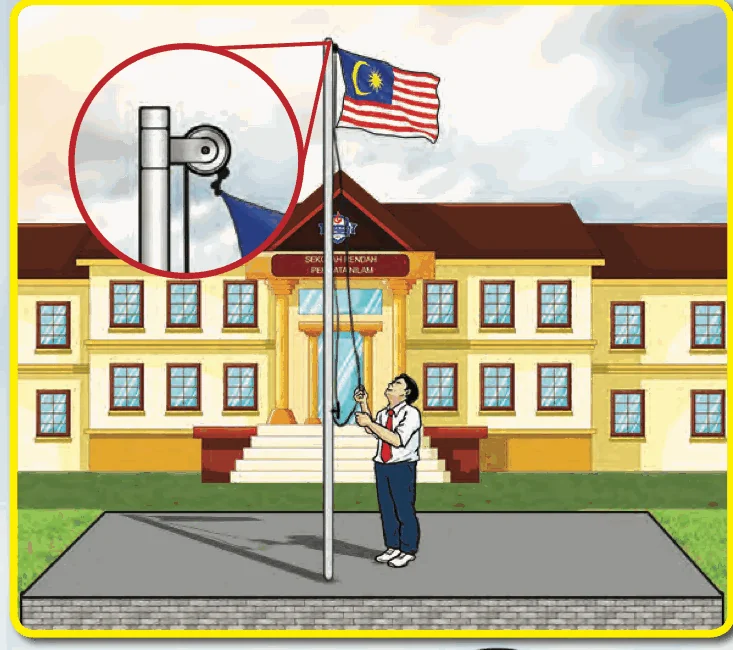
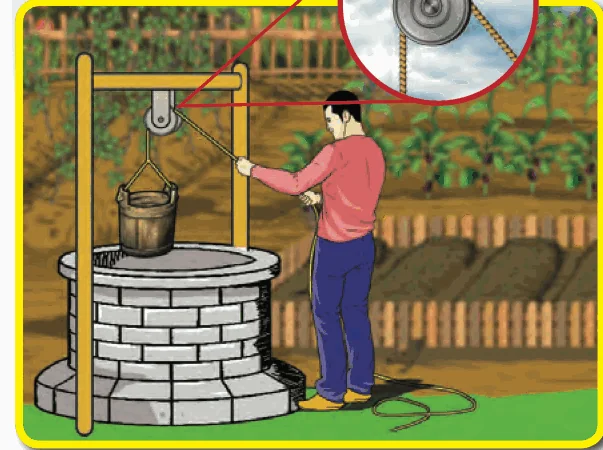
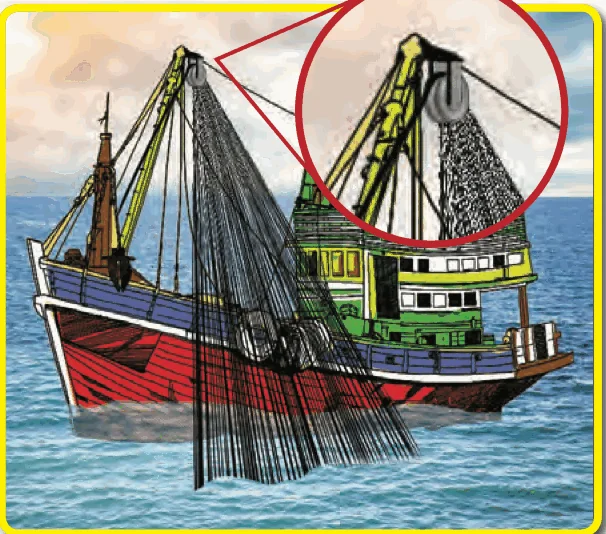
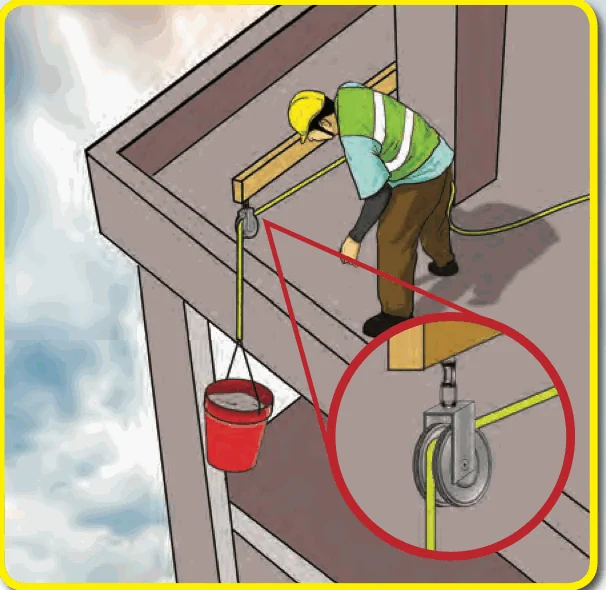
Pictures: Science Year 3 (DLP) textbook, pp. 131–132.
With a pulley or without?
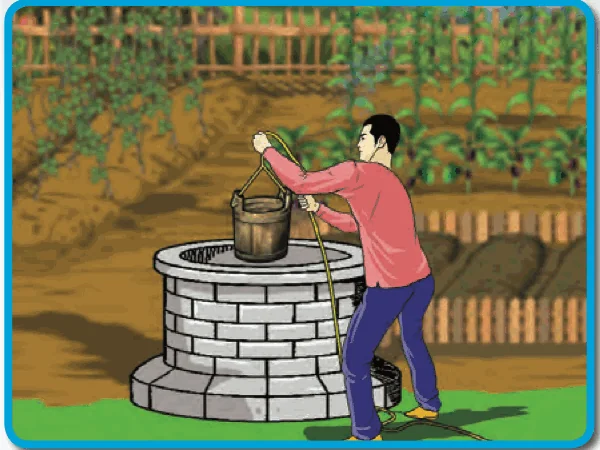
Which is easier? Using the pulley! Without a pulley, the man must lift the bucket straight up. It is harder and he gets tired fast.
What if the flagpole had no pulley? Someone would have to climb the pole to put the flag at the top. That is hard and not safe!
Other types of pulleys
Besides the fixed pulley, there are other types. Two of them are the compound pulley and the movable pulley.
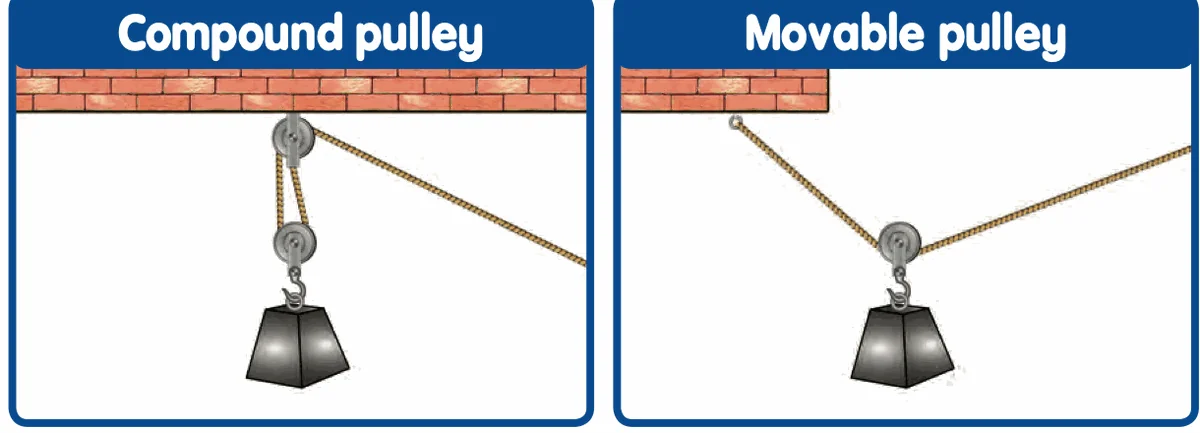
| Type | What it looks like |
|---|---|
| Fixed pulley | One wheel tied to one place. It does not move. |
| Movable pulley | The wheel hangs on the rope and moves up with the load. |
| Compound pulley | A fixed pulley and a movable pulley used together. |
Cranes at the port and at the construction site
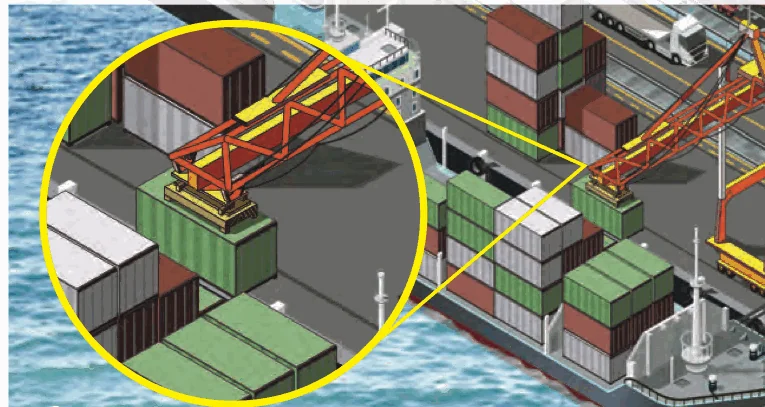
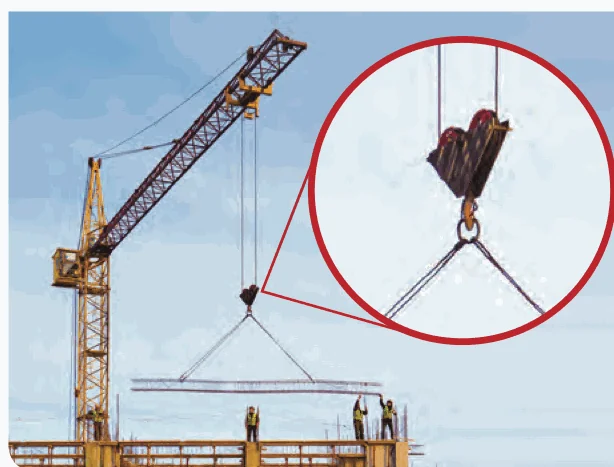
Pictures: Science Year 3 (DLP) textbook, pp. 135–136.
A container is as heavy as many cars. The pulley helps the crane lift it using less force. Without pulleys, building a house or a school would take a longer time and need more workers.
Show answerHide answer
10.4Make your own pulley model
Here is a real problem. The water supply at an apartment was cut off. People must carry heavy buckets of water from a lorry up the stairs. How can we make it easier?
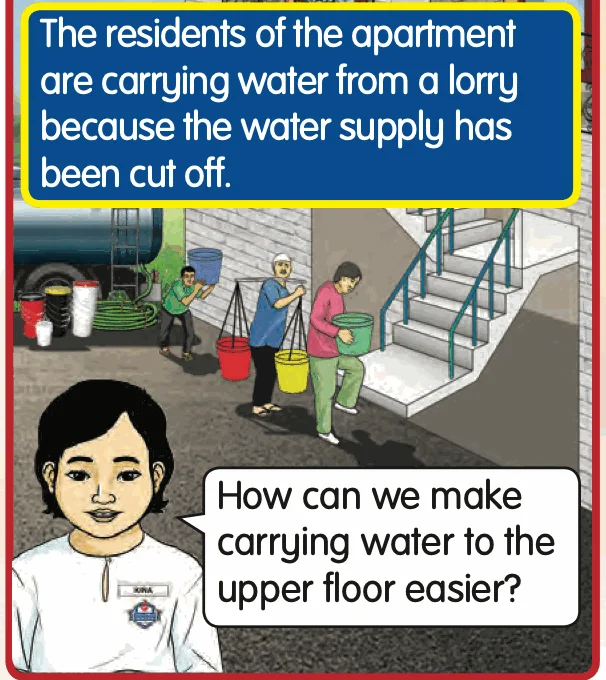
Scientists and engineers solve problems in steps. You can too!
| Step | What we do |
|---|---|
| 1. Find the problem | Carrying water upstairs is tiring. |
| 2. Get an idea | "Let's make a pulley!" |
| 3. Sketch the idea | Draw the pulley on paper first. |
| 4. Prepare materials | Recycled box, plastic bottle, straw, stick, string, glue, scissors, ruler. |
| 5. Build and test | Make the pulley, hang it up and try lifting a small load. |
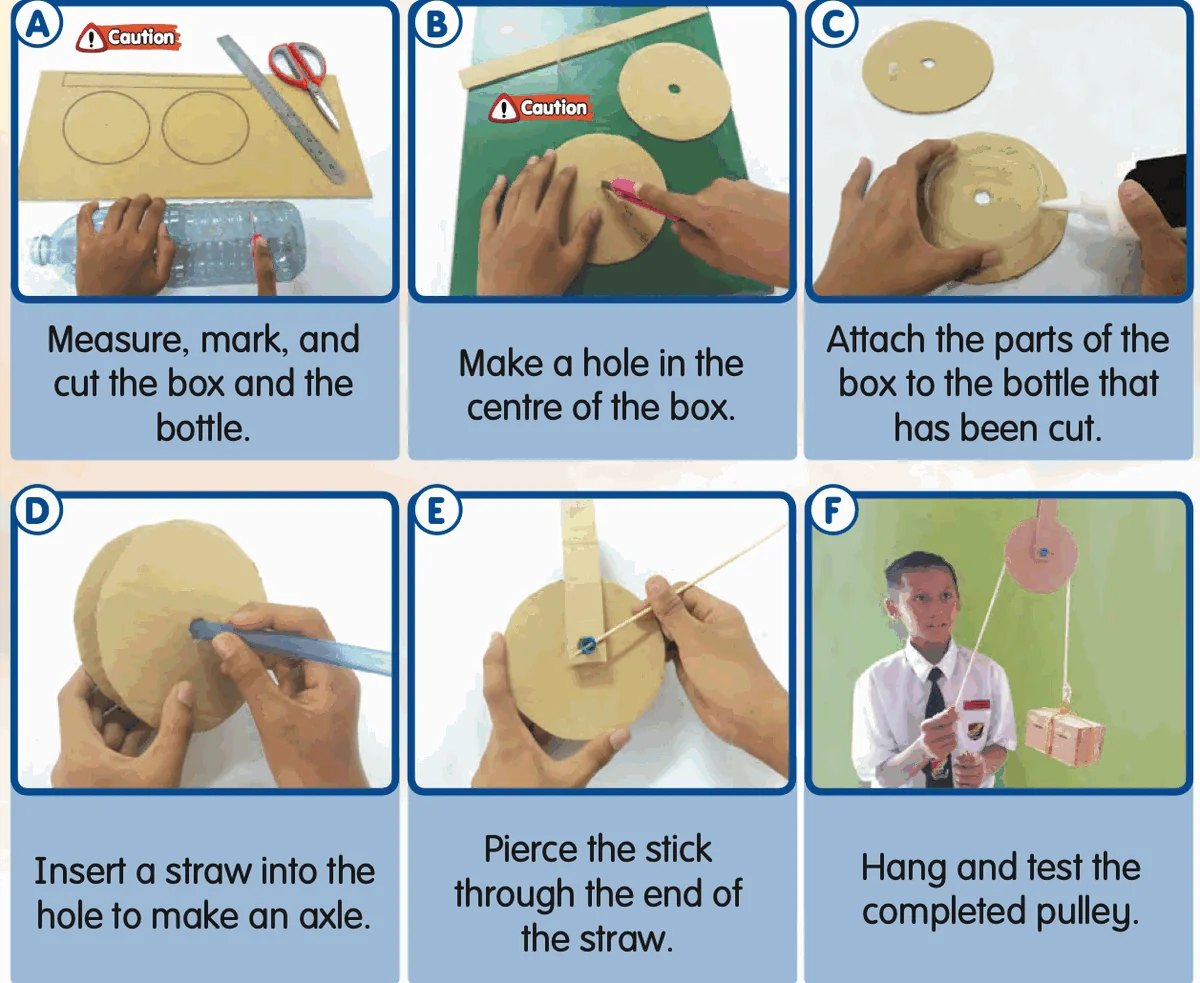
The two round pieces of the box make the wheel. The cut bottle in the middle makes the groove. The straw is the axle.
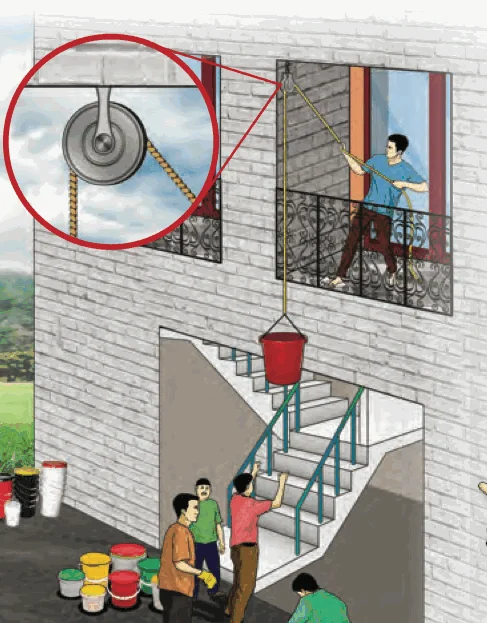
Pictures: Science Year 3 (DLP) textbook, pp. 133–134.
Summary
| Remember | Key fact |
|---|---|
| Pulley | A simple machine. It helps us lift a load easily using less force. |
| Parts of a fixed pulley | Wheel, groove, axle and rope. |
| How it works | The rope is pulled through the groove. The wheel turns. The load is lifted up. |
| Uses | Raising the flag, lifting water from a well, pulling up fishing nets, lifting building materials. |
| Other types | Movable pulley and compound pulley. |
| Cranes | Port: unload containers from ship to lorry. Construction site: lift building materials. |
| Pulley model | Problem, idea, sketch, materials, build and test. Use recycled materials. |