Humans
What this chapter covers
- You can name the organs used in breathing and say where they are (2.1.1)
- You can describe the path of air during inhalation and exhalation (2.1.2)
- You can say how inhaled air and exhaled air are different (2.1.3)
- You can describe how the chest moves when we breathe in and out (2.1.4)
- You can explain how the rate of breathing changes with activity (2.1.5)
- You can suggest ways to keep the lungs healthy (2.1.6)
- You can explain what excretion and defecation are, and name the organs and products of excretion (2.2.1, 2.2.2)
- You can explain why excretion and defecation are important and how to keep them healthy (2.2.3, 2.2.4)
- You can explain stimulus and response and name the sensory organ for each (2.3.1, 2.3.2)
- You can explain why we need to respond to stimuli and which habits disrupt response (2.3.3, 2.3.4, 2.3.5)
Your body is busy all day long, even when you sit still! In this unit you will learn how humans breathe, how the body gets rid of waste, and how we respond to changes around us.
2.1Human breathing
Organs used in breathing
Three organs are involved in human breathing: the nose, the trachea (windpipe) and the lungs. Air can also enter through the mouth.
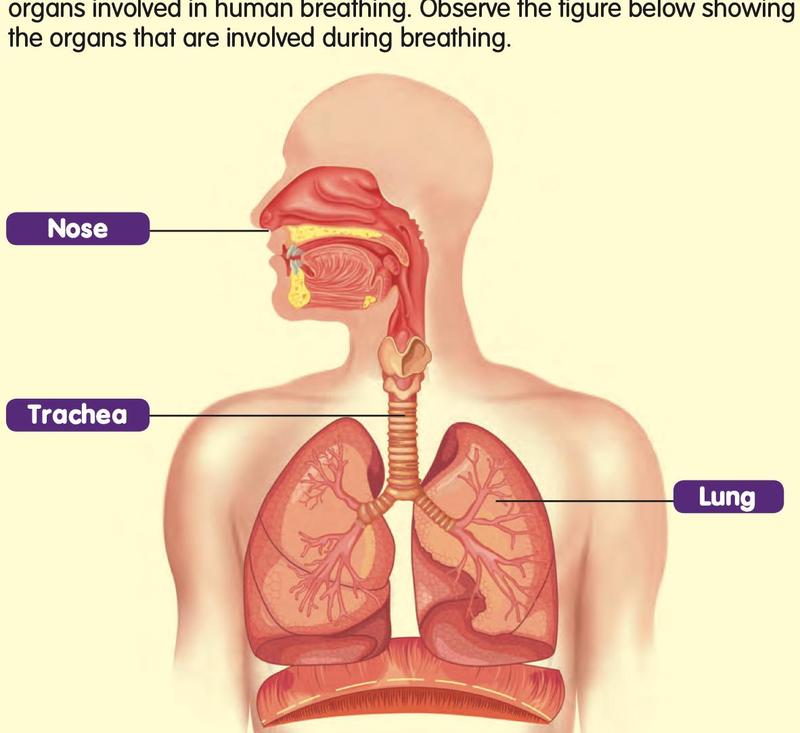
The air passage
| Process | Path of air |
|---|---|
| Inhalation | Nose → trachea → lungs |
| Exhalation | Lungs → trachea → nose |
The path is the same, but the direction is opposite.
Exchange of gases in the lungs
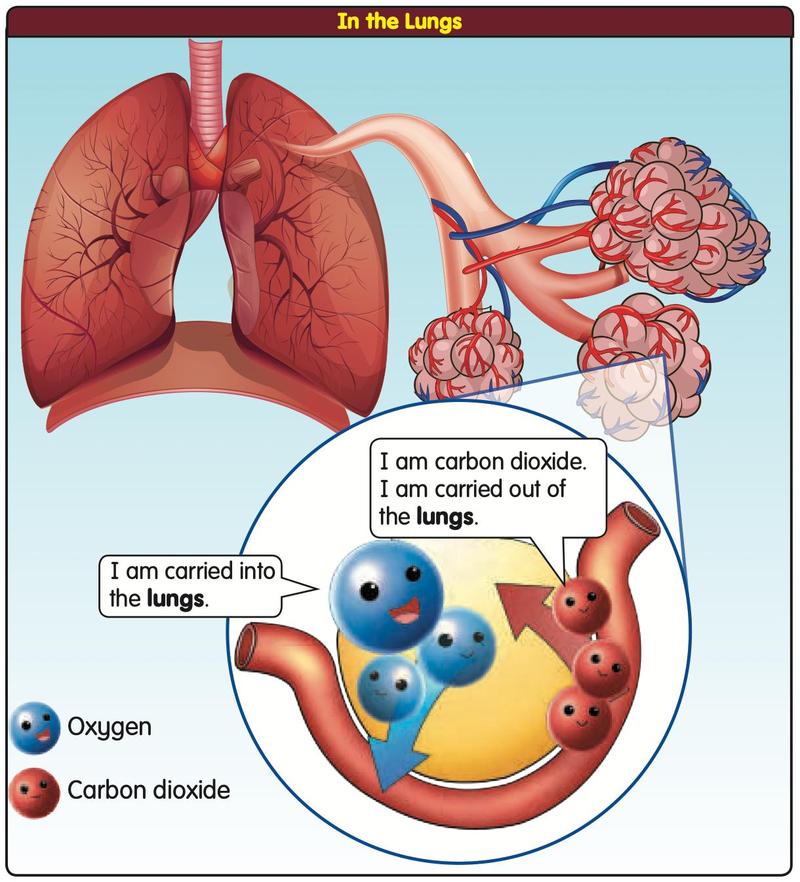
| Gas | Inhaled air | Exhaled air |
|---|---|---|
| Oxygen | More | Less |
| Carbon dioxide | Less | More |
The air around us is a mixture of oxygen, carbon dioxide, nitrogen, other gases and water vapour.
Show answerHide answer
Chest movement
Put your hand on your chest and breathe slowly. Your chest moves!
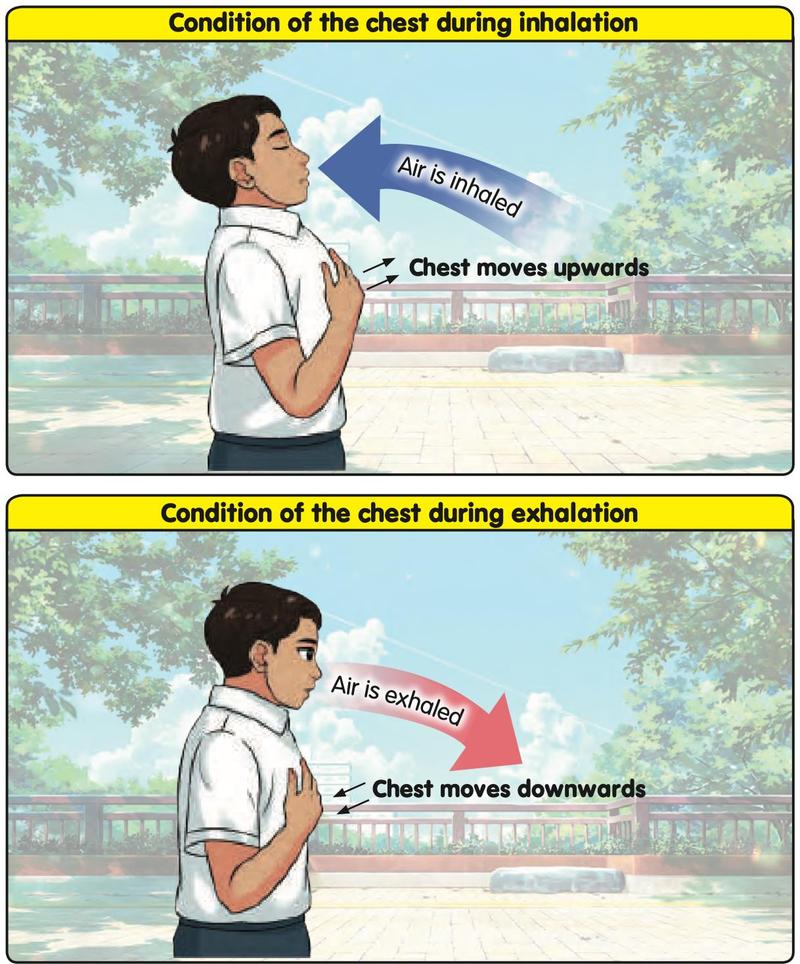
In the activity with a book on the chest, the book goes up when we inhale and down when we exhale. The book moves because the chest moves.
Rate of breathing
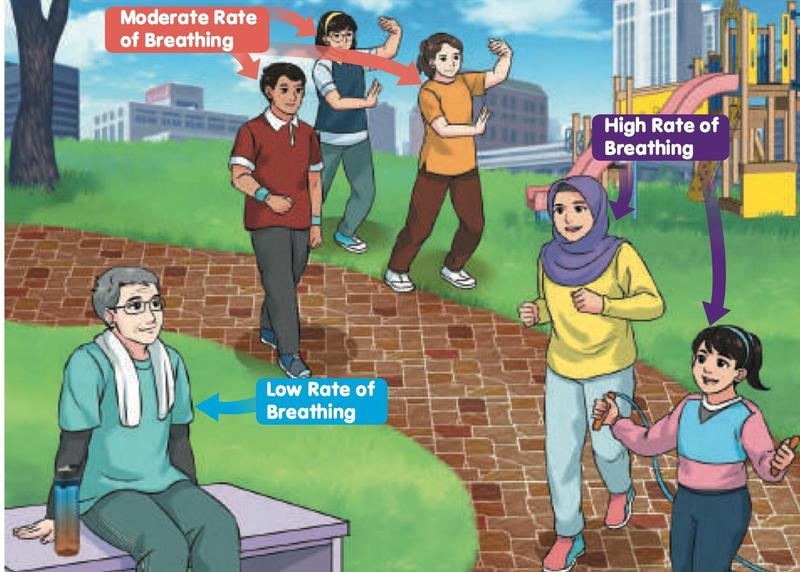
The more intense the activity, the higher the rate of breathing. The body needs more oxygen when it works harder.
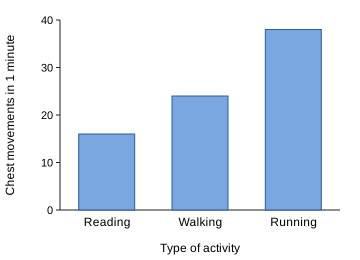
Inference: Maybe the body needs more oxygen when running.
Conclusion: The more active we are, the higher the rate of breathing.
Keeping the lungs healthy
Haze is dry air with gases, dust and tiny floating particles. It makes it hard to see far and it is unhealthy for people. Smoke, open burning and cigarette smoke also harm the lungs.
- Wear a mask when the air is hazy.
- Stay away from smoke, open burning and smoking areas.
- Do not smoke.
- Do exercise in a clean place, such as a park with fresh air.
- Stay indoors when the haze is bad.
Show answerHide answer
2.2Excretion and defecation
What they mean
Faeces are food that the body could not digest. Defecation is kept separate from excretion.
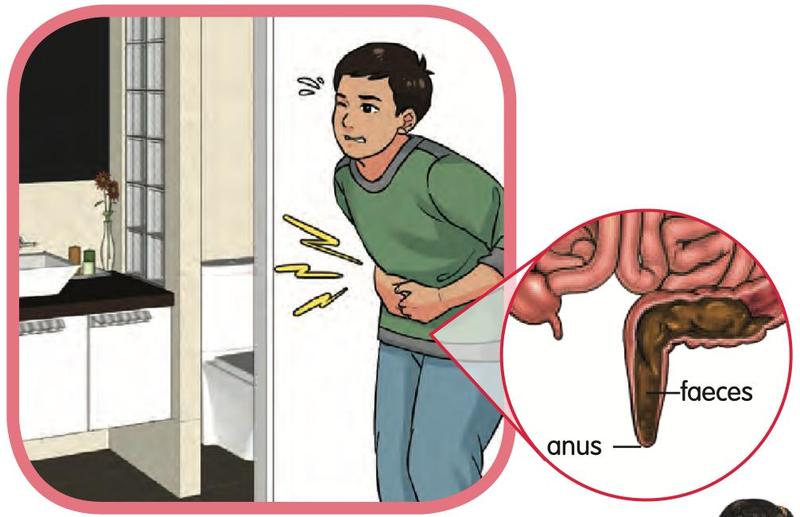
Excretory organs and their products
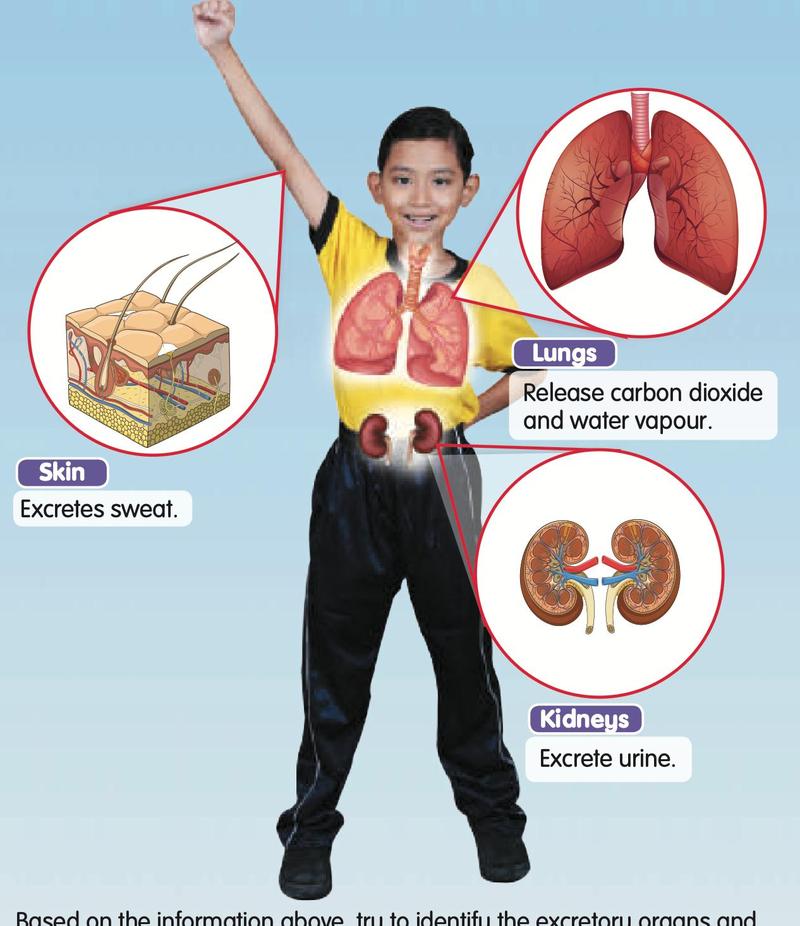
| Organ | Product |
|---|---|
| Kidneys | Urine |
| Skin | Sweat |
| Lungs | Carbon dioxide and water vapour |
Why they are important
- Waste products must leave the body so we do not fall ill.
- If urine cannot leave, kidney stones may form.
- If faeces are hard and cannot leave, we get constipation.
A healthy lifestyle
- Eat a balanced diet with plenty of fibre (fruit and vegetables).
- Drink enough water.
- Exercise regularly and sleep enough.
- Use the toilet when the body needs to.
Show answerHide answer
2.3Response to stimuli
Stimulus and response
Our sensory organs receive stimuli such as light, smell, sound, taste and touch.
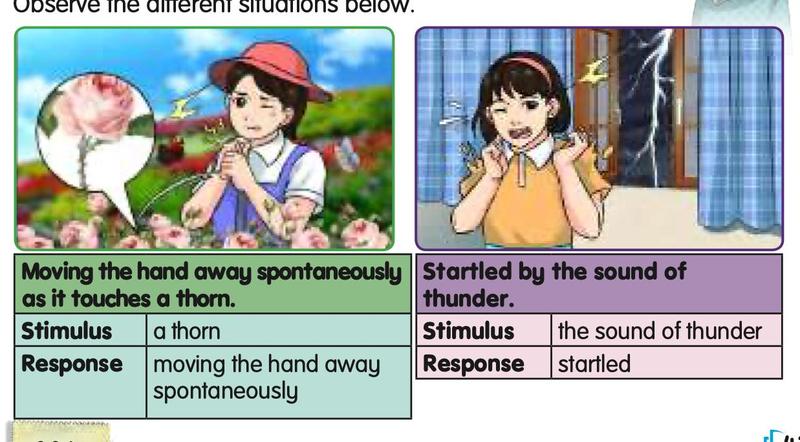
| Stimulus | Sensory organ | Example of response |
|---|---|---|
| Light (too bright) | Eyes | Close the eyes or shade them |
| Sound (alarm clock) | Ears | Wake up |
| Smell (fried chicken) | Nose | Sniff, feel hungry |
| Taste (tea with no sugar) | Tongue | Say it is tasteless |
| Touch (cold) | Skin | Shiver, put on a jacket |
Why we need to respond
- To avoid injury (move away from a hot or sharp object).
- To save ourselves (smell smoke, escape and call for help).
- To get information and communicate (hear the horn or siren and give way).
Habits that disrupt response
| Habit | What it can cause |
|---|---|
| Drinking alcohol | Intoxication; the person cannot respond quickly |
| Glue sniffing | Hallucination and addiction; disturbs the sensory organs and the brain, so response is slow |
| Drug abuse | Hallucination, blackouts and addiction; the sensory organs do not work well |
Show answerHide answer
Pictures: Science Year 4 (DLP) textbook, pp. 23–52 (breathing organs p. 24, gas exchange p. 27, chest p. 31, rate of breathing p. 33, defecation p. 37, excretory organs p. 38, stimuli p. 43).
Summary
- Breathing organs: nose, trachea, lungs. Inhalation: nose, trachea, lungs. Exhalation: lungs, trachea, nose.
- Oxygen enters the lungs and carbon dioxide leaves them. Inhaled air has more oxygen; exhaled air has more carbon dioxide.
- The chest moves up when we inhale and down when we exhale. The more active we are, the higher the rate of breathing.
- Excretion removes waste products (kidneys: urine, skin: sweat, lungs: carbon dioxide and water vapour). Defecation removes faeces through the anus.
- A stimulus is a change in the surroundings; a response is the action taken. Alcohol, glue sniffing and drug abuse disrupt response.