Food and health
What this chapter covers
- I can name foods and drinks, and say what I like and dislike, using love, like, don't mind, don't like and hate (6.1)
- I can summarize a short interview about sumo wrestlers' food and daily life (6.2)
- I can use countable and uncountable nouns with a, an, some, any, much, many and a lot of (6.3)
- I can use adjectives about health, such as fit, unfit, healthy, unhealthy, active, lazy, tired, thirsty and well (6.4)
- I can use the verb + -ing form after like, love, prefer, hate and don't mind (6.5)
- I can give advice and read signs using affirmative and negative imperatives (6.5)
- I can order food and drink in a cafe and say prices (6.6)
- I can write a short food blog using the sequencing words first, after that, next and finally (6.7)
Welcome to Food and health (Unit 5 in the textbook, Unit 6 on this site)! You will learn the words for food, drink and health, use much and many, talk about likes and dislikes, give advice, order a meal in a cafe and write a food blog.
6.1Vocabulary: Food and likes
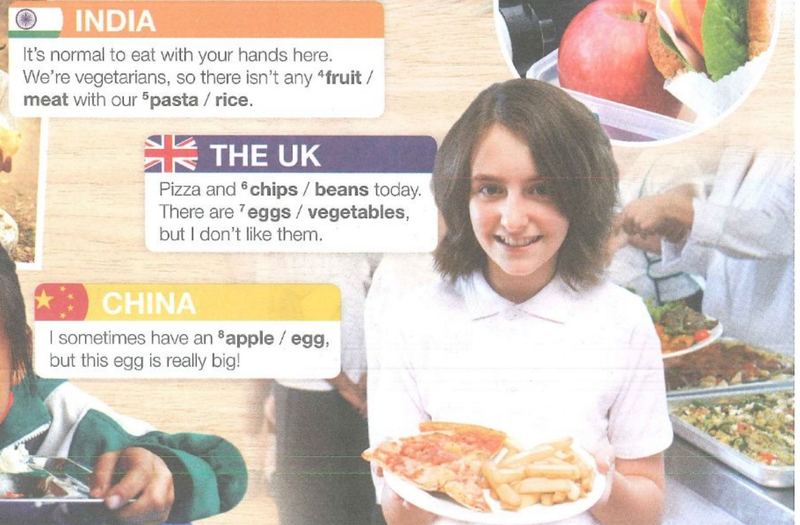
School lunches look different around the world. A word web helps you remember new words: put the topic food in the middle and group the words around it.
| Group | Words from the unit |
|---|---|
| Fruit | apple, pear, grapes, raisins |
| Vegetables | salad, beans, olives, red pepper |
| Meat and fish | chicken, burger, tuna |
| Snacks | crisps, sweets, nuts, chips |
| Drinks | water, juice, cola, fizzy drinks |
| Other | bread, cheese, egg, pasta, rice, pizza, yoghurt |
English Plus 1 Year 5, p. 52.
Pronunciation: short and long vowels
| Short /ɪ/ | Long /iː/ |
|---|---|
| fish, fizzy | beans, meat |
Show answerHide answer
6.2Reading: Sumo wrestlers
English Plus 1 Year 5, p. 54.
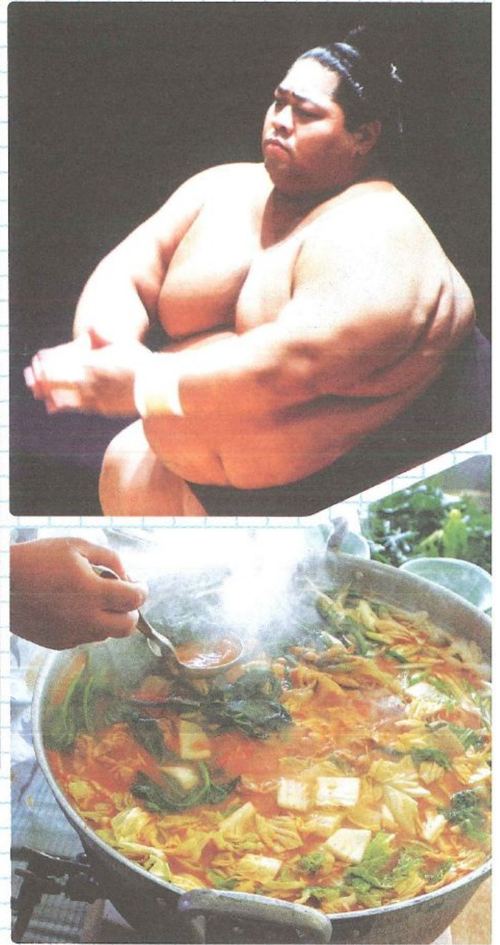
Summary in my own words: Top sumo wrestlers weigh more than 140 kilos. They get up early and train from 5 a.m. until about 1 p.m. They do not have breakfast, so they are very hungry at lunchtime. They eat a dish called chankonabe with meat or fish and a lot of vegetables. It has vitamins and not much fat, but they eat huge amounts. They do not exercise after meals; they sleep. The person answering says there are not many sumo wrestlers these days and that it is not a healthy lifestyle.
| Question in the interview | Answer |
|---|---|
| What's their typical day? | They get up early and train from 5 a.m. to about 1 p.m. |
| What do they have for lunch? | Chankonabe, a dish of meat or fish and vegetables. |
| Is it healthy? | The food is full of vitamins, but they eat a lot and sleep after meals. |
| Do they ever eat different foods? | Some eggs, salads and desserts, but always chankonabe. |
Show answerHide answer
6.3Language focus: Countable and uncountable nouns
| Countable | Uncountable | |
|---|---|---|
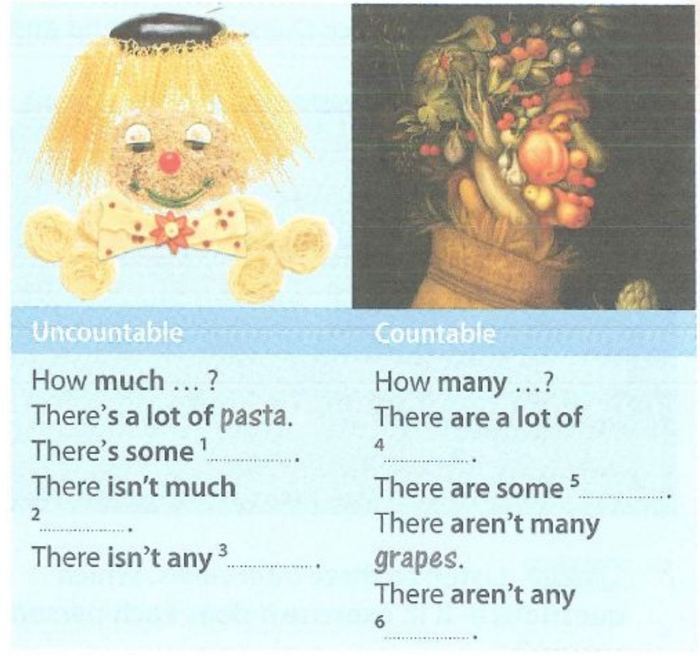
| What are they? | things we can count: one apple, two apples | things we cannot count one by one: juice, bread, pasta, rice, water |
| a / an and plural -s | an apple, apples, an egg, eggs | no a / an and no plural: juice, not "juices" |
| Question | How many grapes are there? | How much pasta is there? |
| Negative | There aren't many grapes. There aren't any pears. | There isn't much fat. There isn't any cheese. |
| Positive | There are some / a lot of grapes. | There's some / a lot of pasta. |
English Plus 1 Year 5, p. 55.
Show answerHide answer
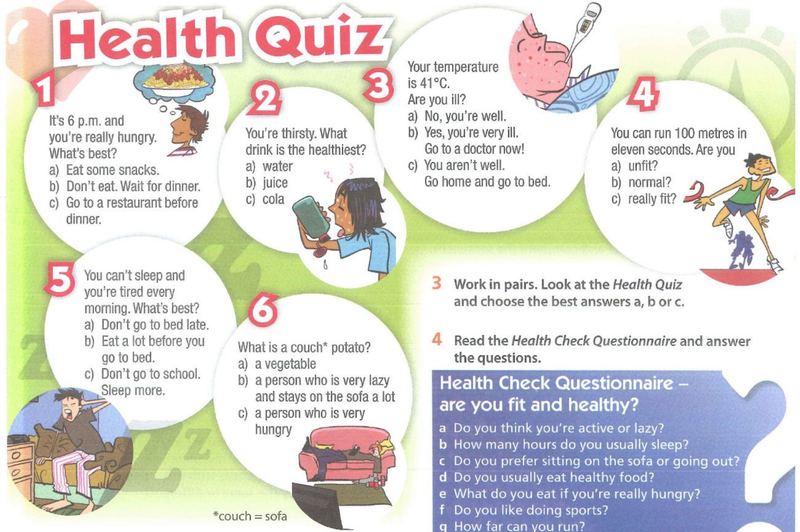
6.4Vocabulary and listening: Health
English Plus 1 Year 5, p. 56.
| Adjective | Meaning | Opposite |
|---|---|---|
| healthy | good for your body | unhealthy |
| fit | strong, exercises a lot | unfit |
| well | not ill | ill |
| active | does a lot of activities | lazy |
| hungry | wants to eat | - |
| thirsty | wants to drink | - |
| tired | needs to sleep | - |
Show answerHide answer
6.5Language focus: Verb + -ing and imperatives
Verb + -ing
After like, love, prefer, hate and don't mind we use the -ing form of the verb.
| Verb | -ing form | Rule |
|---|---|---|
| play, eat, go | playing, eating, going | add -ing |
| run, sit, swim | running, sitting, swimming | short word ending consonant-vowel-consonant: double the last letter |
Imperatives
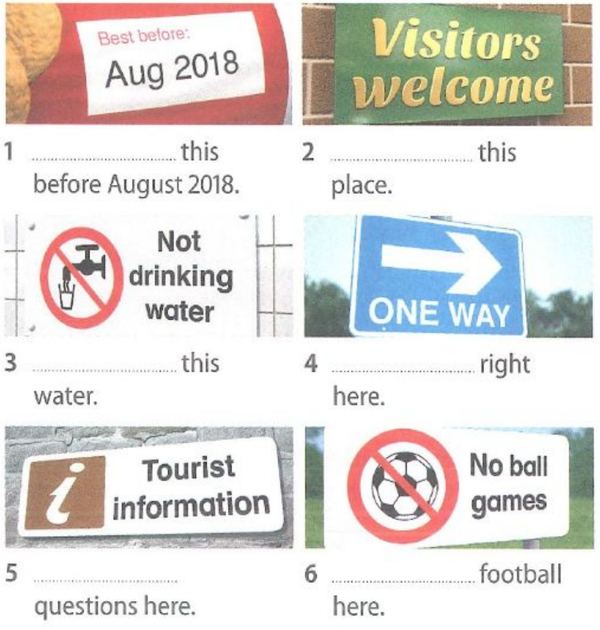
We use imperatives for orders, rules, signs and advice. The affirmative form is the plain verb. For the negative form add Don't.
| Affirmative | Negative |
|---|---|
| Eat some snacks. | Don't eat crisps for lunch. |
| Go to a doctor. | Don't go to bed late. |
| Visit this place. | Don't play football here. |
English Plus 1 Year 5, p. 57.
Show answerHide answer
6.6Speaking: In a cafe
English Plus 1 Year 5, p. 58.
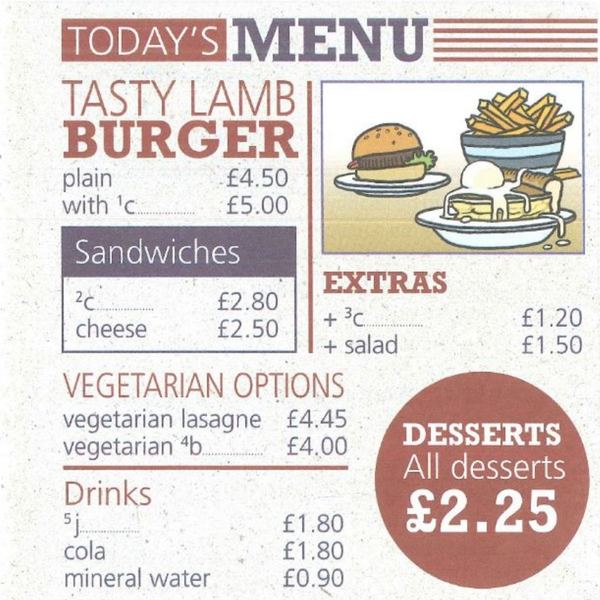
Aaron: Yes, can I have a cheese sandwich, please?
Waitress: Sure. Would you like salad or chips with that?
Aaron: Chips, please.
Waitress: Anything else?
Aaron: I'll have a cola, please.
Waitress: OK. That's five pounds fifty, please.
| Job | Key phrases |
|---|---|
| Cafe worker offers help | Can I help you? / Would you like ... (with that)? / Anything else? |
| Customer orders | Can I have ..., please? / I'll have ..., please. |
| Saying the price | That's ..., please. |
Saying prices
| Price | We say |
|---|---|
| £4.50 | four pounds fifty |
| £1.00 | one pound |
| £0.80 | eighty pence |
| $3.85 | three dollars eighty-five |
| €0.50 | fifty cents |
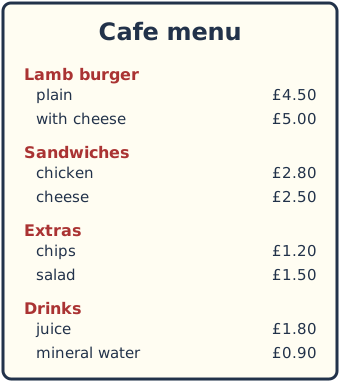
Check the sum in the dialogue: cheese sandwich £2.50 + chips £1.20 + cola £1.80 = £5.50.
Show answerHide answer
6.7Writing: A food blog
English Plus 1 Year 5, p. 59.
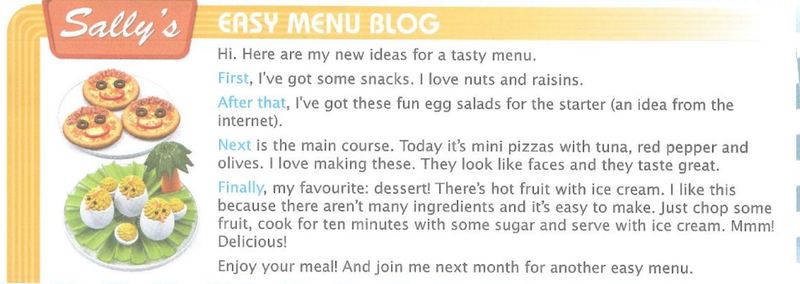
A blog about a menu goes in order: a welcome, the food in each course, why you like it, and a friendly ending.
| Sequencing word | Use |
|---|---|
| First | the first thing |
| After that / Next | the second and middle things (they mean the same) |
| Finally | the last thing |
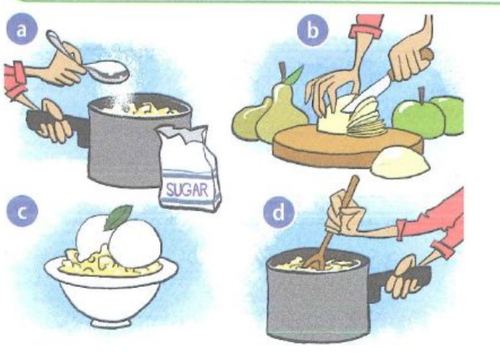
English Plus 1 Year 5, p. 59.
| Useful key phrases | Example |
|---|---|
| They taste great / terrible / OK. | They taste great. |
| It's easy / fun / cheap / difficult to make. | It's easy to make. |
| Mmm! Delicious! | Say it about the food you like. |
| Enjoy your meal! | Enjoy your meal! Join me next month for another menu. |
Show answerHide answer
Summary
| Topic | Remember |
|---|---|
| Likes | love, really like, quite like, don't mind, don't like, hate + verb-ing |
| Much and many | much + uncountable (juice); many + countable (apples); mostly in questions and negatives |
| Some, any, a lot of | some in positive, any in negative and questions, a lot of with both |
| Health words | fit / unfit, healthy / unhealthy, active / lazy, well / ill |
| Imperatives | Eat well. Don't eat crisps. |
| Cafe | Can I have ..., please? Would you like ...? Anything else? That's ... |
| Writing | First, After that / Next, Finally |