Science questions, unit 1
Nama / NameKelas / ClassTarikh / Date
Scientific skills
40 marks. Use Practice to check each answer as you go, or Exam to answer everything first. Ask a grown-up to help you mark the written answers.
Section A: objective questions
12 marksChoose the best answer for each question.
1
Question 1
Melia looks at the paper planes in the hall. Which statement is an observation?
Show answerHide answer
A
An observation is what we sense. B is a prediction, C is an inference and D is a hypothesis.
2
Question 2
Ana says to Ravi, "I predict that your paper plane will fly far because of the large size of its wings." What is a prediction?
Show answerHide answer
C
To predict is to say what will happen next, using observations, experience or a pattern.
3
Question 3
Mr Zaki gives every pupil the same type, size and thickness of paper. What are these?
Show answerHide answer
B
Variables that are kept the same to make the test fair are constant (fixed) variables.
4
Question 4
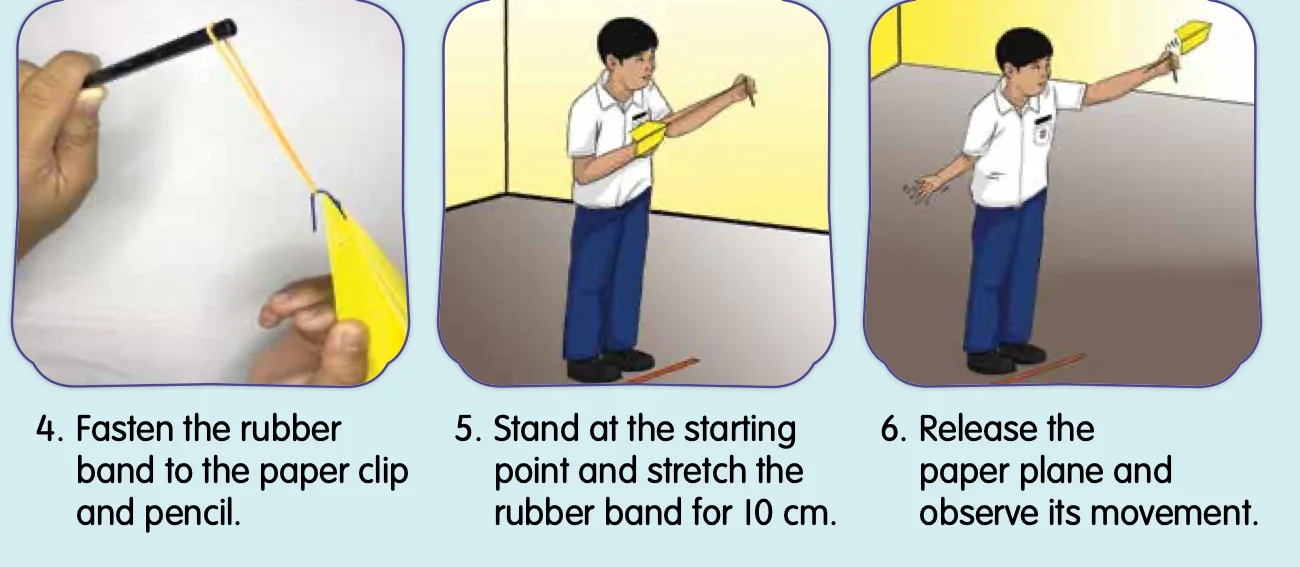
In the paper plane investigation, a plane is launched with a rubber band stretched for 10 cm, 20 cm and 30 cm. What is the manipulated variable?
Show answerHide answer
D
The length of the stretched rubber band is the thing the pupils change on purpose.
5
Question 5
Which is the operational definition of the durability of soap bubbles?
Show answerHide answer
A
An operational definition says what is measured. Durability is measured by the time taken for the bubbles to burst (page 12).
6
Question 6
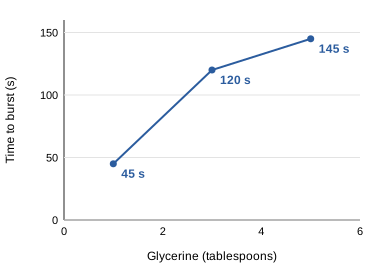
Diagram 2 shows the results of the soap bubble experiment. How long did the bubble last when 3 tablespoons of glycerine were used?
Show answerHide answer
C
At 3 tablespoons the point is at 120 seconds.
7
Question 7
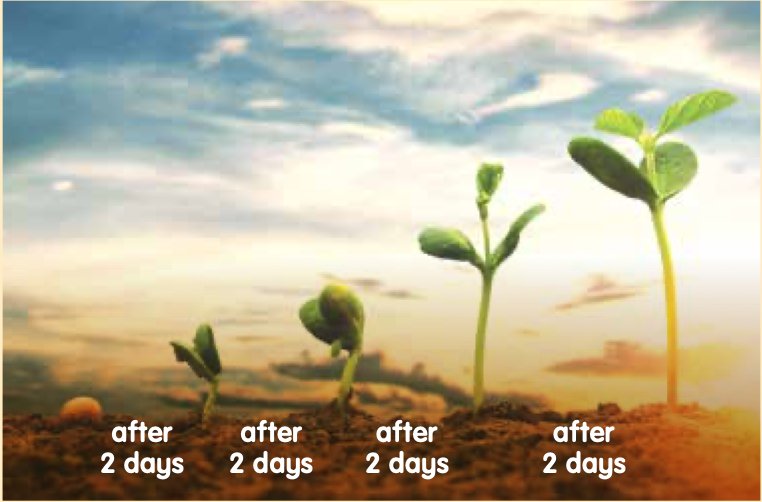
Diagram 3 shows a seedling every 2 days. What is the space-time relationship?
Show answerHide answer
B
Space-time relationship describes how something changes with time. The seedling grows taller with the number of days.
8
Question 8
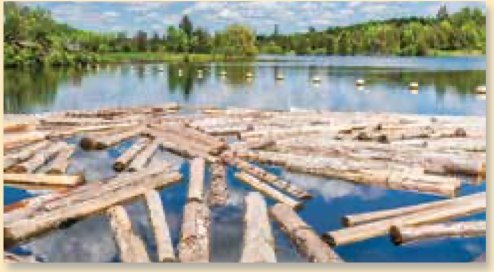
Large logs float on water, as in Diagram 4. Which is the best inference?
Show answerHide answer
D
Objects float when they are less dense than the liquid (page 15, answer for Mind Test 1).
9
Question 9
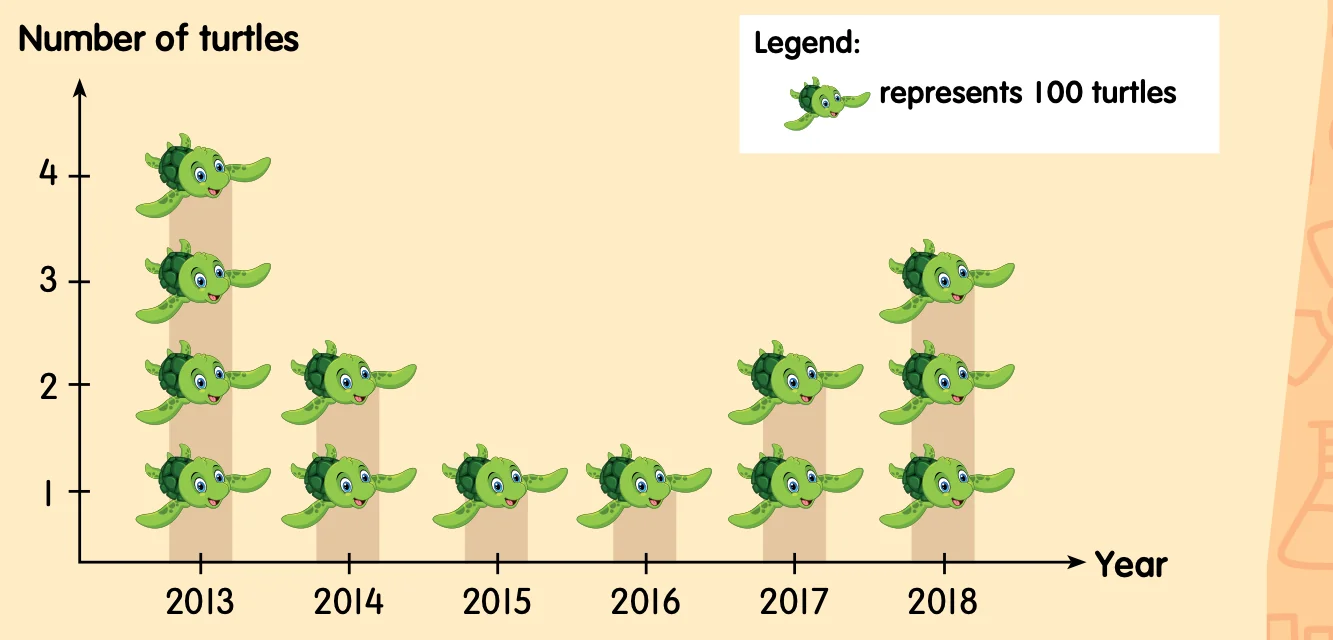
Diagram 5 shows the turtles that landed on a beach in State M. What is the total number of turtles that landed in 2013 and 2014?
Show answerHide answer
C
2013: 4 × 100 = 400. 2014: 2 × 100 = 200. 400 + 200 = 600 turtles.
10
Question 10
Ana wants to find out how glycerine affects soap bubbles. Which is a suitable hypothesis?
Show answerHide answer
A
A hypothesis relates the manipulated and responding variables. B is the aim, C is the problem statement and D is a responding variable.
11
Question 11
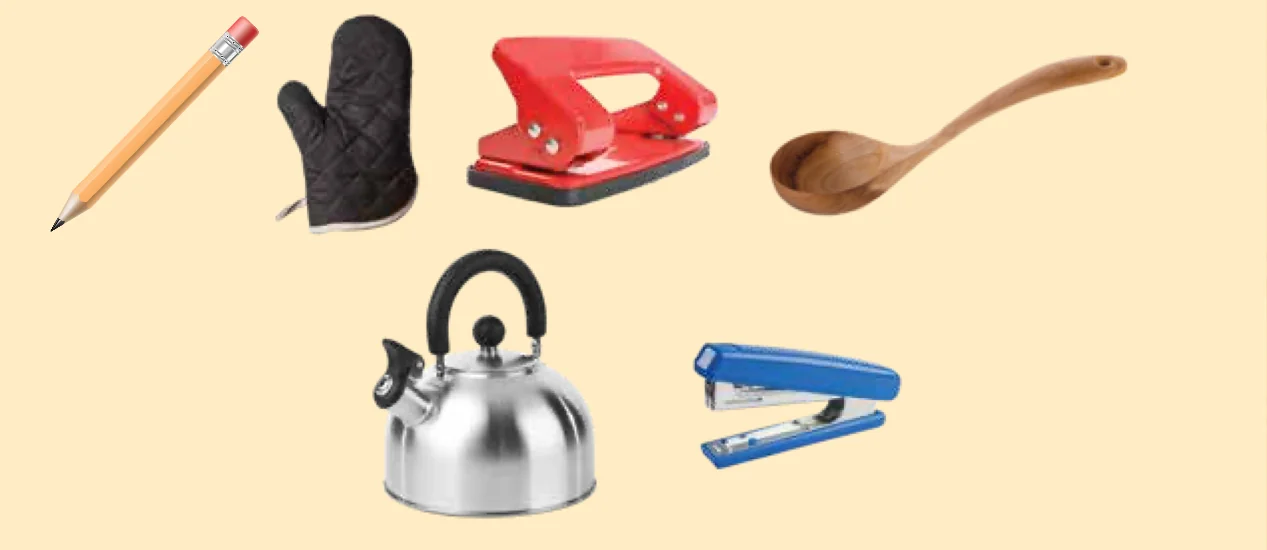
Diagram 6 shows six objects. Which group lists only kitchen utensils?
Show answerHide answer
B
The oven mitt, wooden ladle and kettle are used in the kitchen. The pencil, hole puncher and stapler are stationery.
12
Question 12
Siti wants to find out whether the size of the wings affects the distance a paper plane travels. Which plan is a fair test?
Show answerHide answer
D
Only the manipulated variable (wing size) may change. Paper type, thickness, design and launch height must stay the same.
Section B: structured questions
28 marksAnswer all questions. Circle the answer or write it in the space.
13
Question 13
Aiman launches a paper plane using a rubber band stretched for 10 cm, then 20 cm, then 30 cm. He measures the distance travelled each time.
[1 mark]
(a)State the manipulated variable.
Show answerHide answer
Tick each point you got.
[1 mark]
(b)State the responding variable.
Show answerHide answer
Tick each point you got.
[1 mark]
(c)State one constant variable.
Show answerHide answer
Tick each point you got.
[1 mark]
(d)Write a hypothesis for this investigation.
Show answerHide answer
Tick each point you got.
[1 mark]
(e)Give the operational definition of the distance travelled by the paper plane.
Show answerHide answer
Any 1 points
Tick each point you got.
14
Question 14
A soap bubble made with one tablespoon of glycerine bursts after a short time.
[1 mark]
(a)Write one observation.
Show answerHide answer
Tick each point you got.
[1 mark]
(b)Give an inference for the observation.
Show answerHide answer
Any 1 points
An inference is a reason. It starts with "Maybe...".
Tick each point you got.
15
Question 15
Diagram 7 shows the glycerine and soap bubble results.
[1 mark]
(a)How many tablespoons of glycerine made the bubble last longest?
Show answerHide answer
Tick each point you got.
[1 mark]
(b)How much longer did the bubble last with 5 tablespoons than with 1 tablespoon?
Show answerHide answer
Tick each point you got.
[1 mark]
(c)Is the hypothesis "the more glycerine, the longer the time" accepted or not accepted?
Show answerHide answer
Accepted
The time increases from 45 s to 120 s to 145 s as the glycerine increases.
16
Question 16
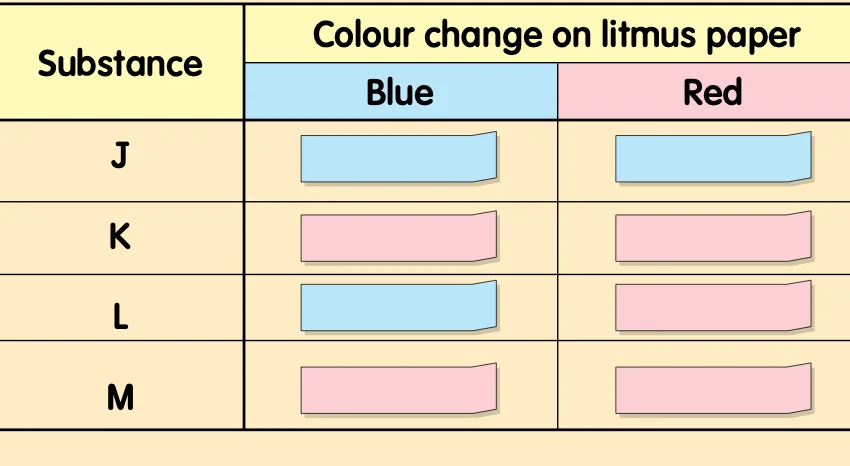
Diagram 8 shows the colour that blue litmus paper and red litmus paper turned when four substances, J, K, L and M, were tested.
[1 mark]
(a)Classify substance J.
Show answerHide answer
Alkaline
J turns red litmus paper blue, so it is an alkali.
[1 mark]
(b)Classify substance L.
Show answerHide answer
Neutral
L does not change the colour of either litmus paper (blue stays blue, red stays red).
[1 mark]
(c)Give the operational definition of an alkali.
Show answerHide answer
Any 1 points
Tick each point you got.
17
Question 17
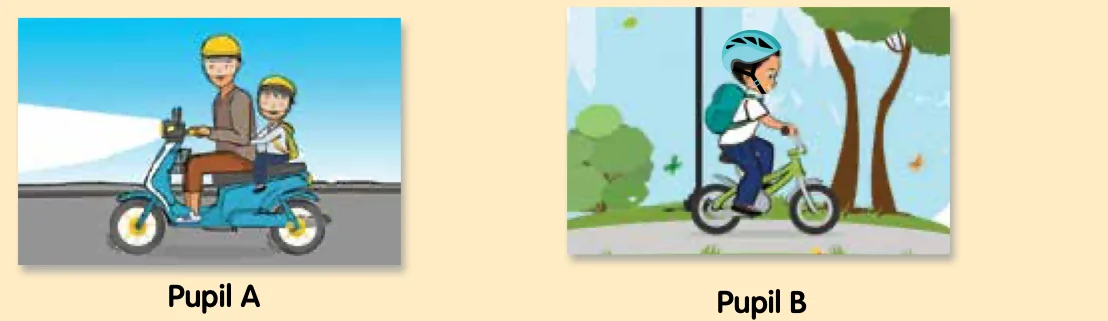
Diagram 9 shows how two pupils go to school. Both houses are 1 km from the school.
[1 mark]
(a)Which pupil will take a shorter time to reach school?
Show answerHide answer
Pupil A
A motorcycle goes faster than a bicycle over the same distance.
[1 mark]
(b)Pupil B takes 15 minutes. Predict the time Pupil A will take.
Show answerHide answer
Tick each point you got.
18
Question 18
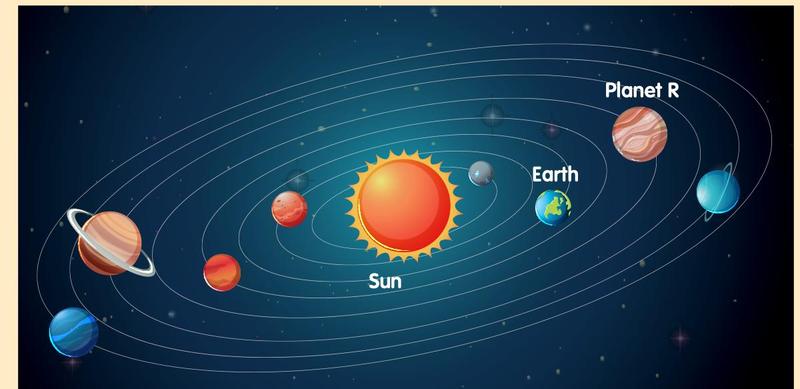
Diagram 10 shows the positions of the planets from the Sun in the Solar System. The position of a planet decides the time it takes to make one complete revolution around the Sun.
[1 mark]
(a)What is Planet R?
Show answerHide answer
Jupiter
Planet R is farther from the Sun than the Earth, so it cannot be Venus or Mercury, which are nearer. The textbook answer for Planet R is Jupiter (page 18).
[1 mark]
(b)State the manipulated variable.
Show answerHide answer
Tick each point you got.
[1 mark]
(c)State the responding variable.
Show answerHide answer
Tick each point you got.
[1 mark]
(d)Make a hypothesis for this investigation.
Show answerHide answer
Tick each point you got.
[2 marks]
(e)Predict the time taken by Planet R compared with the Earth. Give your inference.
Show answerHide answer
Tick each point you got.
19
Question 19
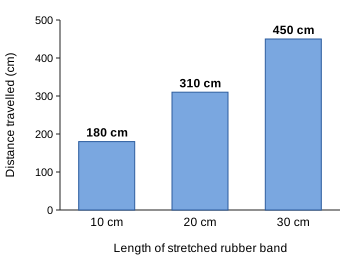
Diagram 11 shows the distance travelled by a paper plane for three lengths of stretched rubber band (sample results made up for practice).
[1 mark]
(a)How far did the paper plane travel when the rubber band was stretched for 20 cm?
Show answerHide answer
Tick each point you got.
[1 mark]
(b)How much farther did it travel with a 30 cm stretch than with a 10 cm stretch?
Show answerHide answer
Tick each point you got.
[1 mark]
(c)Predict the distance if the rubber band is stretched for 40 cm. Give a reason.
Show answerHide answer
Tick each point you got.
20
Question 20
A pupil plans an investigation to find out if the quantity of water poured on a plant affects how tall the plant grows in one week.
[1 mark]
(a)State the manipulated variable.
Show answerHide answer
Tick each point you got.
[1 mark]
(b)State the responding variable.
Show answerHide answer
Tick each point you got.
[2 marks]
(c)State two things you must keep the same.
Show answerHide answer
Any 2 points
Tick each point you got.