Animals
What this chapter covers
- You can explain what the survival of an animal species means (3.1.1)
- You can describe the body parts and behaviours that protect animals from enemies (3.1.2)
- You can explain how animals protect themselves from extreme weather, including hibernation, migration and wallowing (3.1.3)
- You can describe how animals protect their eggs and ensure the survival of their young (3.1.4, 3.1.5)
- You can design an imaginary animal with characteristics that protect it, and say why they matter (3.2)
- You can build food chains and food webs, and name the producers and consumers in them (3.3.1, 3.3.2, 3.3.4)
- You can explain how energy from the Sun is transferred along a food chain (3.3.3)
- You can predict what happens to other living things when a population changes (3.3.5, 3.3.6, 3.3.7)
Every animal faces danger: enemies, bad weather and hunger. Animals have special body parts and ways of behaving that keep them alive. In this unit you will learn how animals protect themselves, their eggs and their young, and how living things depend on each other for food.
3.1Survival of animal species
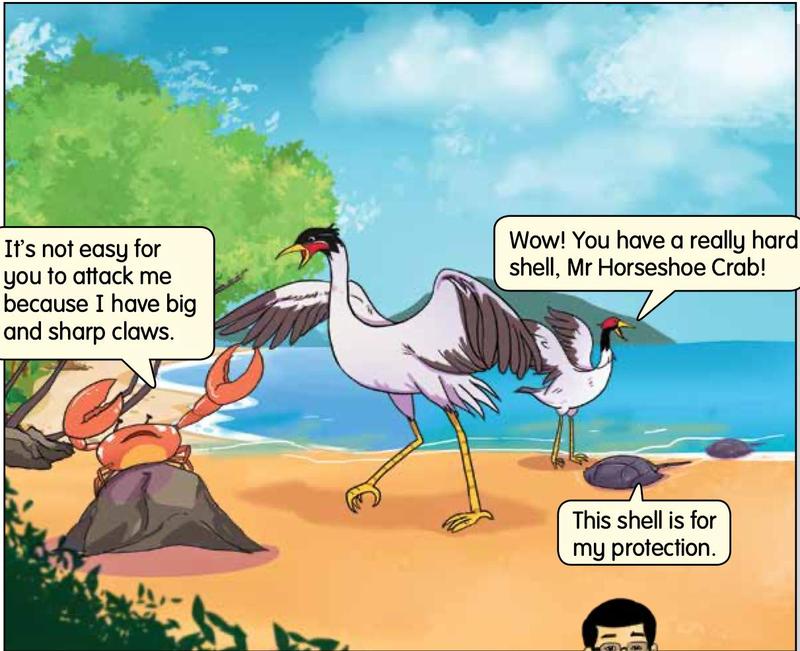
Protection from enemies
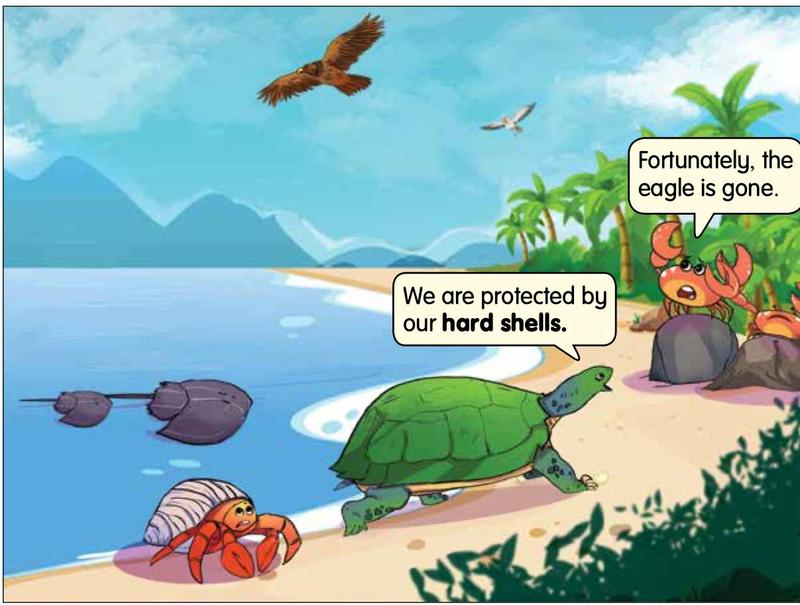
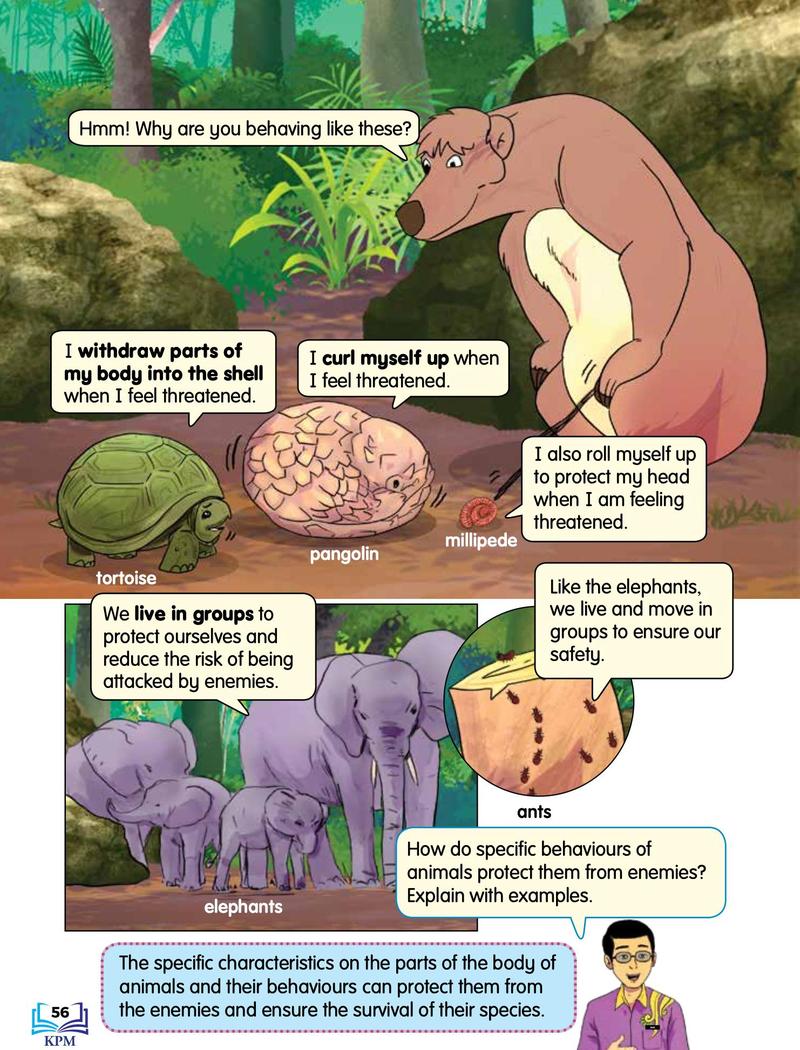
The tortoise pulls its body into its hard shell when an eagle attacks, so the eagle cannot hurt it. Other animals have different tools of defence.
| Body part or characteristic | Examples | How it protects |
|---|---|---|
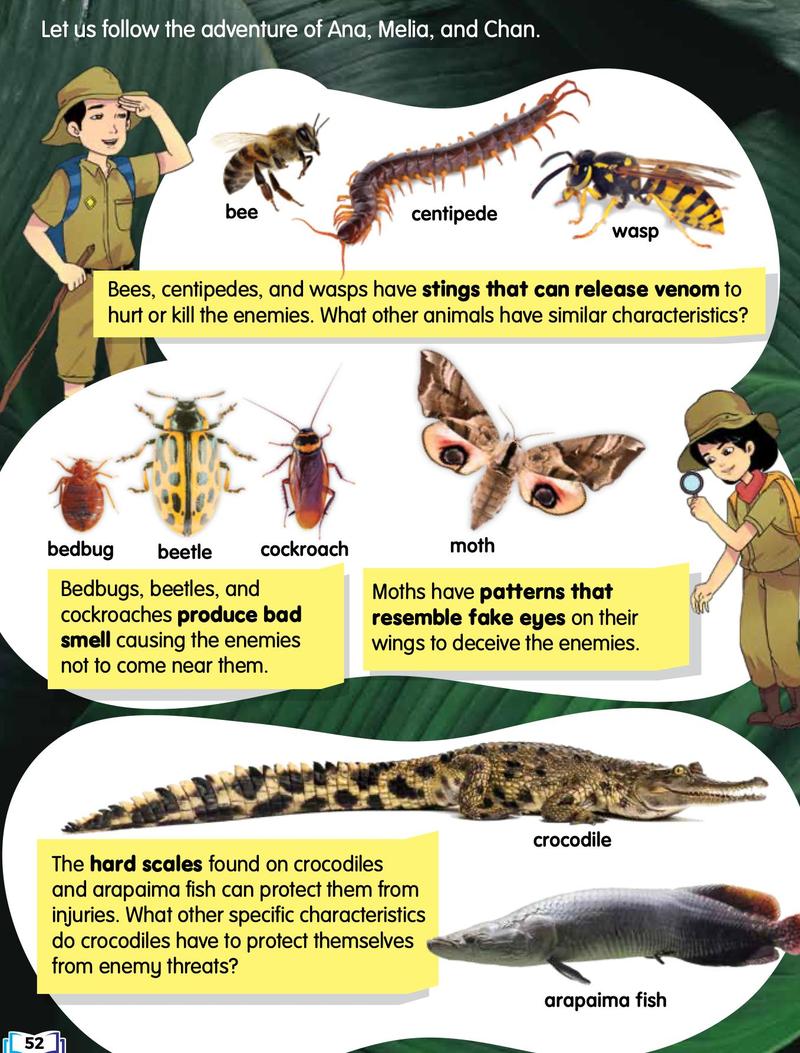
| Stings that release venom | Bee, wasp, centipede | Hurts or kills the enemy |
| Bad smell | Bedbug, beetle, cockroach | Enemies do not come near |
| Patterns like fake eyes on the wings | Moth | Deceives (tricks) the enemy |
| Hard scales | Crocodile, arapaima fish | Protect the body from injuries |
| Big, sharp claws | Crab | Hurt or scare the enemy |
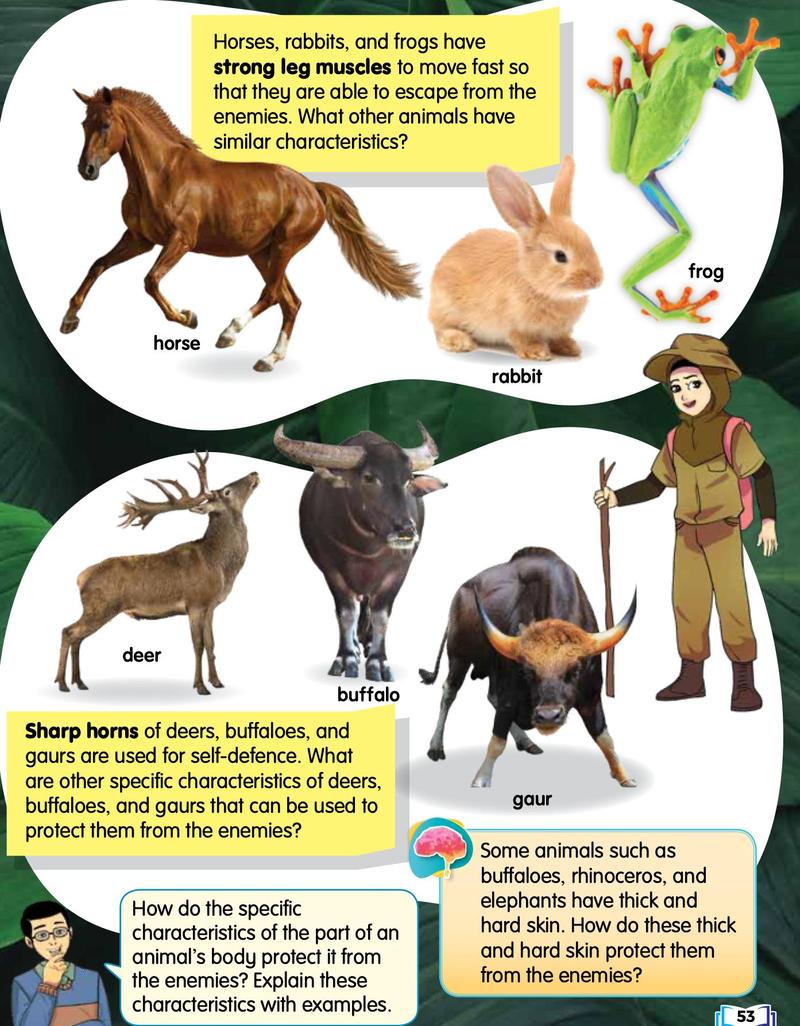
| Strong leg muscles | Horse, rabbit, frog | Run or jump fast to escape |
| Sharp horns | Deer, buffalo, gaur | Used for self-defence |
| Thick, hard skin | Buffalo, rhinoceros, elephant | Hard for enemies to bite or pierce |
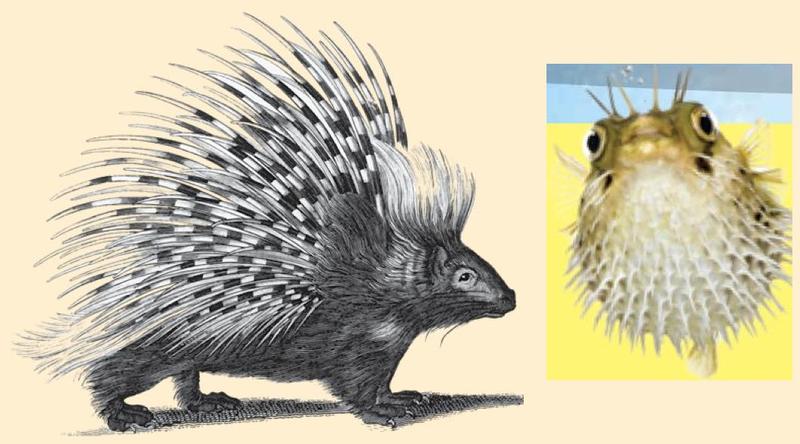
| Sharp spines | Porcupine, pufferfish | Pierce enemies that touch them |
| Hard shell | Tortoise, horseshoe crab | Hides and shields the soft body |
Protection by behaviour
| Behaviour | Animal | What happens |
|---|---|---|
| Raises its sharp spines (quills) | Porcupine | Enemies get pierced. It also runs into its burrow. |
| Inflates (puffs up) its body | Pufferfish | Looks three times bigger and has sharp spines, and it is poisonous. |
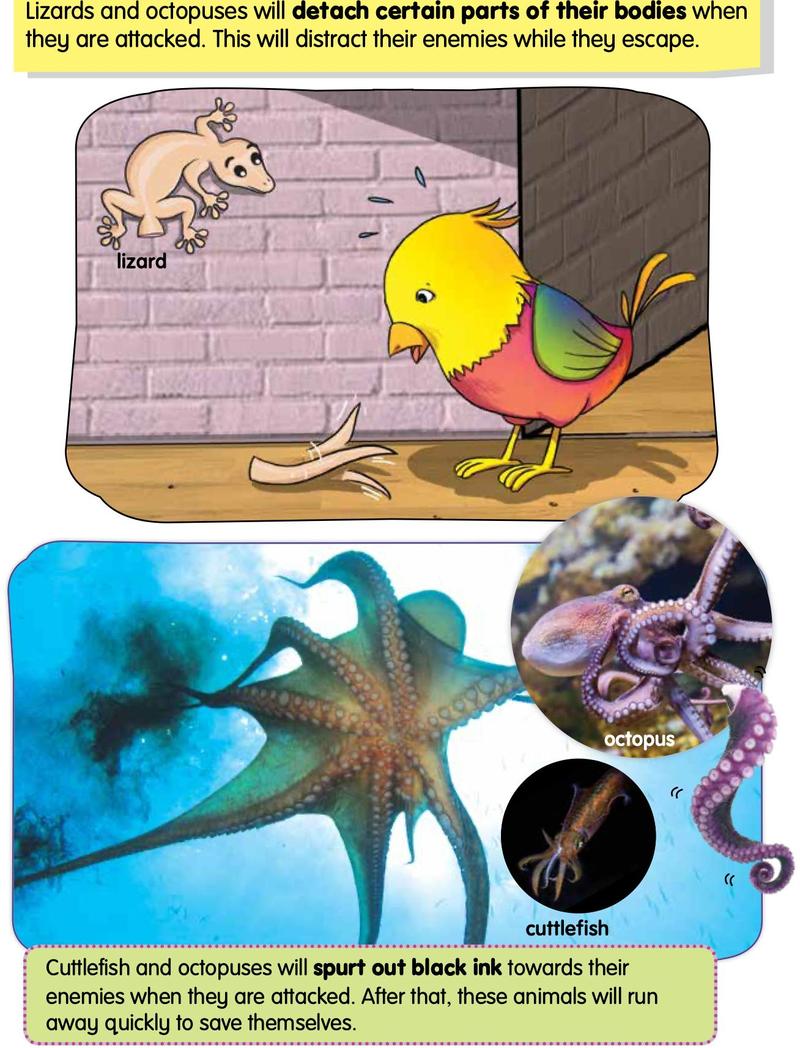
| Detaches a body part | Lizard (tail), octopus (arm) | The part keeps moving and distracts the enemy while the animal escapes. |
| Spurts out black ink | Octopus, cuttlefish | Enemy cannot see, so the animal swims away. |
| Withdraws body parts into the shell | Tortoise | Soft parts are hidden. |
| Curls or rolls up its body | Pangolin, millipede | Protects the head and the soft parts of the body. |
| Lives in groups | Ants, elephants | Reduces the risk of being attacked. |
Show answerHide answer
Protection from extreme weather
Some places are extremely cold or extremely hot. Animals there have body parts and behaviours that help them stay alive.
| Weather | Characteristic or behaviour | Example | How it helps |
|---|---|---|---|
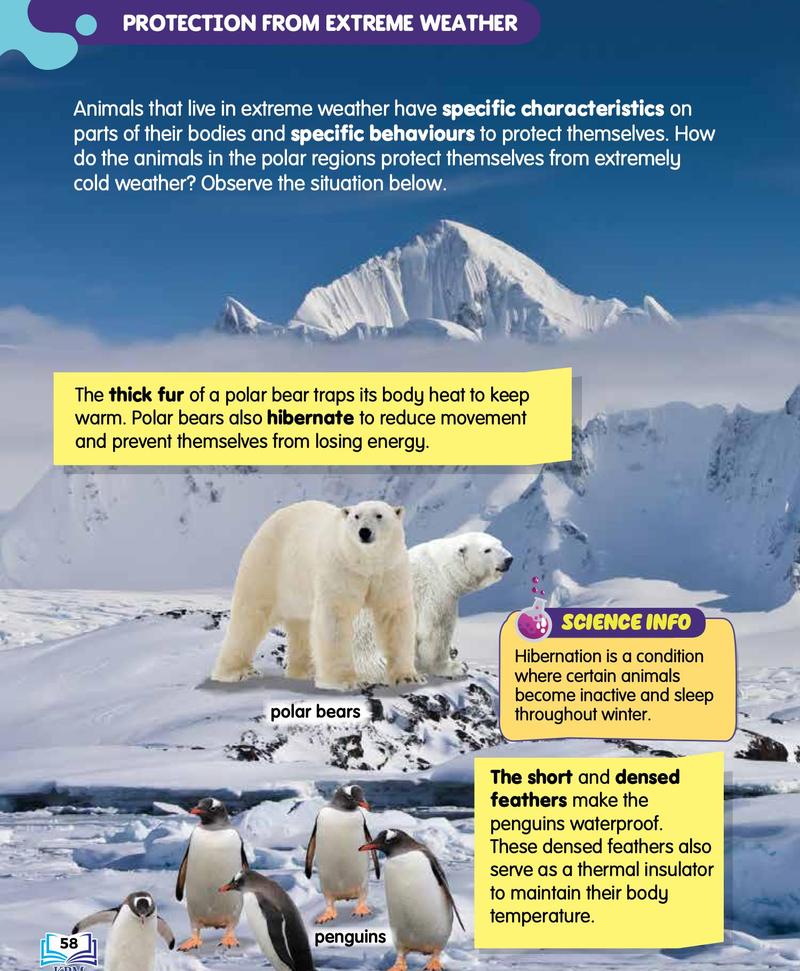
| Extremely cold | Thick fur | Polar bear | Traps body heat to keep warm |
| Extremely cold | Short, dense feathers | Penguin, snow goose | Waterproof and a thermal insulator |
| Extremely cold | Thick layer of fat under the skin | Walrus, sea lion | Keeps body heat in |
| Extremely cold | Small ear lobes | Walrus, sea lion | Reduce heat loss |
| Extremely cold | Hibernation | Polar bear | Sleeps through winter, moves little and saves energy |
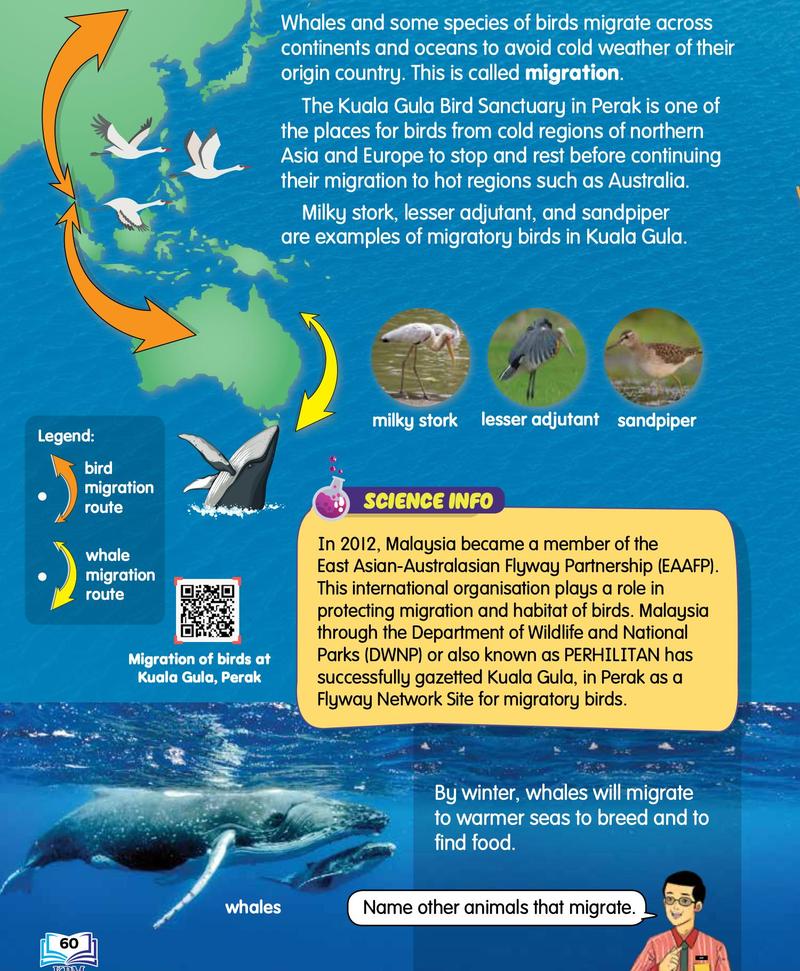
| Winter in the home place | Migration | Whales, birds (milky stork, sandpiper) | Move to a warmer place to breed and to find food |
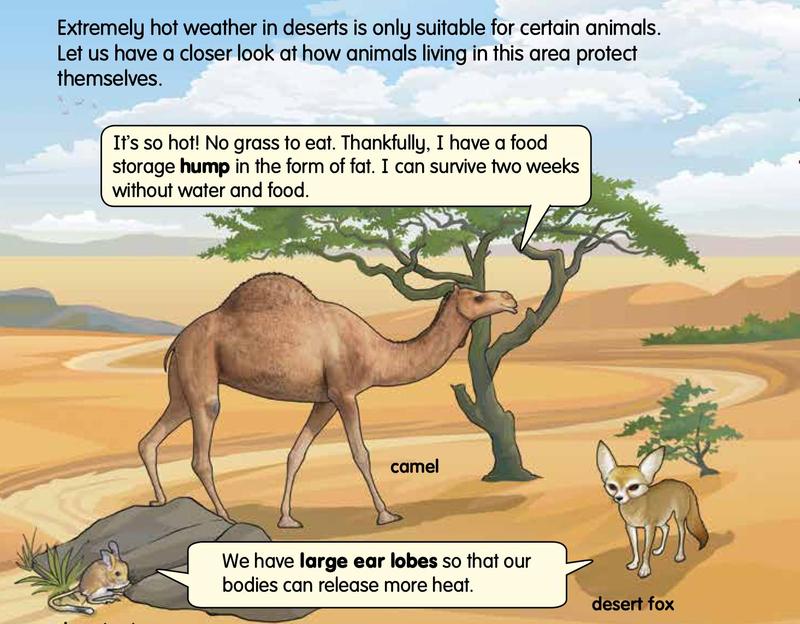
| Extremely hot | Hump of stored fat | Camel | Food store; survives about two weeks without food and water |
| Extremely hot | Large ear lobes | Desert fox, desert rat | Release more heat from the body |
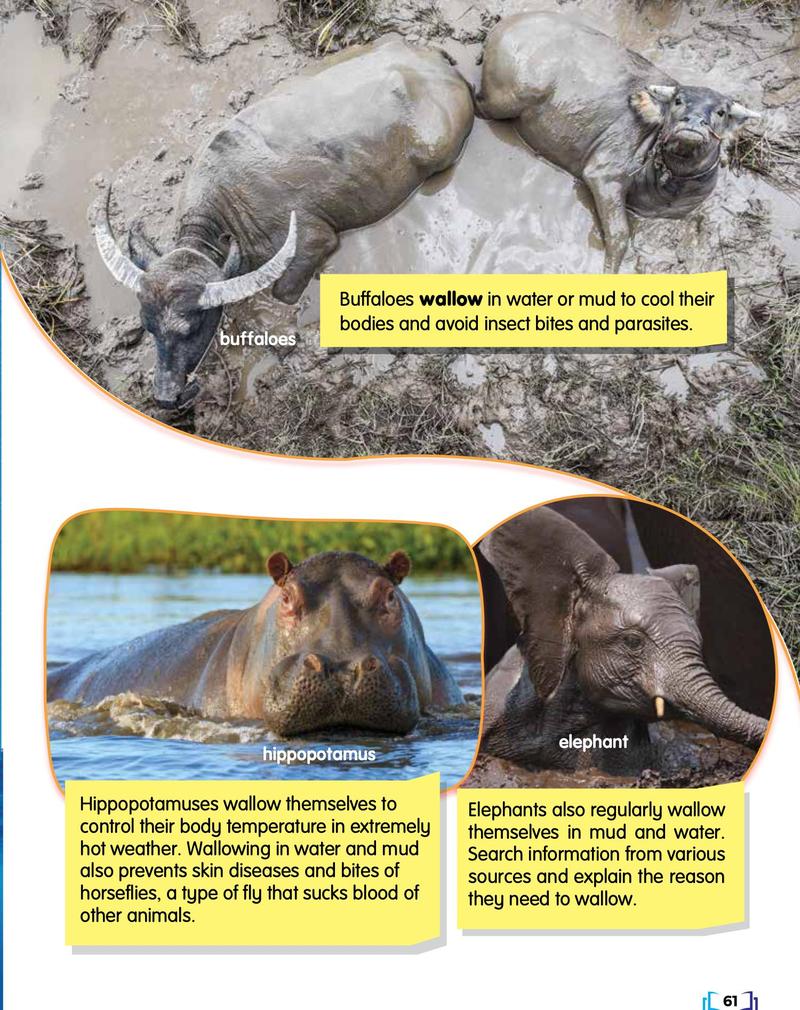
| Extremely hot | Wallowing in water or mud | Buffalo, hippopotamus, elephant | Cools the body; stops insect bites, parasites and skin diseases |
Show answerHide answer
Protecting eggs and young
Animals protect their eggs and young so that their species does not become extinct.
| Way of protecting eggs | Examples |
|---|---|
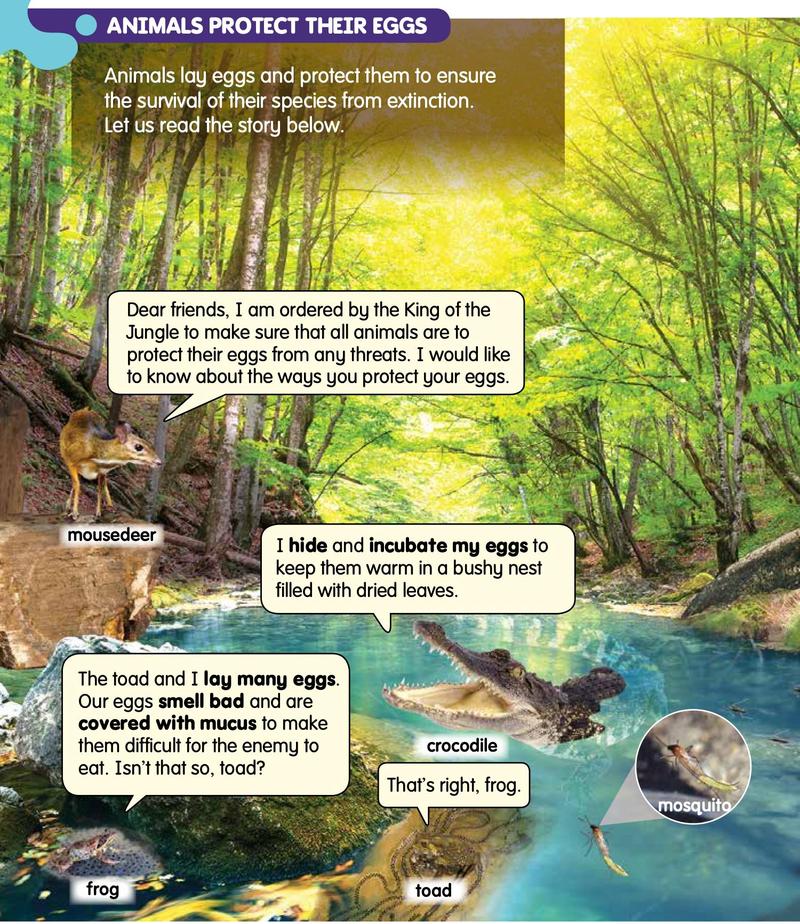
| Hide the eggs (in nests, tree holes, gaps, bushes) | Crocodile, woodpecker, cockroach |
| Incubate (keep warm) the eggs until they hatch | Crocodile, woodpecker, hen |
| Bury the eggs in the soil | Grasshopper, tortoise |
| Lay eggs on rocks or leaves near calm river water | Water strider |
| Lay a large number of eggs | Frog, toad |
| Slimy (covered with mucus) or smelly eggs | Frog, toad |
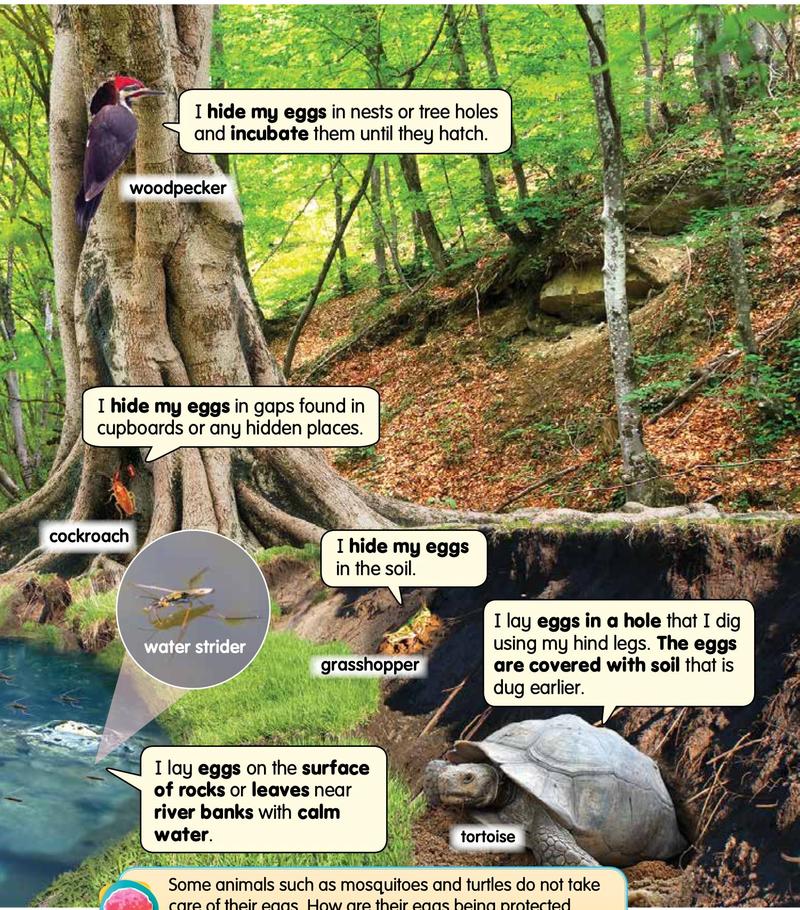
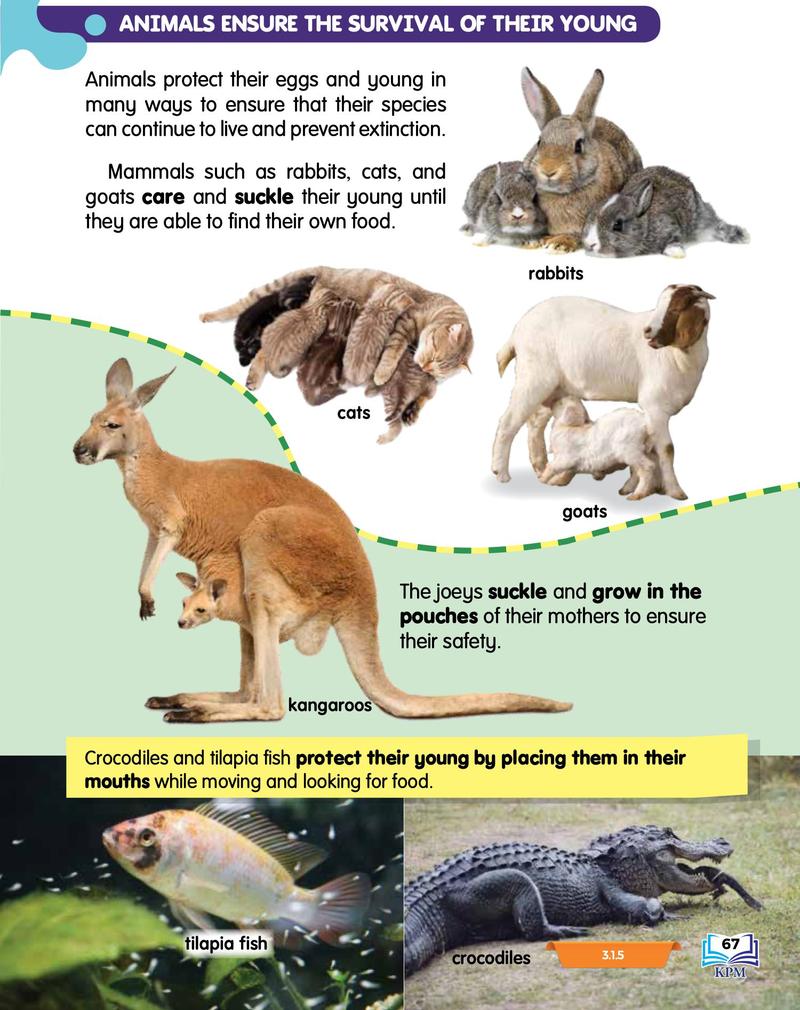
Animals also look after their young until they can look after themselves.
| How the young are kept alive | Examples |
|---|---|
| Care for and suckle (feed with milk) | Rabbit, cat, goat |
| Carry in a pouch | Kangaroo |
| Carry in the mouth | Crocodile, tilapia fish |
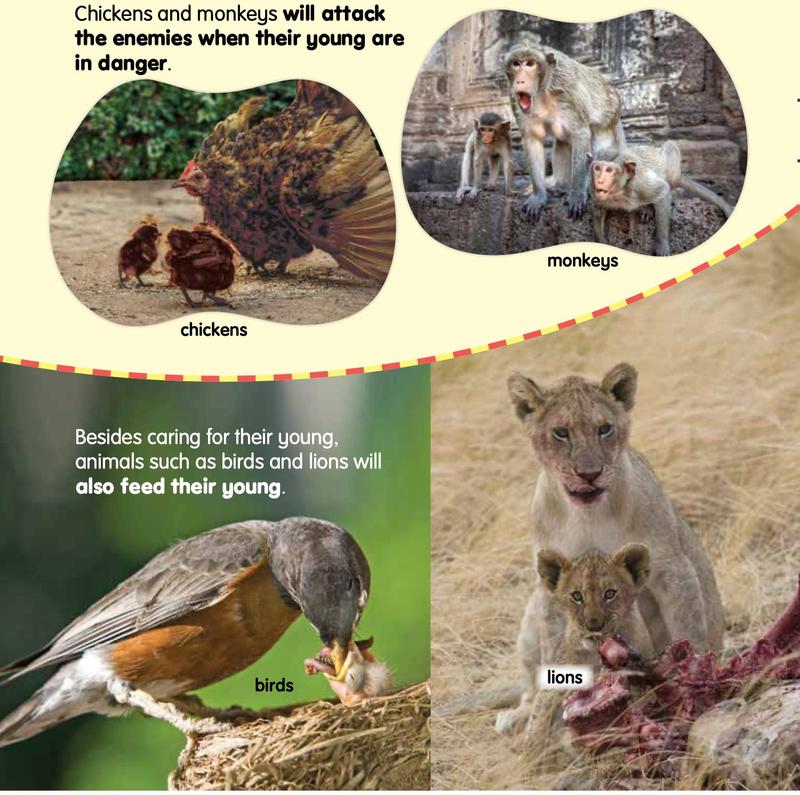
| Attack enemies when the young are in danger | Hen, monkey |
| Feed the young | Birds, lions |
Show answerHide answer
3.2Imaginary animal
Ana made a model of an imaginary animal. She chose a body part for each danger, and gave a reason for it.
| Body part | Job |
|---|---|
| Scales | Protect from injuries |
| Antennae | Sensitive to touch |
| Nose | Very sensitive to unfamiliar smells |
| Small ear lobes | Reduce heat loss |
| Sharp spines and claws | Self-protection; scratch and grip the enemy |
| Thick fat and thick, smooth fur | Keep the body warm in cold weather (thermal insulator) |
Example: "My animal has thick fur. It is a thermal insulator, so it can live in the cold. Without fur it would lose body heat and may die."
Every animal has characteristics and behaviours that help it survive. This keeps the balance of nature, so we should look after animals and their habitats.
3.3Food chains and food webs
Food chain
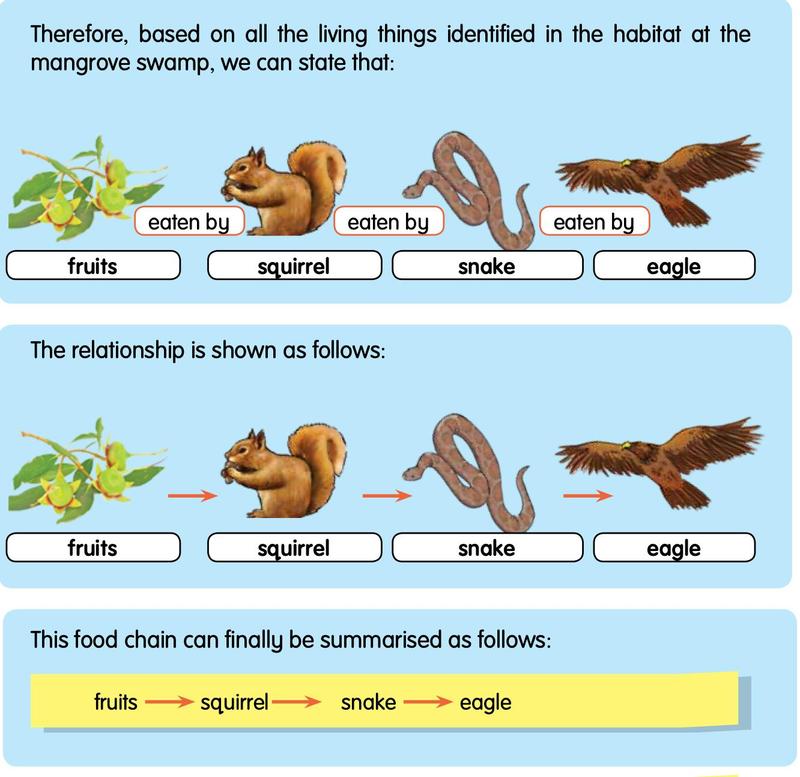
Producers and consumers
| Group | What it does | Examples |
|---|---|---|
| Producer | Makes its own food by photosynthesis, using sunlight | Plants: fruits, paddy, waterweed, vegetables |
| Consumer | Cannot make its own food; gets energy by eating other living things | Squirrel, snake, eagle, duck |
- The Sun is the main source of energy in an ecosystem. It gives light and heat energy.
- Energy goes from the Sun to the producer, then to the consumer that eats it, and then to the next consumer.
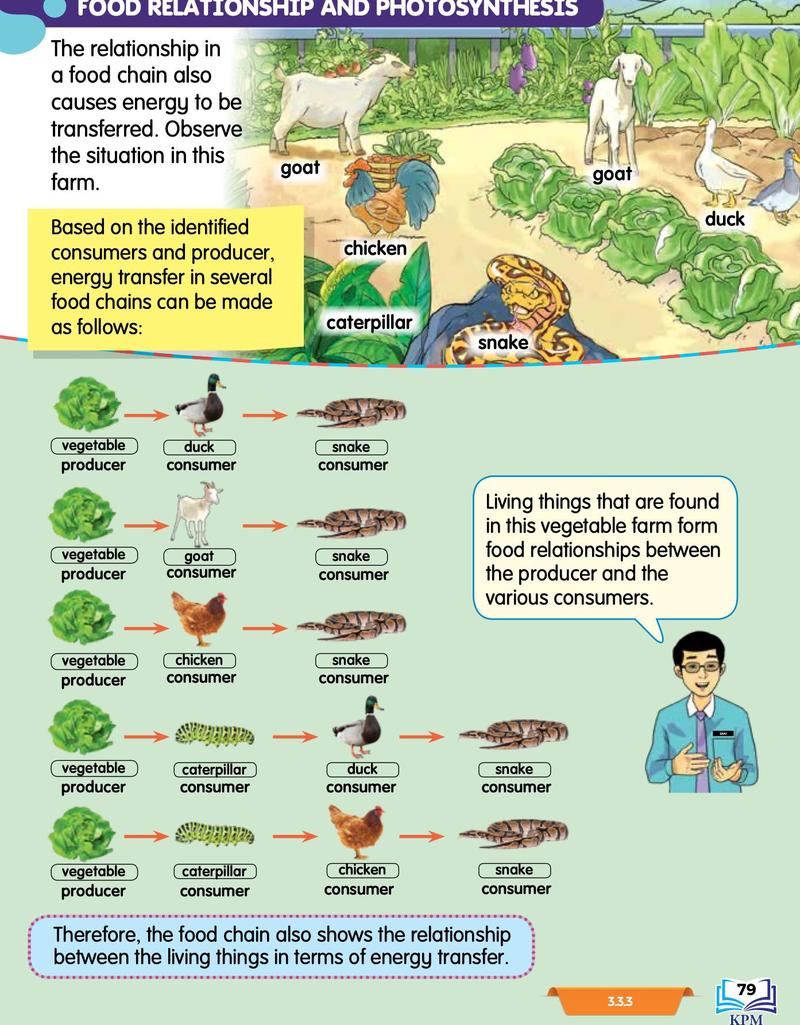
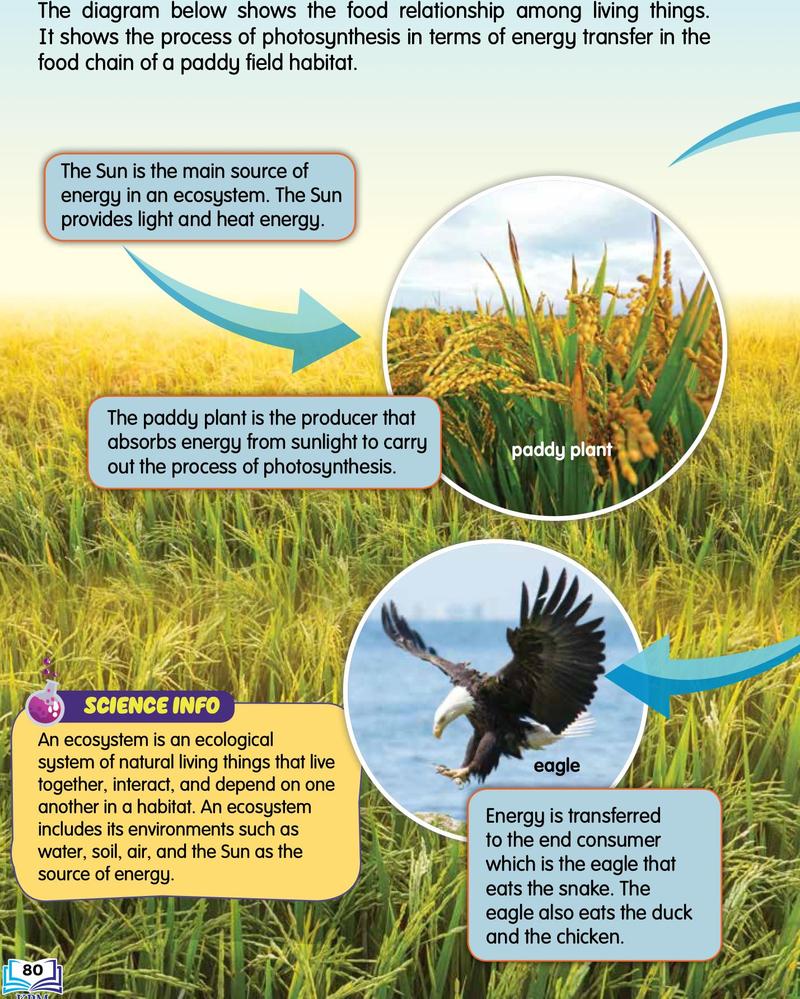
Show answerHide answer
Food web
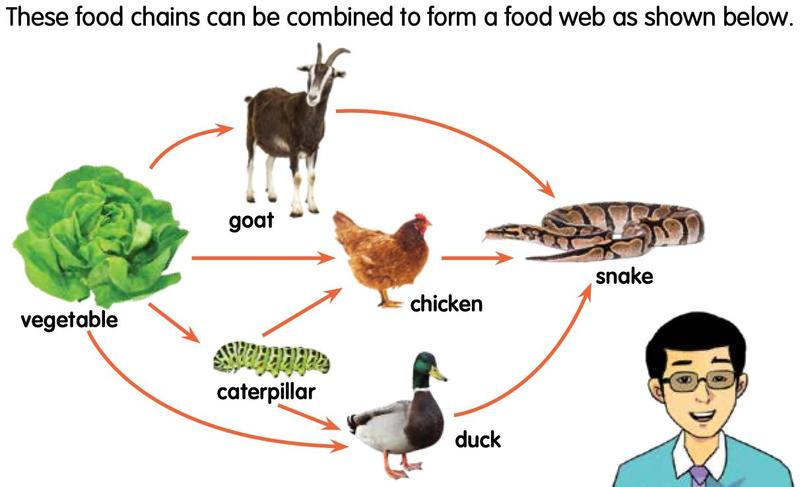
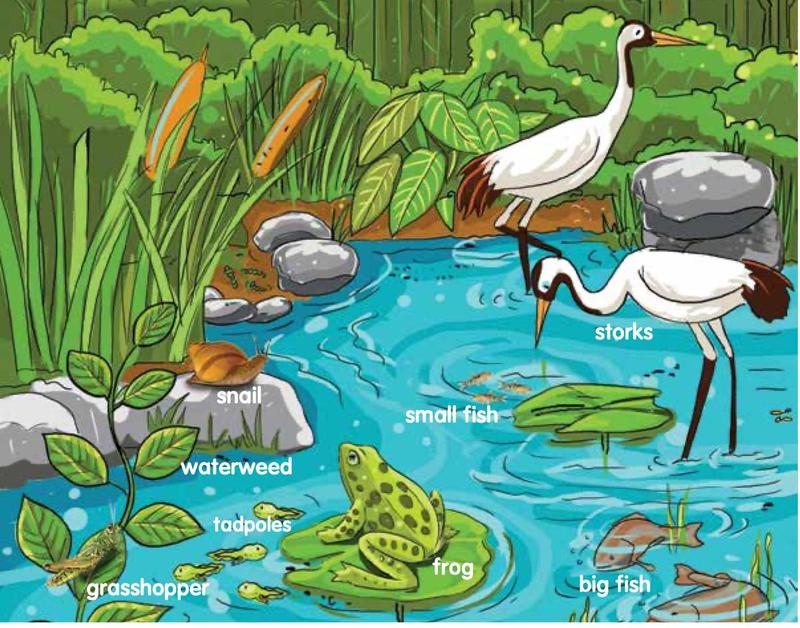
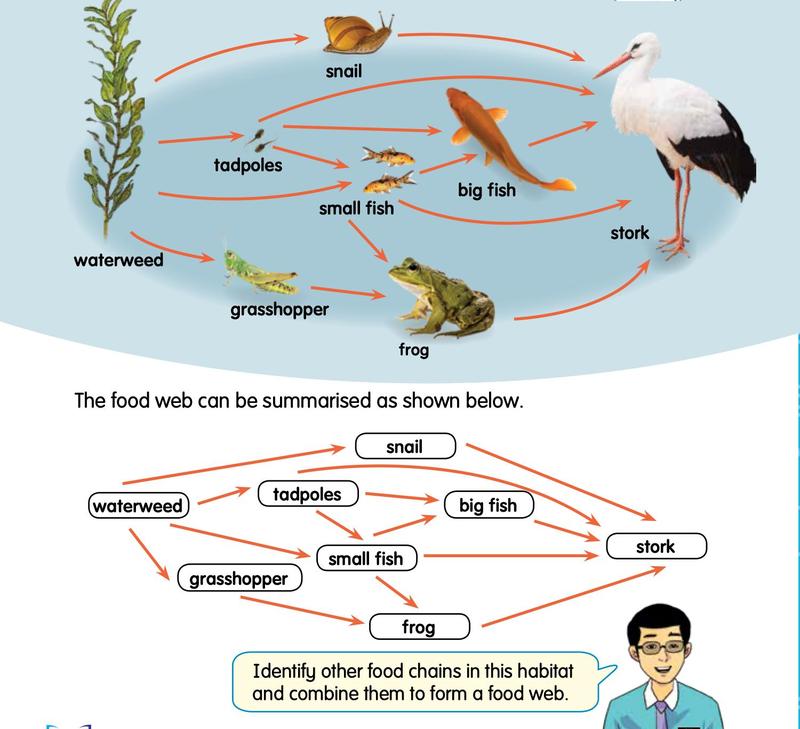
In the pond web, tadpoles, small fish, snails and grasshoppers all eat waterweed. Some animals eat both plants and animals; these are omnivores.
Effects of a change in population
Causes of a change: extreme weather, a pandemic (a disease that spreads widely), unplanned forest clearing, forest fires and illegal hunting.
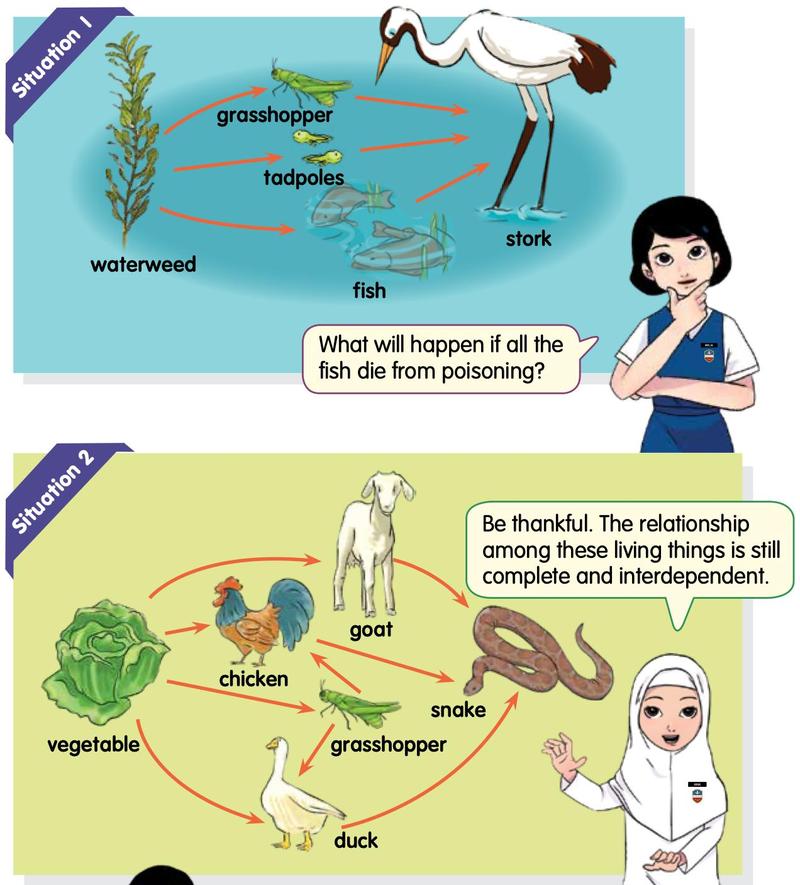
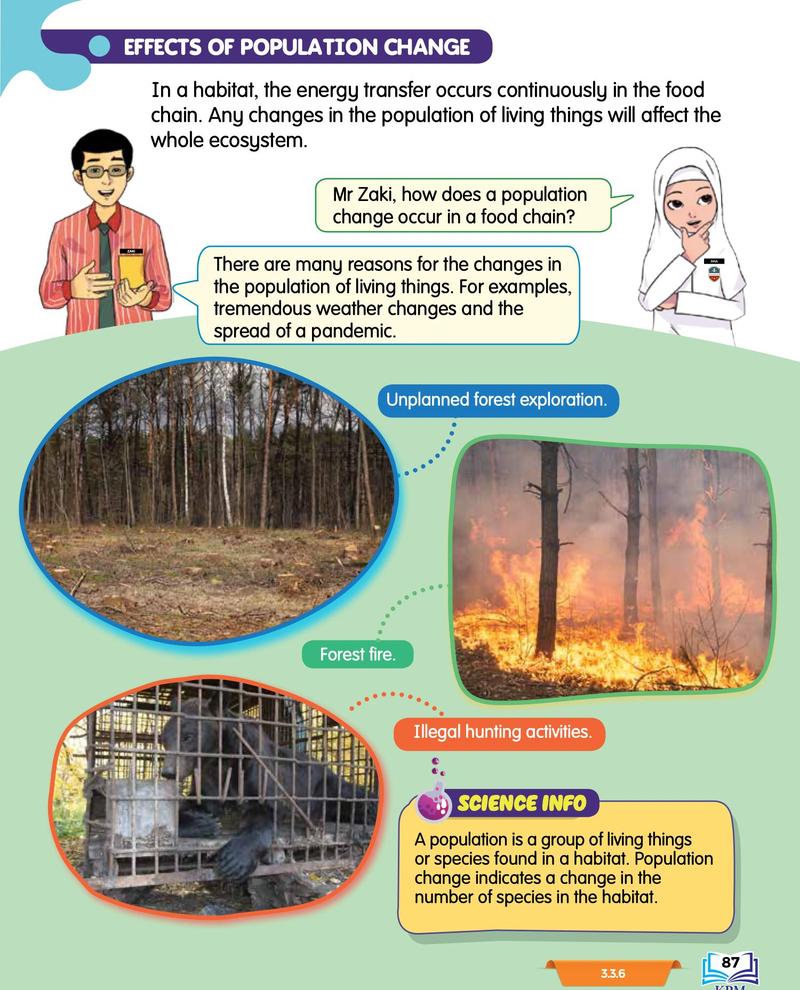
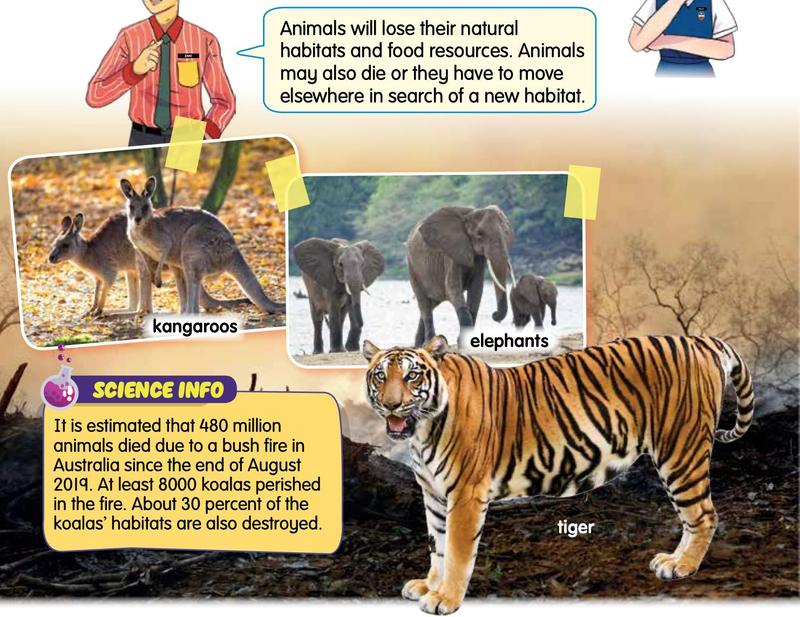
- Animals lose their natural habitat and food.
- Animals die or move elsewhere to look for a new habitat.
- Food relationships are disrupted, so the whole food web changes.
Show answerHide answer
Pictures: Science Year 5 (DLP) textbook, pp. 49–92 (crab p. 50, tortoise p. 51, defences pp. 52–56, polar p. 58, migration p. 60, wallowing p. 61, desert p. 62, eggs pp. 64–65, young pp. 67–68, food chain p. 76, farm p. 79, paddy p. 80, food web pp. 82–84, situations p. 86, population pp. 87–88).
Summary
| Topic | Key points |
|---|---|
| Survival of species | Ability to avoid extinction |
| Against enemies | Shells, stings, spines, scales, horns, bad smell, fake eyes, fast legs, detach parts, ink, curl up, live in groups |
| Against weather | Fur, fat, dense feathers, small ear lobes, hibernate, migrate, humps, large ear lobes, wallow |
| Eggs | Hide, incubate, bury, lay many, slimy or smelly |
| Young | Protect, suckle, feed, carry in pouch or mouth, attack enemies |
| Food chain | Producer → consumers; arrow means "eaten by"; energy flows |
| Food web | Several food chains joined together |
| Population change | Loses habitat and food; animals die or move; balance affected |