Science questions, unit 3
Nama / NameKelas / ClassTarikh / Date
Animals
42 marks. Use Practice to check each answer as you go, or Exam to answer everything first. Ask a grown-up to help you mark the written answers.
Section A: objective questions
12 marksChoose the best answer for each question.
1
Question 1
What is meant by the survival of an animal species?
Show answerHide answer
C
Survival of a species means the animals can keep their species going and not become extinct.
2
Question 2
Diagram 1 shows four animals. Which animal has patterns on its wings that look like fake eyes to deceive its enemies?

Show answerHide answer
D
A moth has patterns that look like eyes on its wings. They trick the enemy.
3
Question 3
A cuttlefish spurts out black ink when an enemy attacks it. Why does it do this?
Show answerHide answer
B
The black ink hides the cuttlefish so that it can swim away quickly.
4
Question 4
Which characteristic helps walruses and sea lions keep warm in very cold weather?
Show answerHide answer
A
Thick fat under the skin keeps body heat in. Walruses also have small ear lobes to reduce heat loss.
5
Question 5
What is migration?
Show answerHide answer
D
Migration is travelling across continents or oceans to avoid the cold weather of the home place. Sleeping through winter is hibernation.
6
Question 6
A desert fox has large ear lobes. How do they help it live in a hot desert?
Show answerHide answer
C
Large ear lobes let the body lose more heat, so the fox stays cooler. A camel's hump (not the ears) stores fat.
7
Question 7
Which animal is matched correctly with the way it protects its eggs?
Show answerHide answer
A
Frogs lay many eggs that are covered with slimy mucus. The woodpecker hides its eggs in a tree hole.
8
Question 8
How does a mother kangaroo keep her joey safe?
Show answerHide answer
B
The joey suckles and grows in its mother's pouch. Crocodiles and tilapia fish carry their young in their mouths.
9
Question 9
Which of these is a correct food chain? (The arrow means "is eaten by".)
Show answerHide answer
C
The fruits are eaten by the squirrel, the squirrel by the snake and the snake by the eagle. A food chain starts with a plant.
10
Question 10
Why are plants called producers?
Show answerHide answer
D
Plants use sunlight to make their own food. That is why they are producers.
11
Question 11
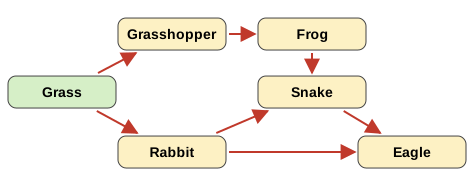
Diagram 2 shows a food web in a grassland. Which animal is eaten by both the snake and the eagle?
Show answerHide answer
A
The arrows from the rabbit go to the snake and to the eagle. The frog is eaten only by the snake.
12
Question 12
In a pond, the food chain is waterweed → tadpoles → small fish → stork. In this pond the stork eats only small fish. All the small fish die from poisoning. What will happen to the number of tadpoles at first?
Show answerHide answer
B
Small fish eat tadpoles. With no small fish, fewer tadpoles are eaten, so their number goes up for a while. The stork in this chain does not eat tadpoles.
Section B: structured questions
30 marksAnswer all questions. Circle the answer or write it in the space.
13
Question 13
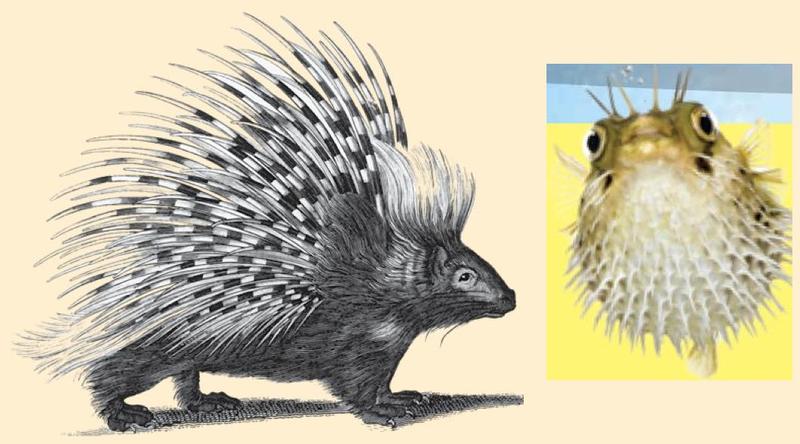
Diagram 3 shows a porcupine and a pufferfish. Choose the correct behaviour for each animal.
[1 mark]
(a)When it is attacked, the porcupine
Show answerHide answer
raises its sharp spines
[1 mark]
(b)When it feels threatened, the pufferfish
Show answerHide answer
inflates its body
[1 mark]
(c)Besides spines, the pufferfish is also
Show answerHide answer
poisonous
14
Question 14
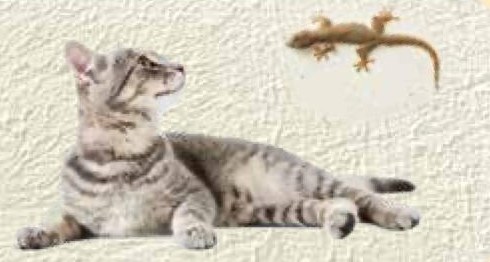
Diagram 4 shows a cat trying to catch a lizard. The cat managed to catch only the tip of the lizard's tail.
[1 mark]
(a)State the behaviour of the lizard that protects it from the cat.
Show answerHide answer
Tick each point you got.
[1 mark]
(b)How does this behaviour protect the lizard?
Show answerHide answer
Tick each point you got.
[1 mark]
(c)Name another animal that has a similar behaviour.
Show answerHide answer
Tick each point you got.
15
Question 15
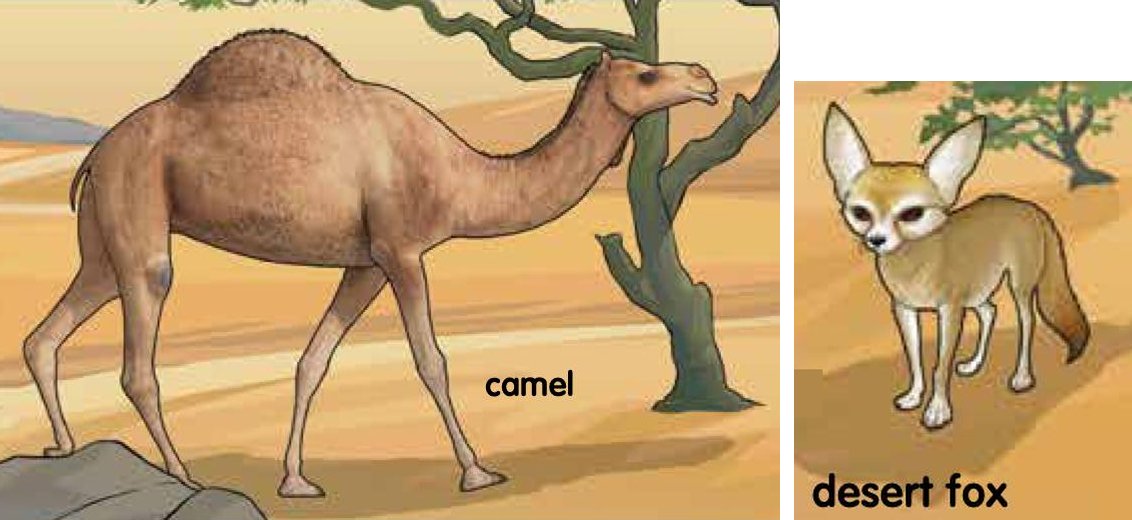
Animals have special characteristics and behaviours to live in extreme weather. Diagram 5 shows a camel and a desert fox in the desert.
[1 mark]
(a)What does the camel's hump store?
Show answerHide answer
Tick each point you got.
[1 mark]
(b)How does the hump help the camel survive in the desert?
Show answerHide answer
Tick each point you got.
[1 mark]
(c)A polar bear has thick fur. How does thick fur help it?
Show answerHide answer
Tick each point you got.
[2 marks]
(d)Why do buffaloes wallow in water or mud on a hot day? Give two reasons.
Show answerHide answer
Tick each point you got.
16
Question 16
Answer these questions about how animals protect their eggs and young.
[2 marks]
(a)Frogs and toads do not look after their eggs, but the eggs are still protected. State two ways.
Show answerHide answer
Any 2 points
Slimy and smelly eggs are difficult for enemies to eat.
Tick each point you got.
[1 mark]
(b)Name one animal that incubates its eggs.
Show answerHide answer
Tick each point you got.
[1 mark]
(c)Name one animal that carries its young in its mouth.
Show answerHide answer
Tick each point you got.
[1 mark]
(d)What do chickens and monkeys do when their young are in danger?
Show answerHide answer
Tick each point you got.
17
Question 17
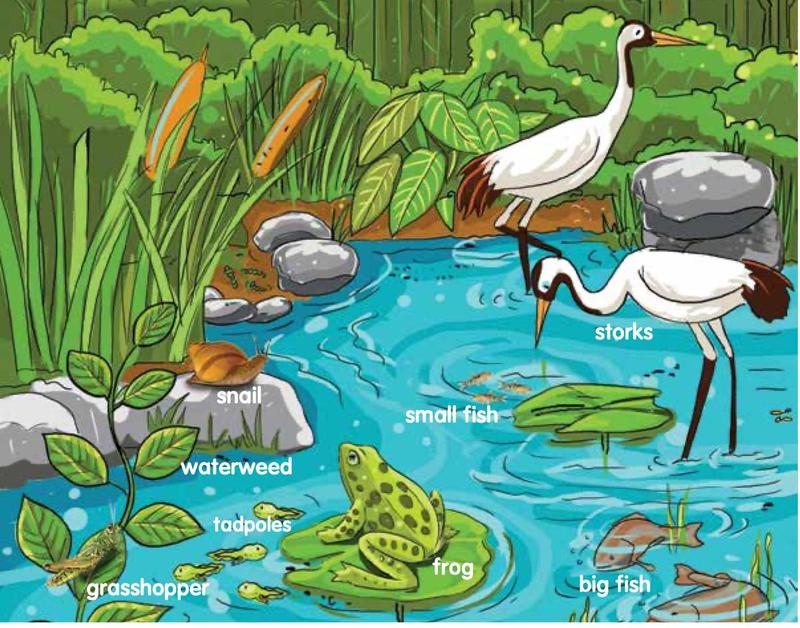
Diagram 6 shows a pond habitat. These food chains are found in the pond: waterweed → snail → stork, waterweed → tadpoles → stork, waterweed → grasshopper → frog → stork.
[1 mark]
(a)Name the producer in the pond.
Show answerHide answer
Tick each point you got.
[2 marks]
(b)Name two consumers that eat the producer.
Show answerHide answer
Any 2 points
Tick each point you got.
[1 mark]
(c)What is the main source of energy in this habitat?
Show answerHide answer
Tick each point you got.
[1 mark]
(d)Draw a food chain with four living things that ends with the stork.
Show answerHide answer
Tick each point you got.
18
Question 18
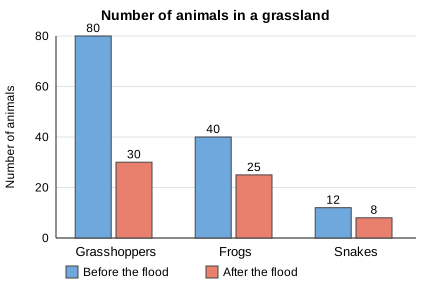
A flood destroyed most of the grass in a grassland like the one in Diagram 2. Diagram 7 shows the number of animals before and after the flood.
[1 mark]
(a)Which animal had the biggest fall in number?
Show answerHide answer
Tick each point you got.
[1 mark]
(b)How many fewer frogs are there after the flood?
Show answerHide answer
Tick each point you got.
[1 mark]
(c)Explain why the number of grasshoppers fell.
Show answerHide answer
Tick each point you got.
[1 mark]
(d)Explain why the number of snakes fell.
Show answerHide answer
Tick each point you got.
[1 mark]
(e)Apart from the flood, give one other cause of a change in the population of animals.
Show answerHide answer
Tick each point you got.
19
Question 19
Sara designs an imaginary animal that lives in a very cold place and has enemies that hunt it.
[2 marks]
(a)Suggest two characteristics of her animal that keep it warm.
Show answerHide answer
Any 2 points
Tick each point you got.
[1 mark]
(b)Suggest one characteristic that protects the animal from its enemies and explain how it helps.
Show answerHide answer
Tick each point you got.
[1 mark]
(c)Why do animals have different characteristics and behaviours?
Show answerHide answer
Tick each point you got.