Science questions, unit 4
Nama / NameKelas / ClassTarikh / Date
Plants
45 marks. Use Practice to check each answer as you go, or Exam to answer everything first. Ask a grown-up to help you mark the written answers.
Section A: objective questions
10 marksChoose the best answer for each question.
1
Question 1
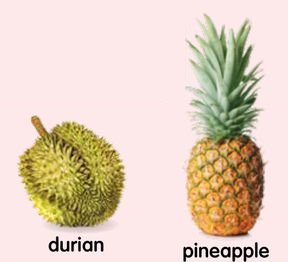
Diagram 1 shows a durian and a pineapple. Which specific characteristic protects the durian from enemies?
Show answerHide answer
B
The sharp thorns hurt enemies that want to eat the durian.
2
Question 2
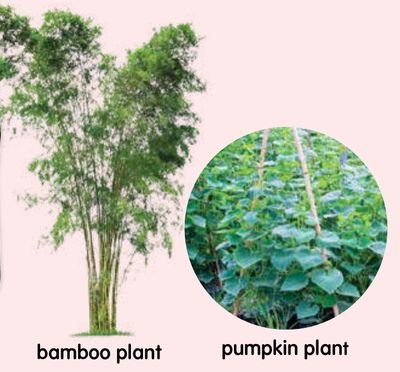
Diagram 2 shows a bamboo plant. A girl feels itchy after she touches its leaves. What causes the itch?
Show answerHide answer
D
Bamboo leaves have fine hairs. They make the skin itchy and keep enemies away.
3
Question 3
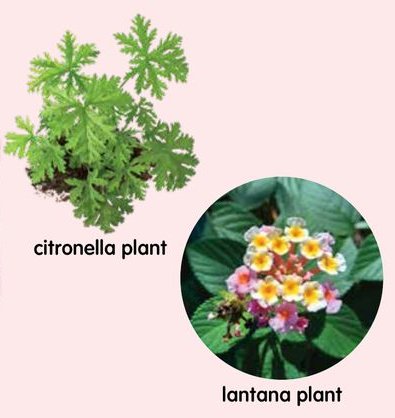
Diagram 3 shows a citronella plant and a lantana plant. Why do enemies keep away from them?
Show answerHide answer
A
Citronella and lantana plants give off a strong bad smell, so enemies go away.
4
Question 4
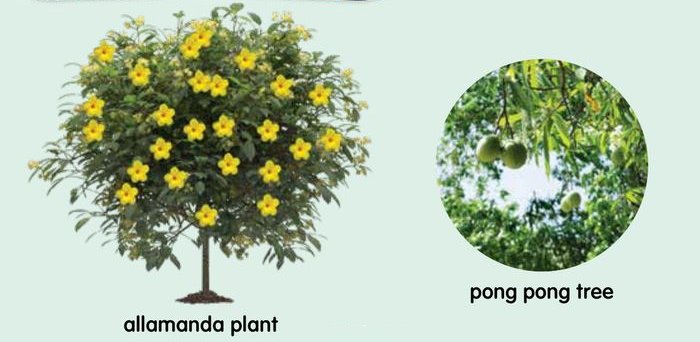
A child wants to pick the flowers of the allamanda plant in Diagram 4. Which statement is correct?
Show answerHide answer
C
The leaves, stems, roots and flowers of the allamanda are all poisonous. The poison can cause poisoning or even death.
5
Question 5
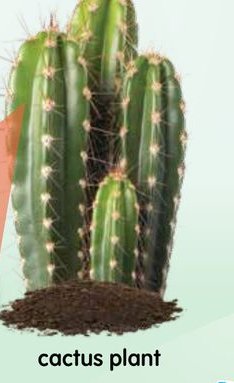
Which part of the cactus plant in Diagram 5 stores water?
Show answerHide answer
B
The stem of the cactus stores water. Its leaves are modified as spikes and its long roots absorb water deep in the soil.
6
Question 6
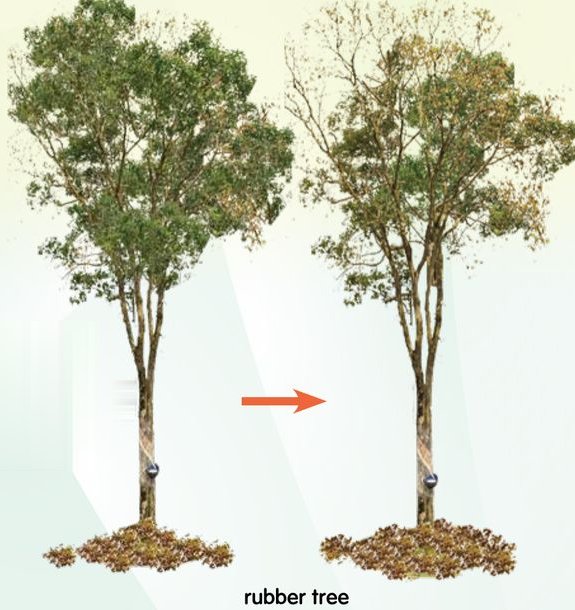
The rubber tree in Diagram 6 sheds its leaves when the weather is hot and during the dry season. Why does it do this?
Show answerHide answer
D
Without leaves, the tree loses less water, so it can survive the dry season.
7
Question 7
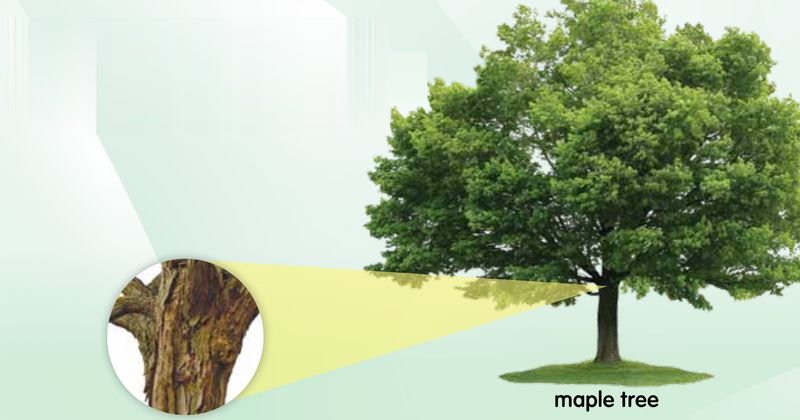
Diagram 7 shows a maple tree with thick bark covering its trunk. In which climate does the thick bark help it survive?
Show answerHide answer
A
Thick bark protects the trunk from the cold climate.
8
Question 8
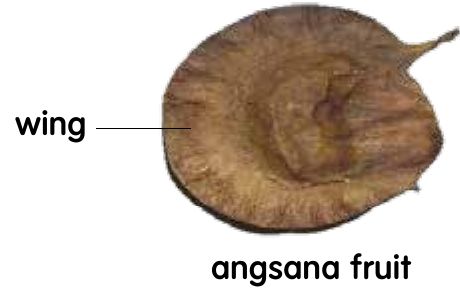
Diagram 8 shows an angsana fruit. It is thin and lightweight and has a wing-like structure. How is it dispersed?
Show answerHide answer
C
A thin, light fruit with a wing is carried far by the wind.
9
Question 9
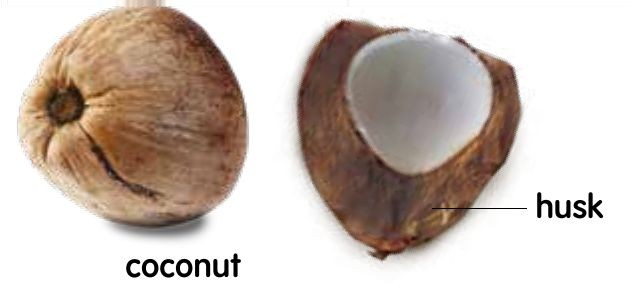
A coconut (Diagram 9) can float on water. Which characteristic helps it to float?
Show answerHide answer
B
The husk of a coconut has air cavities and its skin is waxy. These help it to float and be dispersed by water.
10
Question 10
The seed pods of the garden balsam dry out and then split open, throwing the seeds out. This way of dispersal is called
Show answerHide answer
D
When the pod dries and splits open, the seeds are thrown out. This is the explosive mechanism.
Section B: structured questions
35 marksAnswer all questions. Circle the answer or write it in the space.
11
Question 11
Name the specific characteristic that protects each plant from enemies.
[1 mark]
(a)Pineapple
Show answerHide answer
Sharp thorns
[1 mark]
(b)Jackfruit tree
Show answerHide answer
Produce latex
The latex is sticky and stops enemies from eating the fruits.
[1 mark]
(c)Pumpkin plant
Show answerHide answer
Fine hairs
[1 mark]
(d)Lantana plant
Show answerHide answer
Bad smell
12
Question 12
Diagram 10 shows the allamanda plant.
[1 mark]
(a)State the specific characteristic of the allamanda plant that protects it from enemies.
Show answerHide answer
Tick each point you got.
[1 mark]
(b)Why should we not pick its flowers?
Show answerHide answer
Tick each point you got.
13
Question 13
Some plants live in a hot climate.
[1 mark]
(a)The stem and leaves of a tomato plant are covered with fine hairs. State one benefit of this characteristic.
Show answerHide answer
Tick each point you got.
[1 mark]
(b)A turmeric plant rolls its leaves when the weather is hot. Why?
Show answerHide answer
Tick each point you got.
[2 marks]
(c)State two characteristics of the cactus plant (Diagram 11) that help it survive in a hot climate and during the dry season.
Diagram 11
Show answerHide answer
Any 2 points
Tick each point you got.
14
Question 14
Choose the situation in which each characteristic helps the plant.
[1 mark]
(a)Flexible trunk and split leaves, as in the coconut tree
Show answerHide answer
Strong seasonal wind
They reduce the force of strong winds, so the tree does not break.
[1 mark]
(b)Shedding leaves, as in the rubber tree
Show answerHide answer
Hot climate and dry season
[1 mark]
(c)Thick bark, as in the maple tree
Show answerHide answer
Cold climate
15
Question 15
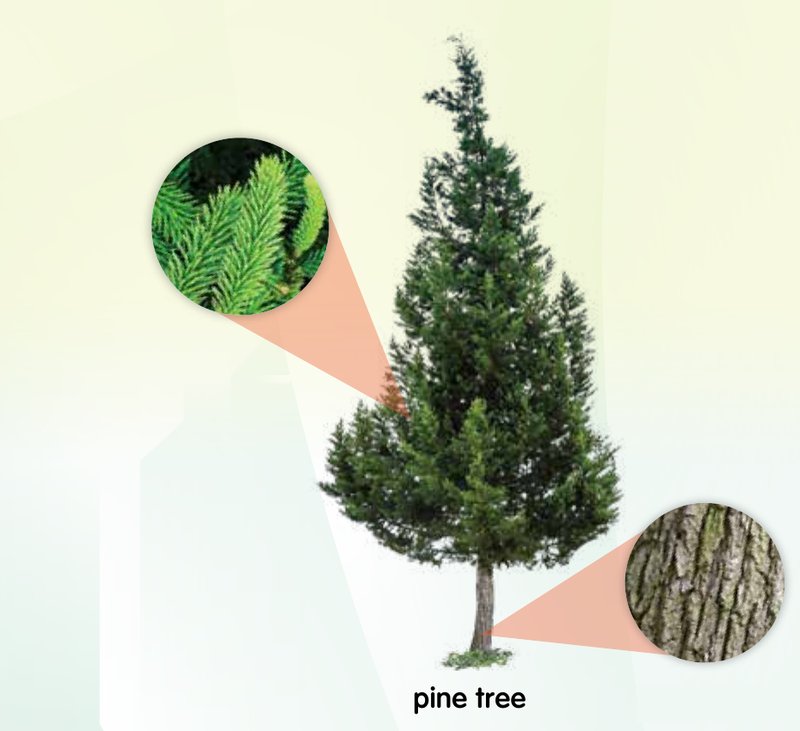
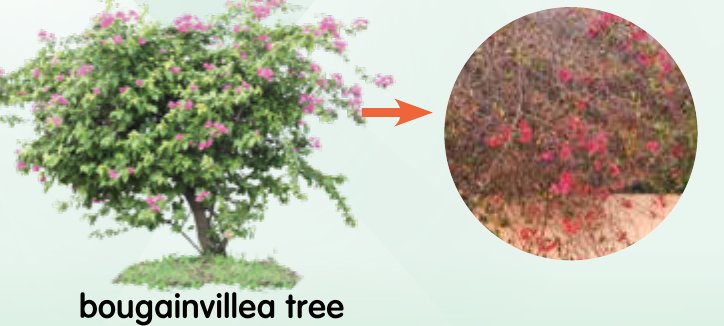
Diagram 12 shows a pine tree and a bougainvillea tree.
[1 mark]
(a)How do the needle-shaped leaves help the pine tree?
Show answerHide answer
Tick each point you got.
[1 mark]
(b)State one characteristic that helps the pine tree survive in cold weather.
Show answerHide answer
Tick each point you got.
[1 mark]
(c)The bougainvillea tree sheds its leaves when the weather is hot and during the dry season. Give a reason.
Show answerHide answer
Tick each point you got.
16
Question 16
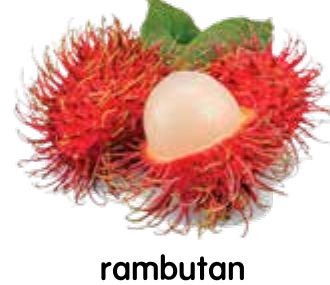
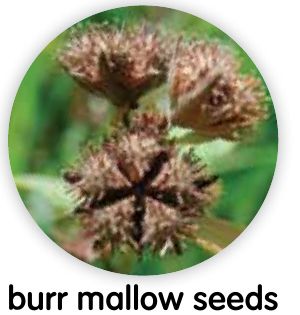
Diagram 13 shows a rambutan and burr mallow seeds.
[1 mark]
(a)How are both of them dispersed?
Show answerHide answer
By animals and humans
[2 marks]
(b)State two characteristics of the rambutan that make animals eat it.
Show answerHide answer
Any 2 points
Tick each point you got.
[1 mark]
(c)Burr mallow seeds stick to the fur of rabbits. Which characteristic makes this happen?
Show answerHide answer
Tick each point you got.
17
Question 17
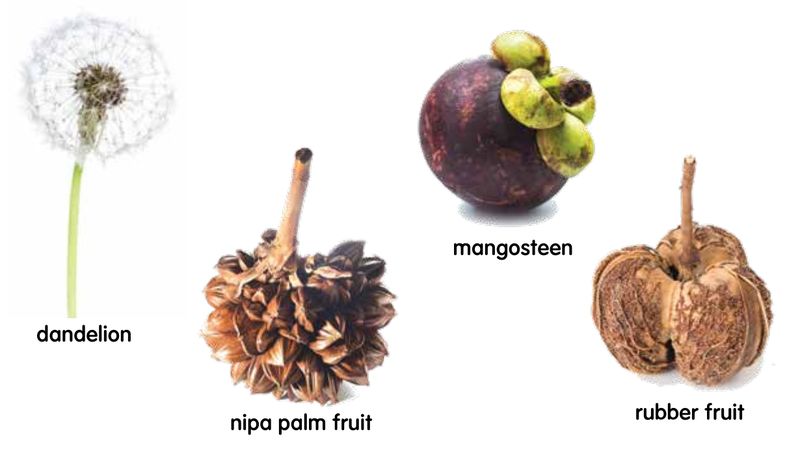
Diagram 14 shows four seeds or fruits. Predict the way each one is dispersed.
[1 mark]
(a)Dandelion (light, with fine hairs)
Show answerHide answer
Wind
[1 mark]
(b)Nipa palm fruit (fibrous husk with air cavities)
Show answerHide answer
Water
The fibrous husk holds air, so the fruit floats and is carried by water.
[1 mark]
(c)Mangosteen (sweet flesh, attractive colour)
Show answerHide answer
Animals and humans
[1 mark]
(d)Rubber fruit (dry pod that splits open)
Show answerHide answer
Explosive mechanism
18
Question 18
Read each riddle and predict the way of dispersal and the seed or fruit.
[1 mark]
(a)"I am light enough to float on water. My skin is soft and waxy, and my fibrous husk is filled with air." What way of dispersal is this?
Show answerHide answer
Water
[1 mark]
(b)Name a fruit that fits this riddle.
Show answerHide answer
Tick each point you got.
[1 mark]
(c)"We live in a seed pod. When it dries and splits open, off we are scattered." What way of dispersal is this?
Show answerHide answer
Explosive mechanism
[1 mark]
(d)Name a seed that fits this riddle.
Show answerHide answer
Tick each point you got.
19
Question 19
A durian has sharp thorns to protect itself from animals and humans, yet animals and humans are also dispersal agents for durians.
[2 marks]
(a)Explain how animals and humans disperse durian seeds.
Show answerHide answer
Tick each point you got.
20
Question 20
Living things depend on each other to keep the balance of nature.
[1 mark]
(a)State one way plants help animals and humans.
Show answerHide answer
Any 1 points
Tick each point you got.
[1 mark]
(b)State one way animals help plants.
Show answerHide answer
Any 1 points
Tick each point you got.
[1 mark]
(c)What may happen to animals if plants cannot ensure the survival of their species?
Show answerHide answer
Any 1 points
Tick each point you got.
21
Question 21
Nadia wants to design a model seed that will be carried a long way by the wind.
[2 marks]
(a)Suggest two characteristics she should give the model seed.
Show answerHide answer
Any 2 points
Tick each point you got.