Plants
What this chapter covers
- You can state the specific characteristics of plants that protect them from enemies, such as sharp thorns, latex, fine hairs, poison and bad smell (4.1.1)
- You can describe how plants adapt to strong seasonal wind, hot climate and dry season, and cold climate (4.1.2)
- You can explain why these characteristics help plant species survive (4.1.3)
- You can state the ways seeds and fruits are dispersed, by wind, water, animals and humans, and explosive mechanism (4.2.1)
- You can relate the characteristics of seeds and fruits to their way of dispersal and predict how a seed is dispersed (4.2.2, 4.2.3)
- You can explain how living things depend on each other to keep the balance of nature (4.2.4)
A plant cannot run away from danger or move to a cooler place. Yet plant species survive for a very long time. How? Plants have specific characteristics that protect them, help them live through weather changes and spread their seeds. In this unit you will study all three.
4.1Characteristics of plants for survival
Protection from enemies
The textbook describes five of these characteristics. Learn each one with its example.
| Characteristic | How it protects the plant | Examples |
|---|---|---|
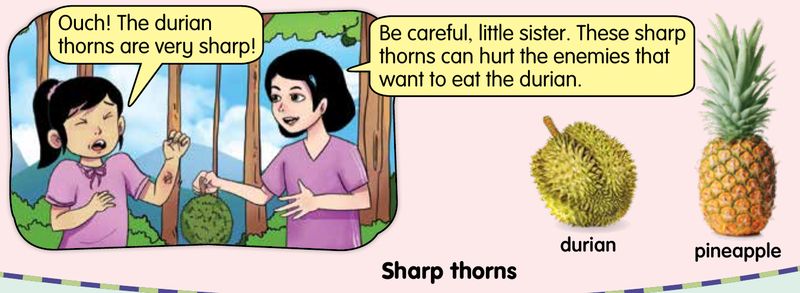
| Sharp thorns | The thorns hurt animals that want to eat the plant or its fruit. | Durian, pineapple |
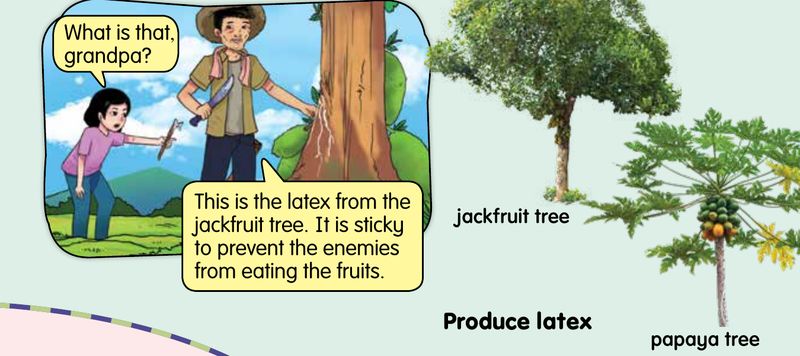
| Produce latex | The latex is sticky, so enemies are put off eating the fruit. | Jackfruit tree, papaya tree |
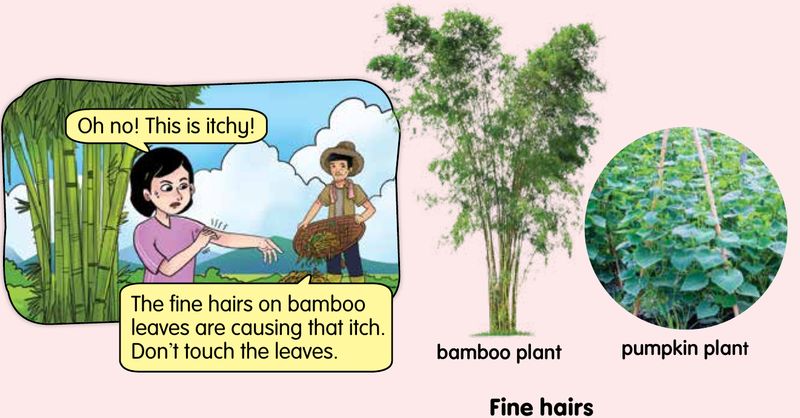
| Fine hairs | The hairs make the skin itchy when touched. | Bamboo, pumpkin plant |
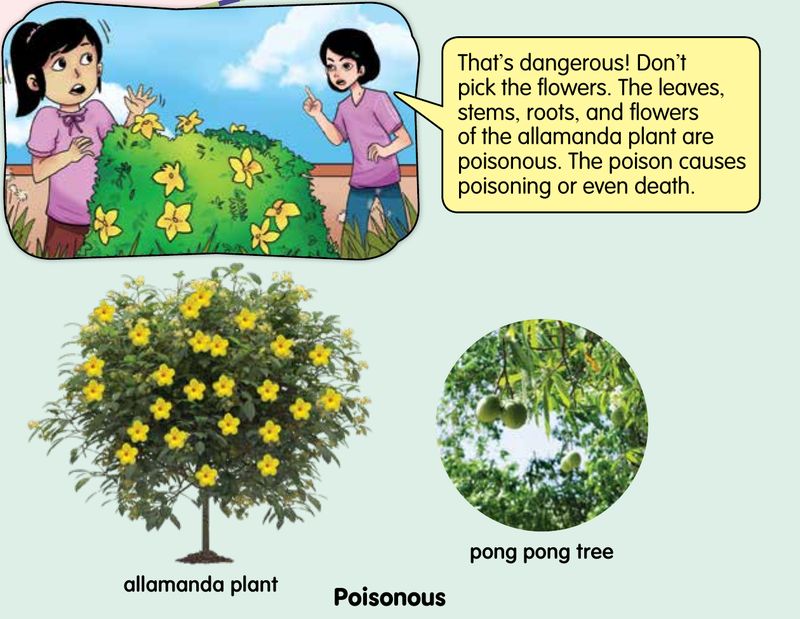
| Poisonous | Eating or touching the plant causes poisoning, even death. | Allamanda, pong pong tree |
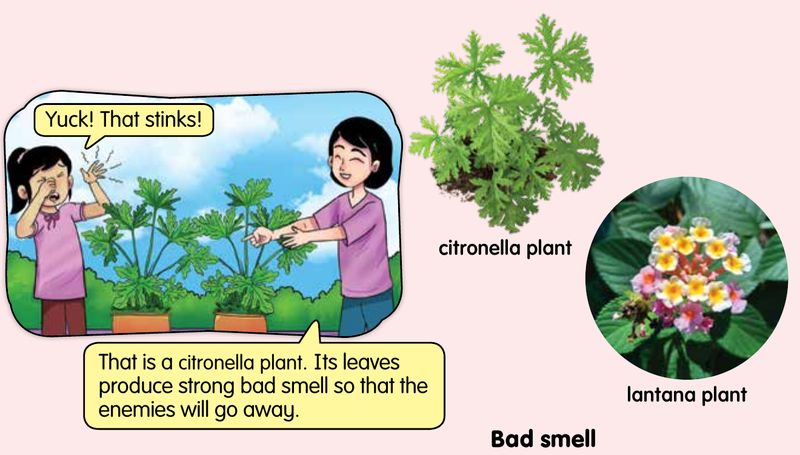
| Bad smell | The strong smell makes enemies go away. | Citronella, lantana |
Show answerHide answer
Adapting to climate and seasonal changes
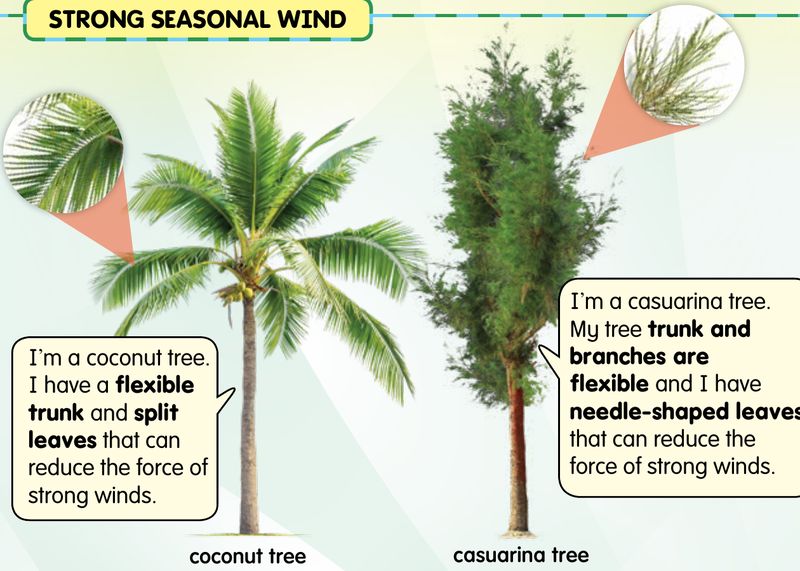
Strong seasonal wind. The plant must not be broken or blown over.
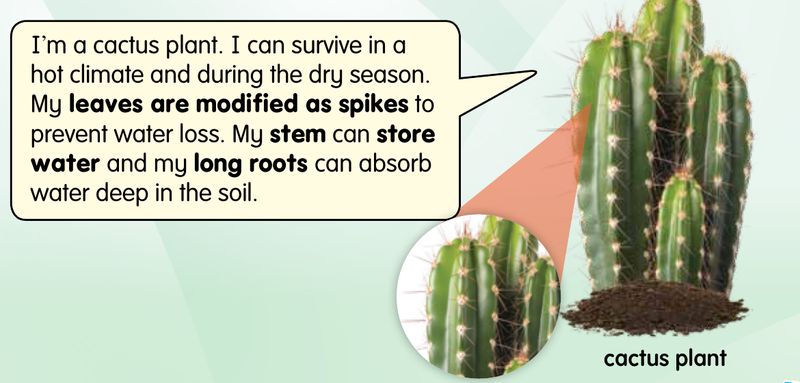
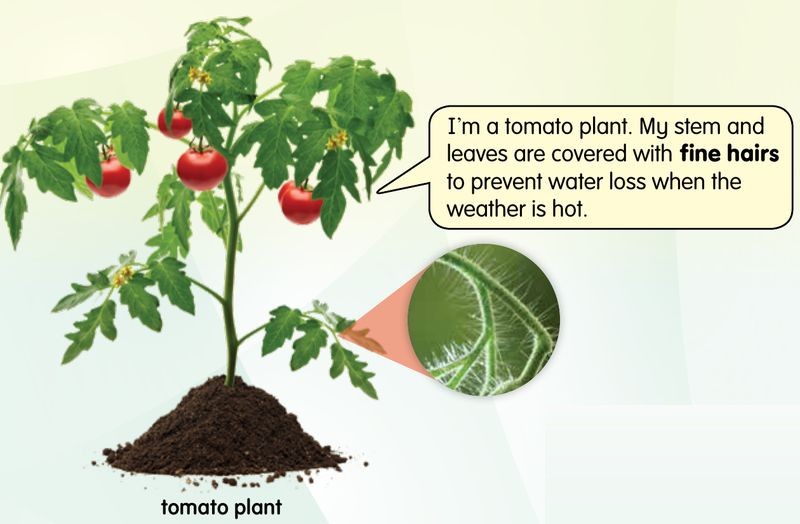
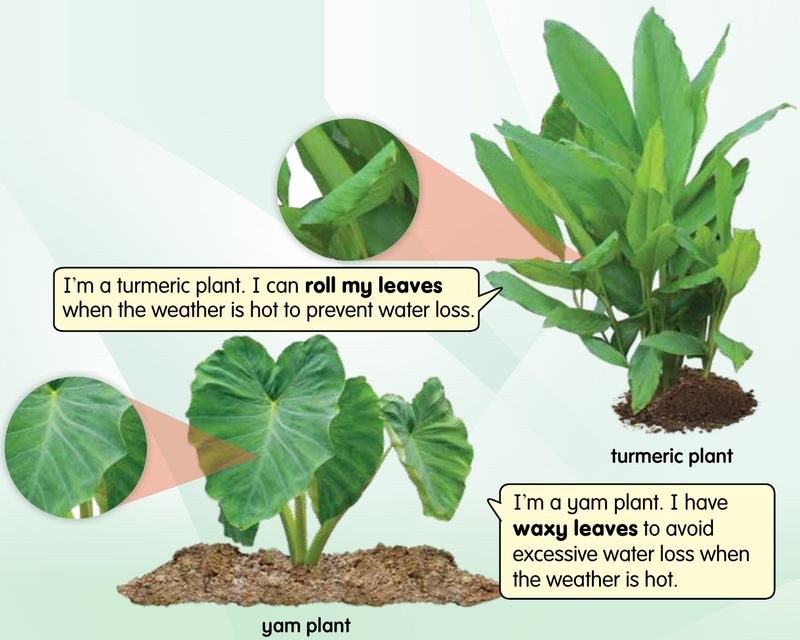
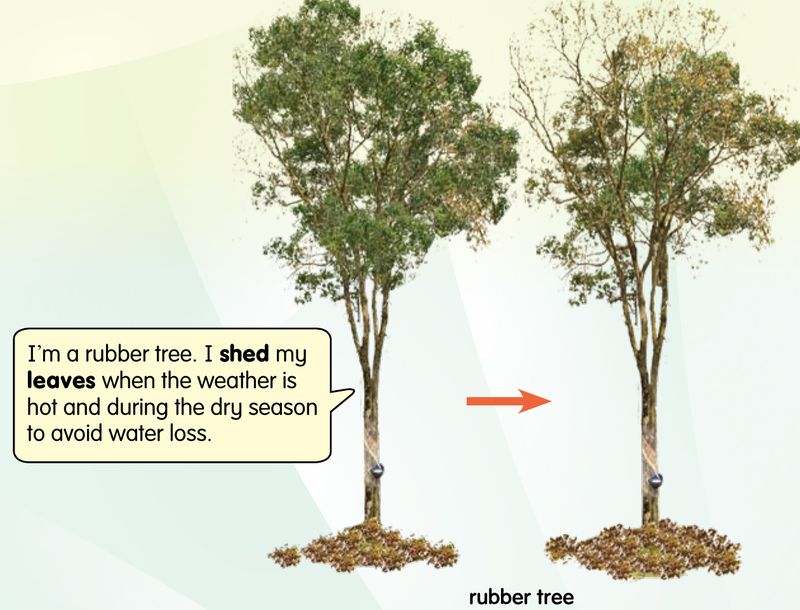
Hot climate and dry season. The main danger is losing too much water.
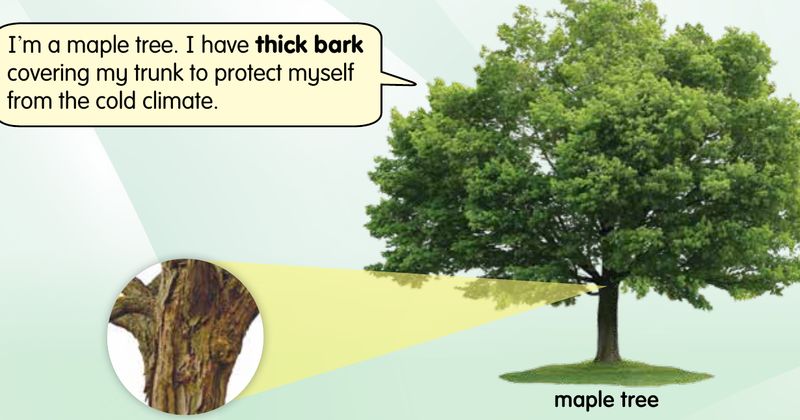
Cold climate. The plant must be protected from the cold.
| Situation | Characteristic | What it does | Example |
|---|---|---|---|
| Strong seasonal wind | Flexible trunk and branches | Bends instead of breaking | Coconut tree, casuarina |
| Split leaves | Reduce the force of the wind | Coconut tree | |
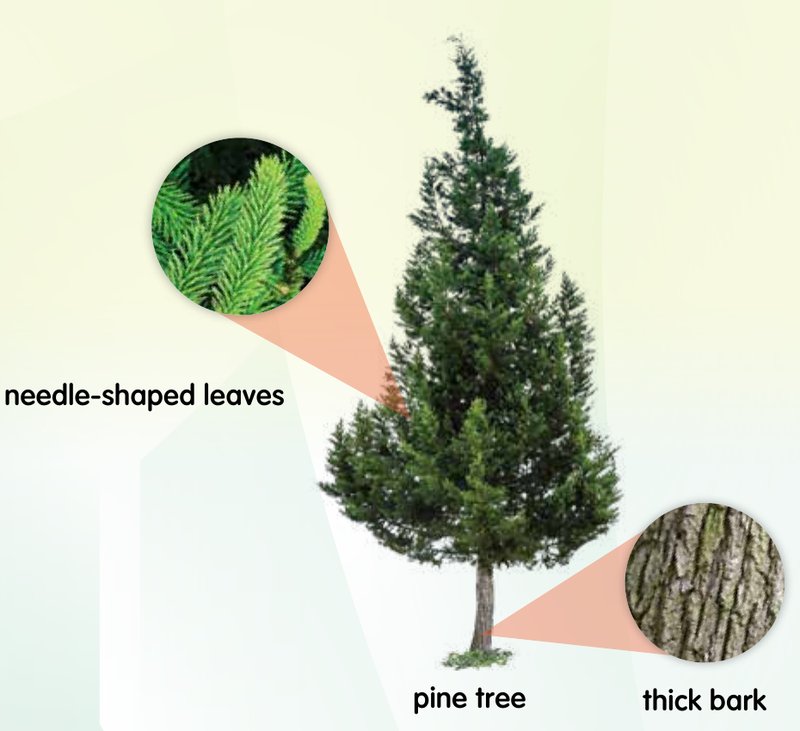
| Needle-shaped leaves | Reduce the force of the wind | Casuarina, pine | |
| Hot climate and dry season | Leaves modified as spikes | Prevent water loss | Cactus |
| Stem stores water; long roots | Keeps water; absorbs water deep in the soil | Cactus | |
| Fine hairs on stem and leaves | Prevent water loss | Tomato plant | |
| Rolling leaves | Prevent water loss | Turmeric | |
| Waxy leaves | Avoid too much water loss | Yam | |
| Shedding leaves | Avoid water loss | Rubber tree, bougainvillea | |
| Cold climate | Thick bark | Protects the trunk from the cold | Maple tree, pine |
| Needle-shaped leaves | Help the tree live through the cold | Pine |
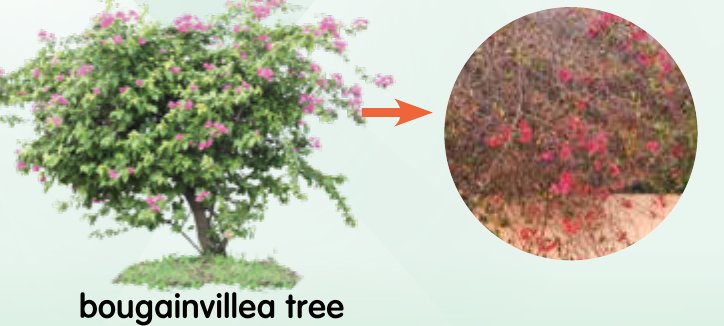
Show answerHide answer
4.2Dispersal of seeds or fruits
There are four main ways. The shape and parts of a seed or fruit tell you its way of dispersal.
| Way of dispersal | Characteristics of the seed or fruit | Example |
|---|---|---|
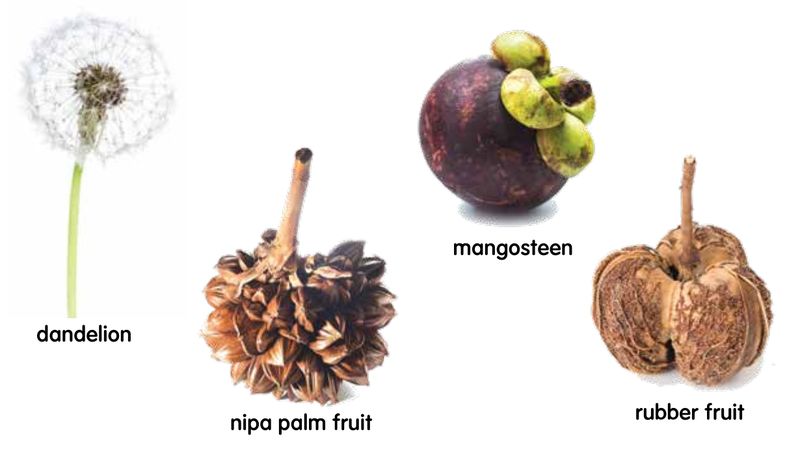
| Wind | Small, thin, lightweight, fine hairs, wing-like structure | Angsana fruit, dandelion |
| Water | Waxy skin, husk with air cavities | Coconut, nipa palm fruit |
| Animals and humans | Edible flesh, attractive colour, pleasant smell; or small, lightweight, with hooks | Rambutan; burr mallow |
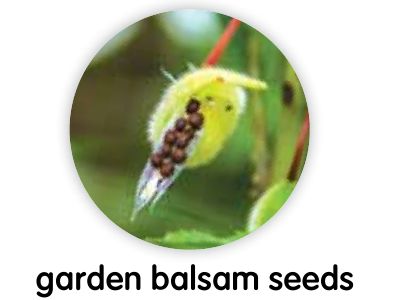
| Explosive mechanism | Seed pods dry out and split open | Garden balsam, rubber fruit |
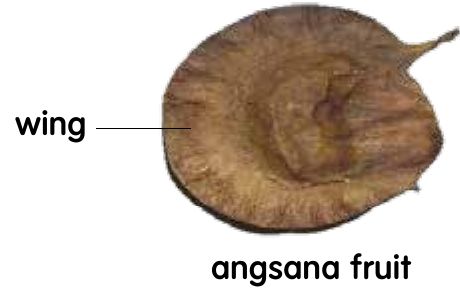
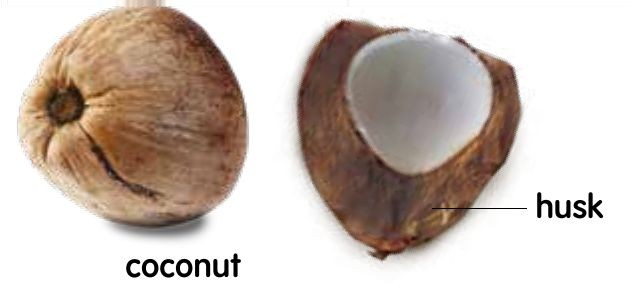
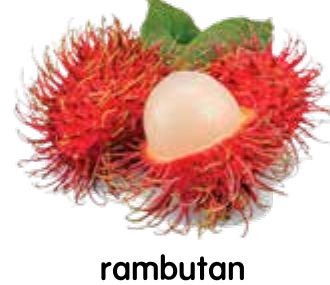
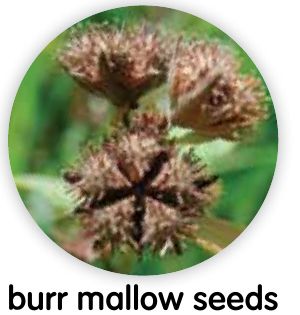
Two kinds of animal dispersal. Fruits with edible flesh are eaten, and the animal drops or passes out the seeds somewhere else. Seeds with hooks stick to the fur of animals and fall off later.
Show answerHide answer
Why survival of species matters
Living things depend on each other to keep the balance of nature.
- Plants are food for animals and humans. They also give oxygen during photosynthesis and materials for animals' nests.
- Animals and humans give fertilisers and nutrients to plants when waste decays.
- Animals and humans disperse the seeds and fruits of plants.
If plants could not ensure the survival of their species, the animals that depend on them would lose food, shelter and oxygen, and the balance of nature would be upset.
Pictures: Science Year 5 (DLP) textbook, pp. 94–112 (thorns and latex p. 94, hairs and poison p. 95, smell p. 96, wind and cactus p. 99, tomato, turmeric and yam p. 100, rubber and maple p. 101, pine and bougainvillea p. 102, angsana and coconut p. 105, rambutan and burr mallow p. 106, balsam p. 107, seeds p. 108).
Summary
| Topic | Key points |
|---|---|
| Protection from enemies | Sharp thorns, produce latex, fine hairs, poisonous, bad smell |
| Strong seasonal wind | Flexible trunk, split leaves, needle-shaped leaves |
| Hot climate and dry season | Spikes, water-storing stem, long roots, fine hairs, rolling, waxy or shedding leaves: prevent water loss |
| Cold climate | Thick bark, needle-shaped leaves |
| Dispersal | Wind, water, animals and humans, explosive mechanism |
| Balance of nature | Plants, animals and humans depend on each other |