Electricity
What this chapter covers
- You can name the sources of electrical energy and say what energy each one changes into electrical energy (5.1.1)
- You can tell a series circuit from a parallel circuit and say how many paths the electric current has (5.2.1)
- You can use symbols to sketch circuit diagrams of series and parallel circuits (5.2.2)
- You can compare the brightness of bulbs in series and parallel circuits and explain why (5.2.3)
- You can say how the number of dry cells and bulbs changes the brightness of bulbs in each type of circuit (5.2.4, 5.2.5)
- You can predict what happens to the bulbs when a switch is opened in a series or a parallel circuit (5.2.6)
- You can explain what affects the usage of electrical energy and how to save it (5.3.1, 5.3.4)
- You can describe the effects of mishandling electrical appliances and the safety precautions to follow (5.3.2, 5.3.3)
Lights, fans, televisions and phone chargers all need electrical energy. In this unit you will find out where electrical energy comes from, how bulbs can be connected in a circuit, why some bulbs shine brighter than others, and how to use electricity wisely and safely.
5.1Sources of electrical energy
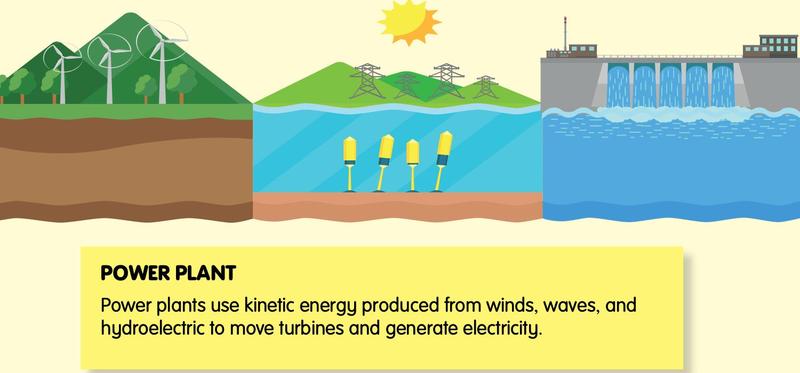
Source: Science Year 5 (DLP) textbook, p. 116.
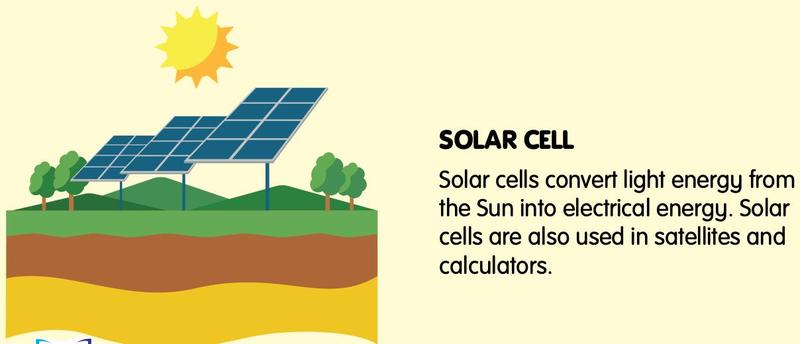
Source: Science Year 5 (DLP) textbook, p. 116.
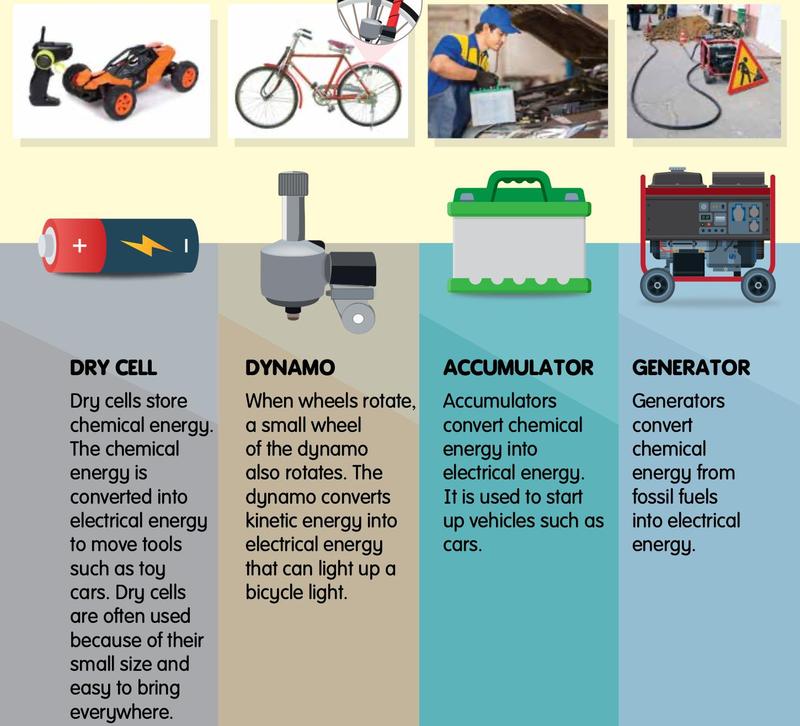
Source: Science Year 5 (DLP) textbook, p. 117.
| Source | Energy change | Where it is used |
|---|---|---|
| Power plant (wind, waves, hydroelectric) | Kinetic energy turns turbines and generates electrical energy | Supplies electricity to homes and factories |
| Solar cell | Light energy (Sun) to electrical energy | Satellites, calculators |
| Dry cell | Chemical energy to electrical energy | Toy cars; small and easy to carry everywhere |
| Dynamo | Kinetic energy to electrical energy | Bicycle light (the wheel turns the dynamo) |
| Accumulator | Chemical energy to electrical energy | Starting a car |
| Generator | Chemical energy of fossil fuels to electrical energy | Runs on fossil fuels to supply electricity |
Show answerHide answer
5.2Series circuit and parallel circuit
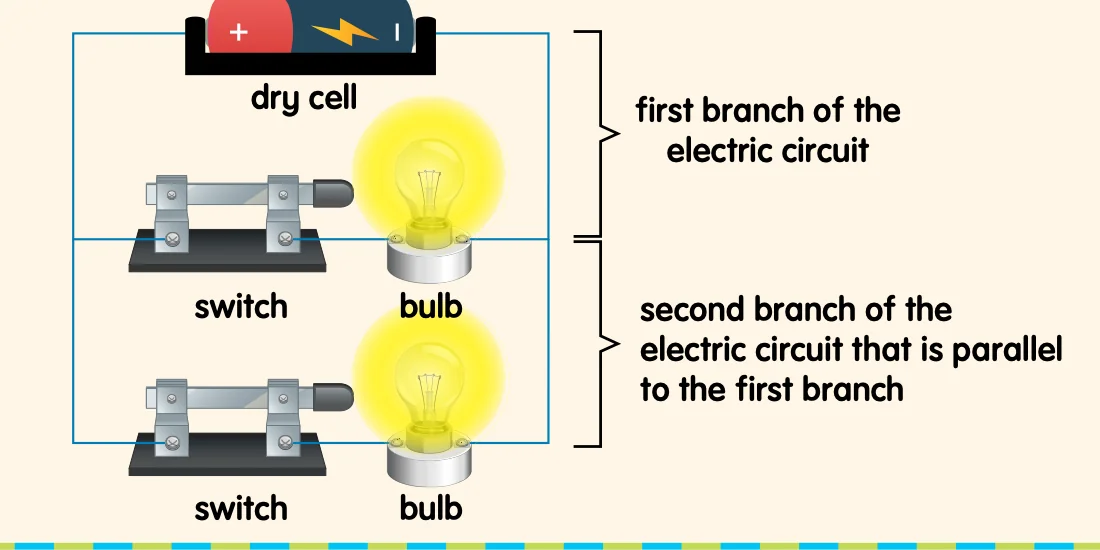
For a bulb to light up, the circuit must be complete: a dry cell, a closed switch, a bulb and wires joined in a loop with no gap. Bulbs can be connected in two ways.
Series circuit and parallel circuit
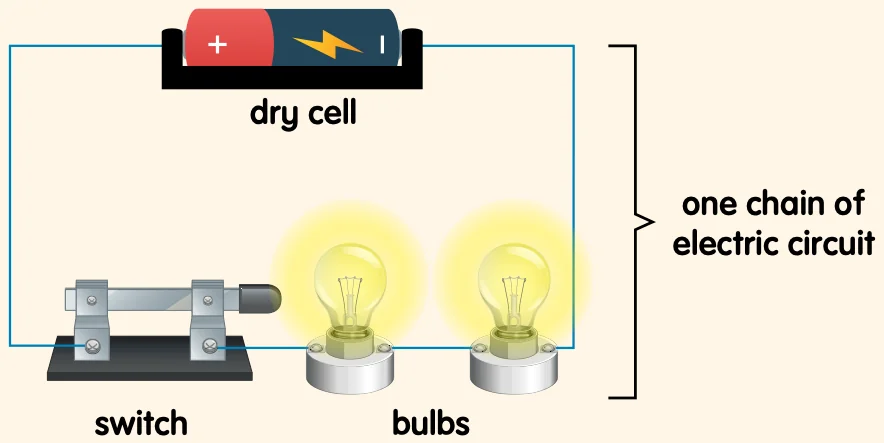
Source: Science Year 5 (DLP) textbook, p. 118.
Source: Science Year 5 (DLP) textbook, p. 119.
| Series circuit | Parallel circuit | |
|---|---|---|
| Arrangement of bulbs | One chain | Several branches, side by side |
| Paths for the current | One | More than one |
Sketching circuits with symbols
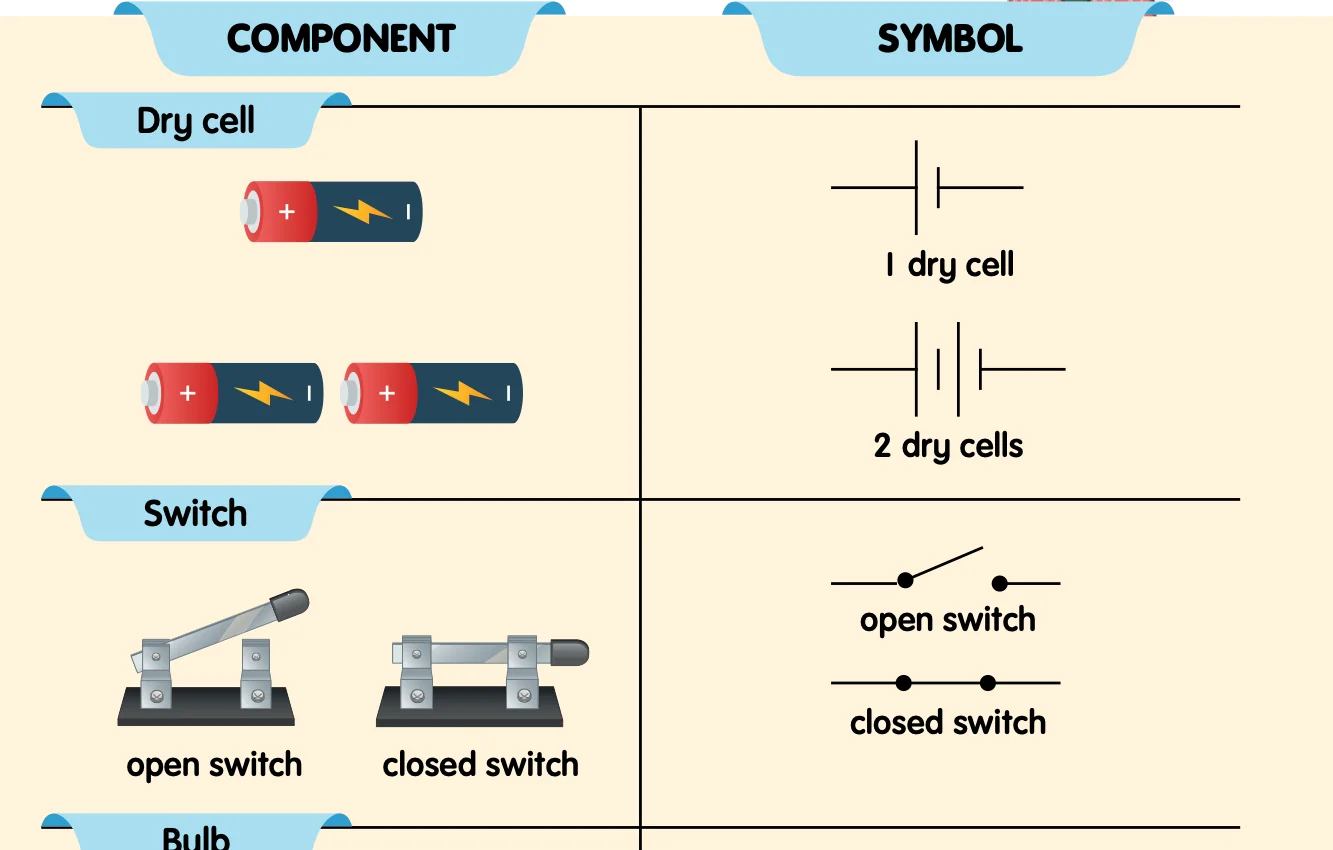
A circuit diagram uses symbols instead of pictures of real parts. It is quicker to draw and shows the connections more clearly.
Source: Science Year 5 (DLP) textbook, p. 120.
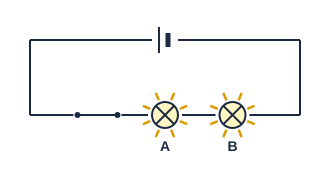
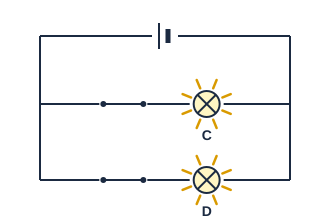
How to sketch a circuit:
- Draw the symbol of the dry cell.
- Draw the symbols of the bulbs (and switches).
- Join them with straight wires so the loop is closed. For a parallel circuit, draw the first branch, then the second branch beside it.
The brightness of bulbs
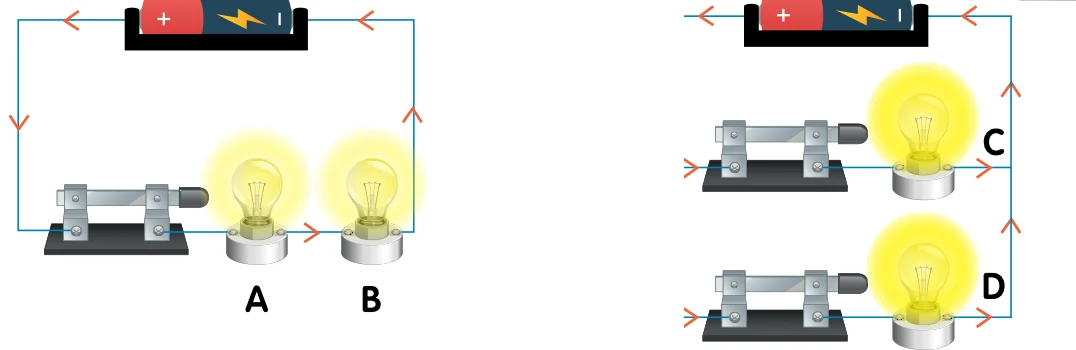
Source: Science Year 5 (DLP) textbook, p. 123.
- Series: one path, so the bulbs share the electric current. Each bulb is dimmer.
- Parallel: more than one path. Each path receives the same amount of electrical energy, so each bulb is brighter than in the series circuit.
What changes the brightness?
| Change | Series circuit | Parallel circuit |
|---|---|---|
| More dry cells | Bulbs get brighter | Bulbs get brighter |
| More bulbs | Bulbs get dimmer | No change: each bulb has its own branch |
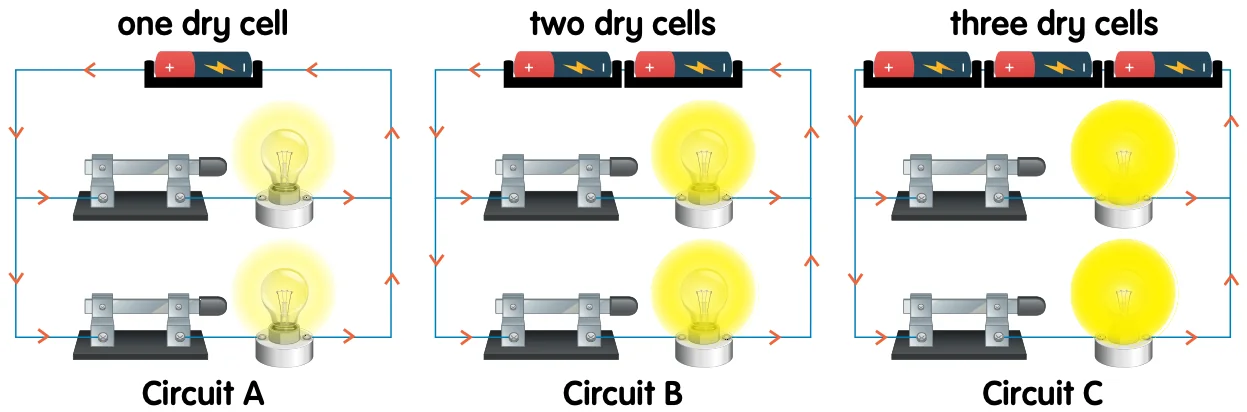
Source: Science Year 5 (DLP) textbook, p. 127.
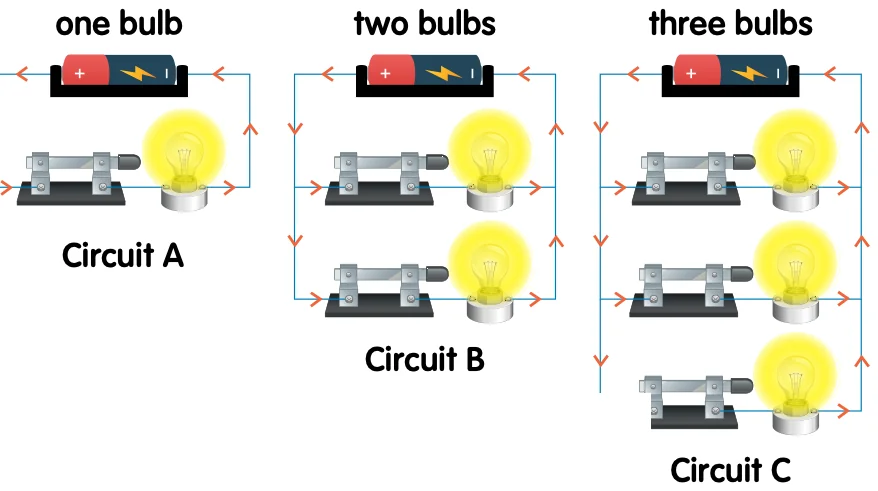
Source: Science Year 5 (DLP) textbook, p. 128.
Hypothesis: as the number of dry cells increases, the bulbs light brighter.
Manipulated variable: number of dry cells (1, 2, 3).
Responding variable: brightness of the bulbs.
Constant variables: number of bulbs and type of circuit.
Conclusion: the hypothesis is accepted. As the number of dry cells increases, the brightness of the bulbs also increases.
Show answerHide answer
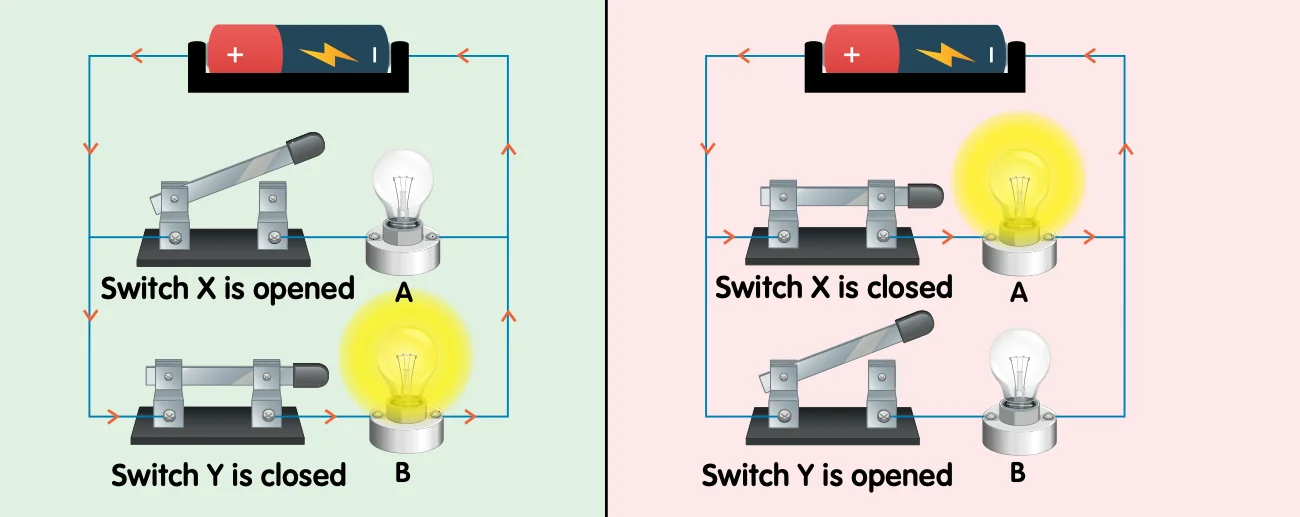
Closed switch, open switch
Series circuit. There is only one path. If either switch is opened, both bulbs go out.
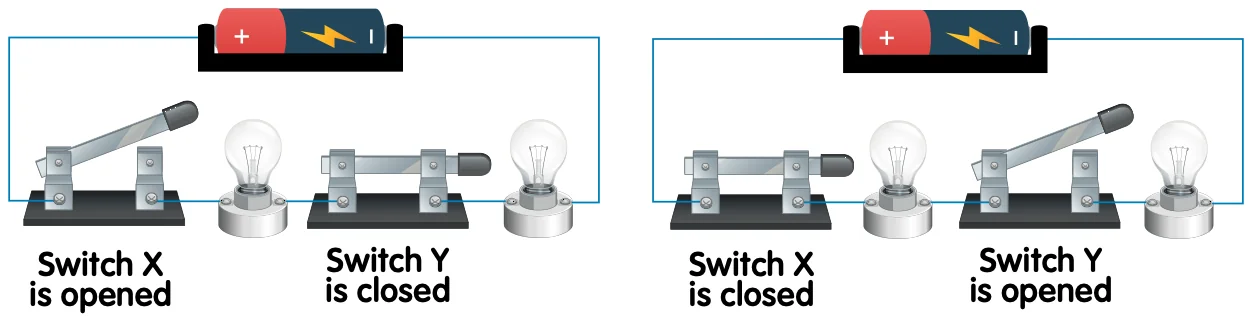
Source: Science Year 5 (DLP) textbook, p. 129.
Parallel circuit. Each branch has its own path. If a switch in one branch is opened, only the bulb in that branch goes out. The bulb in the other branch still lights up.
Source: Science Year 5 (DLP) textbook, p. 130.
| One switch is opened | Bulbs in a series circuit | Bulbs in a parallel circuit |
|---|---|---|
| What happens | All the bulbs go out | Only the bulb in that branch goes out |
Show answerHide answer
5.3Using electrical energy wisely and safely
What affects the usage of electrical energy?
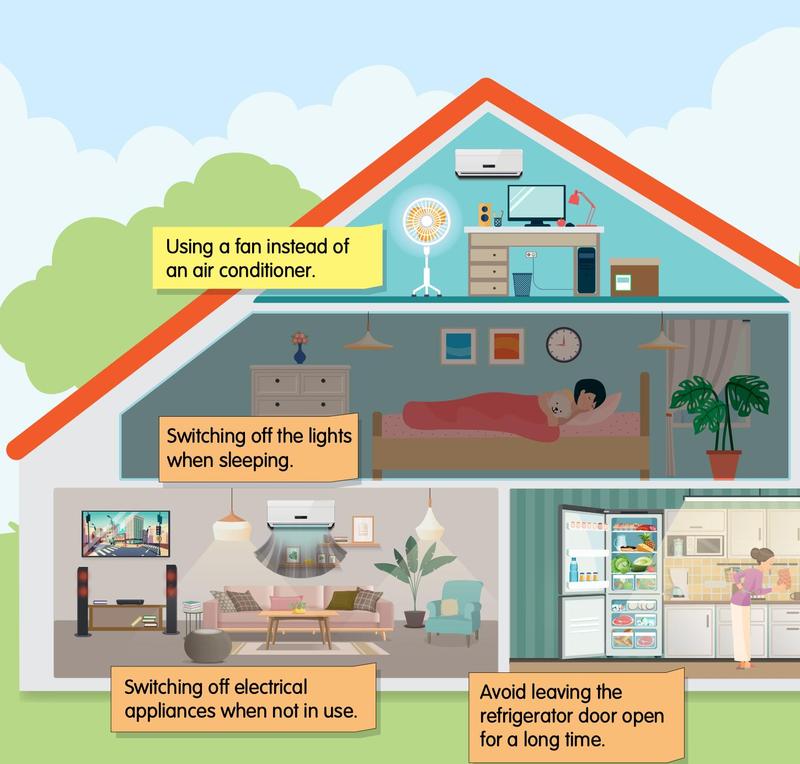
The more electrical energy we use, the more we pay on the electricity bill. Two things affect the usage: the type of electrical appliance we use and the duration (how long) we use it.
Source: Science Year 5 (DLP) textbook, p. 132.
- Use a fan instead of an air conditioner.
- Switch off the lights when you sleep and appliances that are not in use.
- Do not leave the refrigerator door open for a long time.
- Use the water heater less when you shower.
- Dry clothes under the Sun instead of using a clothes dryer.
- Unplug appliances that are not in use, and choose appliances that are energy efficient.
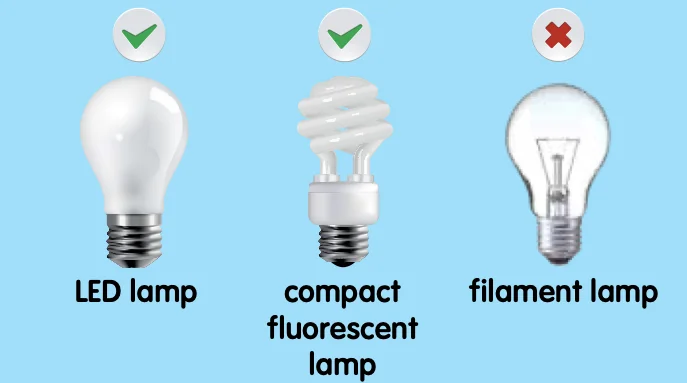
- Use energy-saving lamps (LED lamp, compact fluorescent lamp) instead of filament lamps.
Source: Science Year 5 (DLP) textbook, p. 133.
Mishandling electrical appliances
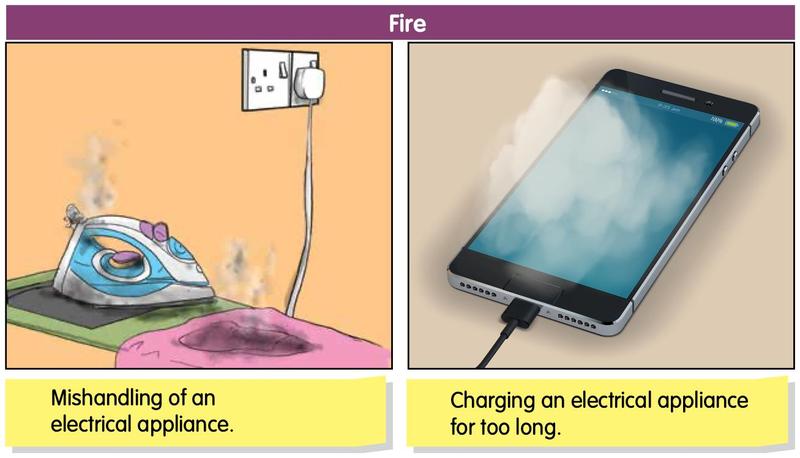
Electricity is useful, but mishandling electrical appliances is very dangerous. It can cause electrocution, a short circuit or a fire.
| Effect | Examples of mishandling |
|---|---|
| Electrocution | Touching a switch or an appliance with a wet or damp hand. Putting an object that conducts electric current into a socket. |
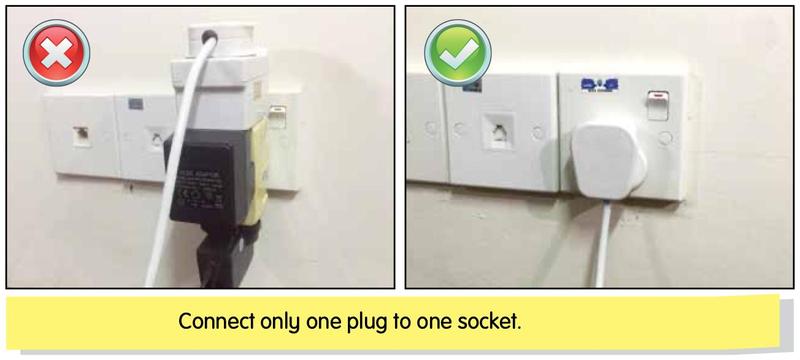
| Short circuit | Using an appliance with a damaged wire. Connecting too many plugs into one socket. |
| Fire | Leaving a hot iron on clothes. Charging an appliance for too long. |
Source: Science Year 5 (DLP) textbook, p. 136.
Safety precautions
- A faulty appliance must be repaired by a certified person.
- Your hands must be dry when you touch a switch.
- Connect only one plug to one socket.
- Turn off the switch before pulling the plug from the socket.
- Replace a damaged wire with a new one.

Source: Science Year 5 (DLP) textbook, pp. 137–138.