A Ringgit Saved is a Ringgit Earned
What this chapter covers
- I can listen to and give instructions to make something from recycled items using sequence words (1.1.3, 1.2.2)
- I can compare prices in two flyers and plan a budget, stating how much I spend and save (1.2.4)
- I can read a talk about a savings account and answer questions on details, reasons and who is eligible (2.2.3)
- I can read tips on saving money and tell needs from wants (2.2.3)
- I can write instructions in order, and a reply email suggesting ways to earn pocket money (3.2.2, 3.3.1)
- I can tell simple sentences from compound sentences and join clauses with for, and, nor, but, or, yet, so (5.2.1)
- I can predict what happens next in a story and write a conversation between characters (4.3.2)
Unit 14 is about money: why we save, how to plan a budget and how to earn pocket money. You will give instructions, read about a children's savings account, write an email, and learn simple and compound sentences.
14.1Listening and speaking: giving instructions
On p. 134 Lee Ann shows Asin the money box she made from recycled things. She tells Asin the steps in order.
First, remove the plastic lid from the tub.
Then, draw a narrow rectangular coin slot on the lid and cut it out.
After that, cut wrapping paper and stick it onto the tub, and decorate it with a ribbon.
Finally, secure the lid onto the tub.
English Year 6 SK, p. 134.
Show answerHide answer
14.2Speaking: comparing prices and making a budget
On p. 135 two supermarkets send flyers. You have RM200.00 for you and your three siblings, and must buy water bottles, exercise books, T-shirts, bags and book wrappers. Compare the price of each item in both flyers, choose the cheaper one, then fill in the budget.
| Term | Meaning |
|---|---|
| budget | the amount of money you plan to spend |
| total | all the costs added together |
| balance | the money left: budget minus total (this is what you save) |
Balance = 200.00 - 168.50 = RM31.50 saved.
English Year 6 SK, p. 135.
Show answerHide answer
14.3Reading: the Junior Savings Account
On p. 136 a bank officer, Encik Ramzi, talks to pupils of SK Tunas Cipta. Main facts:
- The account is for Malaysian children aged seven to twelve.
- A parent or guardian must open it; a child cannot open it alone.
- You open it with only RM1.00.
- The more you save, the higher the profits you earn.
- Gifts: a recognition card with birthday gifts, discounts at selected book and food outlets, and a money box.
English Year 6 SK, p. 136.
Show answerHide answer
14.4Reading: tips on saving money
On p. 137 Encik Hakimi explains the saying "save for a rainy day": keep money for times of need. He gives four tips.
| Tip | What to do |
|---|---|
| 1. Spend less | use public transport, ride a bicycle or walk; avoid branded items; bring home-made food |
| 2. Shop wisely | bring only enough money for your shopping list; compare prices; look for offers or vouchers; buy needs, not wants |
| 3. Put aside some money | save a little every day; save for charity |
| 4. Prepare a budget | keep track of what you spend; plan for short and long term goals |
English Year 6 SK, p. 137.
Show answerHide answer
14.5Writing: instructions and a reply email
Instructions: a candle stand (p. 138)
You need a plastic bottle, a candle, glitter dust, scissors and glue. Write the six steps using connectors and neat cursive writing.
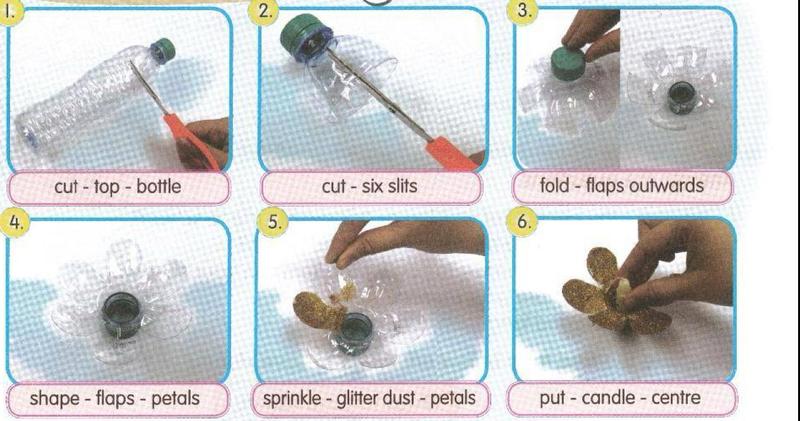
English Year 6 SK, p. 138.
Reply email (p. 139)
Idith wants a bag but does not have enough money, and asks Kamini for ways to earn pocket money. Kamini suggests four ways: sell handicrafts, bake and sell cookies, sell second-hand items and collect old newspapers, cans and plastic bottles to sell to recycling centres. A reply email has a subject, a greeting, the suggestions with a short reason, and a friendly closing.
You can earn pocket money in several ways. You can make handicrafts and sell them at school. You can also bake cookies and sell them to your neighbours. Lastly, you can sell toys or books you no longer use. I hope these ideas help.
Your friend,
Kamini
English Year 6 SK, p. 139.
Show answerHide answer
14.6Grammar: simple and compound sentences
| Type | Meaning | Example |
|---|---|---|
| Simple sentence | one independent clause (a subject and a verb); may have more than one subject or verb | Lee Ann has saved RM20.00 a week. Najmee and Asin play futsal every weekend. |
| Compound sentence | two or more independent clauses joined by a conjunction | Faris wants to learn French but Naqib wants to learn Spanish. |
English Year 6 SK, pp. 140-141.
Asin was sick so he did not go to school. (result)
My grandfather is old yet he still plays tennis. (contrast)
She does not drink tea nor does she eat cakes.
Show answerHide answer
14.7Language arts: the little strange man
On p. 142 the little strange man gives Queen Lisa another chance: if she guesses his name in two days she keeps her baby. You predict how she will find his name and write a conversation for when he returns. Use speech marks and what each character would say.
Summary
| Topic | Remember |
|---|---|
| Instructions | list what you need, begin with a verb, use first, then, after that, finally. |
| Budget | balance = budget minus total; compare prices first. |
| Junior Savings Account | Malaysian, 7 to 12, parent opens, RM1.00. |
| Saving tips | spend less, shop wisely, put money aside, prepare a budget. |
| Simple sentence | one independent clause. |
| Compound sentence | two clauses joined by for, and, nor, but, or, yet, so. |