Interaction among living things
What this chapter covers
- You can explain what interaction among living things means (4.1.1)
- You can describe the prey-predator interaction among animals and give examples (4.1.1)
- You can state the factors of competition among animals and tell intraspecies from interspecies competition (4.1.2)
- You can explain mutualism, parasitism and commensalism among animals with examples (4.1.3)
- You can investigate how space, water, sunlight and nutrients cause plants to compete (4.2.1)
- You can describe commensalism and parasitism among plants with examples (4.2.2)
- You can explain why interaction among living things is important to the ecosystem (4.2.3)
No living thing lives alone. Animals and plants in a habitat meet each other every day. In this unit you will learn how they affect each other, and why these interactions keep nature in balance.
4.1Interaction among animals
There are three types of interaction among animals: prey-predator, competition and symbiosis.
Prey-predator
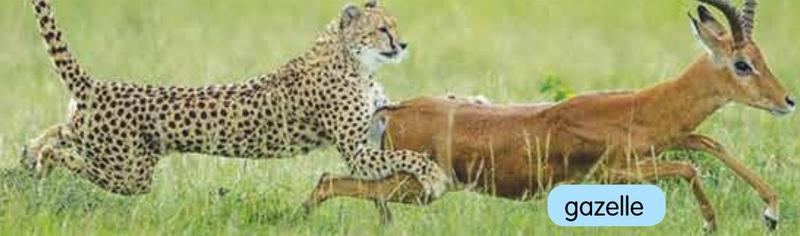
Figure: Science Year 6 textbook, p.52.
Competition among animals
When basic needs are in short supply, animals compete to survive.
| Type | Who competes | Example |
|---|---|---|
| Intraspecies competition | Animals of the same species | Hyenas compete for food. Male mynahs compete for a female mate. |
| Interspecies competition | Animals of different species | Vultures compete with lions for food. Zebras compete with gnus for water. |
The factors of competition among animals are food, water, shelter or territory and mate. Mate is a factor only for intraspecies competition, because animals mate with their own species.
Show answerHide answer
Symbiosis among animals
| Type | What happens | Example |
|---|---|---|
| Mutualism | Benefits both organisms | Crocodile and bird; clownfish and sea anemone |
| Parasitism | Benefits one (the parasite) and harms the other (the host) | Tick and cat; tapeworm and human |
| Commensalism | Benefits one, the other is not harmed and not helped | Barnacles and crab; remora and shark |
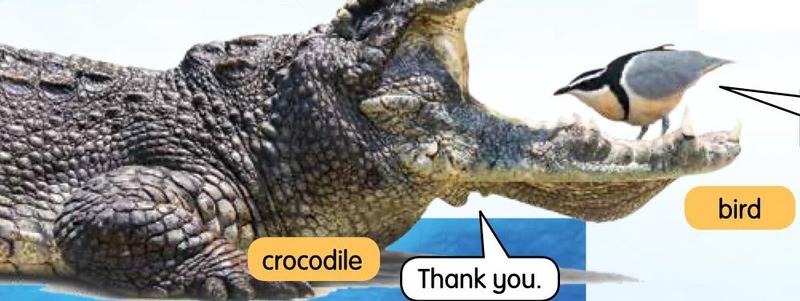
Figure: Science Year 6 textbook, p.56.
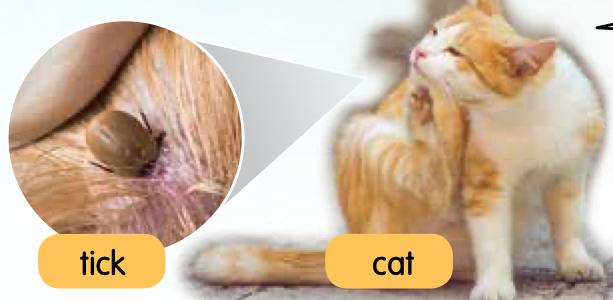
Figure: Science Year 6 textbook, p.57.
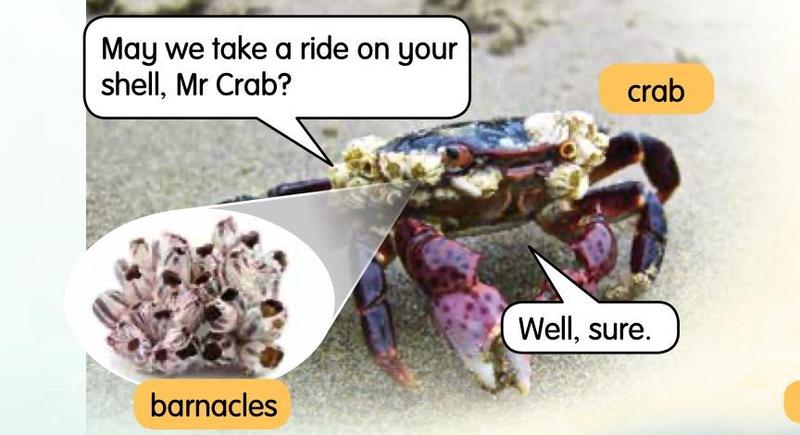
Figure: Science Year 6 textbook, p.57.
Show answerHide answer
4.2Interaction among plants
There are two types of interaction among plants: competition and symbiosis.
Competition among plants
Plants compete when their basic needs are limited. The factors are space, water, sunlight and nutrients.
| Factor | Investigation (green bean seeds) | What you see |
|---|---|---|
| Space | 15 seeds in a small pot and 15 in a big pot | Seedlings in the small pot are crowded and grow poorly. |
| Water | 10 seeds in pot A, 3 seeds in pot B | Roots in pot B grow healthier. Seedlings in pot A share limited water. |
| Sunlight | 15 seeds in pot A, 3 seeds in pot B, both covered by a box with a small hole on top | Seedlings in pot A grow taller as they compete to reach the light. |
| Nutrients | Fertiliser added to pot B only | Seedlings in pot A compete for limited nutrients. |
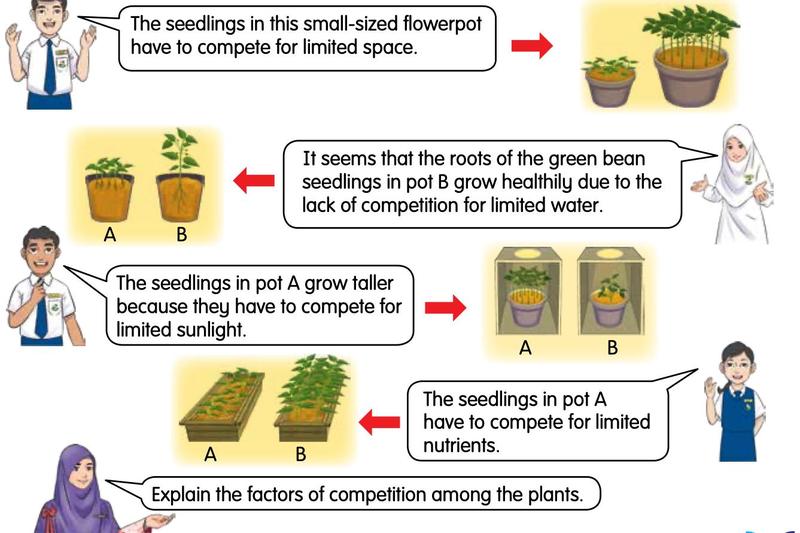
Figure: Science Year 6 textbook, p.61.
Symbiosis among plants
| Type | What happens | Example |
|---|---|---|
| Commensalism | One plant gains support and sunlight. The host plant is not harmed. | Bird's-nest fern and orchid growing on a host plant |
| Parasitism | The parasite takes water and nutrients and harms the host plant. | Rafflesia; Indian willow |
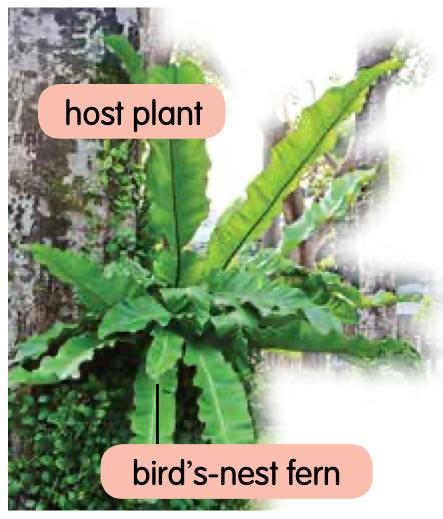
Figure: Science Year 6 textbook, p.62.
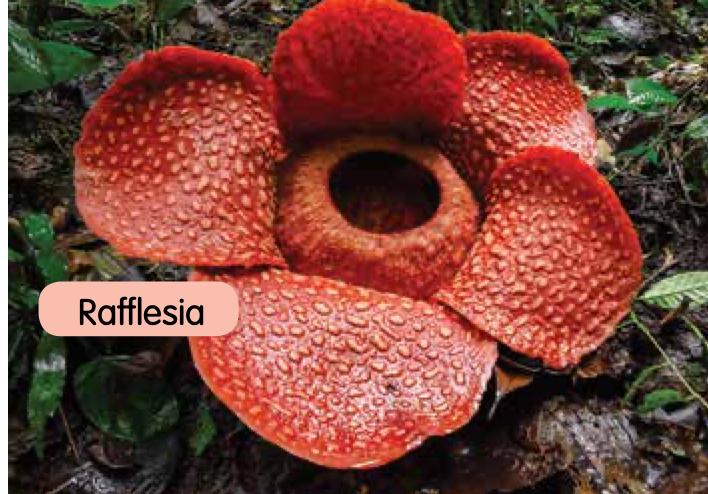
Figure: Science Year 6 textbook, p.62.
Show answerHide answer
4.3Importance of interaction to the ecosystem
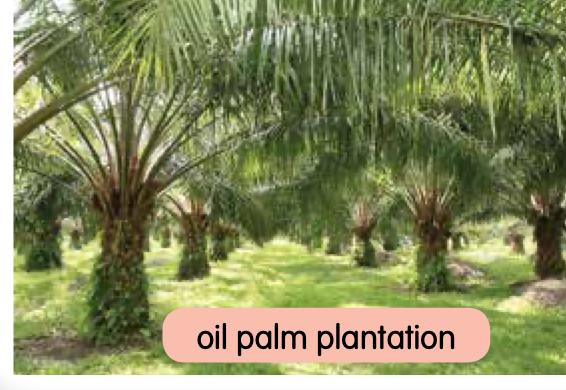
Figure: Science Year 6 textbook, p.63.
- Control the population of organisms: competition and prey-predator stop any one population from growing too large.
- Ensure the survival of species: in a pond, large fish depend on small fish, and small fish depend on tadpoles and water weeds.
- Maintain natural resources: the most resilient plants survive and produce strong seedlings.
- Restore the balance of nature.