Science questions, unit 4
Nama / NameKelas / ClassTarikh / Date
Interaction among living things
40 marks. Use Practice to check each answer as you go, or Exam to answer everything first. Ask a grown-up to help you mark the written answers.
Section A: objective questions
10 marksChoose the best answer for each question.
1
Question 1
What is interaction among living things?
Show answerHide answer
C
Interaction among living things is a relationship among living things that depend on each other to obtain their basic needs.
2
Question 2
In an oil palm plantation, an owl hunts a rat. What is the owl?
Show answerHide answer
B
An animal that hunts other animals for food is a predator. The rat is the prey.
3
Question 3
Zebras and gnus drink at the same small water hole in the dry season. What type of interaction is this?
Show answerHide answer
A
Zebras and gnus are different species, so it is interspecies competition. They compete for water.
4
Question 4
Two male mynahs fight near a female mynah. What are they competing for?
Show answerHide answer
D
Male mynahs of the same species compete for a female to mate with.
5
Question 5
Which interaction is an example of commensalism?
Show answerHide answer
A
Barnacles get a free ride and the crab is not harmed or helped. The tick and cat is parasitism; the other two are mutualism.
6
Question 6
A tapeworm lives in the intestine of a person and absorbs the food there. The person becomes ill. Which statement is correct?
Show answerHide answer
C
The tapeworm is the parasite and gains food. The person is the host and is harmed. This is parasitism.
7
Question 7
Fifteen green bean seeds are planted 5 cm apart in pot A and another fifteen in pot B. The pots are the same size and get the same amount of water every day. Fertiliser is spread on the soil of pot B only. After three weeks the seedlings in pot B are healthier. Which factor causes the seedlings in pot A to compete?
Show answerHide answer
D
Everything is the same except the fertiliser. Without fertiliser, the seedlings in pot A have limited nutrients in the soil, so they compete for nutrients.
8
Question 8
Why does the Rafflesia need to grow on a host plant?
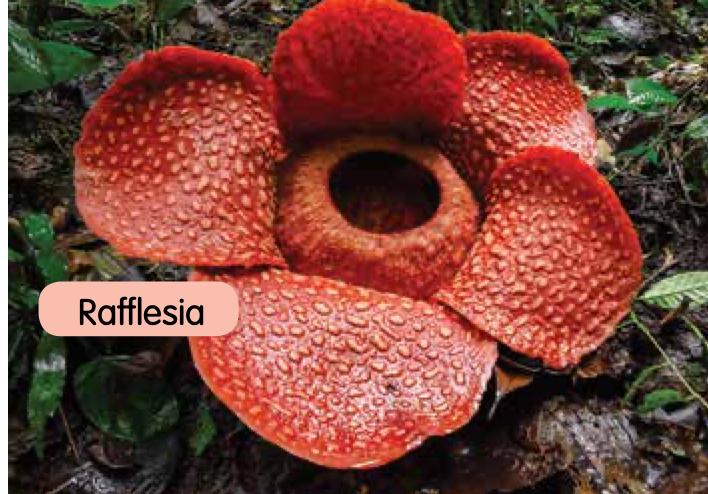
Show answerHide answer
D
Rafflesia cannot make its own food by photosynthesis. It absorbs water and nutrients from the host plant, which is harmed.
9
Question 9
Farmers keep owls in an oil palm plantation. How do the owls help the ecosystem?
Show answerHide answer
A
Predators such as owls hunt rats. Prey-predator interaction controls the population of organisms.
10
Question 10
The table shows three interactions between organisms. A plus sign (+) means the organism benefits, a cross (x) means it is harmed and a dash (-) means it is not affected.
Which row names the three interactions correctly?
| Interaction | Organism 1 | Organism 2 |
|---|---|---|
| P | + | + |
| Q | + | x |
| R | + | - |
Show answerHide answer
C
Both benefit in P (mutualism). One benefits and one is harmed in Q (parasitism). One benefits and the other is not affected in R (commensalism).
Section B: structured questions
30 marksAnswer all questions. Circle the answer or write it in the space.
11
Question 11
Diagram 2 shows a cheetah chasing a gazelle.
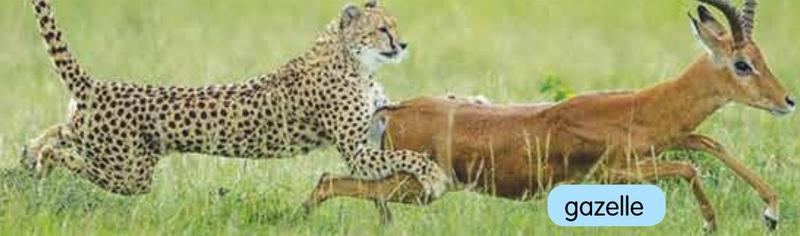
[1 mark]
(a)Name the predator.
Show answerHide answer
Tick each point you got.
[1 mark]
(b)What is a prey?
Show answerHide answer
Tick each point you got.
[1 mark]
(c)The Venus flytrap catches flies. Is the fly the prey or the predator?
Show answerHide answer
Prey
12
Question 12
Hyenas fight over a piece of meat, and vultures compete with lions for the same food.
[1 mark]
(a)The hyenas are competing with each other. Is this intraspecies or interspecies competition?
Show answerHide answer
Intraspecies
[1 mark]
(b)What is the factor of competition in both cases?
Show answerHide answer
Tick each point you got.
[1 mark]
(c)Why is the competition between vultures and lions called interspecies competition?
Show answerHide answer
Tick each point you got.
13
Question 13
Diagram 3 shows a tick on a cat.
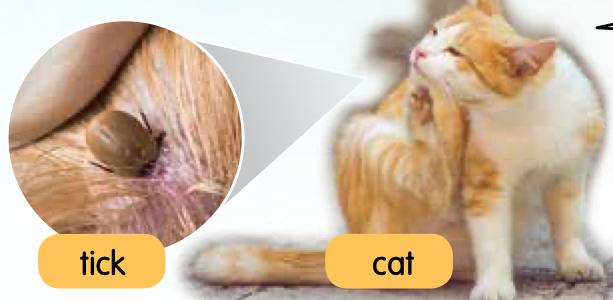
[1 mark]
(a)Name the type of symbiosis between the tick and the cat.
Show answerHide answer
Tick each point you got.
[2 marks]
(b)Which one is the parasite and which one is the host?
Show answerHide answer
Tick each point you got.
[1 mark]
(c)A bird feeds on food stuck between a crocodile's teeth and the crocodile's teeth are cleaned. Both benefit. What type of symbiosis is this?
Show answerHide answer
Mutualism
[1 mark]
(d)Remoras attach to a shark to get free transport and food scraps. The shark is not affected. What type of symbiosis is this?
Show answerHide answer
Commensalism
14
Question 14
Aishah plants 10 green bean seeds in pot A and 3 seeds in pot B. Both pots are the same size, use the same soil and get the same amount of water every day. After three weeks she removes the seedlings and looks at the roots.
[1 mark]
(a)What does Aishah change in this investigation?
Show answerHide answer
Tick each point you got.
[1 mark]
(b)State one thing she keeps the same.
Show answerHide answer
Tick each point you got.
[1 mark]
(c)State what she will observe about the roots.
Show answerHide answer
Tick each point you got.
[1 mark]
(d)Give an inference for your answer in (c).
Show answerHide answer
Tick each point you got.
15
Question 15
Diagram 4 shows living things in a pond.
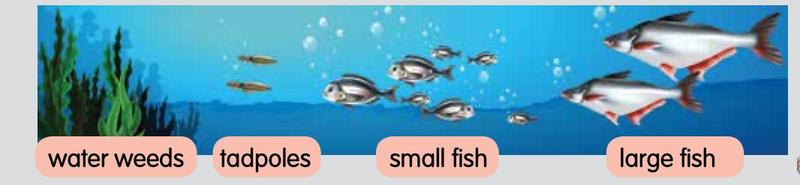
[1 mark]
(a)What do the large fish depend on the small fish for?
Show answerHide answer
Tick each point you got.
[1 mark]
(b)All the small fish in the pond are removed. State what happens to the large fish.
Show answerHide answer
Tick each point you got.
[2 marks]
(c)Explain why it is important that the large fish and small fish interact.
Show answerHide answer
Tick each point you got.
16
Question 16
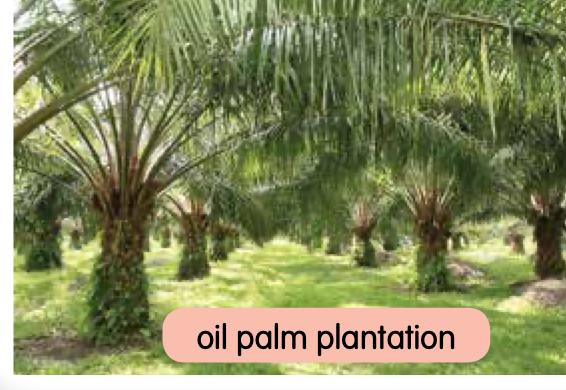
Rats are eating the fruit in an oil palm plantation. A farmer says he will kill all the owls because they are noisy at night.
[1 mark]
(a)Name the interaction between the owls and the rats.
Show answerHide answer
Tick each point you got.
[1 mark]
(b)Is the farmer's idea a good one? Choose.
Show answerHide answer
No
[2 marks]
(c)Give a reason for your answer in (b).
Show answerHide answer
Tick each point you got.
17
Question 17
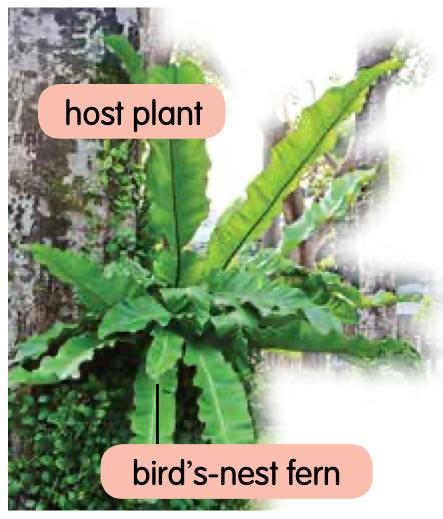
Diagram 6 shows two plants. The bird's-nest fern grows on a large branch of a host plant. The Rafflesia grows on a host plant.
[1 mark]
(a)Which plant shows commensalism with its host?
Show answerHide answer
Bird's-nest fern
[1 mark]
(b)Why is the host plant of the bird's-nest fern not harmed?
Show answerHide answer
Tick each point you got.
[2 marks]
(c)Explain why the Rafflesia harms its host plant.
Show answerHide answer
Tick each point you got.
18
Question 18
Choose the factor that makes the plants compete in each situation.
[1 mark]
(a)Fifteen seedlings are crowded in a very small flowerpot.
Show answerHide answer
Space
[1 mark]
(b)Seedlings in a box with a small hole at the top grow tall and thin towards the hole.
Show answerHide answer
Sunlight
[1 mark]
(c)Seedlings in the pot without fertiliser grow weaker than those in the pot with fertiliser.
Show answerHide answer
Nutrients