Science notes, unit 5
Preservation and conservation
Textbook Science Year 6 (DLP, Semakan 2017), pages 67–86
What this chapter covers
- You can explain what extinct means and name animals that are extinct (5.1.3)
- You can name animals and plants that are facing the threat of extinction (5.1.4)
- You can describe the factors that threaten animals and plants (5.1.5)
- You can explain what preservation and conservation mean and give examples of each (5.1.1, 5.1.2)
- You can explain why preservation and conservation are important (5.1.6)
- You can suggest ways to keep our environment sustainable (5.1.7)
Some animals and plants have disappeared from Earth for ever. Others are in danger of following them. In this unit you will find out why this happens, and what people do to protect living things.
5.1Extinction, preservation and conservation
Extinct animals
Extinct means no longer existing on Earth. Not one of that kind of animal or plant is left alive.
| Extinct animal | Why it became extinct |
|---|---|
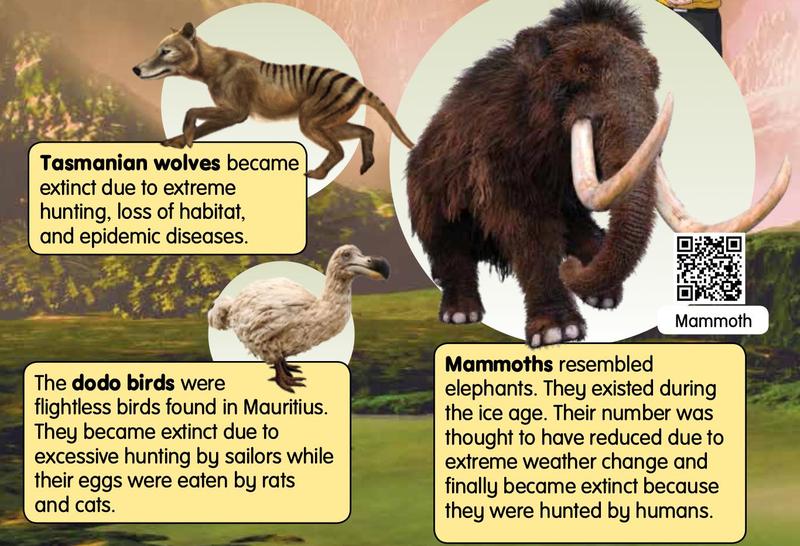
| Dodo bird (Mauritius) | Sailors hunted it too much. Rats and cats ate its eggs. It could not fly. |
| Tasmanian wolf | Extreme hunting, loss of habitat and epidemic diseases. |
| Mammoth | Extreme weather change in the ice age, and hunting by humans. |
| Dinosaurs, sabre-toothed tiger | Extreme weather change. |
| Quagga | Hunted for its skin and meat. |
Did you know? A Brontosaurus was about 20 m long and weighed about 34.5 tonnes. An elephant weighs about 5 tonnes.
Threat of extinction
A species is facing the threat of extinction when its numbers keep falling and it is in danger of becoming extinct. We also call it endangered.
| Endangered animals | Endangered plants |
|---|---|
| Elephant, rhinoceros, orangutan, panda, Malayan tapir, Malayan tiger | Meranti, keruing and cengal trees, Rafflesia, pitcher plant, slipper orchid, tongkat ali |
Large animals are more at risk because they need a lot of space and food, and they breed slowly.
Extinct and endangered are not the same. Extinct: already gone. Endangered: still alive, but in danger of being gone.
Factors that threaten animals and plants
Human activities are the greatest threat. Using natural resources too much, and without control, makes the numbers fall.
| Factor | What happens |
|---|---|
| Destruction of habitat | Roads and new towns are built; forests are burned for new crops. Animals and plants lose their homes. |
| Illegal hunting | Animals and plants are taken for medicine, food, ornaments and clothes (for example pangolin and Rafflesia). |
| Pollution | Plastic traps animals; oil spills and toxic waste kill sea life. |
| Natural disasters | Floods, landslides, earthquakes and tornadoes destroy habitats. |
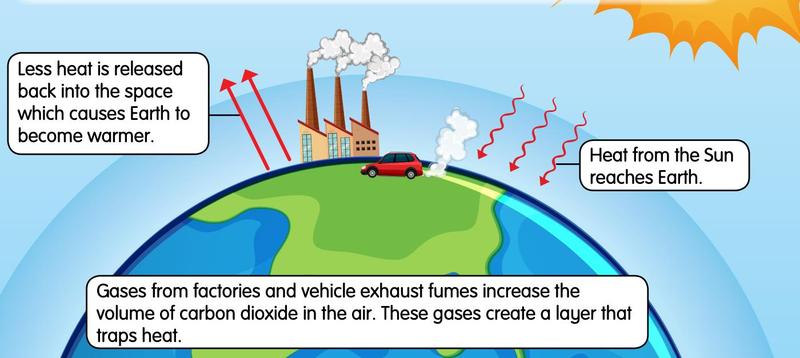
| Global warming | Carbon dioxide from factories and vehicles traps heat. Ice at the Poles melts, the sea level rises and coasts are flooded. |
Explain how global warming threatens animals and plants along the coast.
Show answerHide answer
Ice at the Poles melts, so the sea level rises. The coast is submerged and the animals and plants there lose their habitat.
Preservation
Preservation means keeping animals and plants in their original and balanced state. It protects them from extinction.
| Method of preservation | How it helps |
|---|---|
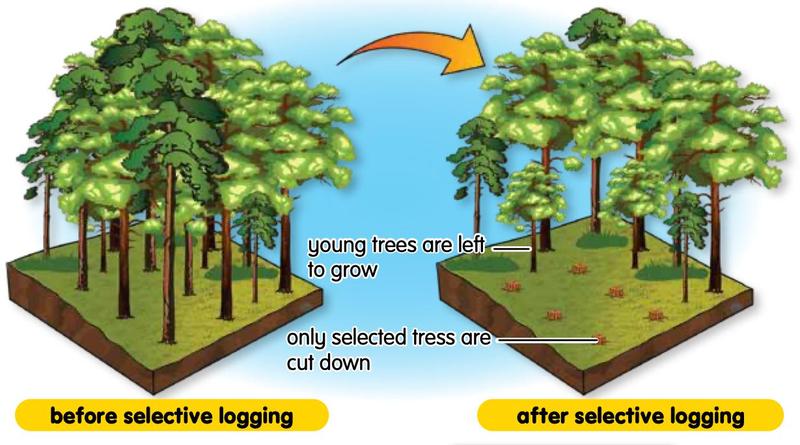
| Selective logging | Only selected, mature trees are cut. Young trees are left to grow, so the habitat is protected. |
| Educate the public | Campaigns such as World Wildlife Day teach people why protection matters. |
| Boycott products from endangered species | Buyers do not buy turtle eggs, pitcher plants and similar products. |
| Enforce laws | Malayan tigers, tapirs, orangutans, elephants, turtles and tree shrews are protected by law. |
| Reduce, reuse, recycle | Less plastic pollution and less paper means fewer trees are logged. |
| Gazette forest reserves and marine parks | Protected areas (including RAMSAR sites) are protected by law, with severe punishment for offenders. |
Did you know? A RAMSAR site is a wetland protected under a convention held in Ramsar, Iran, in 1971. Tasik Bera in Pahang was the first in Malaysia.
Conservation
Conservation means returning animals and plants to their natural conditions.
| Method of conservation | Example |
|---|---|
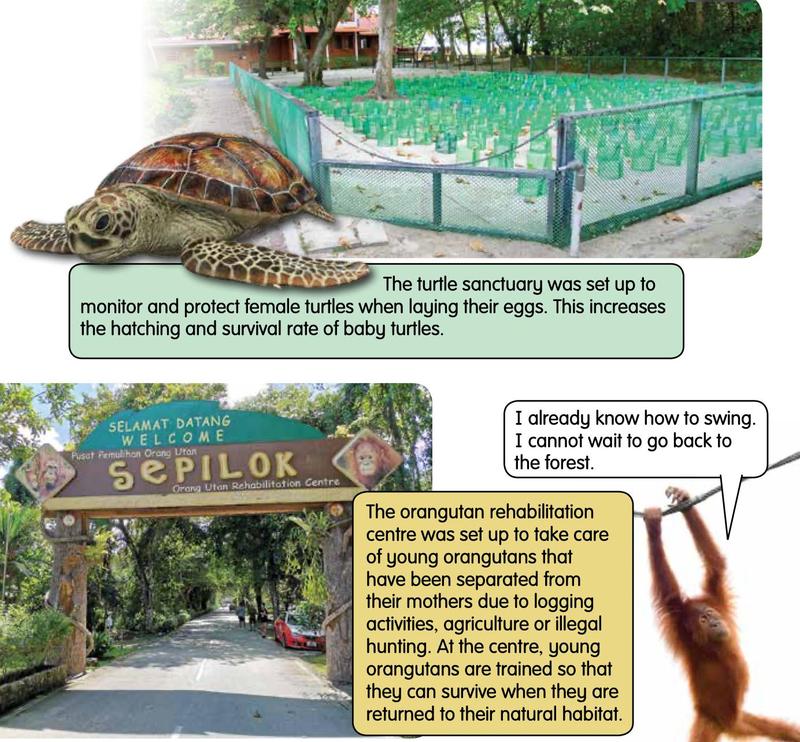
| Set up conservation centres | A turtle sanctuary protects egg-laying females so more baby turtles hatch and survive. An orangutan rehabilitation centre cares for young orangutans and trains them to live in the wild again. |
| Replanting | Seeds or seedlings are planted where forests were cleared, for example reforestation and replanting mangrove swamps. |
Do not mix them up. Preservation keeps things as they are (laws, selective logging, protected areas). Conservation brings them back (centres, replanting).
Is a turtle sanctuary preservation or conservation?
Show answerHide answer
Conservation. It helps turtles return to their natural habitat.
Why preservation and conservation are important
- Prevents extinction: fewer threats and more animals and plants.
- Prevents overexploitation: reduce, reuse and recycle lessen our need for natural resources.
- Keeps the environment clean and healthy: controlled logging and replanting keep the oxygen and carbon dioxide balance.
- Prevents loss of habitat: forest reserves, marine parks and RAMSAR sites keep homes safe.
Example: the pangolin
Pangolins are hunted for scales, meat and skin. Preservation: enforce laws and boycott pangolin products. Conservation: look after rescued pangolins in a conservation centre.A sustainable environment is one where resources are kept so there is enough for people now and in the future. Looking after it is everybody's responsibility.
Pictures: Science Year 6 (DLP) textbook, extinct animals p. 68, global warming p. 74, selective logging p. 75, conservation centres p. 78.
Summary
| Word | Meaning | Example |
|---|---|---|
| Extinct | No longer exists on Earth | Dodo |
| Endangered | Facing the threat of extinction | Malayan tiger |
| Preservation | Keeping in original, balanced state | Enforce laws |
| Conservation | Returning to natural conditions | Replanting |