Science questions, unit 9
Nama / NameKelas / ClassTarikh / Date
Waste materials
44 marks. Use Practice to check each answer as you go, or Exam to answer everything first. Ask a grown-up to help you mark the written answers.
Section A: objective questions
12 marksChoose the best answer for each question.
1
Question 1
What are waste materials?
Show answerHide answer
A
Waste materials are materials that we no longer need and do not want to keep, such as old newspapers and empty bottles.
2
Question 2
Which of the following is an example of food waste?
Show answerHide answer
B
Egg shells, onion skin and chicken bones are food waste. A can is metal, a bottle is glass and a magazine is paper.
3
Question 3
Which statement describes biodegradable waste?
Show answerHide answer
D
Biodegradable waste is decomposed by microorganisms such as bacteria and fungi.
4
Question 4
Which pair contains only non-biodegradable waste?
Show answerHide answer
C
Plastic and glass cannot be decomposed by microorganisms. The other pairs are biodegradable.
5
Question 5
Aiman has finished reading some newspapers and magazines. Which recycling bin should he use?
Show answerHide answer
A
The blue recycling bin is for paper waste.
6
Question 6
A pupil wants to throw away a soft drink can and a plastic food container. Which bin is suitable for both?
Show answerHide answer
C
The orange bin takes aluminium, steel and plastic.
7
Question 7
Why should leftover food not be thrown into a river?
Show answerHide answer
C
As leftover food decomposes it uses up oxygen, so fish and other aquatic life die.
8
Question 8
Flash floods happen more often in a city. Which waste is most likely to clog the drains?
Show answerHide answer
D
Plastic does not decompose. It piles up in drains and blocks the flow of water.
9
Question 9
Which waste is best used to make compost fertiliser?
Show answerHide answer
C
Compost is made from biodegradable waste such as vegetable leftovers and dry leaves.
10
Question 10
Hana's father made a swing from an old lorry tyre. Which practice is this?
Show answerHide answer
A
The tyre is used again for a different purpose without being made into a new material. This is reusing.
11
Question 11
At the waste collection and sorting centre, waste is separated into three groups. Which group goes to a compost fertiliser centre?
Show answerHide answer
D
Decomposable materials go to the compost fertiliser centre. Recyclable materials go to the recycling centre and non-recyclable materials go to the landfill.
12
Question 12
A factory dumps chemical waste into a river. Which is the most serious effect on people living nearby?
Show answerHide answer
B
In the Kim Kim river case, toxic fumes from chemical waste made more than 100 people ill.
Section B: structured questions
32 marksAnswer all questions. Circle the answer or write it in the space.
13
Question 13
Answer these questions about waste materials.
[1 mark]
(a)State the meaning of biodegradable waste.
Show answerHide answer
Tick each point you got.
[1 mark]
(b)State the meaning of non-biodegradable waste.
Show answerHide answer
Tick each point you got.
[2 marks]
(c)Name two types of microorganisms that decompose waste.
Show answerHide answer
Tick each point you got.
14
Question 14
Classify each waste as biodegradable or non-biodegradable.
[1 mark]
(a)Chicken bones
Show answerHide answer
Biodegradable
[1 mark]
(b)Aluminium can
Show answerHide answer
Non-biodegradable
[1 mark]
(c)Old newspaper
Show answerHide answer
Biodegradable
[1 mark]
(d)Chemical waste from a factory
Show answerHide answer
Non-biodegradable
15
Question 15
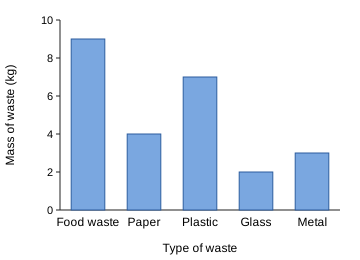
A school canteen recorded the waste it threw out in one week. Diagram 1 shows the results (practice numbers, not from the book). Food waste and paper are biodegradable.
[1 mark]
(a)Which type of waste was thrown out the most?
Show answerHide answer
Tick each point you got.
[1 mark]
(b)Calculate the total mass of biodegradable waste.
Show answerHide answer
Tick each point you got.
[1 mark]
(c)Calculate the total mass of non-biodegradable waste.
Show answerHide answer
Tick each point you got.
[1 mark]
(d)Suggest one way the canteen can deal with the food waste.
Show answerHide answer
Any 1 points
Tick each point you got.
[1 mark]
(e)Suggest one way the canteen can reduce its plastic waste.
Show answerHide answer
Any 1 points
Tick each point you got.
16
Question 16
Match each situation with its effect.
[1 mark]
(a)Plastic bags are dumped into the drains of a town.
Show answerHide answer
Flash floods
[1 mark]
(b)A restaurant pours leftover food into a river.
Show answerHide answer
Fish die from lack of oxygen
[1 mark]
(c)A factory dumps chemical waste into a river.
Show answerHide answer
Toxic fumes harm people
17
Question 17
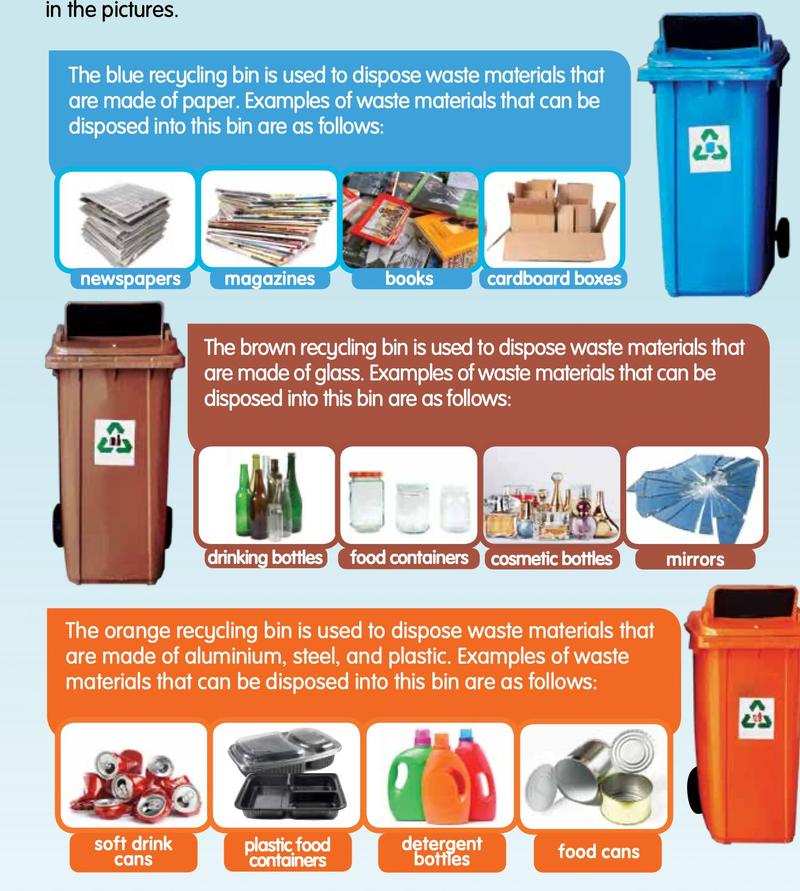
Diagram 2 shows the recycling bins at a school.
[1 mark]
(a)A mirror is broken. Which colour of bin should it go into?
Show answerHide answer
Tick each point you got.
[1 mark]
(b)Which colour of bin is for cardboard boxes?
Show answerHide answer
Tick each point you got.
[2 marks]
(c)Name two items that go into the orange bin.
Show answerHide answer
Tick each point you got.
[1 mark]
(d)Why must waste be sorted before it is thrown away?
Show answerHide answer
Any 1 points
Tick each point you got.
18
Question 18
Lina's family makes compost fertiliser in a flowerpot using vegetable leftovers, egg shells and dry leaves.
[1 mark]
(a)Why can these materials be used to make compost?
Show answerHide answer
Tick each point you got.
[2 marks]
(b)Lina's brother adds a plastic bottle to the mixture. Is this correct? Give a reason.
Show answerHide answer
Tick each point you got.
[1 mark]
(c)State one way compost fertiliser is useful.
Show answerHide answer
Any 1 points
Tick each point you got.
19
Question 19
A pile of waste is dumped by a roadside near a river. It has plastic bottles, food scraps, glass bottles and used cooking oil.
[2 marks]
(a)State two effects of this waste on the environment.
Show answerHide answer
Any 2 points
Tick each point you got.
[2 marks]
(b)Suggest how the glass bottles and plastic bottles can be dealt with.
Show answerHide answer
Tick each point you got.
[1 mark]
(c)Suggest how the used cooking oil should be disposed of.
Show answerHide answer
Tick each point you got.
[2 marks]
(d)Your friend says, "One small pile of waste does not matter." Do you agree? Give a reason.
Show answerHide answer
Tick each point you got.